
Landscaping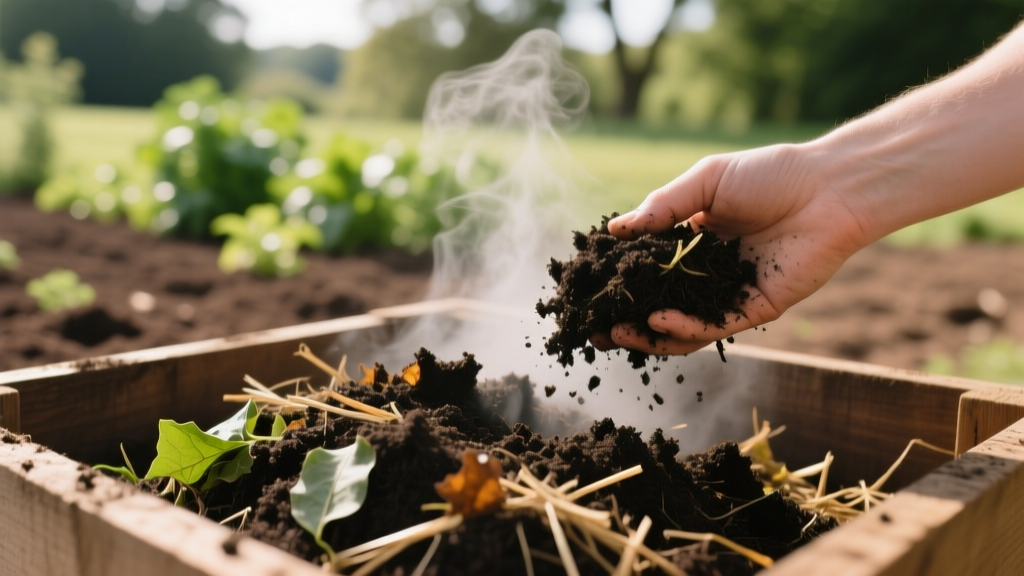
How to Amend Clay Soil in Landscape Beds Using Hot Compost
Sarah ChenPublished
The Challenge of Clay Soil in Landscape Design
Landscaping in heavy clay soil often feels like an uphill battle for homeowners and garden designers alike. Whether you are installing a new flagstone patio, designing a perennial garden bed, or establishing a privacy hedge, clay's dense, compacted nature restricts root growth, limits subsurface drainage, and stifles the soil food web. Clay particles are microscopic and plate-like, meaning they pack tightly together, leaving very little pore space for oxygen and water to move freely. When wet, clay becomes a slick, impermeable barrier; when dry, it bakes into a concrete-like crust that repels water and cracks, tearing delicate root hairs.
While many homeowners resort to synthetic fertilizers, gypsum, or aggressive mechanical rototilling to force plants to survive, these methods often degrade soil structure over time. The most sustainable, effective, and long-term solution lies in prioritizing soil health and composting. Specifically, amending clay soil with properly managed hot compost transforms the physical structure of your landscape beds, turning lifeless dirt into a thriving, biologically active ecosystem capable of supporting robust plant life and improving overall curb appeal.
Why Hot Compost is the Ultimate Clay Amendment
Not all compost is created equal. Cold composting—the passive method of piling yard waste and waiting a year or more—has its place in waste reduction, but it falls short when amending poor soils. According to the Cornell University Waste Management Institute, hot composting is a carefully managed biological process that generates internal temperatures between 130°F and 160°F. This thermophilic phase is critical for several reasons:
- Pathogen and Weed Seed Destruction: High temperatures kill invasive weed seeds and soil-borne pathogens that might otherwise infest your pristine landscape beds.
- Accelerated Humification: The intense microbial activity breaks down complex lignins and cellulose into stable humus. Humus acts like a sponge, binding clay particles together into larger, porous aggregates (crumbs) that permanently improve drainage and aeration.
- Biological Inoculation: Hot compost teems with beneficial bacteria, fungi, and nematodes that outcompete disease-causing organisms.
When integrated into clay, the humus from hot compost physically pries the tightly packed clay plates apart, creating macro-pores for water infiltration and micro-pores for moisture retention.
Building Your Hot Compost Pile: A Step-by-Step Guide
To create high-quality compost for your landscape beds, you must balance carbon-rich "browns" and nitrogen-rich "greens." The ideal Carbon-to-Nitrogen (C:N) ratio is roughly 30:1. If the pile has too much carbon, it will stall; too much nitrogen, and it will become an anaerobic, foul-smelling sludge.
Sizing and Siting the Pile
A hot compost pile requires critical mass to retain heat. Build your pile to be at least 3 feet wide, 3 feet long, and 3 feet tall (one cubic yard). Choose a well-draining site in partial shade, close to a water source. You can use a simple wire bin, a three-bay wooden pallet system, or a commercial tumbling composter (though tumblers are often too small to maintain high heat in colder climates).
Understanding Your Materials
According to guidelines published by the Environmental Protection Agency (EPA), a diverse mix of materials yields the most nutrient-dense compost. Below is a structured breakdown of common landscape and household materials and their approximate C:N ratios to help you formulate your pile.
| Material Type | Category | Approximate C:N Ratio | Preparation Tip |
|---|---|---|---|
| Dry Autumn Leaves | Carbon (Brown) | 60:1 | Shred with a lawnmower before adding to speed up decomposition. |
| Wood Chips / Bark | Carbon (Brown) | 400:1 | Use sparingly; best as a bulking agent for airflow rather than a primary carbon source. |
| Straw / Hay | Carbon (Brown) | 75:1 | Ensure it is seed-free to prevent introducing weeds to your landscape beds. |
| Fresh Grass Clippings | Nitrogen (Green) | 15:1 | Layer thinly (1-2 inches) to prevent matting and anaerobic odors. |
| Kitchen Veggie Scraps | Nitrogen (Green) | 25:1 | Bury deep within the pile to deter rodents and fruit flies. |
| Coffee Grounds | Nitrogen (Green) | 20:1 | Excellent for sustaining high temperatures; mix thoroughly with browns. |
Managing Moisture and Aeration
Your compost pile should feel like a wrung-out sponge. If it is too dry, microbial activity halts; if it is too wet, oxygen is displaced. Water the pile as you build it layer by layer. To maintain oxygen levels, turn the pile using a pitchfork or compost aerator every 3 to 4 days. Moving the cooler outer edges into the hot center ensures uniform decomposition. With proper management, your compost will cure and be ready for landscape application in just 4 to 6 weeks.
How to Apply Compost to Clay Landscape Beds
Once your hot compost has cured (it should smell earthy, look dark brown, and no longer generate heat), it is time to integrate it into your landscape beds. The University of Minnesota Extension strongly advises against using mechanical rototillers on clay soil. Tilling destroys the fragile soil aggregates you are trying to build, creates a hardpan layer just below the tiller's depth, and brings dormant weed seeds to the surface.
The No-Till Broadfork Method
Instead of tilling, adopt a no-till approach to preserve soil structure:
- Aerate the Clay: Use a garden broadfork (a heavy-duty manual tool with long tines) to gently lift and fracture the clay soil every 8 to 10 inches. This introduces deep oxygen channels without inverting the soil layers.
- Top-Dress Generously: Spread a 2 to 3-inch layer of your finished hot compost evenly over the entire landscape bed. For new planting installations, you can mix the compost into the top 6 inches of the fractured clay by hand using a digging fork.
- Mulch the Surface: Cap the compost with a 2-inch layer of coarse arborist wood chips. This mimics the natural forest floor, retaining moisture, regulating soil temperature, and feeding the fungal networks that will further break down the clay over time.
Feed the soil, not the plant. A healthy, compost-rich soil food web will naturally suppress diseases, buffer pH fluctuations, and cycle nutrients directly to your landscape roots.
Timing Your Applications
The best time to amend landscape beds is in the late fall. Applying compost before the ground freezes allows winter moisture and freeze-thaw cycles to work the organic matter deep into the clay profile. By spring, the soil will be noticeably softer, darker, and ready for planting. A secondary, lighter top-dressing (1 inch) can be applied in early spring to replenish microbial populations before the summer heat sets in.
Tools and Costs for the Home Landscaper
Investing in soil health requires some upfront capital, but it pays dividends in reduced plant mortality, lower water bills, and decreased reliance on chemical fertilizers.
- Compost Thermometer ($80 - $130): A 20-inch stainless steel probe thermometer (such as the Reotemp Fast Response model) is non-negotiable for hot composting. It allows you to monitor the core temperature and know exactly when to turn the pile.
- Broadfork ($150 - $300): Brands like Meadow Creature or Vashon Broadfork offer heavy-duty, all-steel broadforks capable of penetrating dense clay without bending. This is a lifetime tool that will save your back and your soil structure.
- Compost Sourcing Costs: If you cannot generate enough hot compost at home, buying in bulk is the most economical route. Bagged compost at big-box stores averages $4 to $6 per cubic foot (roughly $110 to $160 per cubic yard). In contrast, bulk compost delivered from a local landscape supply yard typically costs between $30 and $50 per cubic yard, plus a delivery fee of $50 to $100. Always request a "leaf-based" or "mushroom" compost blend, as manure-heavy blends can introduce excess salts and weed seeds.
Long-Term Soil Health Maintenance
Amending clay soil is not a one-time event; it is an ongoing relationship with your landscape's ecosystem. Clay soils naturally want to revert to their compacted state, especially if subjected to heavy foot traffic or landscape machinery. To maintain the improved structure:
- Utilize Cover Crops: In vegetable gardens or seasonal beds, plant deep-rooting cover crops like daikon radish or annual ryegrass in the fall. Their roots act as biological drills, fracturing the clay and adding organic matter when they decompose in the spring.
- Avoid Soil Compaction: Never walk on or run heavy wheelbarrows over wet landscape beds. Designate permanent stepping stones or hardscape pathways to keep foot traffic off the amended soil.
- Annual Inoculation: Apply a half-inch layer of compost or compost tea annually to sustain the microbial biomass required to keep clay particles aggregated.
By shifting your landscaping perspective from merely "feeding plants" to actively managing soil health through hot composting, you can conquer the challenges of heavy clay. The result is a resilient, drought-tolerant, and visually stunning landscape that thrives in harmony with its underlying geology.

