Tree Care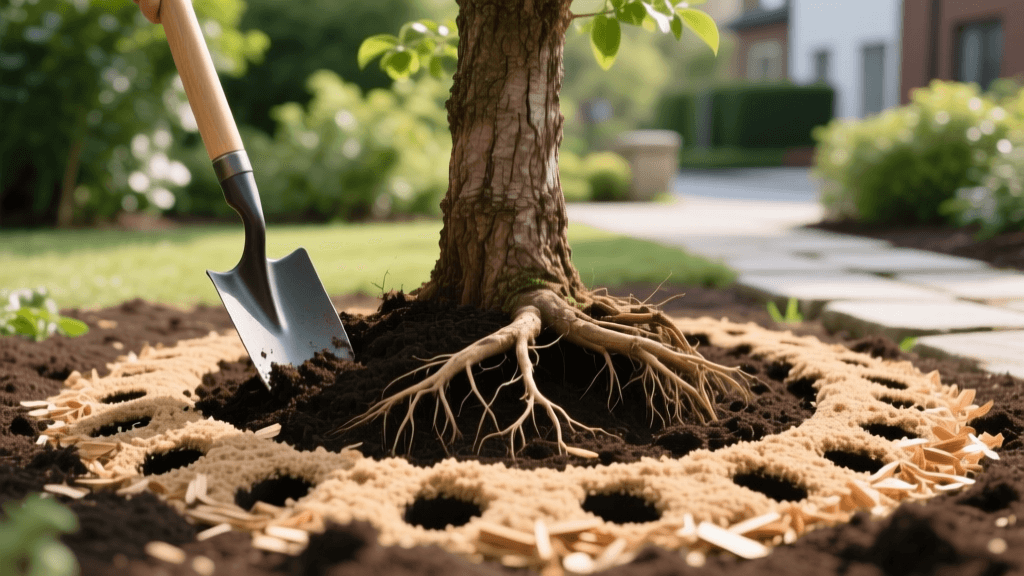
How to Fix Compacted Tree Soil Using Compost and Mulch
The Silent Killer: Understanding Soil Compaction
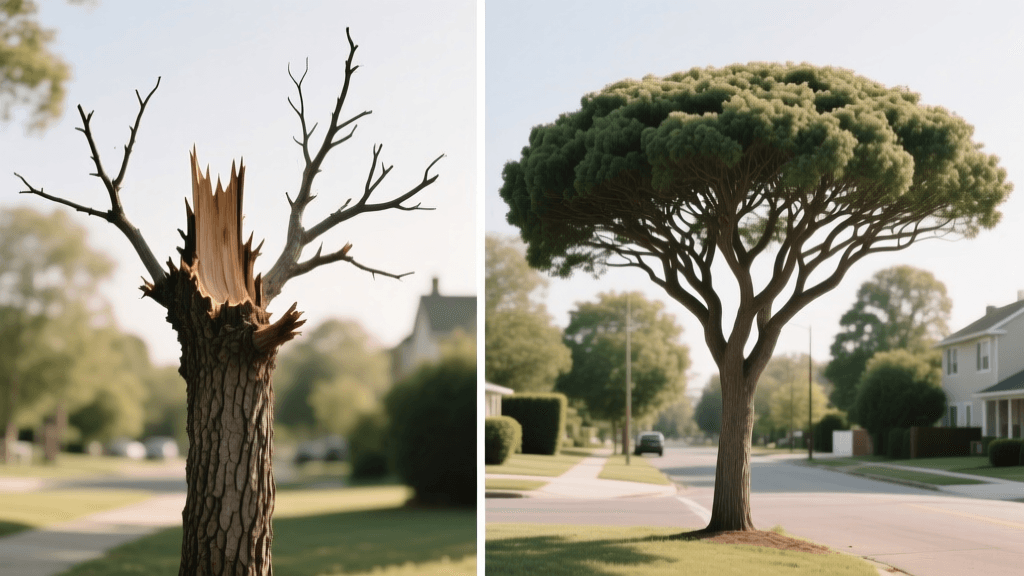
In urban and suburban landscapes, soil compaction is one of the most pervasive and destructive threats to tree health. When soil is compressed by foot traffic, heavy construction equipment, or even repeated lawn mowing, the vital pore spaces between soil particles are crushed. These macropores are essential for the movement of oxygen, water, and nutrients to the tree's fine, absorbing roots. According to The Morton Arboretum, compacted soil forces roots to grow closer to the surface in search of oxygen, making the tree highly susceptible to drought stress, physical damage, and windthrow.
Fortunately, arborists and soil scientists have developed highly effective methods to reverse this damage. By combining mechanical aeration techniques with targeted compost amendments, homeowners and landscape professionals can restore soil structure, boost microbial activity, and revitalize declining trees.
Signs Your Trees Are Suffering from Compacted Soil
Before investing time and materials into soil amendment, it is crucial to confirm that compaction is the underlying issue. Look for these primary indicators:
- Water Pooling: Water sits on the surface for hours after a rainstorm instead of percolating into the ground.
- Surface Root Proliferation: Roots are visibly breaking through the soil surface or wrapping around the trunk base.
- Canopy Thinning and Dieback: The tree produces smaller, sparser leaves, and branch dieback begins at the outer edges of the canopy.
- Early Fall Color: The tree exhibits stress-induced autumn coloration weeks earlier than surrounding, healthy trees.
- Hardpan Resistance: A manual soil probe or a simple screwdriver cannot easily be pushed more than a few inches into the ground.
The Science of Compost and Soil Structure
Compost is not merely a fertilizer; it is a profound soil conditioner. When incorporated into compacted soils, the organic matter in compost acts as a binding agent, encouraging tiny clay or silt particles to clump together into larger aggregates. This process, known as flocculation, recreates the macropores necessary for gas exchange and drainage. Furthermore, the USDA NRCS highlights that adding organic matter significantly increases the soil's Cation Exchange Capacity (CEC), allowing it to hold onto vital nutrients like calcium, magnesium, and potassium, preventing them from leaching away.
Step-by-Step Guide to Amending Compacted Tree Soils
Simply spreading compost on top of hard, compacted dirt will not solve deep-root issues. You must physically integrate the organic matter into the root zone. The most effective method for established trees is a combination of vertical mulching (radial trenching) and compost top-dressing.
Step 1: Assess the Root Zone and Clear the Area
Begin by removing any turfgrass, weeds, or old, matted mulch from the tree's root zone. Ideally, you want to work from about 3 feet away from the trunk out to the tree's drip line (the outer edge of the canopy). Removing competing grass eliminates a major barrier to water and nutrient penetration.
Step 2: Vertical Mulching and Radial Trenching
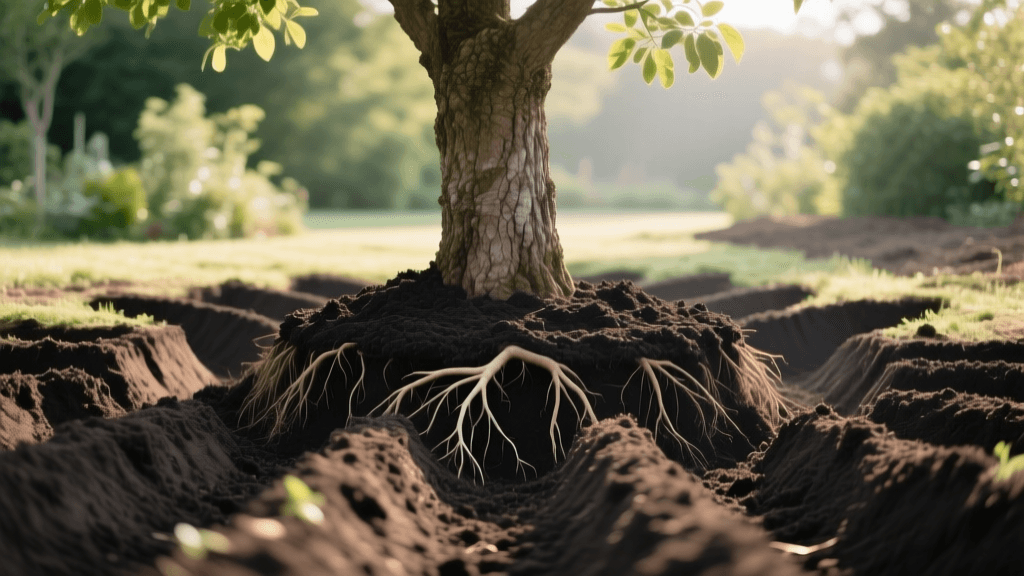
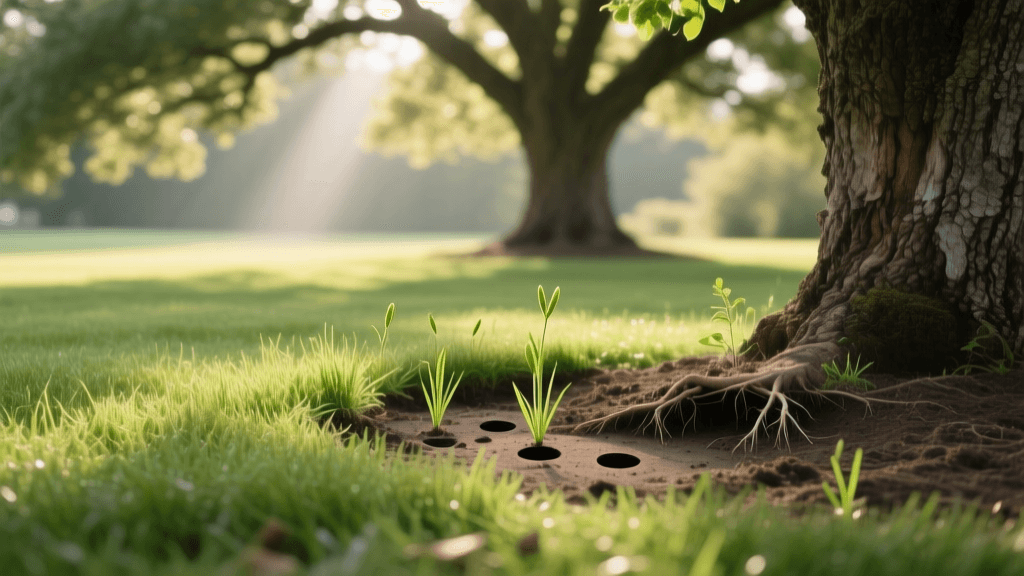
To bypass the compacted surface layer, you need to create vertical columns of loose, organic-rich soil. Using a 2-inch to 3-inch wide auger bit attached to a heavy-duty drill, or a manual post-hole digger, drill holes 8 to 12 inches deep into the soil. Space these holes in a concentric grid pattern, approximately 2 feet apart, starting 3 feet from the trunk and extending to the drip line. Avoid severing any roots larger than 2 inches in diameter; if you hit a major root, simply move the hole a few inches to the side.
Step 3: Filling the Trenches with Compost
Mix your chosen high-quality compost with a small amount of native soil and a mycorrhizal fungi inoculant. Shovel or pour this mixture into the vertical holes, packing it loosely. These compost-filled columns act as sponges, drawing water and oxygen deep into the subsoil while providing a hospitable environment for new fine root growth.
Step 4: Top-Dressing and Proper Mulching
Once the vertical holes are filled, apply a thin layer of compost—about 1/2 inch to 1 inch thick—over the entire exposed root zone. Follow this with 2 to 4 inches of coarse arborist wood chips. Crucial Rule: Never pile mulch or compost against the tree trunk. Leave a 6-inch bare ring around the base of the trunk to prevent bark rot and rodent damage, creating what arborists call the 'donut method'.
Compost Comparison Chart for Tree Care
Not all compost is created equal. Trees are highly sensitive to excess salts and raw nitrogen. Below is a comparison of common compost types to help you select the best amendment for your soil profile.
| Compost Type | Best For | Pros | Cons | Est. Cost / Cu. Yard |
|---|---|---|---|---|
| Leaf Mold Compost | Acid-loving trees (Oaks, Maples) | Excellent structure, low salt, high fungal dominance | Can be hard to source commercially | $40 - $65 |
| Aged Yard Waste | General urban tree care | Readily available, balanced nutrients, great bulk | Quality varies by municipality facility | $25 - $45 |
| Mushroom Compost | Alkaline-tolerant trees (Ash, Elm) | High calcium content, excellent water retention | High pH and soluble salts; can burn young roots | $30 - $50 |
| Vermicompost | Small trees, container trees, or root-zone injection | Extremely high microbial life, rich in humic acids | Very expensive; impractical for large-scale trenching | $150 - $300+ |
For most established landscape trees, a well-aged, OMRI-listed yard waste or leaf mold compost is the safest and most effective choice. Always avoid fresh manure or 'hot' composts, as the ammonia and high salt content will chemically burn the fine feeder roots.
Enhancing Compost with Mycorrhizal Fungi
To maximize the benefits of your compost, consider blending in a granular mycorrhizal fungi inoculant. As noted by researchers at the University of Minnesota Extension, mycorrhizae form a symbiotic relationship with tree roots, effectively extending the root system's reach by hundreds of times. These fungal hyphae penetrate micro-pores in compacted soil that roots cannot access, mining for water and phosphorus and trading them to the tree in exchange for carbohydrates. Applying this inoculant directly into your vertical mulch trenches ensures immediate root-to-fungi contact.
Tools and Estimated Cost Breakdown
Amending a mature tree's root zone is an investment in the longevity of your landscape. Here is a realistic breakdown of the tools and materials required for a medium-to-large tree (approx. 30-foot canopy spread):
- Manual Soil Probe or T-Handle: $40 - $80 (For initial compaction testing)
- Heavy-Duty Drill & 2-Inch Auger Bit: $150 - $250 (Or rent a gas-powered earth auger for $60/day)
- Premium Organic Compost (1-2 Cubic Yards): $40 - $90
- Coarse Arborist Wood Chips (2-3 Cubic Yards): $30 - $60 (Often available for free from local tree services)
- Mycorrhizal Inoculant (Granular): $25 - $50
Total estimated material and tool cost ranges from $150 to $400, depending on what equipment you already own and local material availability.
Seasonal Timing and Post-Treatment Watering
The optimal time to perform vertical mulching and compost amendment is during the tree's dormant season or just before its primary root-flush periods. Early spring (just before bud break) and early autumn (after leaf drop) are ideal. Performing this work in the heat of summer adds unnecessary stress to an already compromised tree.
Immediately after backfilling your compost trenches and applying the top-dressing and mulch, perform a deep, slow watering. Use a soaker hose or a root-feeder probe to apply at least 10 to 15 gallons of water per inch of trunk diameter. This initial watering settles the compost into the soil voids and activates the microbial life. Throughout the first growing season, monitor soil moisture weekly; the new compost columns will hold water longer than the surrounding native clay, so adjust your irrigation accordingly to prevent waterlogging.
Common Mistakes to Avoid
When attempting to remediate compacted soils, well-meaning gardeners often make critical errors that worsen the problem:
- Adding Sand to Clay: Never mix sand into heavy clay soil in an attempt to loosen it. Without massive amounts of organic matter, sand and clay combine to form a concrete-like substance that is entirely impenetrable to roots.
- Deep Rototilling: Do not use a rototiller under an established tree's canopy. This will indiscriminately shred the vital fine feeder roots located in the top 6 inches of soil, causing severe canopy dieback.
- Volcano Mulching: Piling compost and mulch high against the trunk traps moisture against the bark, inviting fungal pathogens and providing a winter haven for bark-girdling rodents.
Conclusion
Reversing soil compaction is not an overnight fix, but it is one of the most impactful interventions you can make for the health of your landscape trees. By utilizing vertical mulching to physically break through hardpan layers and introducing high-quality, biologically active compost, you rebuild the subterranean ecosystem your trees rely on. With proper timing, careful material selection, and consistent deep watering, your trees will reward your efforts with vigorous new growth, enhanced drought tolerance, and decades of structural stability.