Tree Care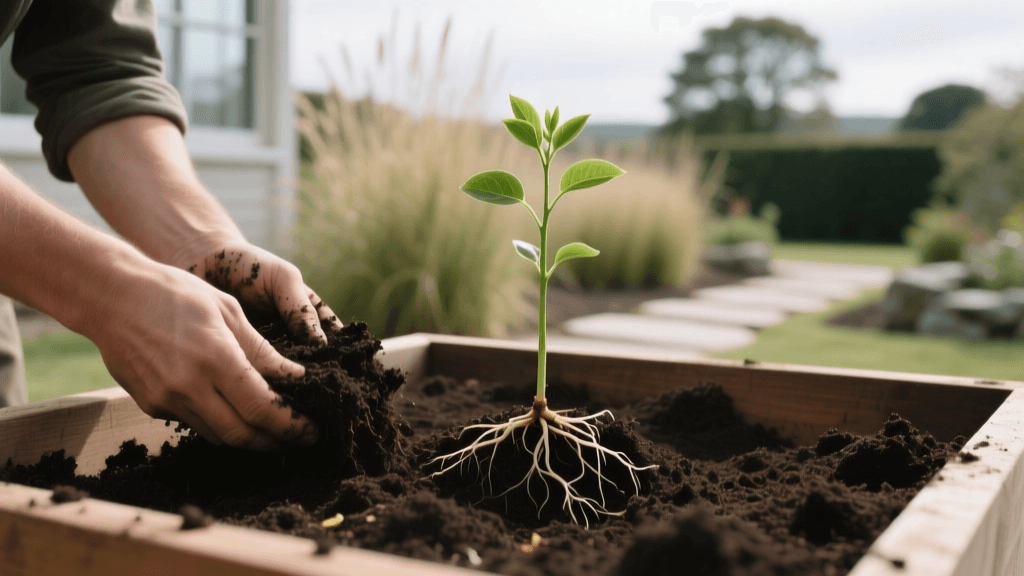
How to Amend Soil for Tree Planting Using Compost
The Foundation of Tree Health: Soil Biology and Compost
Trees are the cornerstone of any thriving landscape, providing shade, improving air quality, and increasing property value. However, the success of a newly planted tree or the revitalization of a struggling mature tree rarely depends on the plant itself. Instead, it hinges on the invisible ecosystem beneath the surface: the soil food web. For decades, the landscaping industry focused heavily on synthetic N-P-K (nitrogen, phosphorus, and potassium) fertilizers. Today, modern arboriculture and soil science emphasize that long-term tree health is rooted in soil biology, structure, and organic matter. This is where compost becomes an indispensable tool in your tree care arsenal.
Compost is not merely a fertilizer; it is a soil conditioner and a biological inoculant. When incorporated correctly, it improves soil aggregation, enhances moisture retention in sandy soils, and increases drainage in heavy clay soils. More importantly, high-quality compost introduces billions of beneficial microorganisms, including mycorrhizal fungi, which form symbiotic relationships with tree roots. These fungal networks act as extensions of the root system, mining the soil for water and micronutrients that the tree could not access on its own.
Testing Your Soil Before Amending
Before you purchase compost or dig a single hole, it is critical to understand your baseline soil conditions. Amending soil blindly can lead to nutrient lockouts, pH imbalances, and poor root establishment. Start by conducting a basic percolation test and a professional soil analysis.
The Percolation Test
Drainage is the single most important physical characteristic of soil for tree survival. Most tree species will perish in waterlogged, anaerobic conditions. To test your drainage:
- Dig a test hole approximately 12 inches deep and 12 inches wide in the planting area.
- Fill the hole completely with water and allow it to drain overnight. This pre-soaks the surrounding soil.
- Refill the hole with water the next morning and use a ruler to measure the water level.
- Measure the drop in water level every hour for three hours. Ideal drainage for most trees is a drop of 1 to 3 inches per hour. If the water drops less than 1 inch per hour, you have heavy clay or severe compaction. If it drops more than 6 inches per hour, you have excessively sandy soil.
Chemical Soil Testing
Send a soil sample to your local university cooperative extension office. You are looking for a pH between 6.0 and 7.0, which is the optimal range for nutrient availability in most shade and ornamental trees. The test will also reveal baseline levels of phosphorus, potassium, and organic matter percentage, guiding your compost application rates.
Step-by-Step Guide to Amending Soil with Compost
When preparing a site for a new tree, the goal is to encourage roots to expand outward into the native soil, rather than staying confined to a highly amended planting hole. Here is the proven methodology for incorporating compost during tree planting.
Step 1: Proper Excavation
Dig a planting hole that is two to three times the width of the tree’s root ball, but no deeper than the root ball itself. The root flare (the point where the trunk widens and transitions into roots) must sit slightly above the surrounding grade to prevent trunk rot and girdling roots.
Step 2: The Mixing Ratio
The most common mistake homeowners make is filling the planting hole with 100% compost or potting soil. This creates a drastic textural interface between the loose hole and the dense native soil.
According to the University of Minnesota Extension, amending the backfill soil with excessive organic matter can create a "bathtub" effect, where water pools in the loose compost rather than draining into the surrounding native clay, leading to root rot.
To avoid this, use a strict mixing ratio. For heavy clay or highly compacted urban soils, mix native soil with compost at a ratio of 80% native soil to 20% compost by volume. For moderately loamy soils, a 90% native to 10% compost ratio is sufficient. Thoroughly blend the compost and native soil on a tarp before backfilling.
Step 3: Backfilling and Watering
Shovel the blended soil back into the hole in 4-inch layers, tamping down lightly with your hands or the handle of your shovel to eliminate large air pockets. Avoid using your foot to stomp the soil, as this destroys the soil structure and compacts the pore spaces needed for oxygen. Once filled, water the tree deeply with at least 15 to 20 gallons to settle the soil around the roots.
Choosing the Right Compost for Trees
Not all compost is created equal. The feedstock used to create the compost dictates its nutrient profile, pH, and biological activity. Below is a comparison chart to help you select the best product for your specific tree care needs.
| Compost Type | Pros | Cons | Best Use Case |
|---|---|---|---|
| Leaf Mold | High in fungal biomass; excellent for moisture retention; slightly acidic. | Low in immediate N-P-K nutrients; takes 1-2 years to produce at home. | Ideal for acid-loving trees (Oaks, Maples, Pines) and top-dressing established woodland gardens. |
| Manure-Based | High nutrient content; heats up quickly; widely available. | Can contain high salts; risk of weed seeds if not properly hot-composted; high pH. | Best for heavy-feeding fruit trees or revitalizing severely depleted agricultural soils. |
| Municipal Yard Waste | Cost-effective; sustainable; good balanced biology. | Quality varies wildly by municipality; potential for herbicide carryover (aminopyralids). | General-purpose backfill amendment for shade trees and large-scale landscape renovations. |
| Pine Bark Fines | Improves drainage in clay; resists compaction; long-lasting. | Very slow to break down; ties up nitrogen during initial decomposition. | Excellent for structural soil amendment in heavy clay; often mixed with leaf mold. |
Sourcing and Costs: Bulk vs. Bagged
Understanding the economics of compost will help you budget for larger tree planting projects. If you are planting a single specimen tree, bagged compost from a local garden center is convenient. Expect to pay between $4.00 and $8.00 per cubic foot for premium bagged organic compost. However, if you are planting a privacy screen, an orchard, or amending a large berm, buying in bulk is vastly more economical.
Bulk compost is typically sold by the cubic yard (27 cubic feet) and delivered by local landscape supply yards. Prices generally range from $30 to $60 per cubic yard, depending on the quality and your proximity to the facility. When buying bulk, always ask the supplier for their compost testing analysis to ensure it is fully finished (cured) and free of persistent herbicides. Uncured compost will rob the soil of nitrogen and generate excess heat, which can literally cook your tree’s tender new roots.
Top-Dressing Established Trees
You do not need to dig up the soil to improve it. For trees that are already established, incorporating compost into the root zone is achieved through top-dressing and vertical mulching. The soil food web is highly efficient at pulling organic matter downward.
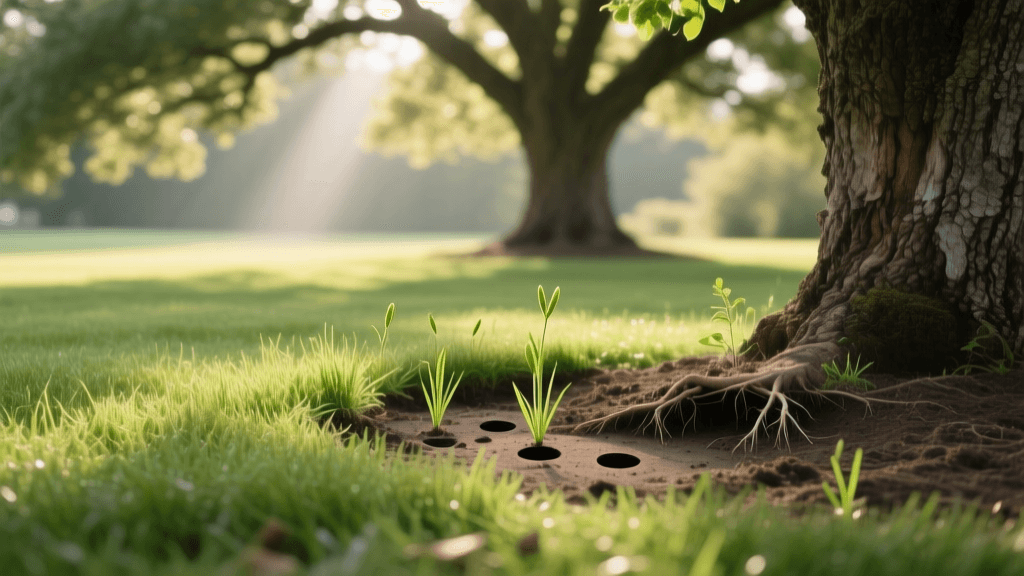
To top-dress, apply a 1/2-inch to 1-inch layer of high-quality, screened compost directly over the soil surface, starting a few inches away from the trunk and extending out to the tree’s dripline (the outer edge of the canopy). Earthworms, ground beetles, and rain will naturally incorporate the organic matter into the topsoil over the course of a season. For severely compacted soils, use a 2-inch auger bit to drill holes 8 inches deep throughout the dripline, fill those holes with compost, and then top-dress the surface. This technique, known as vertical mulching, delivers oxygen and biology directly to the deeper root zones.
Common Mistakes to Avoid
Even with the best intentions, homeowners often make critical errors when combining compost and tree care. Avoid these common pitfalls:
- Volcano Mulching: Piling compost or mulch high against the tree trunk. This keeps the bark constantly moist, inviting fungal pathogens, rot, and girdling roots. The Clemson University Home & Garden Information Center explicitly warns against burying the root flare and applying any organic matter directly against the trunk.
- Over-Amending: Using more than 25% compost by volume in the planting hole. This discourages roots from venturing into the native soil, making the tree highly susceptible to drought and windthrow later in life.
- Using Unfinished Compost: Applying compost that still smells like ammonia or contains recognizable food scraps. This material is still actively decomposing and will tie up vital soil nitrogen, starving your tree.
Long-Term Maintenance and Seasonal Timing
Timing your compost applications correctly maximizes the biological benefits. The best time to amend soil for new tree planting is in the early fall or early spring, when soil temperatures are moderate and moisture levels are consistent. Avoid planting and heavy amending during the heat of summer or when the ground is frozen solid in winter.
For ongoing maintenance, an annual top-dressing of compost in the late fall, followed by a layer of coarse arborist wood chips, mimics the natural forest floor. For long-term care, the Morton Arboretum recommends maintaining a 2 to 4-inch layer of organic mulch over the root zone to slowly feed the soil food web as it breaks down, regulating soil temperature and suppressing competing turf grass.
By shifting your focus from simply feeding the tree to feeding the soil ecosystem, you build a resilient, drought-tolerant, and disease-resistant landscape. Compost is the bridge between dead dirt and living soil, ensuring your trees thrive for generations to come.