
Landscaping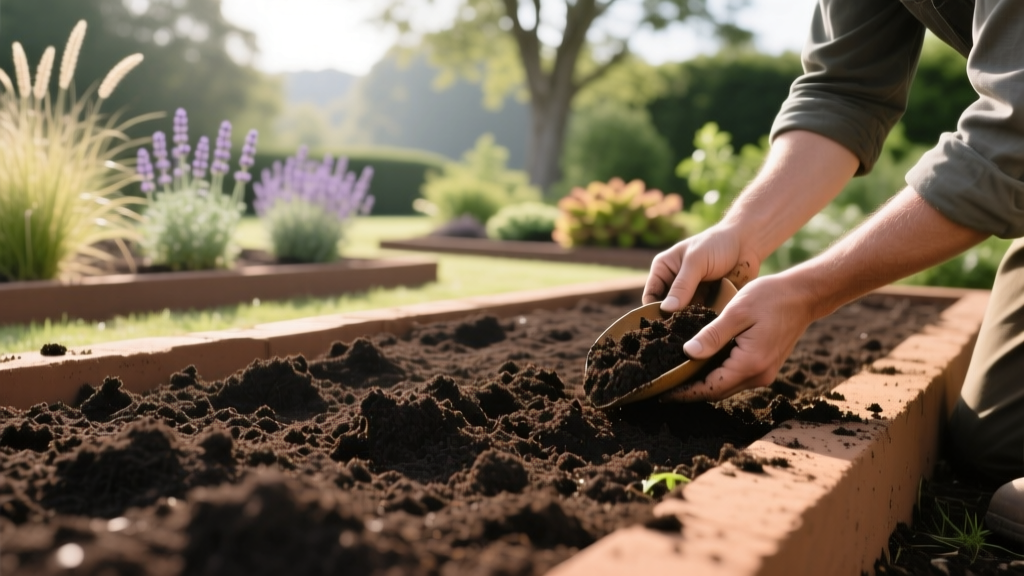
Transforming Heavy Clay Soil With Compost For Landscapes
Lisa ThompsonPublished
The Unique Challenges of Landscaping in Clay Soil
Landscaping in heavy clay soil often feels like an exercise in frustration for homeowners and garden enthusiasts alike. Clay soils are composed of microscopic, plate-like particles that bind tightly together, creating a dense, impermeable matrix. While clay is naturally rich in essential minerals and boasts a high cation exchange capacity (CEC)—meaning it can hold onto nutrients exceptionally well—its physical structure presents severe limitations for landscape plantings.
During heavy rains, clay soils drain poorly, leading to waterlogged root zones that suffocate plants and promote root rot diseases like Phytophthora. Conversely, during dry summer months, clay shrinks and cracks, forming a concrete-like surface that repels water and makes manual weeding or planting nearly impossible. Furthermore, clay soils are highly susceptible to compaction from foot traffic and heavy equipment, which further restricts root penetration and oxygen exchange. To establish thriving landscape beds, ornamental trees, and perennial gardens, you must fundamentally alter the soil structure. The most effective, sustainable, and biologically active method for achieving this is through the strategic incorporation of high-quality compost.
The Science of Compost as a Clay Amendment
Compost is not merely a fertilizer; it is a powerful soil conditioner. According to research from the Cornell Soil Health Laboratory, the addition of organic matter to heavy clay initiates a process called flocculation. Organic acids and fungal hyphae present in mature compost act as a biological glue, binding tightly packed clay particles together into larger, porous clusters known as aggregates.
These aggregates create vital macro-pores in the soil profile, dramatically improving water infiltration, drainage, and aeration. Simultaneously, the micro-pores within the aggregates retain moisture and nutrients, making them available to plant roots over time. Beyond physical improvements, compost introduces a thriving microbiome of beneficial bacteria, mycorrhizal fungi, and nematodes. This soil food web breaks down organic matter, cycles nutrients, and even suppresses soil-borne pathogens, creating a resilient foundation for your landscape design.
Step-by-Step Guide to Amending Clay Landscape Beds
Step 1: Test Your Soil Before Amending
Before purchasing compost, submit a soil sample to your local university cooperative extension office. A standard soil test will reveal your current pH, baseline organic matter percentage, and nutrient levels. Clay soils often lean alkaline; knowing your exact pH helps you select the right plants and determine if you need to apply elemental sulfur alongside your compost to lower the pH for acid-loving landscape shrubs.
Step 2: Choose the Right Compost
Not all compost is created equal. For landscape beds, you need fully decomposed, mature compost that is dark brown, crumbly, and smells earthy. Avoid raw manure, which can burn plant roots and introduce weed seeds, and avoid 'topsoil blends' that may contain high amounts of unamended clay or sand.
- Bulk Municipal Compost: Sourced from local city yard-waste facilities. It is highly cost-effective, typically ranging from $30 to $50 per cubic yard, and excellent for large-scale landscape bed preparation.
- Bagged Premium Compost: Brands like Espoma Organic Land & Garden Compost or Black Kow Composted Cow Manure are excellent for smaller, raised landscape beds or container plantings. Expect to pay $4 to $8 per cubic foot bag.
Ensure your compost is OMRI-listed if you are integrating edible landscaping elements into your ornamental beds.
Step 3: Calculate Application Rates
The goal for initial landscape bed preparation is to achieve a soil profile containing 5% to 10% organic matter by volume. For heavy clay, this generally requires applying a 2-inch to 3-inch layer of compost over the entire planting area before incorporation. According to guidelines published by Penn State Extension, applying more than 3 inches at one time can create a distinct textural boundary that impedes water movement and root growth.
Step 4: Incorporate the Compost Properly
Never till or dig heavy clay when it is wet; doing so destroys the fragile soil structure and creates hard, impenetrable clods upon drying. Wait until the soil is moist but crumbly (field capacity). Spread your compost evenly, then use a garden broadfork or a rear-tine rototiller to incorporate the organic matter to a depth of 6 to 8 inches. A broadfork is often preferred in landscape settings as it fractures the clay and mixes the compost without completely inverting the soil layers, thereby preserving the existing microbial ecology.
Compost Application Rates and Cost Breakdown
Use the table below to estimate the volume of bulk compost required for your specific landscape project and the associated material costs.
| Landscape Bed Size | Target Compost Depth | Cubic Yards Needed | Est. Bulk Cost ($40/cu yd) |
|---|---|---|---|
| 100 sq. ft. (e.g., 10x10) | 2 inches | 0.62 cu. yds. | $25.00 |
| 250 sq. ft. (e.g., 10x25) | 2 inches | 1.54 cu. yds. | $62.00 |
| 500 sq. ft. (e.g., 20x25) | 3 inches | 4.63 cu. yds. | $185.00 |
| 1,000 sq. ft. (Large Yard) | 3 inches | 9.26 cu. yds. | $370.00 |
Note: Always order 10% extra bulk compost to account for settling and uneven grading.
Long-Term Soil Maintenance and Mulching
Amending clay soil is not a one-time event; it is an ongoing process. Organic matter decomposes and is consumed by soil biology over time. To maintain the improved structure of your landscape beds, you must replenish the organic matter annually.
Pro-Tip: Instead of tilling compost into established beds every year, which can damage the roots of your perennials and shrubs, practice 'top-dressing'. Apply a half-inch layer of screened compost over the soil surface in late fall or early spring. Earthworms and soil microbes will naturally incorporate the organic matter into the clay profile below.
Furthermore, always maintain a 2-inch to 3-inch layer of organic mulch, such as shredded hardwood bark or arborist wood chips, over your landscape beds. As noted by the Environmental Protection Agency (EPA), organic mulches slowly break down, mimicking the natural forest floor, suppressing weeds, regulating soil temperature, and providing a continuous, slow-release food source for your soil microbiome. Keep mulch a few inches away from the base of tree trunks and shrub stems to prevent moisture buildup and rot.
Best Landscape Plants for Amended Clay Soil
Even with heavy compost amendment, clay soils will retain more moisture than sandy loams. Selecting plants that are naturally adapted to these conditions will ensure long-term landscape success. Consider integrating the following resilient species into your amended clay beds:
- Red Twig Dogwood (Cornus sericea): A stunning multi-stemmed shrub that thrives in moisture-retentive soils and provides brilliant winter interest.
- Switchgrass (Panicum virgatum): A deep-rooted native ornamental grass whose root system further helps to break up subsurface clay compaction.
- Astilbe (Astilbe x arendsii): Perfect for shaded landscape beds, Astilbe loves the consistent moisture that amended clay provides.
- Black-Eyed Susan (Rudbeckia fulgida): A tough, drought-tolerant perennial that handles heavy soils beautifully once established.
- Viburnum (Viburnum dentatum): The Arrowwood Viburnum is highly adaptable to clay and provides excellent privacy screening and wildlife habitat.
Conclusion
Transforming heavy clay soil into a fertile, well-draining canvas for your landscape requires patience, physical effort, and a generous application of compost. By understanding the science of soil aggregation, calculating precise application rates, and committing to long-term organic maintenance, you can turn the most stubborn clay into a thriving, vibrant landscape that enhances your property's curb appeal and ecological value for decades to come.

