
Landscaping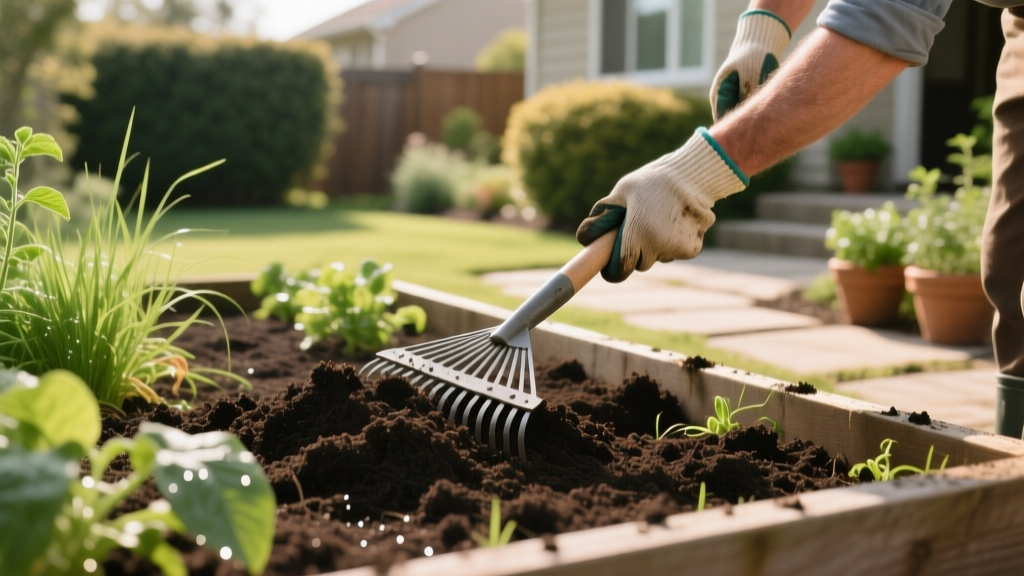
Amending Landscape Soil with Compost for Garden Beds
Sarah ChenPublished
The Foundation of Landscape Design: Soil Health
When planning a landscape renovation, it is easy to become captivated by the visual elements: the vibrant colors of perennial garden beds, the structural elegance of hardscaping, and the lush density of a newly seeded lawn. However, the true success of any landscaping project lies beneath the surface. Soil health is the invisible engine that drives plant vitality, drainage efficiency, and long-term ecosystem sustainability. Without a robust soil food web and proper physical structure, even the most expensive specimen plants will struggle to thrive.
The most effective, sustainable, and cost-efficient way to elevate your landscape soil is through the strategic application of compost. Compost is not merely a fertilizer; it is a complex soil conditioner that improves texture, increases water retention, and inoculates your garden beds with beneficial microorganisms. According to the United States Environmental Protection Agency (EPA), composting enriches soil, helping to retain moisture and reduce the need for chemical fertilizers, while simultaneously promoting a diverse and healthy soil microbiome.
The Science of Compost in Landscape Soils
To understand why compost is indispensable, we must look at the physical and chemical properties of soil. Most residential landscapes suffer from compromised soil due to construction compaction, topsoil removal, and years of chemical maintenance. This leaves behind heavy clay that restricts root growth, or sandy soil that drains too quickly to hold nutrients.
Compost acts as a universal moderator. In heavy clay soils, the organic matter in compost binds with clay particles to form aggregates, a process called flocculation. This creates microscopic air pockets that improve drainage and allow roots to breathe. In sandy soils, compost acts like a sponge, increasing the soil's Cation Exchange Capacity (CEC) and allowing it to hold onto water and essential nutrients that would otherwise leach away. Furthermore, compost introduces mycorrhizal fungi and beneficial bacteria that form symbiotic relationships with plant roots, extending their reach and protecting them from soil-borne pathogens.
Choosing the Right Compost for Your Garden Beds
Not all compost is created equal. The feedstock used to create the compost dictates its nutrient profile, texture, and best use case in the landscape. Below is a comparison of the most common types of compost available for landscaping projects.
| Compost Type | Best Landscape Use | Nutrient Profile | Pros & Cons |
|---|---|---|---|
| Plant-Based (Yard Waste) | General garden beds, top-dressing lawns | Balanced, low NPK | Pros: Weed-seed free, great structure. Cons: Lower immediate nutrient boost. |
| Manure-Based | Vegetable gardens, heavy-feeding perennials | High Nitrogen | Pros: Excellent fertility. Cons: Can burn plants if not fully aged; odor. |
| Leaf Mold | Woodland gardens, acid-loving plants | Low NPK, high calcium | Pros: Superb water retention, fungal dominant. Cons: Takes years to produce at home. |
| Municipal Biosolids | Turf establishment, large-scale grading | Very High NPK | Pros: Cheap, abundant. Cons: Risk of heavy metals; not for edible beds. |
Calculating Compost Application Rates
One of the most common mistakes in landscape soil amendment is applying too little compost to make a meaningful difference, or applying too much and smothering plant crowns. The ideal application rate depends on whether you are establishing a new garden bed or maintaining an existing one.
For New Garden Beds: You should aim to incorporate 2 to 3 inches of compost into the top 6 to 8 inches of native soil. This creates a transition zone that encourages deep root penetration.
For Existing Beds (Top-Dressing): Apply a thin layer of 1/4 to 1/2 inch of finely screened compost over the soil surface, carefully pulling it away from the immediate base of woody shrubs and tree trunks to prevent rot.
The Cubic Yard Formula: To purchase the correct amount of bulk compost, use this standard landscaping formula:
(Square Footage × Desired Depth in Inches) ÷ 324 = Cubic Yards Needed
For example, a 200-square-foot garden bed requiring 2 inches of compost would need: (200 × 2) ÷ 324 = 1.23 cubic yards. Always round up to the nearest half-yard when ordering from a landscape supply center.
Step-by-Step Guide to Amending New Landscape Beds
When breaking new ground for a hardscape border or a perennial garden, proper soil preparation is critical. Follow these steps to ensure optimal integration:
- Test Your Soil: Before adding amendments, conduct a baseline soil test to determine your native pH and nutrient levels. Compost generally buffers pH toward a neutral 6.5, but knowing your starting point is crucial.
- Clear and Loosen: Remove all existing turf, weeds, and debris. Use a broadfork or a rototiller to break up the top 6 inches of compacted native soil.
- Spread the Compost: Dump your calculated volume of compost over the loosened soil and spread it evenly with a landscape rake.
- Incorporate: Till or fork the compost into the native soil. The goal is to create a homogenous blend so roots do not encounter a sudden textural change, which can cause water to pool at the soil horizon boundary.
- Water and Settle: Water the newly amended bed deeply and allow it to settle for 1 to 2 weeks before planting. This prevents air pockets from collapsing and exposing plant roots later.
Top-Dressing and the No-Till Philosophy
While tilling is appropriate for brand-new beds, it is highly detrimental to established landscapes. The USDA Natural Resources Conservation Service (NRCS) heavily advocates for minimizing soil disturbance to protect the complex fungal networks and soil aggregates that naturally develop over time. Tilling destroys these networks, brings dormant weed seeds to the surface, and accelerates the oxidation of existing organic matter.
For existing garden beds, practice top-dressing. Simply lay your 1/2 inch of compost over the soil surface in early spring or late fall. Earthworms, ground beetles, and rain will naturally incorporate the organic matter into the soil profile without disrupting the delicate soil food web. This mimics the natural process of a forest floor, where organic matter drops and decomposes in place.
Bulk vs. Bagged Compost: A Cost Analysis
Landscaping on a budget requires smart purchasing decisions. When amending large areas, the difference between bulk and bagged compost is substantial.
- Bulk Compost: Purchased from local landscape supply yards, bulk compost typically costs between $30 and $50 per cubic yard. One cubic yard covers approximately 160 square feet at a 2-inch depth. Delivery fees usually range from $50 to $100 depending on your distance from the supplier.
- Bagged Compost: A standard bag of compost contains about 1.5 cubic feet and costs $5 to $8 at big-box hardware stores. It takes roughly 18 bags to equal a single cubic yard, bringing the cost to $90–$144 per cubic yard. Bagged compost is only economical for tiny raised beds or container gardening.
Long-Term Soil Maintenance Strategies
Amending your soil with compost is not a one-time fix; it is an ongoing commitment to landscape ecology. Organic matter is continuously consumed by soil microbes and broken down by plant roots. To maintain optimal soil health, you must replenish the system.
The University of Minnesota Extension recommends leaving grass clippings on the lawn, utilizing fallen leaves as mulch in garden beds, and applying a fresh layer of compost annually. Additionally, planting cover crops like winter rye or crimson clover in empty vegetable beds prevents erosion and adds fresh green manure to the soil when turned under in the spring.
By prioritizing soil health and utilizing compost as your primary landscape amendment, you reduce water usage, eliminate the need for synthetic fertilizers, and create a resilient, thriving outdoor living space that improves year after year. A beautiful landscape is simply the reflection of the healthy soil beneath it.

