Pest Control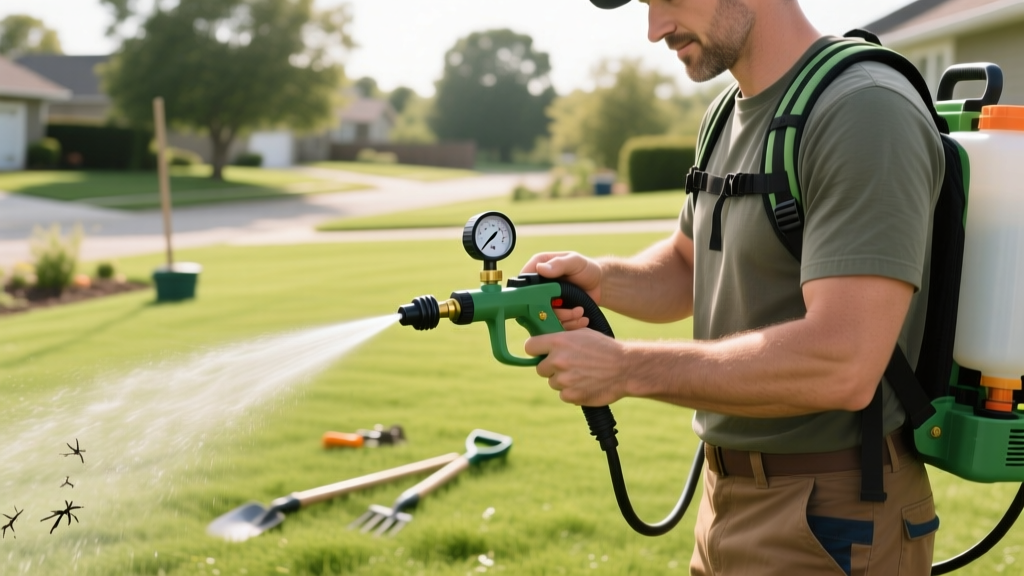
The Ultimate Backpack Sprayer Guide for Lawn Pest Control
Anna KowalskiPublished
When it comes to integrated pest management (IPM) and targeted lawn care, the tools you use are just as important as the products you apply. While hose-end sprayers and granular spreaders have their place, the backpack sprayer remains the undisputed workhorse for precise, effective, and environmentally responsible pest control. Whether you are targeting grubs, treating for chinch bugs, or applying a localized fungicide, mastering your backpack sprayer is essential for a healthy lawn.
Why a Backpack Sprayer is Essential for IPM
Integrated Pest Management emphasizes targeted, minimal-risk interventions. Broadcast spraying an entire lawn with a hose-end attachment often leads to chemical runoff, wasted product, and unnecessary environmental exposure. A high-quality backpack sprayer allows you to control the exact volume, pressure, and droplet size of your application. This precision ensures that the active ingredient reaches the soil surface or the leaf blade exactly where the pest resides, maximizing efficacy while minimizing ecological impact.
Key Features to Look For When Buying
Not all sprayers are created equal. When investing in equipment for lawn pest control, look beyond the price tag and focus on durability, chemical resistance, and ergonomic design.
Tank Capacity and Material
For most residential lawns, a 2-gallon to 4-gallon tank is the sweet spot. A 4-gallon tank fully loaded weighs over 35 pounds, which can cause fatigue during long applications. Look for tanks made from High-Density Polyethylene (HDPE) with UV inhibitors to prevent sun degradation. Translucent tanks with clear, molded-in graduation marks are highly recommended so you can easily monitor your liquid levels without opening the lid.
Seals and Gaskets: The Viton Advantage
The most common point of failure on a sprayer is the degradation of O-rings and seals. Standard rubber seals will quickly break down when exposed to harsh pesticides, herbicides, and solvents. Always choose a sprayer equipped with Viton (fluorocarbon) seals. Viton is highly resistant to chemical corrosion and will significantly extend the lifespan of your equipment.
Pump Mechanism and Wand
Look for a sprayer with an internal or external pump that can be switched for left- or right-handed operation. A padded shoulder strap and a contoured tank back will reduce fatigue. The wand should be made of stainless steel or fiberglass, featuring a shut-off valve with a locking trigger to prevent accidental drips when moving between treatment zones.
Understanding Nozzles and Spray Patterns
The nozzle is the most critical component of your sprayer. It dictates the spray pattern, droplet size, and application rate. Using the wrong nozzle can lead to poor pest control or dangerous chemical drift. Industry-standard brands like TeeJet offer color-coded nozzles that correspond to specific flow rates at varying pressures.
| Nozzle Type | Spray Pattern | Best Used For | Droplet Size |
|---|---|---|---|
| Flat Fan (e.g., TeeJet 8002) | Tapered oval | Broadleaf weed control, uniform soil drenching | Medium to Fine |
| Adjustable Cone | Circular (hollow or solid) | Spot treatments, shrub drenching, perimeter pest barriers | Variable |
| Flood Jet | Wide, flat fan | Soil insecticides, heavy drenching with minimal drift | Very Coarse |
| Pinpoint Wand | Direct stream | Injecting into borer holes, crack and crevice treatments | N/A (Stream) |
For general lawn pest control, such as applying a liquid grub preventative or a surface insecticide for ticks and fleas, a flat fan nozzle is usually the best choice. It provides even coverage across the turf canopy and soil surface.
The Critical Step: Sprayer Calibration
Calibration is the process of determining exactly how much liquid your sprayer applies over a specific area. Over-applying pesticides is illegal, wastes money, and harms the environment. Under-applying fails to control the pest and accelerates chemical resistance. According to turfgrass experts, failing to calibrate is the number one mistake homeowners make.
The 1/128th of an Acre Method
This is the most straightforward calibration method for backpack sprayers. Because there are 128 ounces in a gallon, if you measure an area that is exactly 1/128th of an acre, the number of ounces of water you spray equals the number of gallons you will apply per full acre.
- Measure the Test Area: Mark off an area of 340 square feet (which is roughly 1/128th of an acre). A 17 ft x 20 ft rectangle works perfectly.
- Fill with Water: Fill your sprayer with clean water only. Record the starting water level.
- Spray the Area: Walk at your normal, steady application pace, pumping to maintain a consistent pressure (usually around 40 PSI). Spray the 340 sq. ft. area just as you would apply a pesticide.
- Measure the Output: Pour water back into the tank using a measuring cup to bring it back to the original starting line. The number of fluid ounces it takes to refill the tank is your application rate in gallons per acre (GPA).
- Calculate the Mix: If your test used 20 ounces of water, your sprayer outputs 20 GPA. If the pesticide label calls for 1 oz of product per 1,000 sq. ft., you will need to mix the product accordingly for your tank size based on that 20 GPA output.
"Always calibrate your sprayer with clean water before adding any chemical concentrates. Water is safe, free, and behaves similarly to most liquid pesticide solutions in terms of viscosity and flow rate."
Essential Safety Equipment (PPE)
Handling concentrated pesticides requires strict adherence to safety protocols. The minimum Personal Protective Equipment (PPE) required for any application is explicitly listed on the product label. The Environmental Protection Agency (EPA) mandates that applicators follow these label instructions as a matter of federal law.
At a minimum, your pest control toolkit should include:
- Chemical-Resistant Gloves: Use unlined nitrile or neoprene gloves. Never use leather or cotton gloves, as they will absorb chemicals and hold them against your skin.
- Eye Protection: Tight-fitting chemical splash goggles are necessary to protect against pressurized drips or accidental splashes during mixing.
- Respiratory Protection: If the label requires it, use an NIOSH-approved respirator with the appropriate organic vapor cartridges. The National Institute for Occupational Safety and Health (NIOSH) provides extensive guidelines on selecting the correct respiratory protection for agricultural and residential chemicals.
- Apparel: Long sleeves, long pants, and chemical-resistant boots. Wash application clothing separately from your regular household laundry.
Cleaning, Storage, and Maintenance
Proper maintenance ensures your equipment lasts for years and prevents cross-contamination between herbicides and insecticides. Never use a sprayer that previously held a broadleaf herbicide (like 2,4-D) to apply a lawn insecticide near sensitive flower beds, as trace residues can severely damage ornamental plants.
The Triple-Rinse Method
After every use, perform a triple-rinse to clean the tank, wand, and nozzle.
- Drain any leftover solution into a designated safe disposal area or use it on a labeled site.
- Fill the tank 1/4 full with clean water, add a few drops of mild dish soap, and shake vigorously. Spray the soapy water through the wand to clean the internal plumbing.
- Repeat this process twice more with clean water only.
- Remove the nozzle tip and filter screen, rinsing them separately with a soft brush.
Winterizing Your Sprayer
Freezing temperatures will crack HDPE tanks and ruin pump cylinders. Before storing your sprayer for the winter, ensure it is completely dry. Pump the handle several times with the lid off to force water out of the internal tubes. Store the sprayer in a climate-controlled garage or shed, out of direct sunlight, with the cap slightly loosened to allow for air circulation. Always read and follow the manufacturer's storage guidelines, and consult the EPA's guide on reading pesticide labels for proper disposal of any leftover chemicals before winter storage.
By investing in the right backpack sprayer, mastering nozzle selection, and committing to rigorous calibration and safety standards, you elevate your lawn care from simple guesswork to professional-grade integrated pest management.