Gardening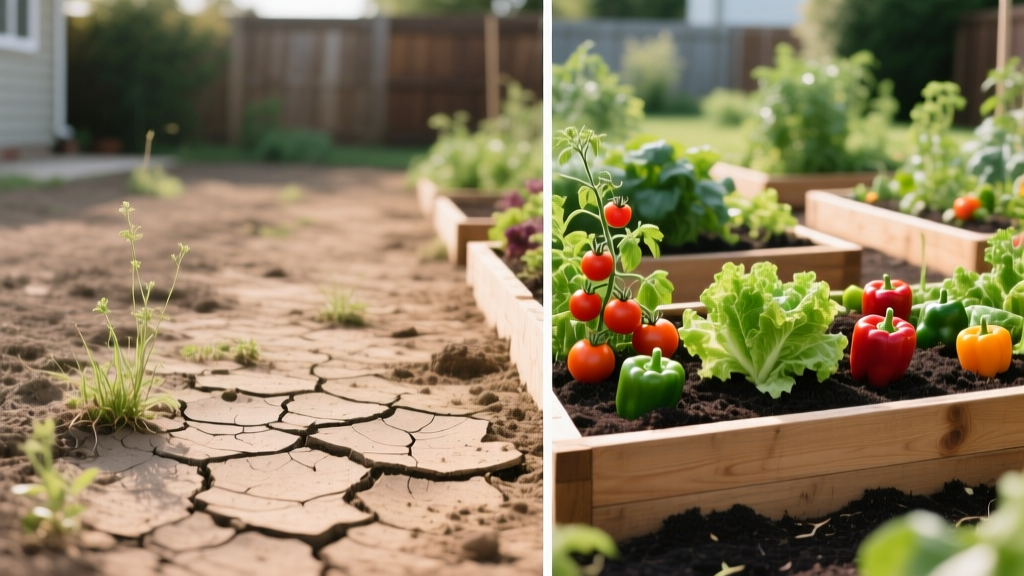
Backyard Garden Transformation: Barren Clay to Raised Beds
Robert HayesPublished
The 'Before': Diagnosing a Dead Zone
Every passionate gardener knows the deep frustration of looking out at a backyard that refuses to cooperate. Two years ago, our 400-square-foot backyard gardening patch was what we affectionately called a 'dead zone.' It was a barren, compacted expanse of heavy clay soil left behind by home builders. During the spring rains, it turned into an impenetrable swamp that held puddles for days. By mid-July, the sun baked it into a cracked, concrete-like surface that snapped the tines off our garden forks. We attempted to grow tomatoes and bell peppers directly in the ground during our first year, but the results were dismal. The plants suffered from severe blossom end rot, stunted root growth, and a relentless invasion of bindweed. The soil simply lacked the drainage, aeration, and biological activity required to support a thriving vegetable garden.
Assessing the Damage: Why In-Ground Gardening Failed
Before we could transform the space, we needed to understand exactly why our initial efforts failed. We conducted a simple percolation test by digging a hole 12 inches deep and 12 inches wide, filling it with water, and timing the drainage. It took over 14 hours for the water to fully absorb. According to the University of Minnesota Extension, heavy clay soils suffer from poor porosity, which suffocates plant roots and promotes fungal diseases. Furthermore, a soil test from our local cooperative extension revealed a pH of 7.8 (highly alkaline) and a severe lack of organic matter. Amending this native clay in-place would have required years of backbreaking tilling, massive quantities of gypsum and sulfur, and continuous cover cropping. We needed a faster, more reliable solution to achieve our dream of a lush, productive harvest. The answer was clear: we needed to build above the problem.
The Blueprint: Designing the Raised Bed Layout
We decided to construct two large raised beds to completely bypass the native clay. As highlighted by Penn State Extension, a width of four feet is optimal for raised beds because it allows the average gardener to reach the center of the bed from either side without stepping on and compacting the soil. We planned for two beds, each measuring 4 feet wide by 8 feet long, with a depth of 18 inches. This depth is crucial for deep-rooting crops like tomatoes, carrots, and parsnips. We chose untreated, rough-sawn western red cedar for the frames. While more expensive upfront than pressure-treated pine or corrugated metal, cedar contains natural tannins that resist rot and insect damage, easily lasting 10 to 15 years without leaching harmful chemicals into our organic vegetable soil.
The Transformation: Step-by-Step Construction
The physical transformation took place over a single weekend in early April, just as the ground was beginning to thaw and dry out.
Step 1: Smothering the Weeds and Prepping the Base
Rather than using chemical herbicides or spending hours digging out the deep-rooted bindweed and thistle, we utilized a sheet mulching technique. We mowed the existing weeds as low as possible and covered the entire 10x12 foot area with overlapping layers of plain, uncoated corrugated cardboard. This blocks sunlight, effectively smothering the weeds while allowing earthworms to eventually break down the cardboard and integrate it into the subsoil. We thoroughly soaked the cardboard with a garden hose to keep it in place and kickstart the decomposition process.
Step 2: Assembling the Cedar Frames
We constructed the frames using 2x10 inch cedar boards. To ensure the beds could withstand the immense outward pressure of 3,000 pounds of wet soil, we reinforced the inside corners with 4x4 inch cedar posts and secured the boards using 3-inch exterior-grade stainless steel wood screws. We placed a 1-inch layer of coarse wood chips at the very bottom of the beds, directly on top of the wet cardboard. This bottom layer acts as a sponge, retaining moisture during dry spells while slowly breaking down to feed the soil food web from the bottom up.
Step 3: Mixing the Ultimate Soil Recipe
Filling raised beds with native dirt or cheap topsoil is a common beginner mistake that leads to compaction. Instead, we formulated a premium, well-draining, and nutrient-dense soil mix inspired by the famous 'Mel's Mix' from Square Foot Gardening, but adapted for sustainability. We avoided peat moss due to environmental concerns regarding bog harvesting, opting instead for coco coir. Our final recipe by volume was:
- 33% Coarse Vermiculite: For aeration, moisture retention, and preventing soil compaction.
- 33% Coco Coir: A sustainable, renewable alternative to peat moss that holds water beautifully.
- 33% Blended Organic Compost: We sourced a diverse blend including mushroom compost, composted cow manure, and homemade leaf mold to ensure a wide spectrum of micronutrients and beneficial microbes.
The Environmental Protection Agency (EPA) notes that incorporating diverse composts not only enriches the soil with essential nutrients but also introduces vital microorganisms that suppress plant diseases and improve overall soil structure.
Before & After: Cost Breakdown and Metrics
Transforming a yard requires an investment of both time and capital. Below is the exact financial breakdown for constructing and filling two 4x8x1.5 foot raised beds.
| Item | Quantity | Unit Cost | Total Cost |
|---|---|---|---|
| Untreated Cedar Boards (2x10x8) | 8 | $42.00 | $336.00 |
| Cedar Corner Posts (4x4x4) | 4 | $18.00 | $72.00 |
| Exterior Wood Screws | 2 Boxes | $15.00 | $30.00 |
| Coir Bricks (10lb blocks) | 6 | $22.00 | $132.00 |
| Coarse Vermiculite (4 cu ft bags) | 6 | $38.00 | $228.00 |
| Diverse Organic Compost Blend | 30 bags | $5.50 | $165.00 |
| Total Project Cost | $963.00 |
The 'After': First Season Harvest and Companion Planting
Fast forward four months to mid-August. The transformation was nothing short of miraculous. Where cracked clay and stubborn weeds once dominated, a vibrant, jungle-like oasis of edible plants now thrived. The 18-inch depth of our custom soil mix allowed tomato roots to plunge deep, accessing consistent moisture and eliminating the blossom end rot that plagued our previous in-ground attempts. We utilized companion planting strategies to maximize our yield and naturally deter pests. We interplanted 'Sun Gold' cherry tomatoes with sweet basil to improve flavor and repel hornworms, while bordering the beds with French marigolds to suppress root-knot nematodes. The drainage was impeccable; even after a torrential two-inch summer downpour, the soil surface was moist but never waterlogged, and the foliage remained dry and free of blight.
Yield and Soil Health Comparison
The data from our first season speaks for itself. The controlled environment of the raised beds drastically improved our gardening outcomes.
| Metric | Before (Native Clay) | After (Raised Bed) |
|---|---|---|
| Soil Drainage Time | 14+ Hours (Puddles) | Under 30 Minutes |
| Weed Pressure | Extreme (Bindweed, Thistle) | Minimal (Occasional wind-blown seeds) |
| Tomato Yield (per plant) | 1.5 lbs (High disease rate) | 18.5 lbs (Healthy, robust) |
| Spring Soil Warm-up | Slow (Delayed planting by 3 weeks) | Fast (Planted 3 weeks earlier) |
| Root Vegetable Viability | Poor (Forked, stunted carrots) | Excellent (Straight, deep taproots) |
Long-Term Soil Health and Maintenance
A raised bed is not a 'set it and forget it' solution; it is a living ecosystem that requires annual stewardship. Because we do not walk on the raised bed soil, it maintains its fluffy, aerated tilth year after year, completely eliminating the need for destructive rototilling. Tilling destroys the delicate mycorrhizal fungal networks that help plant roots absorb phosphorus and water. Instead, our maintenance routine is gentle and regenerative.
Each late autumn, after clearing out spent vegetable debris, we top-dress the beds with a two-inch layer of fresh compost and a light dusting of kelp meal for trace minerals. We then plant a winter cover crop of crimson clover and winter rye. This cover crop prevents winter erosion, scavenges leftover nutrients, and fixes atmospheric nitrogen. In the spring, we simply chop the cover crop at the soil line with a string trimmer, let it wilt for a week, and transplant our new seedlings directly into the nutrient-rich mulch. This continuous cycle of organic matter addition ensures that our raised bed soil actually improves in fertility and biological diversity with each passing year, proving that even the most barren, compacted backyard can be transformed into a highly productive, sustainable food source.
