Tree Care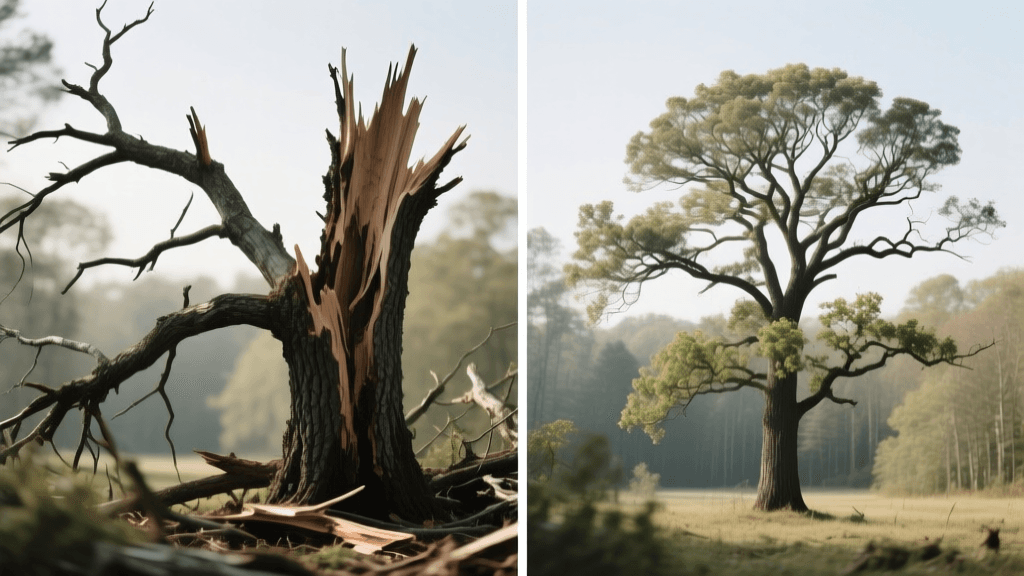
Before and After: Restoring Storm-Damaged Mature Trees
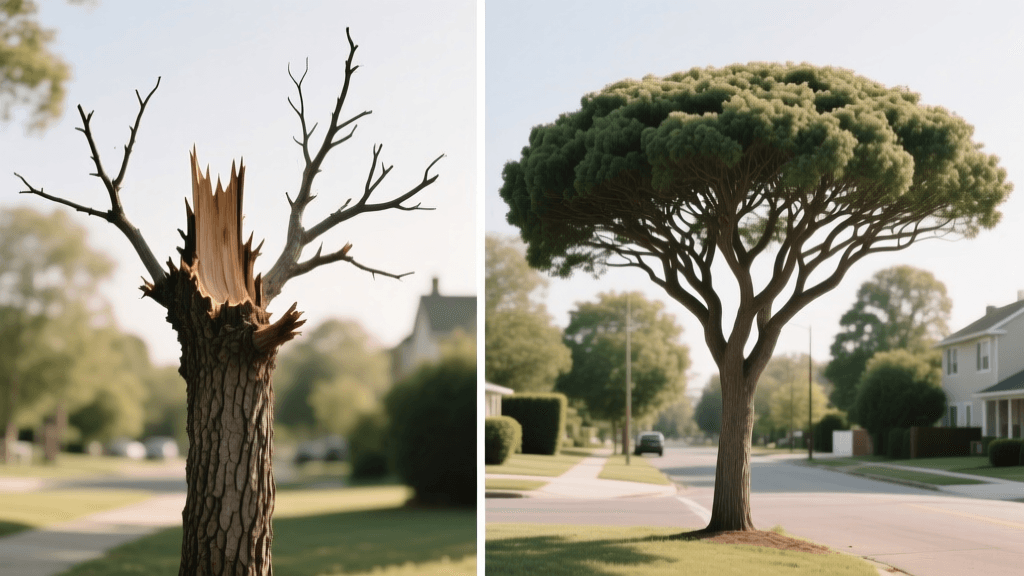
Every homeowner dreads the sound of snapping timber during a severe thunderstorm or ice storm. When the winds die down, the reveal is often heartbreaking: a beloved, mature shade tree with a shattered central leader and jagged, torn branches. While the immediate instinct might be to call a removal crew, many storm-damaged trees are excellent candidates for crown restoration. By applying targeted structural pruning, you can guide a broken tree through a remarkable before-and-after transformation, turning a hazardous eyesore back into a safe, thriving landscape anchor.
The Devastation: Assessing the 'Before' State
The 'before' state of a storm-damaged tree is characterized by chaos and vulnerability. High winds and heavy ice typically target the central leader (the main upward-growing trunk) or weak, V-shaped branch crotches. In the aftermath, the tree suffers from compromised apical dominance, meaning the primary hormone (auxin) that directs upward growth is suddenly severed. This causes the tree to panic, often resulting in a flush of weak, vertically growing 'water sprouts' that are highly susceptible to future breakage.
Furthermore, jagged tears where branches have ripped away from the trunk expose the heartwood to moisture, decay fungi, and wood-boring insects. The tree's natural defense system, known as Compartmentalization of Decay in Trees (CODIT), struggles to seal over large, uneven wounds. Before any transformation can begin, a thorough hazard assessment is required to determine if the tree is worth saving.
The Triage: When to Restore vs. Remove
Not every damaged tree can be transformed. According to Penn State Extension, arborists use a general rule of thumb to decide between restoration and removal: if more than 50% of the tree's root plate is exposed, if the main trunk is split vertically down the middle, or if more than 50% of the canopy has been destroyed, the tree should be removed. However, if the trunk is intact and at least half of the crown remains, the tree is a prime candidate for a before-and-after crown restoration project.
The Transformation: Step-by-Step Crown Restoration
Transforming a damaged tree is not a one-day project; it is a multi-year process of selective pruning that encourages the tree to rebuild a strong, wind-resistant architecture. Here is how the transformation unfolds.
Step 1: Hazard Removal and the Three-Cut Method
The first phase of the 'after' transformation involves cleaning up the immediate hazards. All hanging branches (often called 'widowmakers'), split limbs, and jagged stubs must be removed. To prevent bark from tearing down the trunk during removal, always use the three-cut method recommended by the International Society of Arboriculture (ISA):
- Cut 1 (The Undercut): Make a shallow cut on the underside of the branch, about 12 inches away from the trunk collar.
- Cut 2 (The Top Cut): Cut through the top of the branch an inch or two further out from the undercut. The branch will fall cleanly without tearing the bark.
- Cut 3 (The Collar Cut): Make the final cut just outside the branch bark ridge and branch collar, allowing the tree to properly seal the wound.
For this step, professional-grade tools are essential. A Silky Gomboy 270 folding saw provides razor-sharp, clean cuts that heal faster, while Felco 8 bypass pruners are ideal for smaller, torn laterals.
Step 2: Selecting and Training a New Leader
If the central leader was lost, the tree will attempt to grow several competing leaders. The transformation requires you to play the role of nature and select a single, dominant new leader. Look for a vigorous lateral branch that is attached to the trunk at a wide, U-shaped angle (which indicates strong wood grain connection) and is roughly one-third the diameter of the main trunk.
Once selected, you can physically train this branch upward using a splint. A simple bamboo pole secured to the trunk and the new leader with soft, wide arborist tape will guide the branch into a vertical position. Over the next two to three growing seasons, this branch will thicken and naturally assume the role of the central trunk, completely altering the tree's silhouette from a broken, flat-topped wreck to a towering, pyramidal form.
Step 3: Subordination and Balancing the Canopy
To ensure your new leader succeeds, you must reduce the competition. The University of Florida IFAS Extension heavily emphasizes 'subordination cuts' in crown restoration. This involves reducing the length of competing lateral branches by about one-third. By removing the terminal buds of these competing branches, you redirect the tree's growth hormones back to your chosen new leader. This not only speeds up the vertical transformation but also reduces the wind-sail effect of the remaining canopy, making the tree significantly safer during the next storm.
Before and After: Visualizing the Structural Shift
The Before: A mature Red Oak with a 20-inch diameter trunk, missing its top 15 feet, featuring three competing, weakly attached lateral branches growing vertically from a massive, jagged tear. The canopy is unbalanced, leaning heavily to the south, with a high risk of uprooting.
The After (Year 3): The jagged tear has calloused over entirely. One of the southern laterals has been subordinated and is growing horizontally, providing balanced shade. The northern lateral was selected, splinted, and has now grown 6 feet vertically, establishing a clear, dominant central axis. The canopy is symmetrical, wind-resistant, and the hazard rating has dropped from 'High' to 'Low'.
Investment Breakdown: DIY vs. Professional Restoration
Crown restoration requires an understanding of tree biology and physics. While minor damage on smaller trees can be a DIY weekend project, mature trees often require professional intervention. Below is a comparison of what to expect regarding costs, time, and risk.
| Category | DIY Approach (Small Trees < 20ft) | Professional Arborist (Mature Trees > 30ft) |
|---|---|---|
| Cost Estimate | $150 - $350 (Tools, splints, tape) | $450 - $1,200 (Depending on access and crane needs) |
| Time Required | 4 - 8 hours initial, plus annual follow-ups | 1 - 2 days for crew, plus 3-year maintenance plan |
| Tools Needed | Pole saw, hand pruners, ladder, arborist tape | Bucket truck, climbing spikes/ropes, heavy-duty rigging |
| Risk Level | Moderate (Ladder falls, improper cuts) | Low (Handled by insured, ISA-certified experts) |
| Wound Sealing | Often mistakenly applied by DIYers | Never applied (Relies on natural CODIT process) |
Note: Never use pruning sealants or wound paints on storm damage. Studies consistently show these products trap moisture and accelerate decay. The tree's best 'after' care is clean, sharp cuts and proper hydration.
Long-Term Aftercare: Ensuring the 'After' Lasts
The physical pruning is only half of the transformation. A storm-damaged tree has lost a significant portion of its photosynthetic factory and is under immense physiological stress. To support the 'after' state, rigorous aftercare is mandatory during the first two growing seasons.
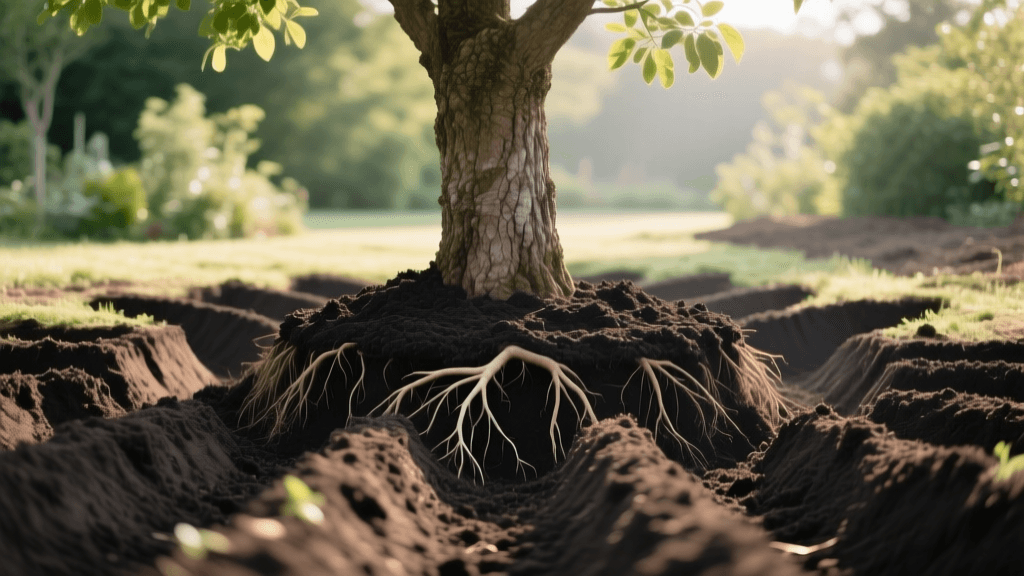
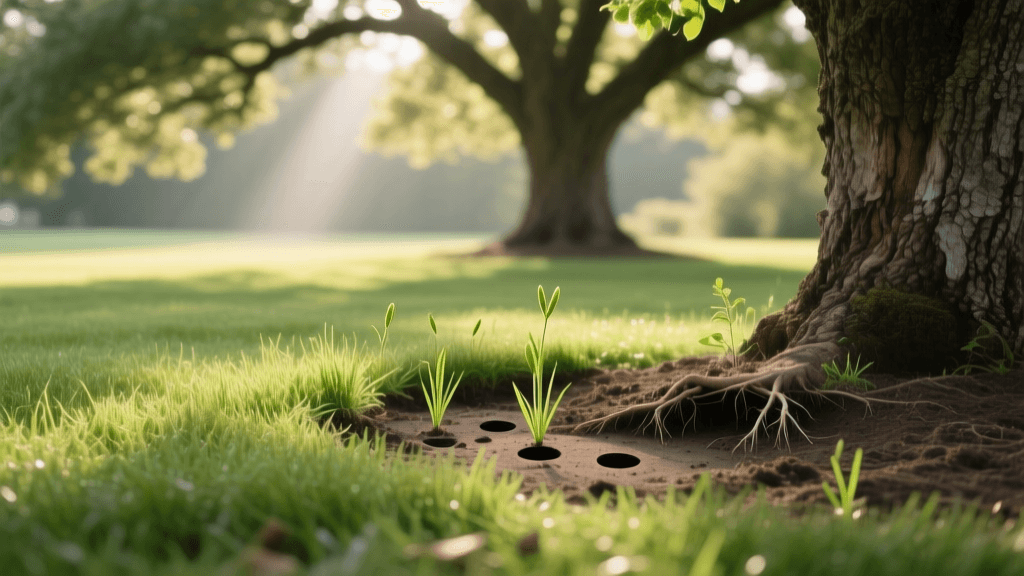
Hydration: The tree needs deep, infrequent watering to encourage deep root anchorage. Apply 1.5 gallons of water per inch of trunk diameter (measured at knee height) once a week during dry spells. For a 20-inch tree, this means 30 gallons per week, best delivered via a slow-drip soaker hose or a tree watering bag like the Treegator.
Mulching: Apply a 3-inch layer of coarse arborist wood chips in a wide 'donut' shape around the tree, extending out to the drip line if possible. Crucially, keep the mulch at least 3 inches away from the trunk flare to prevent rot and rodent damage. This mimics the forest floor, regulating soil temperature and retaining vital moisture.
Monitoring: Inspect the tree every spring. Remove any new water sprouts that emerge from the wound site, as these are weakly attached and will ruin the structural integrity you worked so hard to build. With patience, precise pruning, and dedicated aftercare, your storm-damaged tree will complete its transformation, standing taller and stronger for decades to come.