
Landscaping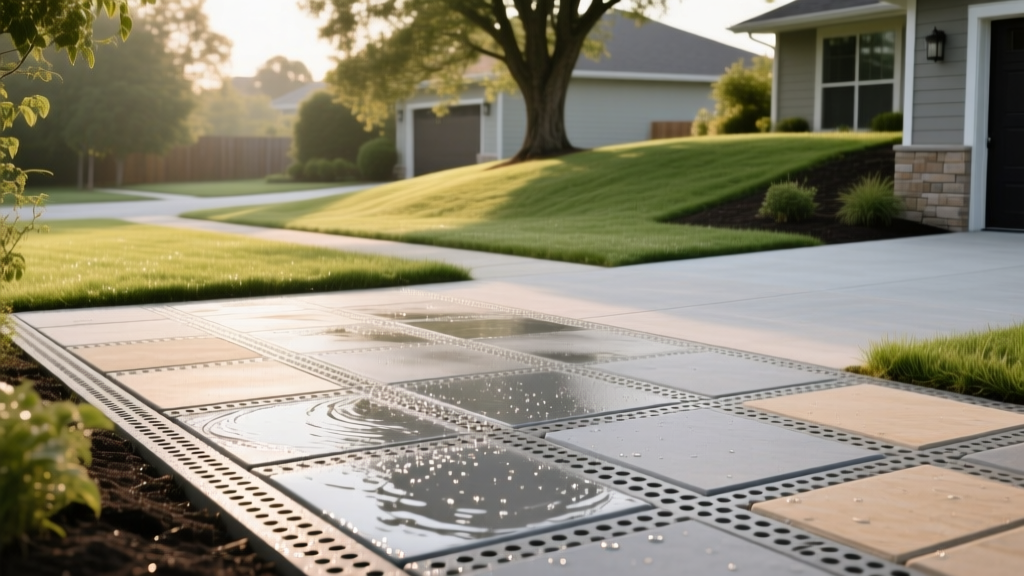
Belgard Aqua-Roc Permeable Driveway 2026: Aeration Guide
David ParkPublished
The Intersection of Lawn Care and Hardscape Design
When homeowners and landscaping professionals think of core aeration, they immediately picture the small soil plugs left behind on a freshly manicured turf lawn. Core aeration is the undisputed champion of relieving soil compaction, allowing oxygen, water, and vital nutrients to penetrate the root zone. But what happens when we apply this vital landscaping principle to the hardscaped areas of our property? In 2026, the concept of 'hardscape aeration' has taken center stage, driven by advanced permeable paver systems like the Belgard Aqua-Roc.
As environmental regulations tighten and sustainable landscaping becomes the standard rather than the exception, treating your driveway as an extension of your lawn's respiratory and drainage system is a revolutionary approach. This guide explores how installing a permeable paver driveway with the Belgard Aqua-Roc system mimics the benefits of core aeration, relieves subsoil compaction, and protects the health of your surrounding landscape.
Rethinking Driveways: Hardscape Aeration vs. Soil Compaction
Traditional poured concrete and asphalt driveways act like a massive, impenetrable layer of thatch over your property's soil. They seal the earth, preventing vital gas exchange and forcing stormwater into overburdened municipal drains or causing destructive yard pooling. Just as a lawn suffocates under compacted soil and heavy thatch, the subsoil beneath an impermeable driveway becomes an anaerobic, biologically dead zone. Tree roots near traditional driveways often girdle or die off due to a lack of oxygen and moisture.
By viewing hardscape installation through the lens of core aeration, we shift our focus from merely 'covering' the ground to 'managing' the ground. A permeable paver system effectively aerates the hardscape footprint, ensuring that the earth beneath your vehicles remains a living, breathing part of your property's ecosystem.
The Belgard Aqua-Roc System: Breathing Life into Hardscapes
The Belgard Aqua-Roc system is a premier permeable interlocking concrete paver (PICP) solution designed for both aesthetic curb appeal and rigorous environmental performance. Rather than relying on a solid concrete slab, Aqua-Roc utilizes precisely spaced pavers and specialized open-graded aggregates. This system functions essentially as a structural aeration matrix for your driveway.
According to the Interlocking Concrete Pavement Institute (ICPI), PICP systems are engineered to capture, store, and slowly release stormwater back into the native soil, mimicking the natural hydrological cycle. The void spaces between the pavers and the angular stones in the base layers act exactly like the macro-pores created by a mechanical lawn aerator, providing pathways for air and water to reach the deep subsoil.
Anatomy of the Aqua-Roc 'Aeration' Layers
To understand how this system breathes, you must look beneath the surface. The Belgard Aqua-Roc system relies on a specific hierarchy of open-graded aggregates, each serving a distinct structural and hydrological purpose:
- Surface Pavers & Jointing Stone: The pavers are laid with wider joints filled with small, clean, angular aggregate (typically ASTM No. 8 or No. 9 stone). This allows immediate water infiltration while preventing weed growth and maintaining structural interlock.
- Bedding Course: A thin layer of slightly larger aggregate (ASTM No. 8) that locks the pavers in place and continues the vertical drainage pathway.
- Base Course: A reservoir layer of ASTM No. 57 stone. This layer provides immense structural support for vehicular traffic while holding a significant volume of stormwater temporarily.
- Sub-Base Course: The deepest layer, utilizing large ASTM No. 2 or No. 3 aggregate. This massive reservoir layer stores heavy rainfall and allows it to slowly percolate into the native subgrade, effectively recharging the local water table.
2026 Installation Metrics and Cost Comparison
Investing in a permeable driveway is a significant landscaping project. In 2026, material and labor costs for high-end PICP systems reflect the specialized engineering required. Below is a comparison of traditional impermeable options versus the Belgard Aqua-Roc system.
| Feature | Traditional Poured Concrete | Belgard Aqua-Roc PICP System |
|---|---|---|
| 2026 Avg. Installed Cost | $12 - $18 per sq. ft. | $18 - $26 per sq. ft. |
| Water Infiltration Rate | 0 inches per hour (100% Runoff) | 100+ inches per hour (Zero Runoff) |
| Subsoil Gas Exchange | None (Anaerobic Zone) | High (Mimics Core Aeration) |
| Lifespan (with maintenance) | 25 - 30 years | 40 - 50+ years |
| Winter De-icing Efficiency | Moderate (Ice forms on surface) | High (Surface remains largely ice-free due to drainage) |
While the upfront cost of the Aqua-Roc system is higher, the long-term benefits regarding landscape health, drainage mitigation, and potential municipal stormwater fee reductions make it a superior investment for the eco-conscious homeowner.
Coordinating Lawn Core Aeration with Permeable Hardscapes
One of the most critical aspects of integrating a permeable driveway into your landscape is managing the transition zone between the hardscape and the turf. If you are maintaining a rigorous core aeration schedule for your lawn, you must take special precautions around the edges of your new Belgard Aqua-Roc driveway.
Protecting the Edge Restraint
Permeable pavers rely heavily on a rigid edge restraint to maintain their interlock and prevent the jointing stones from migrating. When performing core aeration on the adjacent lawn in the fall or spring, keep the aerator tines at least 6 to 12 inches away from the driveway edge. The vibration and lateral force of a mechanical core aerator can easily dislodge the hidden edge restraints or compromise the compacted base soil that supports the perimeter of the paver system.
Managing Soil Cores and Thatch
When you pull soil cores from your lawn, never allow them to wash or be swept onto the permeable paver joints. The fine silt and clay found in lawn soil cores are the exact materials that will clog the open-graded aggregates of the Aqua-Roc system, effectively 'suffocating' your hardscape just as thatch suffocates a lawn. Always use a leaf blower to clear soil plugs away from the driveway perimeter immediately after aerating.
Environmental Impact and Stormwater Management in 2026
The push for sustainable landscaping is heavily supported by federal and local environmental guidelines. The United States Environmental Protection Agency (EPA) strongly advocates for permeable pavement as a core green infrastructure practice to reduce urban runoff, filter pollutants, and mitigate the heat island effect. By installing the Aqua-Roc system, you are essentially creating a massive, load-bearing bio-retention area that filters oil, heavy metals, and sediment before they can reach local waterways.
Furthermore, many municipalities in 2026 offer significant tax incentives or reductions in stormwater utility fees for properties that reduce their impervious surface coverage. The Aqua-Roc system allows you to maintain the functional footprint of a driveway while legally and ecologically classifying it as a permeable, green surface.
Maintenance: Vacuum Sweeping vs. Core Pulling
Just as a lawn requires annual core aeration to prevent compaction and thatch buildup, a permeable paver driveway requires routine maintenance to keep its 'pores' open. However, instead of pulling plugs, you are removing debris.
- Routine Sweeping: Use a stiff-bristled broom or a specialized vacuum sweeper to remove leaves, pine needles, and organic debris that can decompose and clog the jointing stones.
- Deep Cleaning (Every 3-5 Years): Over time, windblown silt and fine sediment may accumulate deep within the bedding course. Professional maintenance involves using high-powered vacuum excavation equipment to extract the clogged jointing aggregate and replace it with fresh, clean ASTM No. 8 stone. This process is the hardscape equivalent of deep core aeration, instantly restoring the driveway's maximum infiltration capacity.
Conclusion: A Unified Approach to Property Health
Landscaping in 2026 demands a holistic approach where hardscapes and softscapes work in harmony. By viewing your driveway through the lens of core aeration, you recognize that the soil beneath your wheels deserves the same breathability and hydration as the soil beneath your feet. The Belgard Aqua-Roc permeable paver system represents the pinnacle of this philosophy, offering a stunning, durable surface that actively participates in the ecological health of your property. Whether you are planning a complete hardscape renovation or looking to solve chronic drainage issues, embracing permeable technology ensures your landscape remains vibrant, resilient, and sustainably aerated for decades to come.

