
Landscaping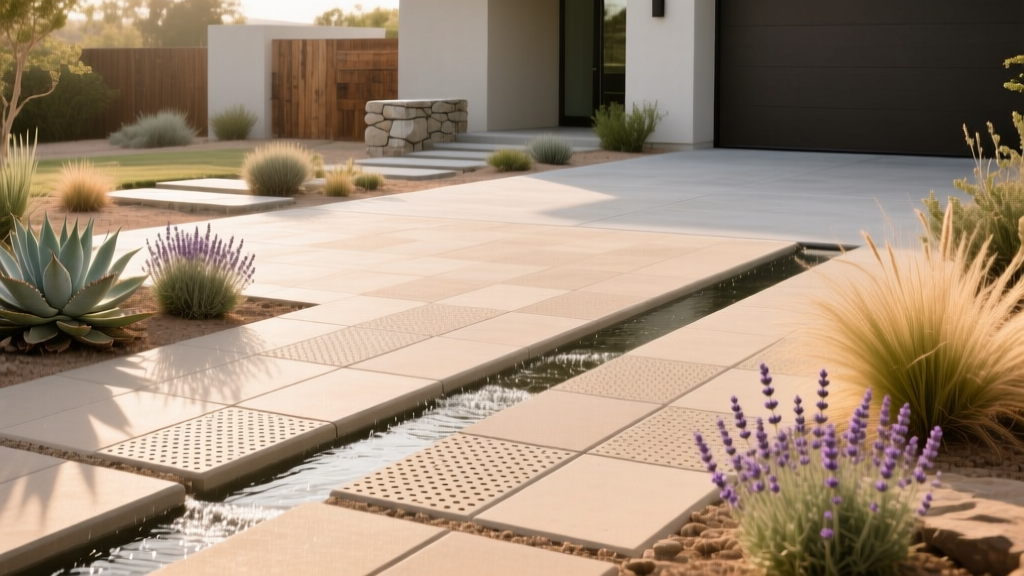
Belgard Aqua-Roc Permeable Driveway Install: 2026 Guide
James MillerPublished
The Intersection of Hardscaping and Xeriscaping
When homeowners and landscape architects think of xeriscaping and low-water landscaping, the mind immediately jumps to drought-tolerant plants, native succulents, mulch, and dry creek beds. However, true xeriscape design encompasses the entire property's hydrology, including how water interacts with hardscapes. In 2026, as municipal water restrictions tighten and extreme weather events become more frequent, managing stormwater at the source is no longer just an environmental preference—it is a landscaping necessity. Traditional concrete and asphalt driveways create massive amounts of impermeable surface runoff, straining municipal storm drains and depriving local soil of vital moisture. This is where the Belgard Aqua-Roc permeable paver system shines, transforming a traditional driveway into a functional, eco-friendly water management tool that perfectly complements a low-water landscape.
What is the Belgard Aqua-Roc System?
The Belgard Aqua-Roc system is not just a single paver; it is a comprehensive permeable paving solution. At its core, the system utilizes specialized open-graded aggregates—often referred to as Aqua-Roc or clean washed stone—combined with Belgard's permeable interlocking concrete pavers (PICP). Unlike traditional paver bases that use stone dust or fine sand which compacts and blocks water, the Aqua-Roc aggregate base consists of uniformly sized, crushed stone with no fines. This creates a highly porous sub-base that acts as an underground reservoir, temporarily storing stormwater and allowing it to slowly infiltrate the native soil below.
According to Belgard's official permeable paver guidelines, this system is designed to handle severe rainfall events while filtering out pollutants like motor oil and heavy metals before they reach the groundwater. For xeriscape enthusiasts, this means the driveway actively recharges the local water table, supporting the deep root systems of nearby drought-tolerant trees and shrubs without requiring supplemental irrigation.
Hydrology and Groundwater Recharge in 2026
The philosophy of xeriscaping is rooted in water conservation and working with the natural climate. The Environmental Protection Agency (EPA) heavily advocates for permeable pavements as a key green infrastructure tool to reduce runoff volume and improve water quality. By installing a Belgard Aqua-Roc driveway, you are essentially creating a passive rainwater harvesting system. During a heavy 2026 spring storm, instead of water sheeting off the driveway and carrying pollutants into the street, it drops through the wide joints of the pavers, filters through the bedding layer, and pools in the Aqua-Roc reservoir base. From there, it percolates into the subgrade, hydrating the surrounding landscape passively.
2026 Cost Breakdown for Permeable Paver Driveways
Investing in a permeable system requires a higher upfront budget than standard concrete, but the long-term ecological and municipal benefits are substantial. Below is a detailed look at the estimated costs for a professional Belgard Aqua-Roc installation in 2026.
| Component | 2026 Estimated Cost (Per Sq. Ft.) | Purpose in Xeriscape System |
|---|---|---|
| Excavation & Subgrade Prep | $2.50 - $4.00 | Removing impermeable soil to make room for the water reservoir base. |
| Geotextile Fabric | $0.50 - $0.85 | Prevents soil migration into the Aqua-Roc base while allowing water flow. |
| Aqua-Roc Base Aggregate | $3.00 - $5.50 | The open-graded reservoir stone that stores and filters stormwater. |
| Permeable Bedding Stone | $1.50 - $2.50 | Smaller clean stone that levels the pavers without clogging joints. |
| Belgard Permeable Pavers | $4.50 - $8.00 | The aesthetic, load-bearing surface with wide spacer bars for joints. |
| Jointing Aggregate & Edge Restraint | $1.50 - $2.50 | Locks pavers in place and maintains surface permeability. |
| Professional Labor (Install) | $8.00 - $14.00 | Specialized compaction and laser-leveling required for PICP systems. |
| Total Estimated Cost | $21.50 - $37.35 | Complete turnkey permeable driveway system. |
Note: Prices vary based on regional material availability, soil conditions, and the specific Belgard paver style selected (e.g., Urbana, Mega-Arbel, or Weston Stone).
Step-by-Step Installation Overview
Proper installation is critical. The Interlocking Concrete Pavement Institute (ICPI) sets the gold standard for PICP installation, and cutting corners on the base will ruin the permeability of the system. Here is how a proper Belgard Aqua-Roc driveway is constructed:
- Step 1: Soil Testing and Excavation. An infiltration test is performed on the native soil. The driveway is excavated 12 to 18 inches deep, depending on the soil's percolation rate and the expected water storage volume required.
- Step 2: Subgrade Compaction and Fabric. The native soil is compacted. A non-woven geotextile fabric is laid over the subgrade to prevent fine clay particles from migrating up into the clean stone base, which would eventually clog the system.
- Step 3: The Aqua-Roc Reservoir Base. A deep layer of large, open-graded crushed stone (typically ASTM No. 57 or No. 2) is installed and compacted. This is the primary water storage reservoir.
- Step 4: Choker and Bedding Layers. A thinner layer of smaller open-graded stone (ASTM No. 8 or No. 89) is applied to transition from the large base stone to the pavers, followed by a precise 2-inch bedding layer of ASTM No. 8 stone.
- Step 5: Paver Laying and Jointing. Belgard permeable pavers are laid in the designated pattern. The joints are swept full of clean, small aggregate (ASTM No. 8 or No. 9), and a low-pressure plate compactor is used to settle the pavers and vibrate the jointing stone deep into the gaps.
Integrating Aqua-Roc with Low-Water Landscaping
To fully embrace the xeriscape angle, your permeable driveway should not exist in isolation. It should be integrated into a broader low-water landscape design. Consider routing the driveway's subsurface overflow pipe toward a nearby rain garden planted with deep-rooted, drought-tolerant native species like Coneflower, Yarrow, or Russian Sage. During torrential downpours that exceed the Aqua-Roc base's storage capacity, the excess water is safely directed to these garden beds, providing them with deep, infrequent watering that promotes robust root growth without relying on municipal water.
Additionally, the edges of the driveway can be softened with creeping groundcovers like Dymondia or Creeping Thyme, which thrive in low-water environments and help filter any surface runoff before it reaches the paver joints. This seamless transition between hardscape and softscape is the hallmark of elite 2026 landscape design.
Maintenance and Longevity in a Xeriscape Environment
A common misconception is that permeable pavers require constant, arduous maintenance. In reality, a Belgard Aqua-Roc system is incredibly resilient, especially in a xeriscape environment where heavy organic mulch and water-intensive lawns (which generate clippings and mud) are absent. To maintain peak infiltration rates:
- Annual Vacuum Sweeping: Use a commercial regenerative air vacuum sweeper once a year to pull dust, dirt, and debris out of the paver joints. Never use sand to fill joints, as this will destroy the permeability.
- Pressure Washing Caution: Avoid high-pressure washing, which can blast the jointing stone out of the gaps and into the reservoir base.
- Winter Care: In freezing climates, avoid using excessive sand or salt for de-icing. The permeable nature of the driveway actually reduces black ice formation, as surface water drains away immediately rather than pooling and freezing.
Conclusion
Xeriscaping is about respecting the natural water cycle, and your driveway should be an active participant in that cycle, not a barrier to it. The Belgard Aqua-Roc permeable paver system offers a stunning, durable, and ecologically responsible alternative to traditional concrete. By investing in this system in 2026, you are future-proofing your property against tightening stormwater regulations, reducing your landscape's irrigation needs through passive groundwater recharge, and elevating your home's curb appeal with premium, sustainable hardscaping.

