Lawn Care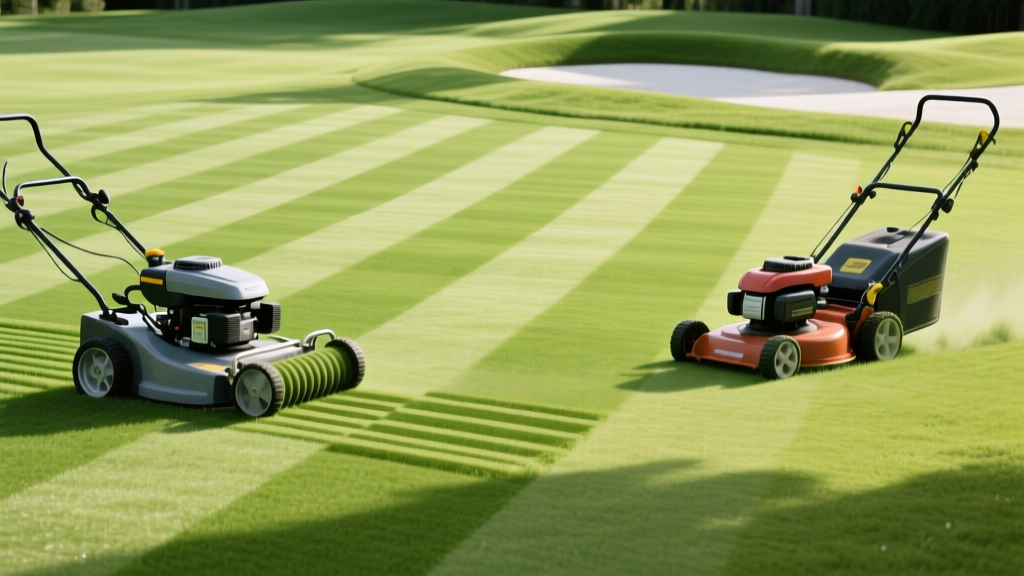
Best Mower for Bermuda Grass Stripes: Reel vs Rotary 2026
Mike RodriguezPublished
The Pursuit of the Perfect Bermuda Grass Stripe in 2026
For lawn care enthusiasts and professional landscapers alike, achieving that pristine, golf-course-quality stripe on a Bermuda grass lawn is the ultimate aesthetic milestone. As we navigate the 2026 landscaping season, the demand for manicured, patterned lawns has never been higher. However, the secret to a breathtaking checkerboard or diamond pattern lies not just in the mowing technique, but in the fundamental mechanics of the mower you choose. The great debate in turf management remains: reel mower versus rotary mower. When dealing specifically with Bermuda grass—a warm-season turf known for its aggressive lateral growth and low mowing tolerance—the choice of equipment dramatically dictates the quality, intensity, and health of your lawn stripes.
The Science Behind Lawn Striping
Before diving into mower mechanics, it is essential to understand the science of lawn striping. Stripes are not created by cutting the grass at different heights or using different shades of seed. Instead, they are an optical illusion created by light reflecting off the grass blades. When you mow in one direction, the mower's roller or deck pushes the grass blades down, bending them away from you. This exposes the darker, waxy underside of the leaf, creating a 'dark' stripe. When you mow in the opposite direction, the blades are bent toward you, reflecting sunlight off the glossy top surface and creating a 'light' stripe.
Bermuda grass is uniquely suited for striping due to its dense growth habit and flexible yet resilient stems. However, because Bermuda grass is typically maintained at much lower heights (often between 0.5 and 1.5 inches) than cool-season grasses like Kentucky Bluegrass, the equipment used to bend the grass must be highly precise to avoid scalping the lawn.
Reel Mowers: The Golf Course Standard
Reel mowers operate using a scissor-cutting action. A spinning cylinder with multiple helical blades sweeps the grass against a stationary bottom plate (the bedknife). This mechanism provides the cleanest cut possible in turf management, which is critical for Bermuda grass health. More importantly for aesthetic patterns, reel mowers are equipped with heavy, solid rear rollers that immediately press the freshly cut grass flat against the soil, locking in the bend and creating incredibly sharp, high-contrast stripes.
Why Reels Excel on Bermuda Grass
Bermuda grass thrives at low mowing heights. According to the Texas A&M Aggie Turf program, hybrid Bermuda grasses can be maintained at heights as low as 0.5 inches, while common Bermuda is best kept between 1.0 and 2.0 inches. Reel mowers are the only residential machines capable of cutting cleanly at 0.5 inches without tearing the turf or scalping the soil. In 2026, residential reel mowers like the Tru Cut H-20 and the McLane 20-inch Front Throw remain the gold standard for homeowners who want professional-grade striping. Their heavy rear drums are specifically designed to lay the stiff Bermuda stolons down perfectly, resulting in tight, vivid stripes that rival commercial sports fields.
Rotary Mowers: Convenience Meets Aesthetic Patterns
Rotary mowers use a single, high-speed horizontal blade that cuts grass via impact, much like a machete. They are incredibly popular due to their versatility, ease of maintenance, and ability to handle taller grass, debris, and uneven terrain. However, rotary mowers generally struggle to cut Bermuda grass below 1.0 inches without causing damage or scalping. Furthermore, standard rotary mowers rely on wheels rather than a rear roller, meaning they do not naturally bend the grass to create stripes.
Adapting Rotary Mowers for Striping
If you prefer the convenience of a rotary mower, achieving aesthetic patterns on Bermuda grass in 2026 requires aftermarket modifications. Attaching a striping kit or a weighted rear roller—such as the BigLeague Stripe or the Toro Striping Kit—adds the necessary weight and surface area to bend the grass behind the cutting deck. While a rotary mower with a striping roller can produce beautiful, wide stripes on Bermuda grass maintained at 1.5 inches or higher, the stripes will lack the razor-sharp definition and tight banding seen with a reel mower. The University of Georgia Turfgrass Program emphasizes that maintaining a dense canopy is crucial for turf health, and rotary mowers can sometimes fray Bermuda grass tips if the blade is not kept razor-sharp, which slightly dulls the visual contrast of the stripe.
Feature Comparison: Reel vs. Rotary for Bermuda Striping
To help you decide which mower is right for your 2026 lawn care strategy, here is a detailed comparison of how reel and rotary mowers perform specifically on Bermuda grass when striping.
| Feature | Reel Mower (e.g., Tru Cut H-20) | Rotary Mower with Stripe Kit |
|---|---|---|
| Cut Mechanism | Scissor-cut (Cylinder to Bedknife) | Impact-cut (Spinning Horizontal Blade) |
| Minimum Mowing Height | 0.25 inches | 1.0 inch (Risk of scalping below) |
| Stripe Definition | Exceptional (Tight, high-contrast bands) | Good (Wider, softer bands) |
| Roller Mechanism | Heavy integrated rear steel drum | Aftermarket weighted plastic/rubber flap |
| Maintenance Level | High (Requires backlapping and reel adjustment) | Low (Simple blade sharpening and oil changes) |
| 2026 Average Cost | $1,200 - $2,500 | $400 - $900 (Plus $50-$100 for stripe kit) |
| Best Bermuda Type | Hybrid (TifTuf, Celebration, Latitude) | Common Bermuda or taller hybrids |
Step-by-Step Guide to Striping Bermuda Grass
Regardless of whether you choose a reel or a rotary mower, executing a flawless pattern requires discipline and a systematic approach. Follow these steps to maximize your lawn's aesthetic appeal.
1. Preparation and Grooming
Before mowing, ensure your Bermuda grass is dry. Wet grass clumps and bends unpredictably, ruining the stripe. If you are using a reel mower, consider using a manual lawn groomer or a battery-powered verticutter attachment to stand the stolons up before cutting. This ensures an even cut and a more uniform bend when the roller passes over.
2. The Mowing Pattern
- The Perimeter: Start by mowing two laps around the entire perimeter of your lawn. This gives you a turning radius at the end of each stripe, preventing the mower from tearing up the grass when making tight U-turns.
- Parallel Lines: Pick a fixed reference point (like a fence line or the edge of your driveway). Mow a straight line down the lawn, lift the mower or disengage the roller at the end, turn, and mow back in the opposite direction, overlapping your previous pass by about two inches.
- The Checkerboard: Once the entire lawn is mowed in one direction, repeat the exact process perpendicular to your original lines. This double-bending of the grass creates the iconic, high-contrast checkerboard pattern.
3. Bending the Grass
Speed matters. If you are using a rotary mower with a striping flap, mow at a moderate, consistent pace. Moving too fast will cause the mower deck to blow the grass upright with its air vacuum before the roller can bend it. If you are using a reel mower, the heavy drum does the work for you, but maintaining a steady walking pace ensures the bend is uniform across the entire width of the cut.
Maintenance and Upkeep
The visual quality of your stripes is directly tied to the health of your Bermuda grass, which in turn relies on mower maintenance. A dull blade tears the grass tips, leaving a whitish, ragged appearance that destroys the light-reflecting properties needed for dark stripes.
For rotary mowers, you should sharpen or replace the blade every 20 to 25 hours of use. In the peak of the 2026 summer growing season, this may mean sharpening the blade every two weeks. For reel mowers, you must perform a process called 'backlapping' using a specialized abrasive compound to keep the cylinder blades and the bedknife perfectly aligned. Additionally, the bedknife must be filed flat periodically to ensure a true scissor cut. While reel maintenance is more demanding, the payoff in turf health and stripe intensity on low-cut Bermuda grass is unmatched.
Expert Insights and Turfgrass Health
Ultimately, the choice between a reel and rotary mower for Bermuda grass striping comes down to your desired mowing height and your willingness to perform equipment maintenance. If you are growing a premium hybrid Bermuda grass and want to maintain it at 0.75 inches with stadium-quality stripes, a dedicated reel mower is a non-negotiable investment. If you maintain common Bermuda at 1.5 inches and prefer a low-maintenance weekend routine, a high-quality rotary mower equipped with an aftermarket striping roller will provide beautiful, neighborhood-envying patterns with a fraction of the mechanical upkeep. By matching your equipment to your specific turfgrass profile, you can achieve breathtaking aesthetic patterns that highlight the natural beauty of your landscape all season long.