Lawn Care
Bermuda vs Zoysia: Choosing Warm-Season Grass Species
The Critical Role of Species Selection in Warm-Season Lawns
When establishing a new lawn or undertaking a major renovation in the southern United States or the transition zone, variety and species selection dictate the long-term success, maintenance requirements, and overall resilience of your turf. While cool-season grasses dominate the northern latitudes, homeowners in warmer climates must rely on warm-season species that thrive in high heat and can endure periods of drought. Among the most popular and widely planted warm-season grasses are Bermuda grass (Cynodon dactylon) and Zoysia grass (Zoysia spp.). Both offer lush, durable carpets of green, but their agronomic traits, establishment methods, and ongoing care routines differ significantly. Choosing the wrong species for your specific microclimate, soil type, or usage pattern can lead to chronic thinning, disease pressure, and wasted financial resources. This comprehensive guide breaks down the nuances of Bermuda and Zoysia grass to help you make an informed, data-driven selection for your property.
Understanding Bermuda Grass: The High-Traffic Champion
Bermuda grass is renowned for its aggressive growth habit, exceptional heat tolerance, and unparalleled recovery rate from physical damage. It spreads rapidly via both above-ground stems (stolons) and below-ground stems (rhizomes), allowing it to choke out weeds and repair divots or pet damage in a matter of weeks. According to NC State Extension TurfFiles, Bermuda grass is the premier choice for high-traffic areas, sports fields, and golf courses due to its sheer resilience.
Top Bermuda Cultivars for Residential Lawns
- Tifway 419: The long-standing industry standard for sod farms. It offers a dense, fine-textured canopy and excellent traffic tolerance, though it requires full sun and frequent mowing.
- TifTuf: A revolutionary cultivar developed by the University of Georgia. TifTuf is celebrated for its superior drought tolerance, using up to 38% less water than other Bermuda varieties while maintaining high turf quality.
- Celebration: Known for its striking blue-green color and improved shade tolerance compared to traditional Bermudas, Celebration also exhibits strong resistance to dollar spot and brown patch.
- Latitude 36: Bred specifically for the transition zone, this variety offers exceptional cold hardiness, allowing it to survive harsh winters further north than traditional Bermuda grasses.
Despite its many strengths, Bermuda grass has a major Achilles heel: shade tolerance. It requires a minimum of eight hours of direct, unfiltered sunlight daily. In shaded areas, Bermuda will quickly thin out, leaving bare patches vulnerable to weed invasion and soil erosion.
Understanding Zoysia Grass: The Dense, Low-Maintenance Alternative
Zoysia grass is a premium warm-season species prized for its dense, carpet-like growth and superior shade tolerance. While it does not recover from damage as quickly as Bermuda, its thick canopy naturally suppresses weeds and feels incredibly soft underfoot. As noted by turfgrass specialists at NC State University, Zoysia is an excellent choice for homeowners who want a high-quality lawn but prefer a slightly slower growth rate, which translates to less frequent mowing.
Top Zoysia Cultivars for Residential Lawns
- Meyer (Z-52): The classic Zoysia japonica variety. It is highly cold-tolerant, making it a staple in the transition zone, but it has a relatively coarse leaf texture and is prone to thatch buildup.
- Zeon: A fine-textured Zoysia matrella cultivar that boasts incredible shade tolerance and disease resistance. Zeon requires less nitrogen than many other varieties and maintains a beautiful dark green color.
- Emerald: A hybrid cross between Z. japonica and Z. matrella. Emerald offers the cold hardiness of Meyer with the fine texture and shade tolerance of Zeon, though it is a very slow grower.
- Geo: Known for its deep root system and excellent drought tolerance, Geo performs beautifully in coastal regions and tolerates salt spray better than most warm-season grasses.
The primary drawback of Zoysia is its slow establishment rate and susceptibility to thatch accumulation. Because it grows laterally rather than vertically, old stems can build up at the soil line, requiring periodic dethatching or core aeration to maintain soil-to-root oxygen exchange.
Head-to-Head Species Comparison
When evaluating variety and species selection, it is vital to compare the agronomic data side-by-side. The following table outlines the core differences between standard Bermuda and Zoysia grasses.
| Metric | Bermuda Grass | Zoysia Grass |
|---|---|---|
| Sunlight Requirement | 8+ hours direct sun | 5-7 hours (varies by cultivar) |
| Traffic Tolerance | Exceptional / Rapid Recovery | Good / Slow Recovery |
| Drought Tolerance | High (goes dormant quickly) | Moderate to High |
| Cold Hardiness | Moderate (Transition zone limits) | High (Survives further north) |
| Mowing Frequency | High (Every 3-5 days in peak summer) | Low to Moderate (Every 7-10 days) |
| Thatch Potential | Moderate | High (Requires monitoring) |
| Nitrogen Needs (lbs/1k sq ft/yr) | 2.0 - 4.0 lbs | 1.0 - 2.5 lbs |
| Establishment Speed | Very Fast (30-60 days) | Very Slow (1-2 full seasons) |
Site Evaluation: Matching Grass to Your Microclimate
Before purchasing seed or sod, conduct a thorough site evaluation. Map out the sunlight patterns across your yard during the peak of summer. If your property is heavily wooded or surrounded by two-story structures that cast long shadows, Zoysia is the undisputed winner. Cultivars like Zeon and Emerald can thrive in dappled light or partial shade where Bermuda would inevitably fail. Conversely, if you have an open, unobstructed southern-facing yard that bakes in the sun all day, Bermuda will outperform Zoysia, especially regarding heat stress and water efficiency.
Soil testing is equally critical. Both species prefer a slightly acidic soil pH between 6.0 and 6.5. Submit a soil sample to your local cooperative extension office to determine baseline phosphorus, potassium, and micronutrient levels. Amending the soil based on lab recommendations prior to establishment saves hundreds of dollars in corrective fertilizers down the road.
Establishment Methods: Seed, Plugs, or Sod?
The method of establishment heavily influences your initial budget and the timeline for a fully usable lawn.
Bermuda Grass Establishment
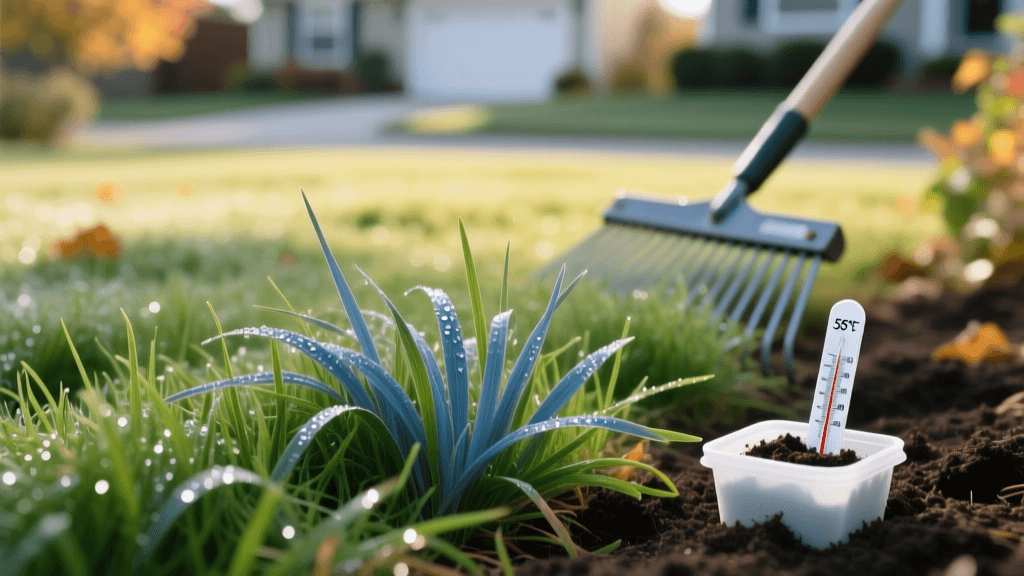
Bermuda is one of the few warm-season grasses readily available in high-quality seed. Improved seeded varieties like Princess 77 or Yukon cost approximately $15 to $25 per pound. The standard seeding rate is 2 to 3 pounds per 1,000 square feet. For a 5,000-square-foot lawn, seed costs will range from $150 to $375. Seed must be planted in late spring or early summer when soil temperatures consistently exceed 65°F. Keep the top inch of soil constantly moist for the first 14-21 days to ensure germination.
Zoysia Grass Establishment
Zoysia seed is notoriously difficult to germinate and is rarely used for residential lawns. Instead, Zoysia is established via sod or plugs. Sod provides an instant lawn but is the most expensive option, typically costing $0.45 to $0.85 per square foot, plus delivery and installation labor. For a 5,000-square-foot yard, expect to pay between $2,250 and $4,250 for professional sod installation. Plugs are a budget-friendly alternative, costing about $0.50 to $0.75 each. Planted on 12-inch centers, you will need one plug per square foot. While cheaper, plugs take 12 to 24 months to fully knit together into a solid canopy, requiring aggressive weed control in the interim.
Long-Term Maintenance and Fertilization Schedules
Once established, the maintenance routines for Bermuda and Zoysia diverge. Bermuda grass is a heavy feeder. To maintain a dense, dark green turf, it requires 2 to 4 pounds of actual nitrogen per 1,000 square feet annually, split into monthly applications from late spring through early fall. A balanced fertilizer like a 16-4-8 or 20-5-10 is ideal. Zoysia, on the other hand, requires far less inputs. Applying 1 to 2 pounds of nitrogen per 1,000 square feet per year is sufficient. Over-fertilizing Zoysia leads to rapid thatch accumulation and increases susceptibility to Large Patch disease.
Mowing heights also differ. Standard Bermuda grass should be maintained at 1 to 1.5 inches using a rotary mower, or as low as 0.5 inches if using a reel mower. Zoysia prefers a slightly higher cut, typically between 1.5 and 2.5 inches. Cutting Zoysia too short scalps the turf, exposing the soil to weed seeds and excessive moisture loss.
Pest and Disease Pressure
Every turfgrass species has specific biological vulnerabilities. Bermuda grass is most threatened by Spring Dead Spot (SDS), a devastating soil-borne fungus that leaves circular, sunken dead patches as the grass exits winter dormancy. Preventative fungicide applications containing Propiconazole or Pyraclostrobin in early fall are critical in SDS-prone regions. Zoysia grass is highly susceptible to Large Patch (caused by Rhizoctonia solani), which thrives in cool, wet spring and fall conditions. Ensuring proper soil drainage and avoiding late-season nitrogen applications are the best cultural defenses against this pathogen.
Final Verdict: Which Species Should You Choose?
According to turfgrass extension specialists, matching the grass species to your specific microclimate, sunlight availability, and usage patterns is far more important than chasing the newest marketed cultivar. The right grass in the right environment will always outperform a premium grass in a compromised environment.
If your lawn receives full, blazing sun, endures heavy foot traffic from children and pets, and you do not mind a rigorous mowing and fertilization schedule, Bermuda grass is the ultimate choice. Its aggressive recovery and heat tolerance are unmatched. However, if your yard features mature trees, partial shade, and you prefer a low-maintenance, low-nitrogen lawn that feels thick and luxurious underfoot, Zoysia grass is the superior investment. By carefully weighing these agronomic factors and consulting resources like university turfgrass selection guides, you can establish a resilient, beautiful warm-season lawn that will thrive for decades.