Pest Control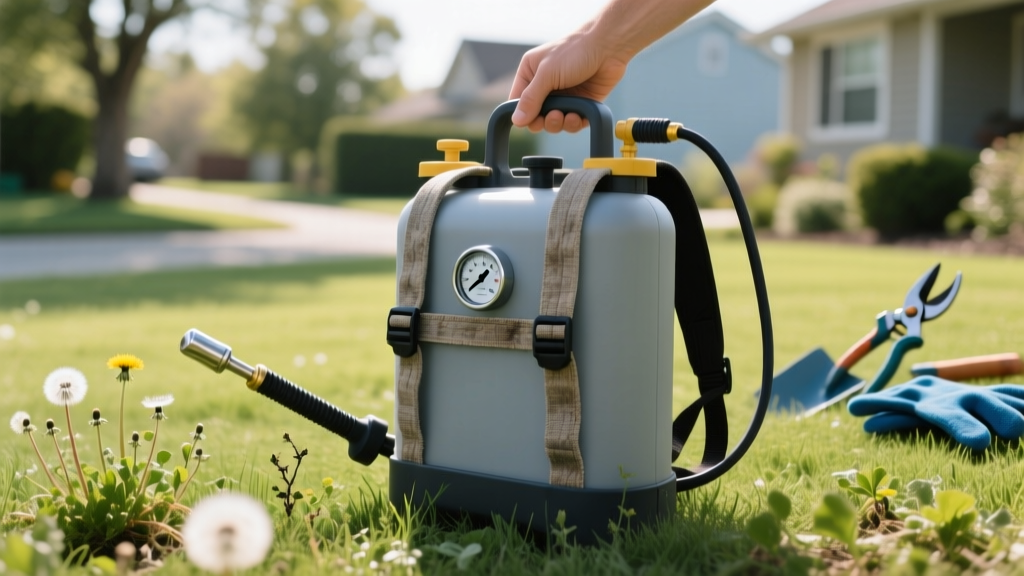
Choosing the Best Backpack Sprayer for Pest Control
Robert HayesPublished
The Ultimate Equipment Guide: Choosing a Backpack Sprayer for Lawn Pest Control
When it comes to integrated pest management (IPM) and targeted lawn care, the equipment you use is just as critical as the treatment itself. While hose-end sprayers and granular spreaders have their place in a comprehensive lawn care arsenal, the backpack sprayer remains the undisputed champion for precise, effective, and economical pest control. Whether you are targeting subsurface white grubs, treating fungal diseases like brown patch, or applying beneficial nematodes, understanding the mechanics, calibration, and maintenance of your sprayer is essential for success.
In this comprehensive tools and equipment guide, we will break down exactly what to look for when purchasing a backpack sprayer for pest management, how to select the correct nozzles for specific pests, and the critical calibration and safety protocols required to protect your lawn and your health.
Why a Backpack Sprayer is Essential for Pest Control
Hose-end sprayers are notoriously inaccurate. They rely on water pressure to siphon concentrated chemicals, which can fluctuate wildly depending on your municipal water supply or well pump. This inconsistency leads to over-application (which can burn your turf and harm the environment) or under-application (which fails to control the pest and encourages chemical resistance).
A high-quality backpack sprayer, on the other hand, allows you to mix the exact volume of water and pesticide required for your specific lawn area. By manually or electronically pressurizing the tank, you maintain a consistent flow rate and droplet size. This precision is a cornerstone of UC Davis Integrated Pest Management program guidelines, which emphasize targeted, measured applications to minimize environmental impact while maximizing pest mortality.
Key Features to Look for in a Pest Control Sprayer
Not all sprayers are created equal. When investing in equipment for chemical pest control, you must look beyond basic yard sprayers and seek out professional-grade features.
Tank Material and Capacity
Look for tanks made from high-density polyethylene (HDPE) with UV inhibitors. UV protection prevents the plastic from becoming brittle and cracking after seasons of sun exposure. For most residential lawns (up to 10,000 square feet), a 3-gallon or 4-gallon tank is the sweet spot. It provides enough volume to cover a significant area without becoming too heavy to carry comfortably (water weighs roughly 8.3 pounds per gallon, meaning a full 4-gallon tank adds over 33 pounds to your back).
Seals and Gaskets: The Viton Advantage
This is the most overlooked feature by amateur applicators. Standard sprayers use Buna-N (nitrile) rubber seals, which degrade rapidly when exposed to harsh solvents, oil-based pesticides, and certain herbicides. For pest control, you must invest in a sprayer equipped with Viton seals. Viton is a synthetic rubber that offers exceptional chemical resistance, ensuring your pump and wand connections do not leak dangerous chemicals onto your skin or ruin the pressurization system.
Pump Type: Diaphragm vs. Piston
- Piston Pumps: These operate like a bicycle pump, generating high pressure (up to 60 PSI). They are excellent for forcing liquid deep into the soil profile or reaching high tree canopies. However, they are prone to clogging if you use wettable powders.
- Diaphragm Pumps: These use a flexible membrane to move liquid. They max out at lower pressures (around 30-40 PSI) but are incredibly durable and can easily handle thick suspensions, wettable powders, and biological treatments like beneficial nematodes without tearing.
Sprayer Types Compared
Choosing the right power source for your sprayer impacts your workflow, consistency, and budget. Below is a comparison of the three main types of backpack sprayers used in lawn care.
| Sprayer Type | Pressure Consistency | Best Use Case | Avg Cost | Maintenance Level |
|---|---|---|---|---|
| Manual Pump (Piston) | Low (Requires frequent pumping) | Spot treatments, small yards | $50 - $90 | Low |
| Manual Pump (Diaphragm) | Medium (Better for powders) | Nematodes, wettable powders | $70 - $120 | Medium |
| Battery-Powered | High (Constant electronic PSI) | Large properties, uniform pest control | $150 - $250 | High (Battery care) |
Choosing the Right Nozzle for the Pest
The nozzle dictates the droplet size and spray pattern, which directly influences how well your pesticide reaches the target pest. Using the wrong nozzle can result in chemical drift or poor coverage.
Flat Fan Nozzles (e.g., TeeJet XR Series)
Best for: Surface-dwelling insects (chinch bugs, armyworms), broadleaf herbicides, and systemic fungicides.
Why: Flat fan nozzles produce a uniform, tapered edge pattern that allows for perfect overlapping during broadcast applications. They provide excellent coverage on the surface of grass blades and soil.
Hollow Cone Nozzles (e.g., TeeJet TX Series)
Best for: Pests that hide on the underside of leaves or deep in the thatch layer, and contact insecticides.
Why: These nozzles create a swirling, circular spray pattern with smaller droplets. The turbulence helps the chemical wrap around grass blades and penetrate dense thatch where pests like sod webworms hide.
Flood or Soil Drench Tips
Best for: Subsurface pests like white grubs, mole crickets, and European crane fly larvae.
Why: These tips produce large, heavy droplets at high volumes with minimal drift. When paired with a surfactant, they help the active ingredient wash down through the thatch and into the root zone where soil-dwelling pests feed.
How to Calibrate Your Backpack Sprayer
Calibration is the process of determining exactly how much liquid your sprayer applies over a specific area. Applying a grub control product at half the required rate will not kill the pests, while applying it at double the rate is illegal, wasteful, and potentially toxic to pets and local waterways.
The 1,000 Square Foot Calibration Method
- Measure the Area: Mark off an area of exactly 1,000 square feet on your driveway or a sparse patch of grass (e.g., a 20 ft x 50 ft rectangle).
- Fill with Water: Fill your sprayer with clean water only. Never calibrate with actual pesticides.
- Spray the Area: Walk at your normal, comfortable application pace, maintaining a consistent pumping rhythm or pressure setting. Spray the entire 1,000 sq ft area just as you would your lawn.
- Measure the Output: Carefully measure how many fluid ounces of water it takes to refill the tank back to its original level.
- Do the Math: The number of ounces used equals the number of gallons you will apply per acre. To find your application rate per 1,000 sq ft, simply divide the ounces by 128 (since there are 128 ounces in a gallon). For example, if you used 25 ounces of water to cover 1,000 sq ft, your application rate is roughly 0.2 gallons per 1,000 sq ft.
Pro Tip: Always calibrate your sprayer every spring and whenever you change nozzles or walking speeds. Even minor changes in your walking pace can alter your application rate by up to 20%.
Safety Gear and PPE for Pesticide Application
When handling concentrated pest control products, your backpack sprayer is only half of the safety equation. Personal Protective Equipment (PPE) is non-negotiable. According to the EPA guidelines on Personal Protective Equipment, handlers must wear specific gear to prevent dermal absorption and inhalation of toxic compounds.
- Gloves: Always wear unlined, chemical-resistant gloves made of nitrile or neoprene (at least 14 mil thick). Never wear cotton or leather gloves, as they absorb chemicals and hold them against your skin.
- Eyewear: Protective goggles that seal around the eyes are necessary to prevent splashes from pressurized lines or wind-blown drift.
- Respiratory Protection: When mixing wettable powders or spraying fine mists in enclosed or poorly ventilated areas, an N95 or half-mask respirator with organic vapor cartridges is highly recommended.
- Clothing: Long sleeves, long pants, and socks are mandatory. Consider a chemical-resistant apron when mixing concentrates directly into the sprayer tank.
Maintenance and Winterization
A well-maintained backpack sprayer will last for decades. Neglect, however, will lead to clogged wands, degraded seals, and dangerous pressure leaks.
Routine Cleaning
After every use, perform a triple-rinse. Fill the tank 1/4 full with clean water, pressurize, and spray it completely out through the wand. Repeat this process three times. If you used an oil-based pesticide or a strong surfactant, add a few drops of dish soap or a dedicated tank cleaner during the first rinse to break down chemical residues.
Winterizing the Pump
Before storing the sprayer for the winter, drain all water to prevent freezing and cracking the pump housing. Run a small amount of RV antifreeze (propylene glycol) or pump oil through the system to coat the internal diaphragms and seals, keeping them supple during cold, dry months.
Pro Tip: Never use petroleum-based lubricants like Vaseline or WD-40 on sprayer O-rings and gaskets. Petroleum breaks down rubber and Viton seals. Always use a 100% silicone-based grease for lubrication.
Integrating Sprayers into Your IPM Strategy
Backpack sprayers are incredibly versatile tools for organic and biological pest control methods. One of the most effective organic treatments for lawn grubs is the application of beneficial nematodes (Heterorhabditis bacteriophora). These microscopic worms actively hunt and destroy grub larvae in the soil.
However, applying nematodes requires specific equipment modifications. You must remove the inline filter screen from your sprayer wand. Nematodes are living organisms, and the mesh screens designed to catch debris will filter them out or shear them apart due to pressure friction. Additionally, use a nozzle with a large orifice (such as a flood tip) and keep the pressure below 30 PSI to ensure the nematodes survive the journey from the tank to the soil.
By mastering the selection, calibration, and maintenance of your backpack sprayer, you elevate your lawn care from guesswork to a precise, professional-grade science. Whether you are deploying targeted chemical treatments or nurturing beneficial biological controls, the right equipment ensures your lawn remains healthy, resilient, and pest-free.