Tree Care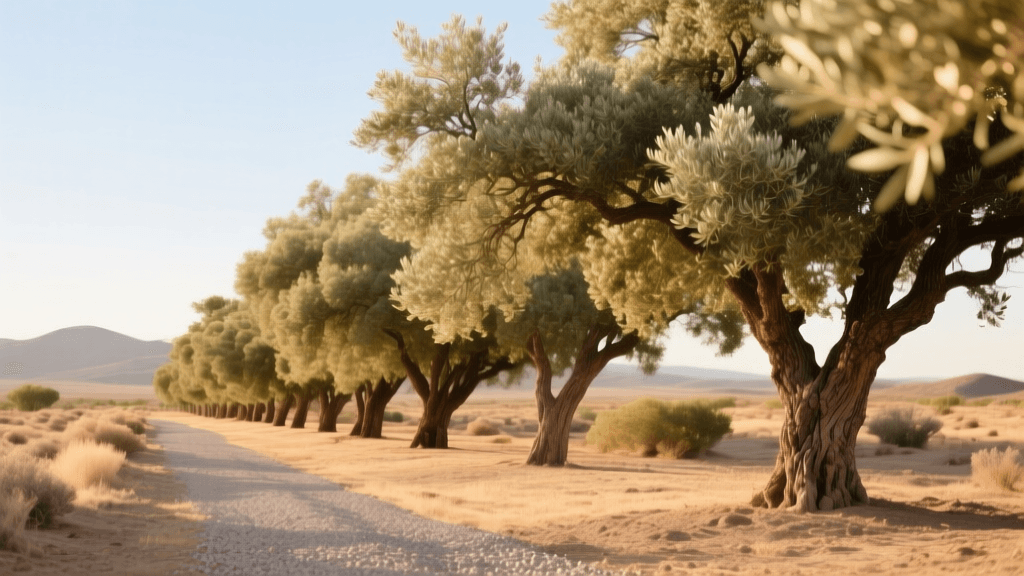
Best Drought-Tolerant Shade Trees for Zones 7 to 9
Why Choose Drought-Tolerant Shade Trees for Warm Climates?
As summer temperatures continue to rise and municipal water restrictions become more frequent across USDA Hardiness Zones 7 through 9, homeowners must rethink their landscape strategies. Selecting the right tree species is no longer just about aesthetics; it is an exercise in climate resilience and long-term resource management. Drought-tolerant shade trees provide critical cooling for your home, reducing air conditioning costs by up to 25 percent, while requiring a fraction of the irrigation needed by traditional species like hydrangeas or shallow-rooted maples.
According to the USDA Plants Database, native and adapted species have evolved deep taproots and specialized leaf structures that allow them to thrive in periods of prolonged heat. By focusing on variety and species selection tailored to warm, dry environments, you can cultivate a lush, expansive canopy that survives—and thrives—during the harshest August droughts.
Top Drought-Tolerant Shade Tree Species
1. Live Oak (Quercus virginiana)
The Southern Live Oak is an iconic, broadleaf evergreen that offers massive, sweeping canopies. While it requires regular watering during its first two years, a mature Live Oak is exceptionally drought-hardy. The NC State Extension Plant Database notes that its extensive lateral root system allows it to scavenge moisture from a wide area. Actionable Tip: Because its roots are aggressive, install 24-inch deep HDPE root barriers at planting time if the tree is within 15 feet of driveways or foundations.
2. Shumard Oak (Quercus shumardii)
For those who prefer autumn color, the deciduous Shumard Oak delivers brilliant crimson and russet foliage in late fall. It is highly adaptable to both alkaline clay soils and rocky terrains. Once established, its deep taproot makes it remarkably resilient to dry spells. Expect to pay between $200 and $350 for a healthy 30-gallon specimen at a local nursery.
3. Chinese Pistache (Pistacia chinensis)
Widely celebrated as one of the most reliable medium-sized shade trees for warm zones, the Chinese Pistache offers a perfectly symmetrical, umbrella-like canopy and unmatched fiery fall color. It thrives in poor, well-draining soils and is virtually immune to most local pests. The Arbor Day Foundation frequently recommends this species for urban environments due to its high tolerance for heat, smog, and drought.
4. Desert Willow (Chilopsis linearis)
If you need shade for a smaller patio or courtyard, the Desert Willow is an outstanding choice. Though technically a large shrub, it is easily trained into a multi-trunk patio tree reaching 15 to 25 feet. It produces stunning orchid-like blooms from late spring through early fall and requires almost zero supplemental watering once established in Zone 8 and 9 landscapes.
Species Comparison Chart
| Species | Mature Height | Canopy Spread | Water Needs (Established) | Soil Preference | Est. Cost (30-Gal) |
|---|---|---|---|---|---|
| Live Oak | 40 - 80 ft | 60 - 120 ft | Very Low | Adaptable, prefers sandy loam | $250 - $400 |
| Shumard Oak | 40 - 60 ft | 30 - 40 ft | Low | Tolerates heavy clay, alkaline | $200 - $350 |
| Chinese Pistache | 35 - 50 ft | 25 - 35 ft | Very Low | Well-draining, loamy | $150 - $250 |
| Desert Willow | 15 - 25 ft | 10 - 15 ft | Extremely Low | Sandy, rocky, poor soils | $90 - $140 |
Precision Planting Techniques for Dry Climates
Selecting the right species is only half the battle; proper planting dictates whether your tree will survive its first summer. The optimal planting window for Zones 7 through 9 is between mid-October and late November. This allows the tree to establish a robust root system in cool, moist soil before the brutal heat of July arrives.
Excavation and Root Flare Identification
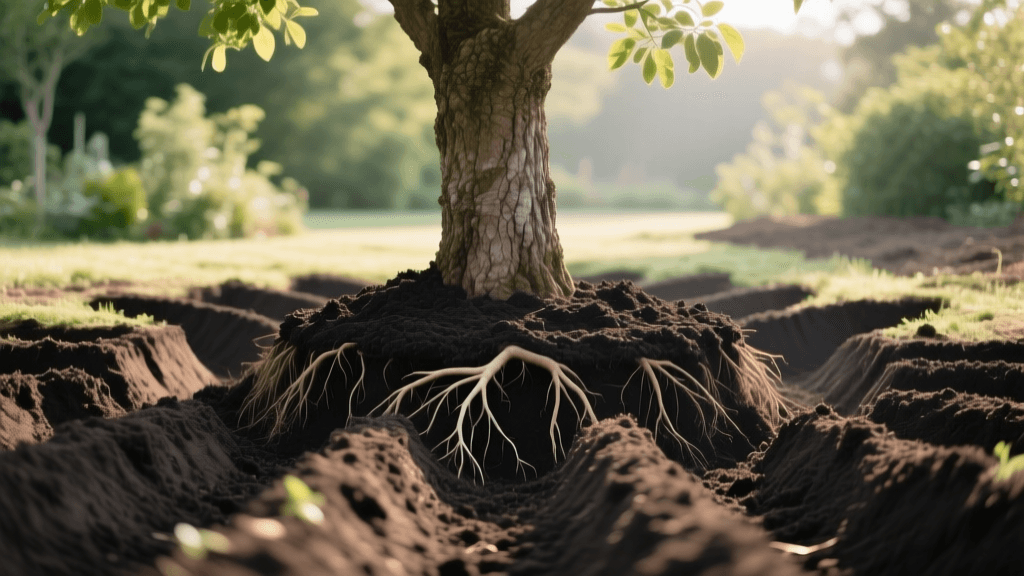
Dig a saucer-shaped hole that is 2.5 times wider than the root ball, but no deeper than the root ball itself. The most critical step is identifying the root flare—the point where the trunk widens and transitions into roots. This flare must sit 1 to 2 inches above the surrounding grade. Planting too deep suffocates the root system and invites fatal fungal pathogens like Phytophthora.
Backfilling and Soil Amendments
Resist the urge to amend the backfill soil with rich compost or peat moss. Creating a highly porous, nutrient-rich pocket in dense native clay causes the bathtub effect, where water pools around the roots and drowns the tree. Always backfill with the exact native soil you excavated, breaking up large clods to ensure good root-to-soil contact.
The Establishment Watering Protocol
Even drought-tolerant trees require consistent moisture to establish their root networks. Follow this strict watering schedule for the first 18 months:
- Weeks 1 to 4: Water every 2 to 3 days. Apply 10 gallons of water per inch of trunk caliper (measured at knee height).
- Months 2 to 6: Water deeply once a week. Increase the volume to 15 gallons per inch of caliper to encourage deep root growth.
- Months 7 to 18: Water every 10 to 14 days, tapering off completely during winter dormancy.
Use a soaker hose or a slow-drip emitter system rather than a high-pressure spray nozzle. Place the drip line at the edge of the root ball, slowly moving it outward as the canopy expands to train the roots to seek moisture laterally.
Mulching and Structural Pruning
Apply the 3-3-3 Rule for mulching: Apply a 3-inch layer of organic hardwood mulch, in a 3-foot radius around the trunk, keeping it 3 inches away from the bark. This donut shape prevents trunk rot, regulates soil temperature, and drastically reduces surface evaporation. Never pile mulch against the trunk in a volcano shape, as this traps moisture and invites boring insects.
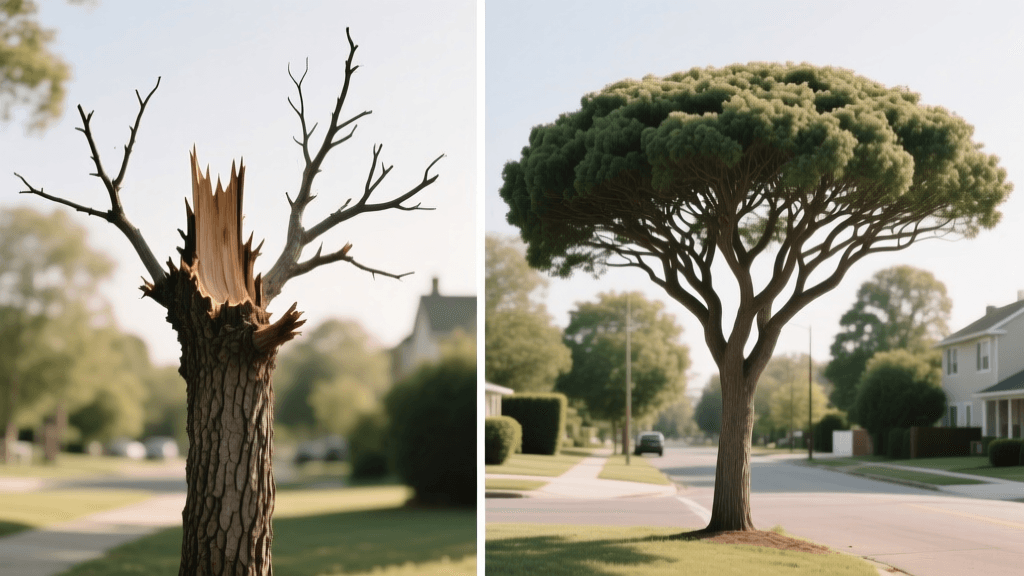
Finally, invest in structural pruning during years two and three. Remove co-dominant stems (stems competing for the central leader) and branches with narrow, V-shaped crotches. A well-structured canopy is essential for wind resistance, ensuring your new shade tree remains standing through the severe thunderstorms and microbursts common in warm-climate regions.
Budgeting and Long-Term Care
When budgeting for a new shade tree, consider the total cost of ownership. A 15-gallon tree might only cost $80 to $120, but it will take 10 to 15 years to provide meaningful shade. A 45-gallon boxed specimen, which costs between $600 and $1,200, provides an immediate architectural anchor and instant cooling benefits. Professional planting services typically charge an additional $150 to $300 per tree, which often includes a one-year survival guarantee and heavy equipment access for moving massive root balls.
Long-term care for these species is minimal. Once established, an annual application of a slow-release, low-nitrogen fertilizer in early spring can support vigorous canopy growth. Monitor for signs of chlorosis (yellowing leaves with green veins), particularly in Shumard Oaks planted in highly alkaline soils. If chlorosis appears, apply chelated iron to the soil surface according to the manufacturer instructions to restore the tree's ability to photosynthesize efficiently.