Pest Control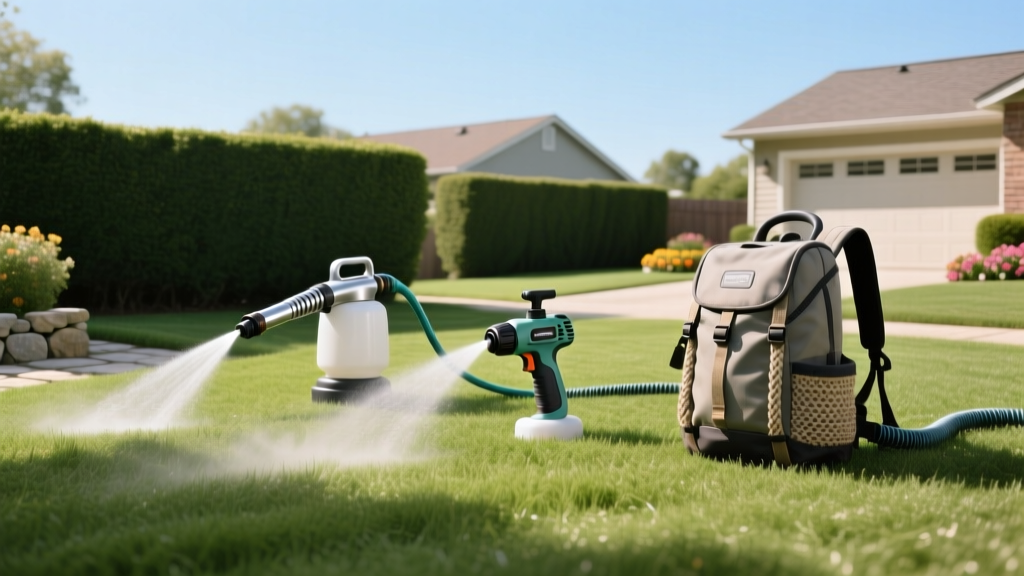
Best Lawn Sprayers for Pest Control: Equipment Guide
Robert HayesPublished
Introduction to Pest Control Sprayers
Effective Integrated Pest Management (IPM) relies heavily on the precise application of treatments. Whether you are targeting surface-feeding insects like chinch bugs, soil-dwelling pests like grubs, or foliar pests affecting your ornamental garden beds, the equipment you use dictates the success of your pest control strategy. Applying too little product renders the treatment ineffective, while over-applying wastes money, harms beneficial insects, and increases environmental runoff. According to the Environmental Protection Agency (EPA), proper application equipment and adherence to label instructions are the first lines of defense in safe and effective pest management. This comprehensive guide breaks down the essential sprayers every homeowner and lawn care enthusiast needs, how to calibrate them, and the safety gear required for the job.
Types of Lawn Sprayers for Pest Management
Choosing the right sprayer depends on your lawn size, the type of pest you are targeting, and the formulation of the pesticide (liquid concentrate, wettable powder, or granular). Below are the three primary categories of sprayers used in residential lawn care.
1. Hose-End Sprayers
Hose-end sprayers attach directly to your garden hose and use water pressure to siphon and mix the pesticide concentrate. They are ideal for treating large areas (over 5,000 square feet) and are particularly effective for applying beneficial nematodes or systemic insecticides that require deep soil watering. Most modern hose-end sprayers feature a dial that allows you to set the mixing ratio (e.g., 1 oz per gallon of water). However, they lack precision. Water pressure fluctuations can alter the application rate, making them less suitable for targeted spot treatments or delicate garden beds where overspray could damage non-target plants.
2. Handheld Compression Sprayers (1 to 2 Gallons)
Handheld pump sprayers are the workhorses of perimeter pest control and spot treatments. By manually pumping a handle, you pressurize the tank (typically to 40-60 PSI). These are perfect for applying barrier treatments around your home’s foundation to stop ants, spiders, and cockroaches. When purchasing a handheld sprayer, look for models with Viton seals and O-rings, as standard rubber seals degrade quickly when exposed to harsh chemical solvents and oil-based pesticides. While highly maneuverable, they are not practical for treating entire lawns due to the physical fatigue of constant pumping and limited tank capacity.
3. Backpack Sprayers (4 to 5 Gallons)
For medium to large lawns (2,000 to 10,000 square feet), a backpack sprayer is the ultimate pest control tool. Worn on your back, the weight is distributed evenly, and a side-mounted lever allows you to maintain constant pressure with your left hand while spraying with your right. Backpack sprayers offer superior consistency and feature adjustable wands and interchangeable nozzles. They are available with either piston pumps (which generate higher pressure, great for reaching tall shrubs) or diaphragm pumps (which handle wettable powders and abrasive mixtures much better without damaging internal seals).
Sprayer Comparison Chart
| Sprayer Type | Capacity | Best Use Case | Avg. Cost | Operating Pressure |
|---|---|---|---|---|
| Hose-End Sprayer | 16-32 oz reservoir | Large lawns, nematodes, soil drenches | $15 - $30 | Dependent on hose PSI |
| Handheld Pump | 1 - 2 Gallons | Foundation perimeter, spot treatments, garden beds | $25 - $50 | 40 - 60 PSI |
| Backpack Sprayer | 4 - 5 Gallons | Full lawn broadcast, shrubs, precise calibration | $60 - $180 | 15 - 60 PSI |
Understanding Nozzles and Droplet Sizes
The nozzle is the most critical component of your sprayer. It determines the droplet size, spray pattern, and ultimately, where the pesticide ends up. Using the wrong nozzle can lead to poor pest control and dangerous chemical drift.
- Flat Fan Nozzles: These produce a wide, flat, even spray pattern. They are ideal for broadcasting liquid insecticides and herbicides over the soil surface or turfgrass canopy. They provide excellent coverage for surface pests like fleas, ticks, and chinch bugs.
- Hollow Cone Nozzles: These create a circular spray pattern with smaller droplets that penetrate dense foliage. They are essential when treating foliar pests like aphids, spider mites, or caterpillars, as the smaller droplets can coat the undersides of leaves where these pests hide.
- Adjustable Brass Nozzles: Common on backpack sprayers, these allow you to twist the tip to transition from a pinpoint stream (for injecting into borer holes or wasp nests) to a wide cone. While versatile, they are less consistent than dedicated flat fan nozzles for broad applications.
Step-by-Step Sprayer Calibration Guide
Calibration ensures you are applying the exact amount of product specified on the pesticide label. As noted by Penn State Extension, an uncalibrated sprayer can easily over-apply chemicals by 30% or more, leading to turf burn and environmental contamination. Follow this simple 1,000 square foot calibration method:
- Measure the Test Area: Mark off an area of your lawn or driveway that is exactly 1,000 square feet (e.g., 20 feet by 50 feet).
- Fill with Water: Fill your sprayer with a known amount of plain water. Record the exact volume (e.g., 4 gallons).
- Spray the Area: Walk at your normal, steady application pace, spraying the 1,000 sq ft area just as you would with a pesticide. Maintain consistent pressure.
- Measure the Remainder: Check how much water is left in the tank. Subtract the remainder from your starting volume to find out how many ounces or gallons you used to cover 1,000 sq ft.
- Calculate the Mix: If the pesticide label calls for 2 ounces of concentrate per 1,000 square feet, and you used 2 gallons of water to cover that area during your test, you must mix 2 ounces of concentrate into every 2 gallons of water in your tank.
Adjuvants and Surfactants
When treating pests with waxy exoskeletons (like scale insects) or spraying on water-repellent leaves, water alone will bead up and roll off. Adding a non-ionic surfactant (a type of adjuvant) breaks the surface tension of the water, allowing the pesticide to spread evenly and stick to the target. Always check the pesticide label; if it recommends a surfactant, add it at a rate of roughly 1/2 teaspoon per gallon of mixed solution.
Essential PPE and Safety Equipment
Handling concentrated pesticides requires strict adherence to safety protocols. The EPA's guide on Personal Protective Equipment (PPE) mandates specific gear based on the toxicity of the chemical. At a minimum, your pest control toolkit should include:
- Chemical-Resistant Gloves: Use unlined nitrile or neoprene gloves. Never use leather or fabric gloves, as they absorb chemicals and hold them against your skin.
- Splash-Proof Goggles: Protect your mucous membranes from accidental splashes during the mixing phase, which is when most exposure occurs.
- Respirator: If applying wettable powders or spraying in enclosed areas (like crawl spaces for termite or ant control), an N95 or a half-face respirator with organic vapor cartridges is necessary.
- Long Sleeves and Pants: Wear dedicated clothing that is washed separately from your household laundry.
Cleaning and Maintenance Protocols
Proper maintenance extends the life of your equipment and prevents catastrophic cross-contamination. Never use a sprayer for herbicides (weed killers) and then use it for insecticides or fungicides. Residual herbicide trapped in the wand or seals can severely damage your ornamental plants or lawn.
After every use, perform a triple-rinse. Fill the tank 1/4 full with clean water, pressurize, and spray it out through the wand to flush the hoses. If you have used an oil-based pesticide or a stubborn wettable powder, add a few drops of dish soap or a specialized tank cleaner to the first rinse. For long-term storage, drain the sprayer completely, release all pressure, and store it in a climate-controlled area to prevent UV degradation and freezing of residual moisture.
Conclusion
Investing in the right pest control sprayer and learning to calibrate it properly will save you money, protect your local ecosystem, and yield a healthier, pest-free lawn. Whether you opt for a versatile backpack sprayer for broad applications or a precise handheld pump for perimeter defense, always prioritize safety, read the label, and maintain your equipment rigorously.