
Landscaping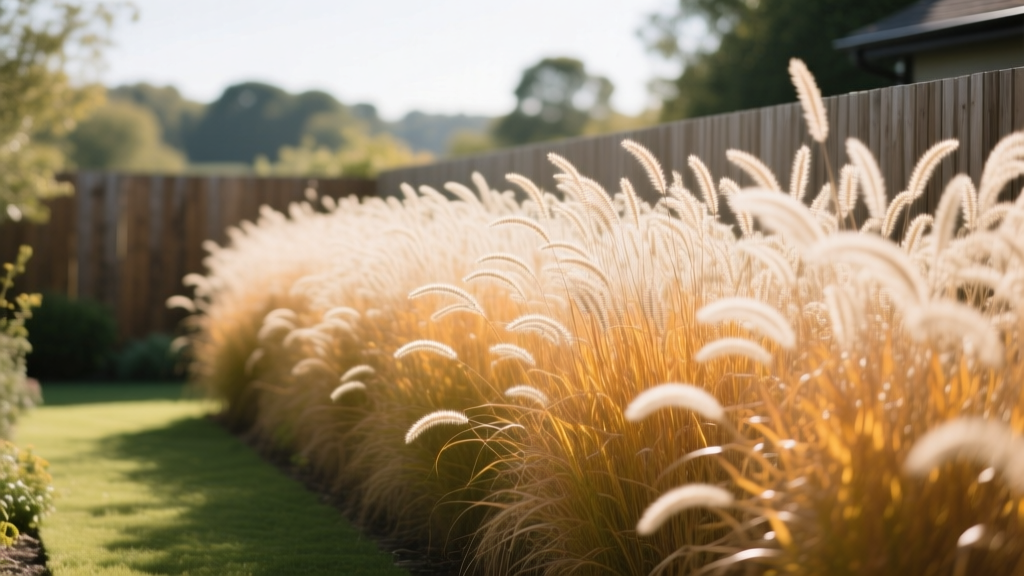
Best Native Ornamental Grasses for Landscape Privacy
Sarah ChenPublished
Transforming Your Landscape with Native Privacy Screens
Creating a private outdoor oasis is a top priority for many homeowners, but traditional privacy solutions like wooden fences or non-native evergreen hedges often come with high maintenance costs, limited ecological value, and a static visual aesthetic. For a dynamic, sustainable, and visually stunning alternative, landscape designers are increasingly turning to native ornamental grasses. When selected and spaced correctly, tall native grasses form dense, living privacy screens that sway in the breeze, provide habitat for local wildlife, and require a fraction of the water and upkeep demanded by traditional hedging plants.
According to the Environmental Protection Agency (EPA), outdoor water use accounts for nearly a third of all residential water use, totaling billions of gallons daily. By integrating drought-tolerant native grasses into your landscape design, you align your property with sustainable water conservation practices while dramatically reducing your long-term maintenance workload. This guide explores the best native ornamental grass species for privacy, complete with planting metrics, design strategies, and seasonal care tips.
Top Native Grass Species for Privacy Screens
When selecting grasses for a privacy screen, you need species that are tall (typically 5 to 8 feet), possess an upright growth habit, and maintain their structural integrity through the fall and winter months. Below are the top three native species that excel in these categories.
1. Big Bluestem (Andropogon gerardii)
Often referred to as the 'king of the prairie grasses,' Big Bluestem is a warm-season perennial that is unmatched for its height and striking seasonal color transitions. During the summer, the foliage is a lush blue-green, but as autumn approaches, it shifts to a vibrant mix of copper, purple, and bronze. The distinctive, three-pronged seed heads resemble turkey feet, adding unique textural interest to the top of your privacy screen.
Big Bluestem thrives in full sun and is highly adaptable to a range of soil types, from sandy loams to heavy clays. Its root system is incredibly deep—often reaching 8 to 10 feet into the soil—which makes it exceptionally drought-tolerant once established. According to the USDA PLANTS Database, this species is hardy in USDA Zones 4 through 9, making it a versatile choice for a vast majority of the United States. Expect mature clumps to reach 6 to 8 feet in height with a spread of 2 to 3 feet.
2. Switchgrass (Panicum virgatum)
Switchgrass is a staple in sustainable landscape design due to its adaptability, upright habit, and airy, cloud-like seed panicles that hover above the foliage in late summer. For privacy screens, selecting an upright cultivar is crucial to prevent the grass from flopping over under heavy rain or snow. Cultivars like 'Northwind' and 'Thundercloud' are specifically bred for their rigid, columnar growth habits, making them perfect for narrow property lines or tight garden beds.
The USDA PLANTS Database notes that Switchgrass is highly tolerant of both wet and dry soil conditions, as well as occasional salt exposure, making it an excellent choice for roadside privacy buffers or rain garden perimeters. It grows best in full sun to light shade and reaches heights of 5 to 7 feet. In the fall, the foliage transitions to a soft yellow or tan, and the dried grass blades and seed heads remain standing throughout the winter, providing a semi-transparent but highly effective visual barrier during the dormant season.
3. Indian Grass (Sorghastrum nutans)
If you want a privacy screen that doubles as a late-summer showstopper, Indian Grass is an exceptional choice. This warm-season grass is renowned for its large, feathery, golden-yellow plumes that catch the sunlight and glow brilliantly in the late afternoon. The foliage is a rich blue-green to deep green, forming a dense base that effectively blocks sightlines from ground level up to about 4 feet, with the flowering plumes extending the visual screen to 7 feet.
Indian Grass prefers well-drained soils and full sun. It is slightly less drought-tolerant than Big Bluestem during its first year of establishment but becomes highly resilient in subsequent years. The USDA PLANTS Database confirms its hardiness across Zones 4 to 9. Ecologically, Indian Grass is a powerhouse; it serves as a host plant for several species of skipper butterflies and provides essential overwintering cover and seeds for native birds like finches and sparrows.
Species Comparison Chart
Use the following table to compare the key characteristics of these three native grasses and determine which best fits your specific landscape requirements, soil conditions, and aesthetic preferences.
| Species | Mature Height | Spread | Sunlight Needs | Soil Moisture | Fall/Winter Color |
|---|---|---|---|---|---|
| Big Bluestem | 6 - 8 ft | 2 - 3 ft | Full Sun | Dry to Medium | Copper, Purple, Bronze |
| Switchgrass ('Northwind') | 5 - 7 ft | 2 - 3 ft | Full to Part Sun | Wet to Dry | Yellow, Tan |
| Indian Grass | 5 - 7 ft | 2 - 3 ft | Full Sun | Medium to Dry | Golden Yellow, Tan |
Designing and Spacing Your Grass Privacy Screen
Unlike traditional hedges that are often planted in a single, rigid line, native grasses look best and perform healthiest when planted in a staggered or 'drift' layout. This mimics their natural growth patterns in prairies and meadows, promoting better air circulation which reduces the risk of fungal diseases.
- Spacing: For a dense, continuous privacy screen, space your grass plugs or potted plants 24 to 36 inches apart on center. If you are using larger 3-gallon or 5-gallon nursery containers, you can space them up to 48 inches apart, as they will fill in within two growing seasons.
- Layering: To create a more robust visual barrier and prevent weeds from encroaching under the screen, plant a secondary, lower-growing layer of native sedges or groundcovers (such as Pennsylvania sedge or creeping phlox) along the sun-facing edge of the grass border.
- Winter Screening: While native grasses hold their form beautifully in winter, they do not provide the solid opacity of an evergreen. If absolute winter privacy is required, consider interplanting the grasses with native evergreen shrubs like American Holly (Ilex opaca) or Inkberry (Ilex glabra). The grasses will hide the bare lower branches of the shrubs in summer, while the shrubs provide solid coverage when the grasses are cut back in early spring.
Site Preparation and Planting Guidelines
One of the most common mistakes homeowners make when planting native grasses is over-preparing the soil. These plants evolved in tough, competitive prairie environments and actually perform poorly in heavily amended, nutrient-rich soils. Excessive nitrogen will cause rapid, weak top growth that is highly susceptible to lodging (flopping over) in high winds.
- Weed Eradication: Before planting, thoroughly clear the area of existing turfgrass and aggressive perennial weeds. Smothering the area with cardboard and mulch for a season prior to planting is an effective, chemical-free method.
- Planting Depth: Dig a hole that is twice as wide as the root ball but no deeper. The crown of the grass (where the roots meet the stems) should sit exactly at or slightly above the surrounding soil grade to prevent crown rot.
- Watering for Establishment: Although these species are drought-tolerant, they require consistent moisture during their first growing season to develop those signature deep root systems. Water deeply twice a week for the first three months, providing about 1 inch of water per week. By the second year, supplemental watering should only be necessary during periods of extreme, prolonged drought.
Long-Term Maintenance and Seasonal Care
Native ornamental grasses are famously low-maintenance, but they do require specific seasonal care to maintain their structural integrity and visual appeal as a privacy screen.
Leave Them Standing in Winter: Resist the urge to cut your grasses down in the fall. The dried foliage and seed heads provide crucial winter interest, catch falling snow to create beautiful landscape sculptures, and offer essential overwintering habitat for beneficial insects and native bees. Furthermore, the standing root crowns help prevent water from pooling and freezing around the base of the plant, which can cause winter kill.
The Spring Cutback: In late winter or very early spring (just before new green shoots begin to emerge from the base), cut the previous year's dead foliage down to about 6 to 8 inches above the ground. For large clumps of Big Bluestem or Switchgrass, a pair of battery-powered hedge trimmers or a string trimmer makes this task quick and easy. Leaving a 6-inch stubble provides a helpful 'nest' that supports the tender new spring growth as it pushes upward.
Dividing Overgrown Clumps: Warm-season native grasses are long-lived, but after 4 to 5 years, the center of the clump may begin to die out, forming a donut shape. When this happens, or if the clump has outgrown its designated space in your privacy screen, it is time to divide. In early spring, dig up the entire root mass and use a sharp spade or a reciprocating saw to cut the tough root ball into three or four smaller sections. Replant the vigorous outer edges and discard or compost the dead center material.
By carefully selecting the right native species, utilizing proper spacing techniques, and embracing a low-input maintenance philosophy, you can cultivate a living privacy screen that is not only highly effective but also deeply beneficial to your local ecosystem.

