Tree Care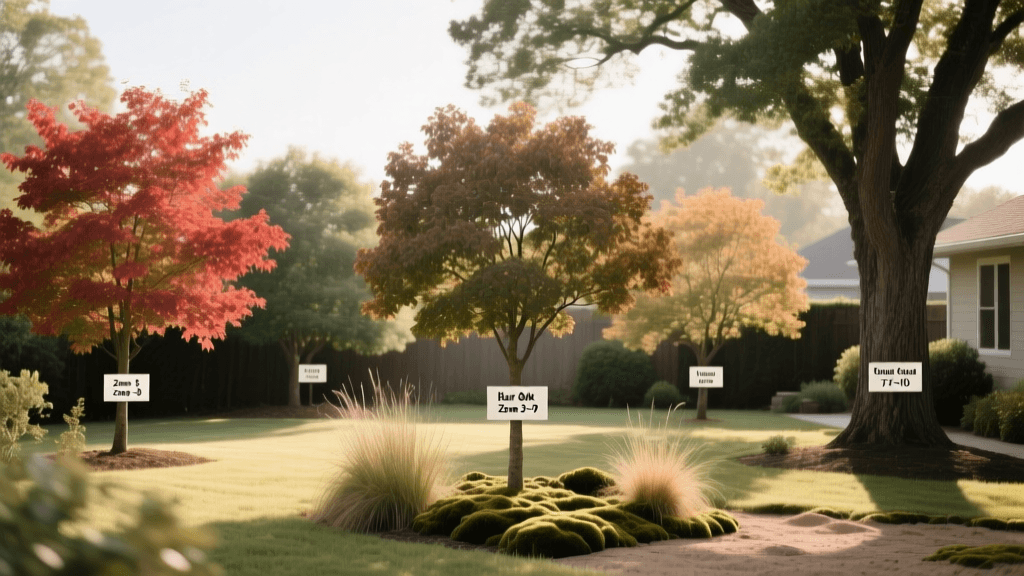
Best Native Shade Trees for Residential Yards by Zone
The Strategic Value of Native Shade Trees
Selecting the right shade tree is one of the most impactful landscaping decisions a homeowner can make. Beyond their undeniable aesthetic appeal, mature shade trees can reduce summer cooling costs by up to 25%, mitigate soil erosion, and provide critical habitat for local wildlife. However, the secret to a thriving, low-maintenance landscape lies in choosing native species adapted to your specific environmental conditions. Native trees require less supplemental watering, possess natural resistance to regional pests, and support local pollinator populations far better than exotic imports.
Understanding Hardiness Zones and Microclimates
Before browsing nursery catalogs, you must understand your USDA Plant Hardiness Zone and your yard's unique microclimates. Hardiness zones are based on the average annual extreme minimum winter temperature, which dictates whether a tree can survive the coldest nights of the year. However, the University of Minnesota Extension notes that microclimates—such as the heat island effect near paved driveways, frost pockets in low-lying areas, or wind tunnels between houses—can shift your effective zone by half a step in either direction. Always observe how water pools in your yard after heavy rain and note where snow drifts accumulate in winter to accurately gauge your planting environment.
Top Native Shade Tree Species by Region
The Arbor Day Foundation's Tree Guide emphasizes matching a tree's mature spread and height to your available space to prevent future conflicts with power lines and foundations. Below is a comparison of top-performing native shade trees across various North American hardiness zones.
| Species | Hardiness Zones | Mature Height | Canopy Spread | Ideal Soil | Avg. Cost (15gal) |
|---|---|---|---|---|---|
| Red Maple | 3-9 | 40-60 ft | 30-50 ft | Acidic, moist | $120 - $180 |
| Bur Oak | 3-8 | 70-80 ft | 60-80 ft | Well-draining | $150 - $250 |
| Tulip Tree | 4-9 | 70-90 ft | 40-50 ft | Loamy, moist | $130 - $200 |
| Eastern Redcedar | 2-9 | 40-50 ft | 8-20 ft | Adaptable | $90 - $140 |
1. Red Maple (Acer rubrum)
Acer rubrum is a staple in eastern and central North American landscapes. Prized for its brilliant crimson fall foliage, the Red Maple is highly adaptable to a range of soil types, though it prefers slightly acidic, moist conditions. It grows at a medium to fast rate, adding 1 to 2 feet per year. When planting, ensure the soil drains adequately; while it tolerates brief flooding, prolonged waterlogging in heavy clay can lead to root rot.
2. Bur Oak (Quercus macrocarpa)
If you have a sprawling property and need a monumental, drought-tolerant shade tree, the Bur Oak is unmatched. Native to the central and midwestern United States, Quercus macrocarpa develops a massive, wide-spreading canopy and a deep taproot that anchors it firmly against high winds. It is exceptionally tolerant of urban pollution and alkaline soils. Because of its taproot, it is best planted when young to ensure proper establishment without transplant shock.
3. Tulip Tree (Liriodendron tulipifera)
Liriodendron tulipifera is one of the tallest native hardwoods in the eastern United States. Recognizable by its unique, tulip-shaped leaves and striking yellow-green spring blooms, this tree thrives in deep, moist, well-drained loamy soils. It is a fast grower, making it an excellent choice for homeowners who want canopy coverage quickly. However, its brittle wood means it should be planted away from structures in areas prone to severe ice storms.
Conducting a Comprehensive Site Assessment
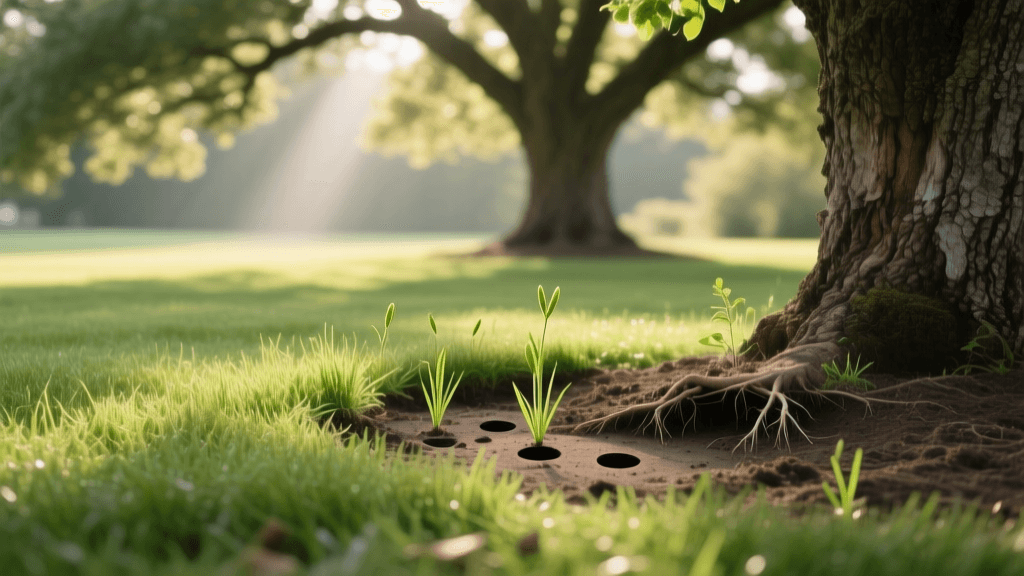
Experts at the Morton Arboretum recommend conducting a thorough site assessment before purchasing any tree. Look up to identify overhead utility lines; never plant a tree that will exceed 25 feet in height directly under power lines. Look down to consider underground utilities (always call 811 before you dig) and the depth of your topsoil. Test your soil drainage by digging a 12-inch deep hole and filling it with water. If it takes longer than 24 hours to drain, you have heavy clay soil and must select a moisture-tolerant species or amend the planting area.
Step-by-Step Planting Guidelines
- Timing: Plant deciduous shade trees in early fall (September to November) after the summer heat breaks but before the ground freezes. This allows roots to establish without the stress of supporting a full canopy. In northern zones (Zones 3-4), early spring planting immediately after the thaw is safer to avoid winter desiccation damage.
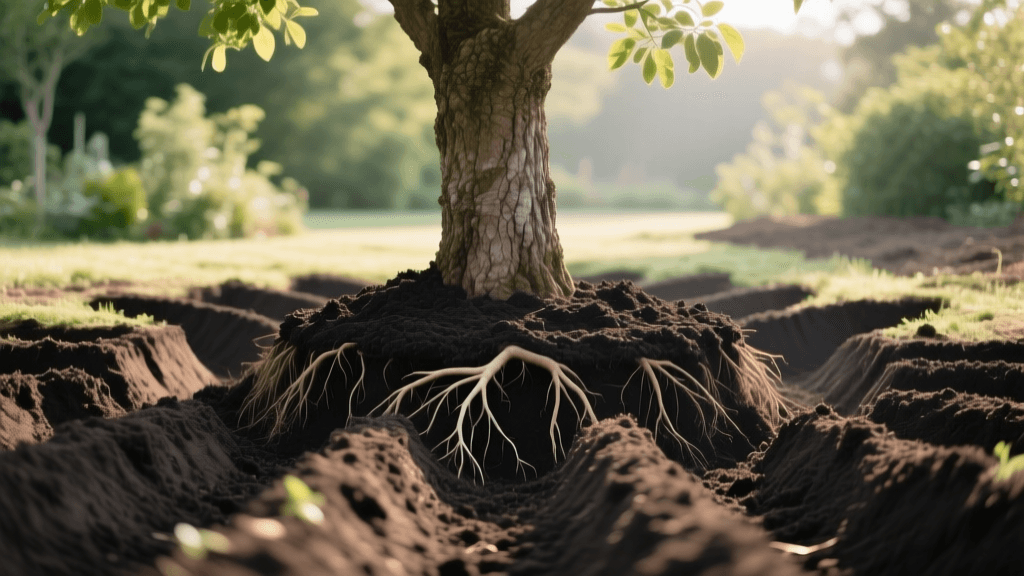
- Hole Dimensions: Dig a hole 2 to 3 times wider than the root ball, but no deeper. The root flare (where the trunk widens at the base) must sit 1 to 2 inches above the surrounding grade to prevent suffocation.
- Backfilling: Use the native soil you just dug out. Amending the backfill with rich compost creates a "bathtub effect," discouraging roots from expanding into the surrounding native earth.
- Mulching: Apply a 2 to 4-inch layer of organic wood chip mulch in a wide donut shape. Keep the mulch at least 3 inches away from the trunk to prevent bark decay and rodent damage.
Budgeting: Container vs. Balled and Burlapped (B&B)
Understanding nursery pricing structures will help you budget effectively. Trees are typically sold in three ways: bare-root, container-grown, or balled and burlapped (B&B).
- Bare-Root ($40 - $90): Best for smaller saplings and native restoration. Must be planted immediately while dormant.
- Container 15-Gallon ($120 - $200): Ideal for DIY homeowners. Weighs roughly 70-100 lbs, making it manageable without heavy machinery. Establishes quickly.
- Balled & Burlapped 2.5-inch caliper ($250 - $500+): Provides instant impact and mature structure. Weighs 300+ lbs and usually requires professional delivery and mechanical planting.
Structural Pruning and Storm Resistance
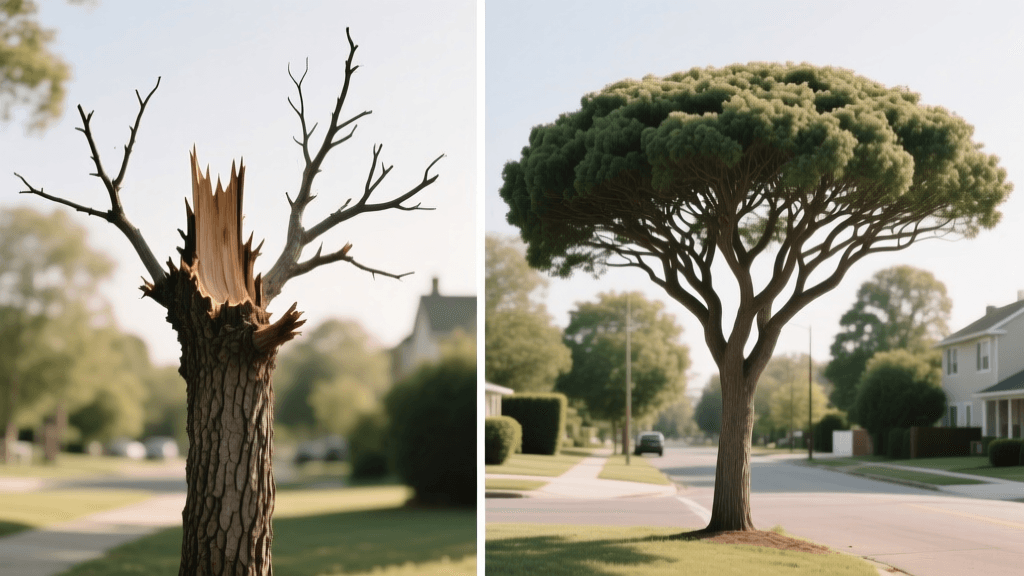
Native shade trees are inherently adapted to local weather patterns, but improper branching architecture can make them vulnerable to storm damage. During the first five years, practice structural pruning to establish a single, dominant central leader. Remove competing leaders and any branches that form narrow, V-shaped crotches, as these are prone to splitting under heavy snow or high winds. Instead, favor branches with wide, U-shaped angles of attachment. Prune only during the dormant season (late winter) to minimize sap loss and reduce the risk of attracting disease-carrying insects, such as the beetles responsible for Oak Wilt or Dutch Elm Disease. Always use sterilized, sharp bypass pruners, and never remove more than 15% of the live canopy in a single season.
Seasonal Care and Long-Term Maintenance
The first two years are critical for root establishment. Water newly planted trees deeply once a week, providing roughly 10 to 15 gallons per inch of trunk caliper. Use a slow-drip soaker hose or a tree watering bag to ensure moisture penetrates the top 12 inches of soil. Avoid fertilizing newly planted trees; high-nitrogen fertilizers push top growth at the expense of root development. Wait until the tree shows vigorous new growth in its second or third spring before applying a balanced, slow-release fertilizer based on a soil test.
"Right tree, right place is not just a catchy slogan; it is the fundamental principle of sustainable arboriculture. A well-sited native tree will outlive its planter and provide ecological dividends for generations."
Conclusion
By carefully matching a native shade tree's biological needs to your yard's specific hardiness zone, soil profile, and spatial constraints, you ensure a resilient landscape. Invest the time in proper site preparation and planting techniques, and your chosen canopy will reward you with decades of cooling shade, vibrant seasonal color, and enduring property value.