Tree Care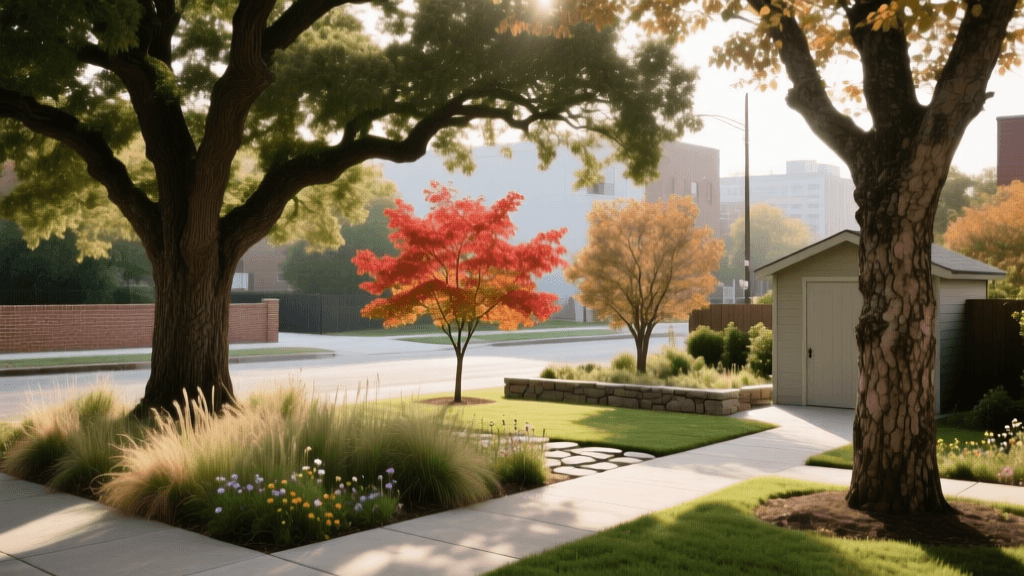
Best Native Shade Trees for Urban Yards: Species Guide
Why Choose Native Shade Trees for Urban Yards?
Selecting the right tree for an urban or suburban yard requires balancing aesthetic desires with harsh environmental realities. Urban soils are often compacted, alkaline, and poorly drained, while the heat island effect subjects trees to elevated summer temperatures. Native shade trees have evolved over thousands of years to withstand local climate fluctuations, making them inherently more resilient than non-native ornamentals.
According to the Arbor Day Foundation, planting native species reduces the need for chemical fertilizers and excessive irrigation, as these trees are already adapted to local rainfall patterns and soil biology. Furthermore, native trees support local ecosystems, providing essential habitat and food sources for native birds and pollinators.
Top 5 Native Shade Trees for Urban Landscapes
When evaluating species for small to medium urban yards, it is crucial to consider mature canopy spread, root behavior, and tolerance to pollution. Below are five exceptional native shade trees that thrive in challenging conditions.
1. Red Maple (Acer rubrum)
Red Maple is a staple in North American landscapes, prized for its brilliant crimson fall foliage and relatively fast growth rate. It adapts to a wide range of soil conditions, from wet, poorly drained sites to moderately dry urban lots. However, it prefers slightly acidic soil. In highly alkaline urban soils, it may develop manganese chlorosis, so a soil test prior to planting is highly recommended.
2. Bur Oak (Quercus macrocarpa)
If you need a tough, long-lived shade tree, the Bur Oak is unmatched. It features deeply furrowed, corky bark and massive, lobed leaves. The Missouri Botanical Garden notes that Bur Oak is exceptionally tolerant of urban pollution, drought, and poor drainage once established. Its deep taproot makes it difficult to transplant when mature, so starting with a smaller container-grown specimen (10-15 gallons) is the most cost-effective approach.
3. Eastern Hackberry (Celtis occidentalis)
Often overlooked in favor of elms and maples, the Eastern Hackberry is a remarkably resilient shade tree. It tolerates heavy clay, alkaline soils, road salt, and strong winds. Its distinctive warty, cork-like bark provides excellent winter interest, and it produces small, berry-like drupes that attract cedar waxwings and robins.
4. Tulip Tree (Liriodendron tulipifera)
For those seeking rapid vertical growth and unique foliage, the Tulip Tree is an excellent choice. It produces striking, tulip-shaped yellow-green flowers in late spring. While it grows quickly (up to 2 feet per year in optimal conditions), it requires deep, moist, well-drained soil. It is not ideal for heavily compacted urban lots unless the planting bed is generously amended and aerated.
5. American Sycamore (Platanus occidentalis)
The American Sycamore offers a massive, spreading canopy and striking exfoliating bark that reveals patches of white, tan, and olive green. It is highly tolerant of wet soils and urban smog. Homeowners should note that Sycamores can be messy, dropping large leaves and seed balls, and they are susceptible to anthracnose in cool, wet springs—though they reliably flush out new growth by early summer.
Species Comparison Chart
Use the following data table to compare key metrics and determine which species best fits your specific yard dimensions and soil profile. The USDA PLANTS Database provides comprehensive native range maps and ecological data to verify if these species are indigenous to your specific county.
| Species | Mature Height | Canopy Spread | Growth Rate | Urban Hardiness |
|---|---|---|---|---|
| Red Maple | 40-60 ft | 30-50 ft | Medium-Fast | Good (needs acidic soil) |
| Bur Oak | 70-80 ft | 50-70 ft | Slow-Medium | Excellent |
| Eastern Hackberry | 40-60 ft | 30-50 ft | Medium | Excellent |
| Tulip Tree | 70-90 ft | 40-50 ft | Fast | Moderate (needs deep soil) |
| American Sycamore | 75-100 ft | 50-70 ft | Fast | Very Good (messy) |
Site Assessment: Matching the Tree to Your Yard
Before purchasing a tree, conduct a thorough site assessment. Measure the distance from your planting location to your home's foundation. For large shade trees like the Bur Oak or Sycamore, maintain a minimum clearance of 15 to 20 feet to prevent root interference with foundations and underground utilities.
Next, look up. If your planting site is beneath or within 10 feet of overhead power lines, do not plant a large shade tree. Instead, opt for a smaller understory tree like the Eastern Redbud or Dogwood. Always call 811 (the national Call Before You Dig hotline) at least three days before digging to have underground utility lines marked for free.
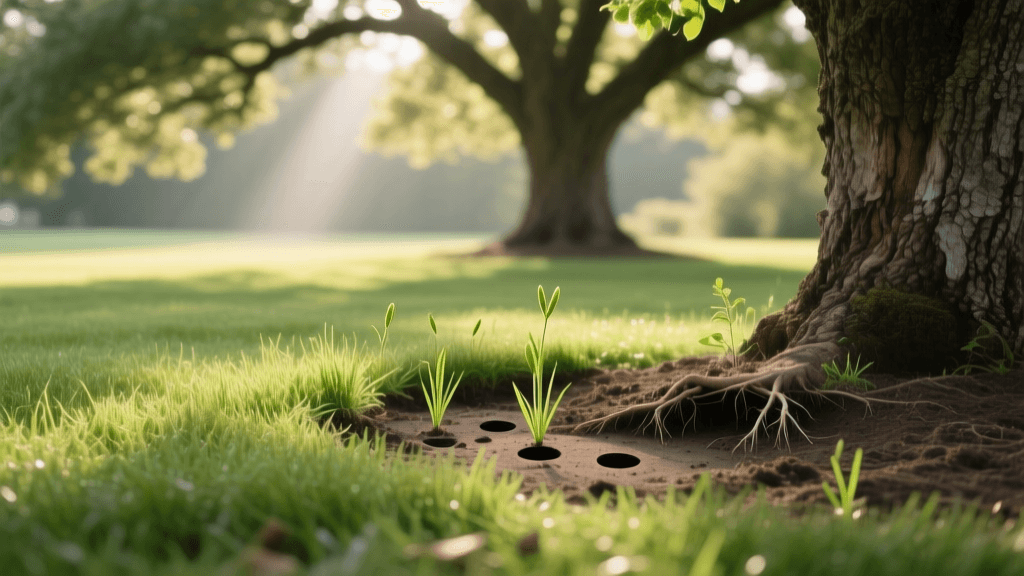
Evaluate your soil drainage by digging a test hole 12 inches deep and filling it with water. If the water does not drain within 4 hours, you have poorly drained clay soil. In this case, the Red Maple or American Sycamore will fare much better than the Tulip Tree, which requires well-drained conditions.
Planting and Establishment Costs
Budgeting for a shade tree involves more than just the nursery price tag. Here is a breakdown of typical costs for urban tree establishment:
- Tree Cost: A 2-inch caliper Balled and Burlapped (B&B) shade tree typically costs between $250 and $450. Container-grown trees (15-25 gallon pots) range from $150 to $300.
- Delivery: Nurseries usually charge $75 to $150 for curbside delivery of heavy B&B trees.
- Professional Planting: Hiring a certified arborist or landscaping crew to plant a large B&B tree costs $300 to $600, which often includes a one-year warranty on the tree's survival.
- Soil Amendments & Mulch: Budget $50 to $100 for high-quality organic compost, mycorrhizal root inoculant, and hardwood mulch.
Pro Tip: Never amend the backfill soil with more than 10% compost. Over-amending the planting hole creates a bathtub effect in heavy clay, trapping water and rotting the roots. Use native soil for backfilling to encourage roots to expand outward.
Post-Planting Care for Urban Trees
The first two years are critical for establishing a deep, resilient root system. Urban trees face intense competition from turfgrass and suffer from radiant heat off paved surfaces.
The Donut Mulching Method
Apply a 3-inch layer of organic hardwood mulch in a 3-foot radius around the tree. Crucially, keep the mulch 3 inches away from the trunk flare to prevent bark decay and rodent damage. Never pile mulch against the trunk in a volcano shape, as this encourages girdling roots and invites fungal pathogens.
Deep Watering Schedule
Newly planted shade trees require approximately 15 to 20 gallons of water per week during their first two growing seasons. Use a slow-release watering bag (such as a Treegator) that zips around the trunk and drips water slowly over 6 to 8 hours. This ensures deep soil penetration rather than surface runoff. During periods of drought, increase watering to twice a week.
Conclusion
Selecting the right native shade tree transforms an urban yard into a cool, biodiverse sanctuary. By carefully matching species like the resilient Bur Oak or the vibrant Red Maple to your specific soil and spatial constraints, you ensure a thriving canopy for decades to come. Invest time in proper site assessment, professional planting techniques, and diligent early watering, and your chosen shade tree will pay dividends in property value, energy savings, and ecological health.