Tree Care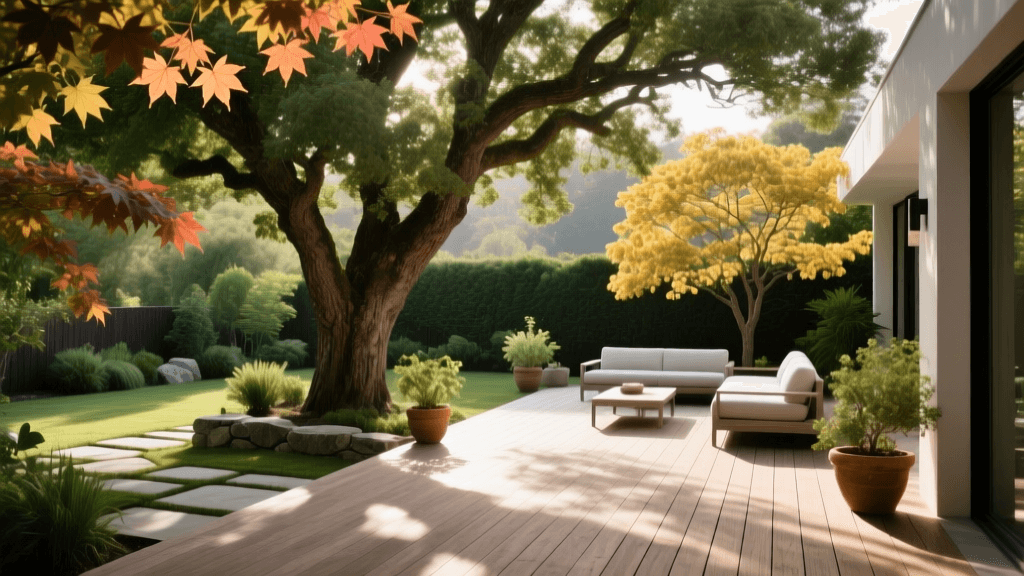
Best Shade Trees for Patios: Planting and Care Guide
Transforming Your Patio with Strategic Shade Trees
When designing an outdoor entertaining space, hardscaping and furniture often take center stage. However, the most impactful element for both comfort and curb appeal is often a living one: a strategically placed shade tree. A well-chosen and properly cared-for shade tree acts as a natural umbrella, lowering patio temperatures by up to 15 degrees Fahrenheit during peak summer afternoons. Beyond the immediate comfort for your guests, mature shade trees significantly elevate your property's curb appeal, framing your home's architecture and signaling a well-maintained, established landscape.
According to the Arbor Day Foundation, strategically planted trees can reduce summer cooling costs by shading the home, while simultaneously increasing overall property values by up to 15 percent. But selecting the right tree for a patio environment requires balancing canopy spread, root behavior, and maintenance requirements. This guide will walk you through the best species for outdoor entertaining, precise planting techniques, and the pruning methods required to create the perfect clearance for patio furniture and string lights.
Top Shade Tree Species for Outdoor Entertaining
Not all trees are suitable for proximity to paved entertaining areas. You need species with strong branch structures to withstand occasional storms, non-invasive root systems to protect pavers, and aesthetically pleasing foliage to maximize curb appeal. Below is a comparison of the top five shade trees for patio environments.
| Species | Mature Height | Canopy Spread | Growth Rate | Best Entertaining Feature |
|---|---|---|---|---|
| Red Maple (Acer rubrum) | 40-60 ft | 30-40 ft | Medium-Fast | Brilliant crimson fall color for autumn gatherings |
| Crape Myrtle (Lagerstroemia) | 15-25 ft | 15-20 ft | Fast | Vibrant summer blooms and striking winter bark |
| Eastern Redbud (Cercis canadensis) | 20-30 ft | 25-35 ft | Medium | Stunning early spring floral displays and dappled shade |
| Live Oak (Quercus virginiana) | 40-80 ft | 60-100 ft | Slow-Medium | Massive, sweeping canopy ideal for large estate patios |
| Japanese Maple (Acer palmatum) | 15-25 ft | 15-20 ft | Slow | Intimate, sculptural shade for small courtyard patios |
Red Maple: The All-Season Showstopper
The Red Maple is a staple for curb appeal. Its dense canopy provides excellent, cooling shade for large patio dining sets during the summer. As autumn approaches, the foliage transitions into a fiery display of reds and oranges, creating a stunning backdrop for fall entertaining. Red Maples prefer slightly acidic, well-draining soil and require moderate watering during their first two years of establishment.
Crape Myrtle: The Patio-Friendly Bloomer
For smaller patios or spaces where you want to maintain sightlines to the street, the Crape Myrtle is unmatched. Often grown as a multi-trunk tree, its peeling bark provides winter interest, while its massive summer flower clusters in shades of pink, purple, red, and white draw the eye. Because it thrives in full sun and tolerates heat exceptionally well, it is perfect for south-facing or west-facing patios that endure harsh afternoon sun.
Eastern Redbud: Dappled Shade for Understory Lounging
If your patio is designed for intimate conversation areas rather than large dining setups, the Eastern Redbud offers beautiful, heart-shaped leaves that create a gentle, dappled shade. This allows enough sunlight to filter through for patio plants to thrive while keeping guests comfortable. Its early spring magenta blooms are a neighborhood spectacle, instantly boosting springtime curb appeal.
Strategic Placement for Maximum Curb Appeal and Comfort
Where you plant your tree is just as critical as the species you choose. Planting too close to the patio can lead to root heaving, which cracks concrete and shifts pavers. Planting too far away defeats the purpose of providing shade over the entertaining area.
- The 10-Foot Rule for Hardscapes: As a general guideline, plant medium-to-large shade trees at least 10 to 15 feet away from the edge of your patio pavers or concrete slab. This gives the trunk room to expand and keeps the primary structural roots away from the hardscape base.
- Root Barriers: If you must plant a vigorous species like a Live Oak or Maple closer to the patio, install a high-density polyethylene root barrier between the tree and the hardscape. Bury the barrier at least 24 to 36 inches deep to deflect roots downward rather than laterally.
- Sun Angle Consideration: To shade your patio during the hottest part of the day (late afternoon), plant your tree on the west or southwest side of the entertaining area. This also shades the exterior walls of your home, reducing indoor cooling costs.
Planting Your Patio Shade Tree: Step-by-Step
Proper planting ensures your tree establishes quickly and avoids structural defects that could become hazardous over your patio later in life. The Arbor Day Foundation's planting guide emphasizes the importance of locating the root flare and avoiding planting too deeply, which is the number one cause of premature tree decline.
- Locate the Root Flare: Before digging, brush away the topsoil from the nursery pot to find the root flare—the point where the trunk widens and transitions into the root system. This flare must sit slightly above the final grade level.
- Dig a Wide, Shallow Hole: Dig a hole that is two to three times wider than the root ball, but no deeper than the root ball itself. A wide hole encourages lateral root growth, anchoring the tree securely against high winds.
- Score the Roots: If the tree is pot-bound, use a sharp knife to make four vertical slices down the sides of the root ball and an 'X' across the bottom. This prevents circling roots from eventually girdling and choking the trunk.
- Backfill and Water: Backfill with the native soil you removed from the hole. Avoid amending the backfill with heavy compost, as this can create a 'bathtub effect' where water pools around the roots. Water deeply immediately after planting to eliminate air pockets.
- Mulch Correctly: Apply a 2-to-4-inch layer of organic hardwood mulch in a wide donut shape around the tree. Keep the mulch at least 3 inches away from the trunk to prevent rot and rodent damage. Never pile mulch against the trunk in a 'volcano' shape.
Pruning and Training for the Perfect Canopy
A tree left to its natural growth habit will often have low-hanging branches that obstruct patio furniture, block sightlines, and make walking underneath difficult. To create a true 'outdoor room' feel, you must train the tree through a process called crown raising.
Achieving the Right Clearance
For a comfortable entertaining space, aim for an 8-to-10-foot clearance from the patio floor to the lowest branches. This allows guests to walk freely without ducking. If you plan to install a pergola, ceiling fan, or string lights within the tree's canopy, you will need to prune for a 12-to-15-foot clearance.
The Three-Cut Pruning Method
When removing larger, low-hanging limbs, never make a single cut from the top down. The weight of the branch will cause the bark to tear down the trunk, creating a massive wound that invites disease and decay. Instead, follow the guidelines recommended by the International Society of Arboriculture (ISA) and use the three-cut method:
- The Undercut: Make a shallow cut on the underside of the branch, about 12 inches from the trunk. This stops any bark tearing.
- The Top Cut: Move an inch or two further out on the branch and cut completely through from the top. The branch will fall cleanly away.
- The Final Collar Cut: Remove the remaining stub by cutting just outside the 'branch collar'—the swollen area where the branch meets the trunk. Never cut flush against the trunk, as the collar contains the cells necessary for the tree to seal the wound.
A properly pruned shade tree not only protects your guests from the sun but also opens up sightlines to your home's architecture, seamlessly blending the landscape with your exterior design to maximize curb appeal.
Integrating Patio Lighting and Decor Safely
Outdoor entertaining often extends into the evening, making patio lighting essential. When integrating lighting into your shade trees, tree health must remain the priority.
- Avoid Nails and Screws: Never drive nails, screws, or staples directly into the trunk or branches to hang string lights or lanterns. These puncture wounds create entry points for fungal pathogens and wood-boring insects.
- Use Expandable Straps: Instead, use wide, UV-resistant nylon straps or bungee cords to attach light fixtures to branches. Check these straps annually and loosen them as the branch grows in girth to prevent girdling.
- Uplighting for Curb Appeal: Place LED uplights at the base of the tree, angled to illuminate the trunk and the underside of the canopy. Ensure the light fixtures are positioned outside the mulch ring to avoid moisture damage to the electrical components, and aim them carefully so they do not blast heat directly onto the lower bark.
Seasonal Care and Maintenance Schedule
To keep your patio tree looking pristine and providing optimal shade, follow this seasonal maintenance schedule:
- Spring: Apply a slow-release, balanced fertilizer (such as a 10-10-10 NPK) just outside the drip line of the canopy. Inspect the canopy for any dead or crossing branches and prune them before the heavy summer growth begins. Refresh your mulch layer to maintain a 3-inch depth.
- Summer: Deep water the tree once a week during dry spells. Use a soaker hose coiled around the drip line and let it run for 2 to 3 hours. Shallow, frequent watering encourages weak surface roots that can heave your patio pavers.
- Autumn: Rake fallen leaves off the patio and hardscapes to prevent staining and slipping hazards. You can compost the leaves or use them to build up garden beds elsewhere on the property.
- Winter: Perform major structural pruning while the tree is dormant. Without leaves, the branch architecture is visible, making it easier to identify weak crotches, co-dominant stems, and branches that need to be raised for the upcoming entertaining season.
Conclusion
Investing in a high-quality shade tree and maintaining it with proper horticultural practices is one of the most rewarding upgrades you can make to your outdoor living space. By selecting the right species for your climate and patio size, planting with careful attention to root placement, and pruning to create an inviting, open canopy, you will craft an outdoor entertaining area that is as comfortable as it is visually stunning. Your patio will become the premier destination for summer gatherings, all while your home's curb appeal continues to grow year after year.