Tree Care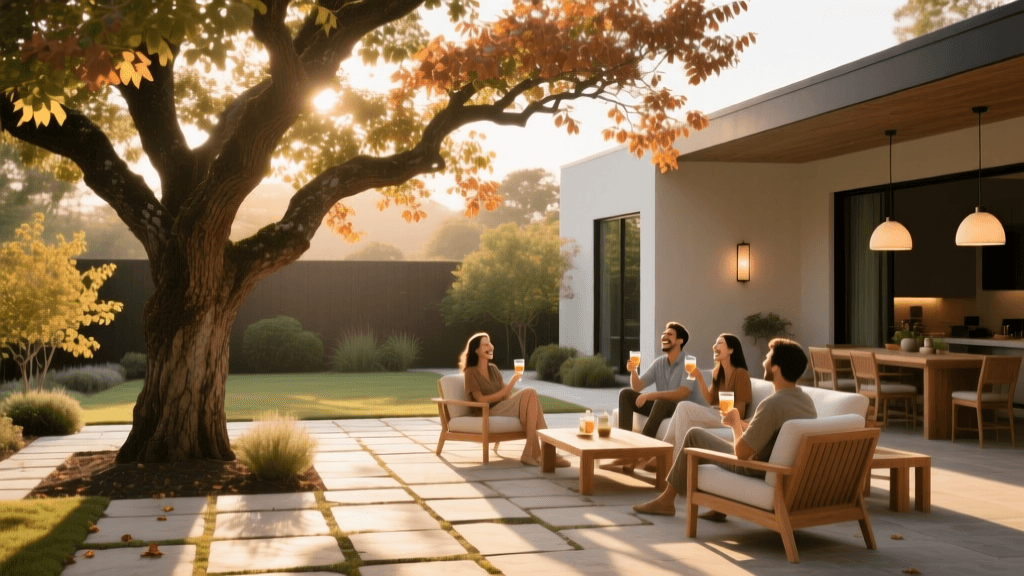
Best Shade Trees for Patios and Outdoor Entertaining Areas
The Intersection of Curb Appeal and Outdoor Comfort
When designing an outdoor entertaining space, hardscaping and furniture often take center stage. However, the strategic placement of a shade tree is what truly transforms a sun-baked patio into a luxurious, usable oasis. A well-chosen and properly placed tree not only provides vital relief from the summer sun but also anchors your landscape, dramatically boosting your property's curb appeal. According to the Arbor Day Foundation, strategic tree shading can cool surrounding air temperatures by up to 10 to 15 degrees, extending your outdoor entertaining season well into the late summer months.
Yet, planting a tree near a patio or outdoor kitchen requires careful forethought. Aggressive root systems can heave pavers, and certain species drop sap, fruit, or excessive pollen that can ruin a dinner party. This guide explores the best shade trees for outdoor entertaining, exact planting measurements, and specialized pruning techniques to maximize both comfort and curb appeal.
Key Selection Criteria for Patio Trees
Not every tree is suited for the immediate vicinity of an outdoor living space. When selecting a specimen for your patio, you must evaluate three critical factors beyond basic hardiness zones.
Canopy Density and Shade Quality
For entertaining areas, you want a tree that provides dappled to medium shade rather than deep, dense shadow. Deep shade can make a patio feel gloomy and prevent understory plantings from thriving. Trees with smaller, compound leaves (like honey locust or serviceberry) filter sunlight beautifully, creating a comfortable, well-lit environment for reading or dining without plunging the space into darkness.
The Messiness Factor
The most common mistake homeowners make is planting high-litter trees near seating areas. Avoid species that drop large, fleshy fruits (like standard crabapples or mulberries), as these attract wasps, stain concrete, and create slip hazards. Similarly, avoid trees prone to heavy aphid infestations that result in sticky 'honeydew' dripping onto patio furniture. Opt instead for sterile cultivars or species with dry, easily swept seed pods.
Top Cultivars for Entertaining Spaces
To ensure success, invest in named cultivars rather than straight species. Cultivars are bred for specific traits, including disease resistance, predictable mature sizes, and reduced litter. Expect to pay between $150 and $350 for a healthy, 15-gallon to 24-gallon specimen from a reputable local nursery.
1. Autumn Brilliance Serviceberry (Amelanchier x grandiflora)
This multi-stemmed small tree is a powerhouse for curb appeal. It offers elegant white spring flowers, edible but small berries that birds quickly devour (leaving your patio clean), and spectacular orange-red fall foliage. Mature Size: 15-25 feet tall and wide. Cost: $180 - $250. Best For: Intimate, smaller patios where a delicate, architectural branching structure is desired.
2. Fastigiata European Hornbeam (Carpinus betulus Fastigiata)
If your entertaining space is bordered by a property line and you need both shade and privacy, this is your tree. It grows in a tight, columnar shape with dense, clean foliage that turns a soft yellow in autumn. It produces virtually no messy litter and is highly tolerant of urban conditions and compacted soils. Mature Size: 30-40 feet tall, but only 15-20 feet wide. Cost: $250 - $350. Best For: Narrow side yards, modern landscape designs, and screening neighboring properties.
3. Prairifire Flowering Crabapple (Malus Prairifire)
While many crabapples are messy, the Prairifire is celebrated for its disease resistance and persistent, tiny, pea-sized fruits that stay on the tree through winter, providing food for birds rather than staining your deck. It features striking dark pink spring blooms and deep burgundy spring foliage that matures to a rich bronze-green. Mature Size: 20 feet tall and wide. Cost: $150 - $220. Best For: Focal point planting at the edge of a large patio or outdoor kitchen.
Strategic Placement and Hardscape Protection
Proper placement is the difference between a landscape asset and a structural liability. The Clemson Cooperative Extension emphasizes that considering the mature canopy and root spread is vital for protecting hardscapes. As a general rule, a tree's root system extends 1.5 to 2 times the width of its canopy. To protect your patio pavers, retaining walls, and foundation, use the following clearance guidelines:
| Mature Canopy Spread | Minimum Patio Distance | Root Barrier Needed? |
|---|---|---|
| Under 15 feet | 5 to 8 feet | No |
| 15 to 30 feet | 10 to 15 feet | Yes (Standard 24-inch depth) |
| Over 30 feet | 20+ feet | Yes (Heavy-duty 36-inch depth) |
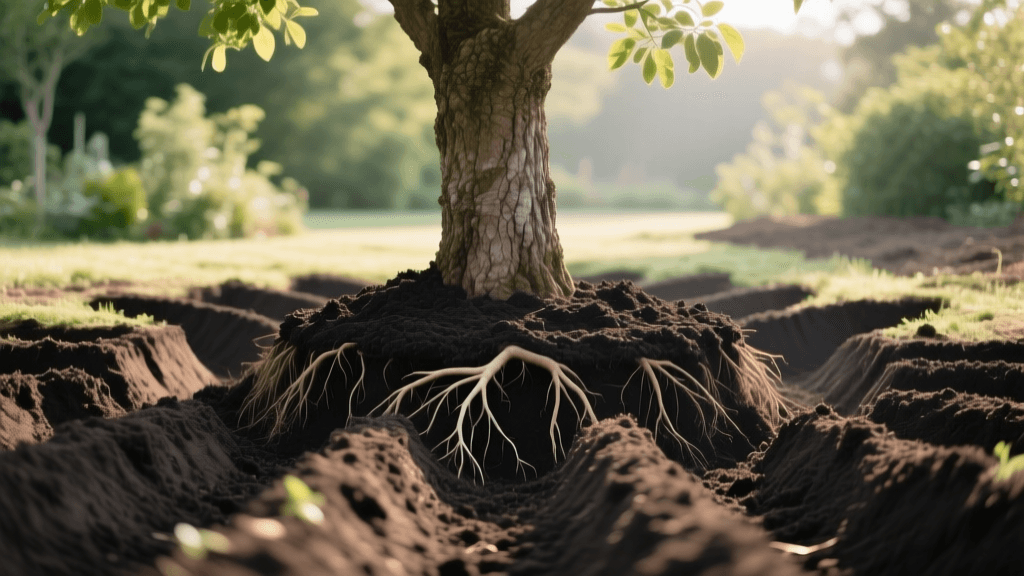
Pro-Tip for Hardscape Protection: If you must plant a larger shade tree closer to a patio for immediate overhead coverage, install a commercial root barrier, such as the DeepRoot Universal Tree Root Barrier (approx. $45 per panel). Trench a line between the tree and the patio, and install the panels to a depth of 24 to 36 inches. This physically deflects structural roots downward, preventing the upward heaving that destroys paver bases and concrete slabs.
Pruning for Clearance and Sightlines
A tree planted for patio shade must be pruned specifically for human traffic. The goal is to raise the canopy so guests can walk and sit comfortably without brushing against branches, while maintaining the tree's aesthetic form from the street.
This technique is known as crown raising. For a patio tree, you should gradually remove the lowest lateral branches to achieve a clearance of 7 to 8 feet above the seating area and walkways. However, to maintain curb appeal, do not strip the trunk entirely. Leave smaller, secondary branches on the lower trunk to soften the tree's appearance. Always make clean cuts just outside the branch collar to promote rapid healing and prevent decay, a principle strongly advocated by the University of Minnesota Extension.
Additionally, practice 'crown thinning' selectively to allow breezes to pass through the canopy. A dense, unthinned canopy acts as a sail during summer thunderstorms, increasing the risk of limb failure over your expensive outdoor furniture.
Mulching, Lighting, and Seasonal Maintenance
The area beneath your patio tree should be treated as a premium landscape bed, not an afterthought. Proper mulching and lighting elevate the space from a simple backyard to a high-end entertaining venue.
The 3-3-3 Mulching Rule
Apply a high-quality, double-shredded hardwood mulch around the base of the tree using the 3-3-3 rule: 3 inches deep, in a 3-foot radius, and kept 3 inches away from the actual trunk flare. Never pile mulch against the trunk (a practice known as 'volcano mulching'), as this invites rot, rodent damage, and girdling roots. A clean, mulched ring contrasts beautifully with surrounding turf or gravel, instantly boosting curb appeal.
Architectural Uplighting
To maximize the visual impact of your shade tree during evening gatherings, install low-voltage landscape uplighting. Position a brass, weather-resistant fixture (such as those from VOLT Lighting or Kichler, typically $100-$150) about 18 inches from the trunk, angled slightly upward to graze the bark. This highlights the tree's architectural branching structure and casts dramatic, moving shadows across the patio as the branches sway in the wind, creating an intimate, resort-like ambiance.
Seasonal Soil Care
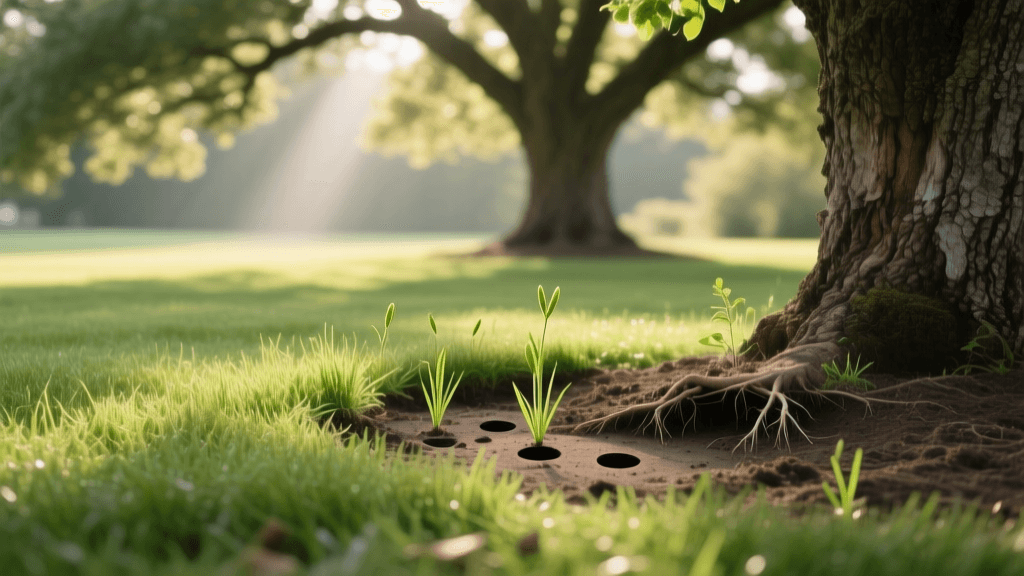
Patio environments often suffer from soil compaction due to construction debris and heavy foot traffic. Once a year, typically in early spring before the entertaining season begins, use a liquid soil aerator or gently top-dress the tree's root zone with a half-inch of organic compost. This replenishes soil microbes and ensures the tree remains vigorous, disease-free, and capable of producing the lush, dense canopy your outdoor living space relies upon.