Tree Care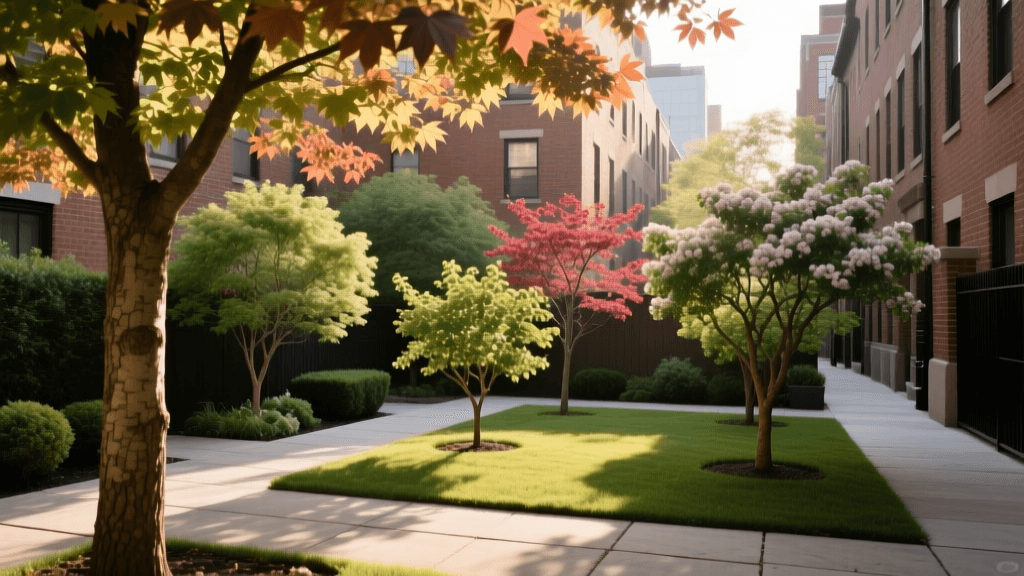
Best Small Shade Trees for Urban Yards: Species Guide
The Unique Challenges of Urban Tree Planting
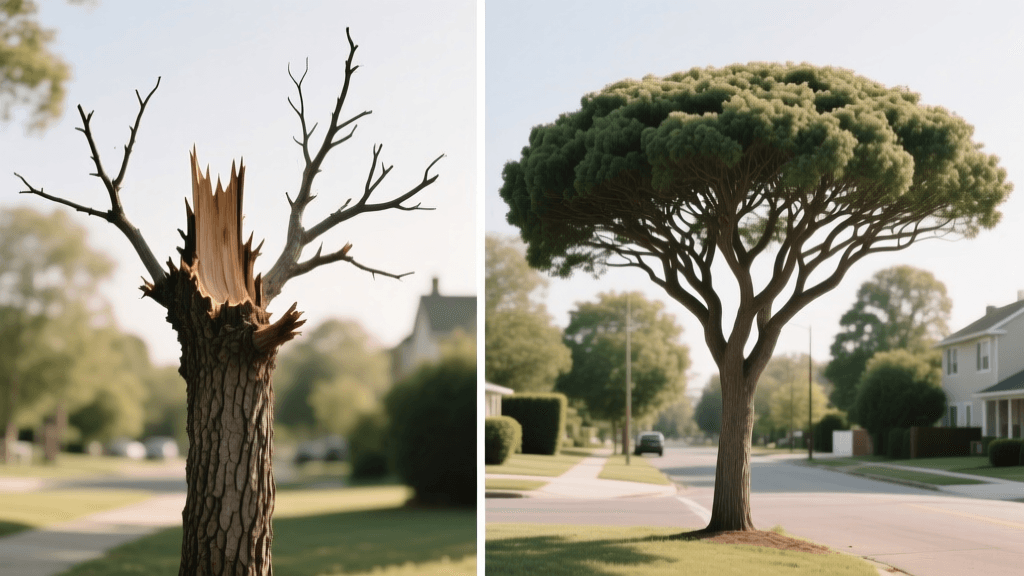
Urban landscapes present a distinct set of challenges for tree establishment and long-term health. Unlike sprawling rural properties, small urban yards are often constrained by overhead utility lines, underground infrastructure, compacted soil, and the urban heat island effect. Selecting the wrong tree species for a compact space can lead to decades of structural damage, sidewalk heaving, and costly emergency pruning. According to the University of Minnesota Extension, matching the tree's mature size and root behavior to the specific site conditions is the most critical step in urban forestry.
When space is limited, homeowners must look beyond traditional, massive shade trees like the Red Oak or Silver Maple. Instead, the focus should shift to small-to-medium understory trees that provide excellent canopy cover, seasonal interest, and non-invasive root systems. These trees typically mature between 15 and 30 feet in height, making them safe for planting near single-story homes, patios, and driveways.
"The right tree in the right place is the foundational principle of urban forestry, preventing decades of infrastructure conflicts and costly removals."
Top 4 Small Shade Trees for Compact Yards
When evaluating species for small urban lots, we prioritize disease resistance, structural integrity, and adaptability to varying soil pH levels. Below are four exceptional species that thrive in restricted spaces while delivering substantial shade and aesthetic value.
1. Eastern Redbud (Cercis canadensis)
The Eastern Redbud is a staple of the American urban landscape, celebrated for its breathtaking, magenta-pink spring blooms that erupt directly from the bark before the leaves emerge. According to Clemson Cooperative Extension, this tree typically reaches a mature height of 20 to 30 feet with a slightly wider spread, creating a beautiful, flat-topped, umbrella-like canopy that provides excellent dappled shade for understory plantings.
- Mature Height: 20-30 feet
- Mature Spread: 25-35 feet
- Root System: Deep taproot with minimal surface heaving; highly safe for hardscapes.
- Soil Preference: Adaptable, but prefers moist, well-drained loam. Tolerates slightly alkaline urban soils.
2. Kousa Dogwood (Cornus kousa)
While the native Flowering Dogwood (Cornus florida) is susceptible to devastating anthracnose and borer issues in stressful urban environments, the Kousa Dogwood offers remarkable resilience. Blooming slightly later in the spring with starry white bracts, the Kousa Dogwood develops a stunning mosaic of exfoliating gray, tan, and mahogany bark as it matures. Its layered, horizontal branching habit casts a wide, cooling shadow over patios and walkways without overwhelming the yard.
- Mature Height: 15-25 feet
- Mature Spread: 15-25 feet
- Root System: Fine, fibrous, and non-aggressive.
- Soil Preference: Requires acidic, well-drained soil rich in organic matter. Highly sensitive to drought and compaction.
3. Serviceberry (Amelanchier x grandiflora)
Often sold under the cultivar name 'Autumn Brilliance', the hybrid Serviceberry is a multi-season powerhouse. In early spring, it produces delicate white flowers, followed by edible, blueberry-like fruits in early summer that attract local bird populations. By autumn, the foliage transitions to a brilliant, fiery orange-red. Growing naturally as a large multi-stemmed shrub or a single-trunk tree, it fits perfectly into narrow side yards or courtyard gardens.
- Mature Height: 15-20 feet
- Mature Spread: 15-20 feet
- Root System: Non-invasive, shallow but well-behaved.
- Soil Preference: Highly adaptable to various soil types, though it prefers consistent moisture.
4. Japanese Maple (Acer palmatum)
For deeply shaded urban yards or north-facing gardens, the Japanese Maple is an unparalleled choice. Cultivars like 'Bloodgood' offer deep burgundy foliage throughout the summer that turns a striking crimson in the fall. Japanese Maples are slow-growing, which translates to highly dense wood and exceptional wind resistance. Their delicate, dissected leaves cast a light, filtering shade that protects sensitive garden beds below from harsh summer sun.
- Mature Height: 15-20 feet
- Mature Spread: 15-20 feet
- Root System: Compact and non-destructive to foundations.
- Soil Preference: Requires slightly acidic, highly organic, and well-drained soil. Intolerant of heavy clay or standing water.
Urban Tree Selection Comparison Chart
Use the following table to compare the structural and environmental requirements of these small shade trees before making a purchase at your local nursery.
| Species | Mature Height | Mature Spread | Sun Exposure | Drought Tolerance | Hardscape Safety |
|---|---|---|---|---|---|
| Eastern Redbud | 20-30 ft | 25-35 ft | Full Sun to Part Shade | Moderate | Excellent |
| Kousa Dogwood | 15-25 ft | 15-25 ft | Part Shade | Low | Excellent |
| Serviceberry | 15-20 ft | 15-20 ft | Full Sun to Part Shade | Moderate | Excellent |
| Japanese Maple | 15-20 ft | 15-20 ft | Dappled Shade | Low | Excellent |
Proper Planting Techniques for Restricted Spaces
Even the most perfectly selected urban tree will fail if planted incorrectly. In compact yards, soil is often heavily compacted from construction foot traffic and heavy machinery. The Arbor Day Foundation emphasizes that proper hole preparation is the single greatest factor in early tree survival.
- Utility Check: Always call 811 at least three business days before digging to have underground utility lines marked.
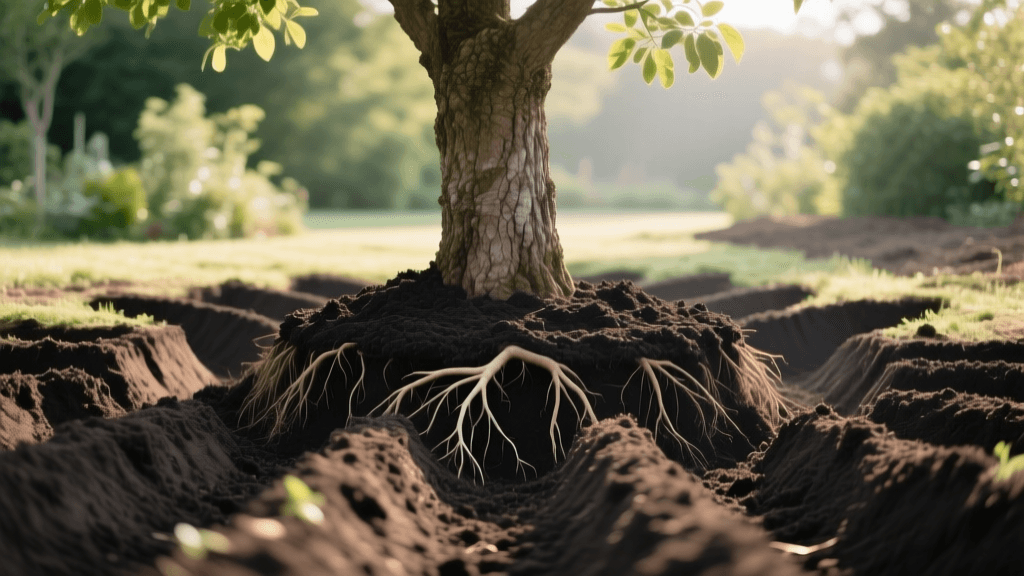
- Hole Dimensions: Dig a hole that is exactly as deep as the root ball, but 2 to 3 times as wide. This wide, shallow basin encourages lateral root expansion into the surrounding urban soil.
- Identify the Root Flare: Before placing the tree in the hole, brush away excess soil from the top of the root ball to expose the trunk flare (the point where the trunk widens at the base). The root flare must sit 1 to 2 inches above the final grade level to prevent trunk rot and girdling roots.
- Backfilling: Use the native soil you just dug out to backfill the hole. Amending the backfill with heavy compost or potting soil in clay-heavy urban yards creates a "bathtub effect," trapping water and drowning the roots.
Mulching and Early Establishment Care
Urban soils dry out rapidly due to reflected heat from concrete and asphalt. A proper mulching strategy is non-negotiable for small yard tree care. Follow the "3-3-3 Rule" for optimal moisture retention and temperature regulation:
- 3 Inches Deep: Apply a layer of organic hardwood mulch no deeper than 3 inches. Excessive mulch suffocates roots and invites fungal pathogens.
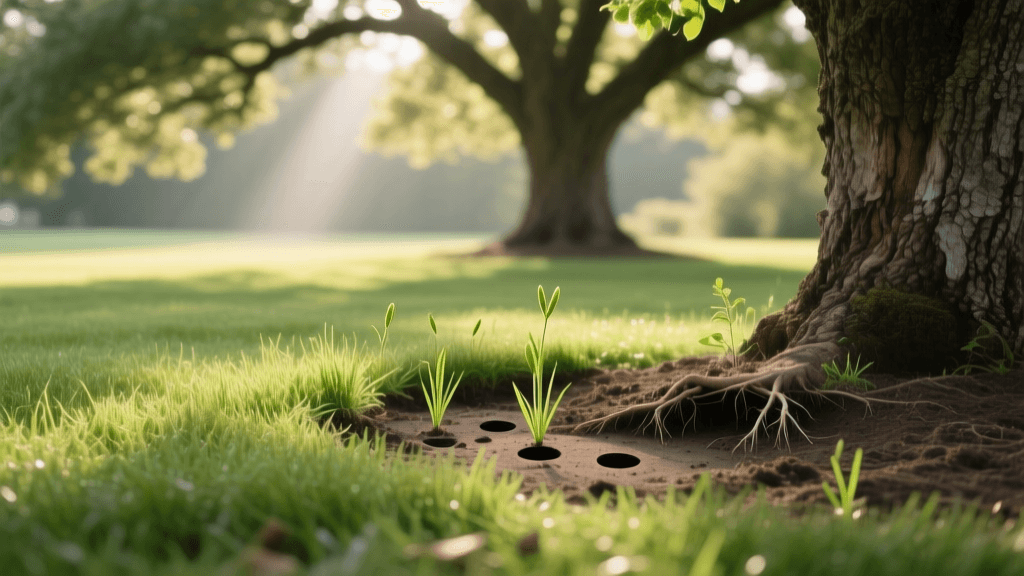
- 3 Feet Wide: Create a mulch ring with a 3-foot diameter around the trunk to outcompete turfgrass, which aggressively steals water and nutrients from young trees.
- 3 Inches Away: Keep the mulch at least 3 inches away from the physical bark of the trunk. "Volcano mulching" (piling mulch against the trunk) causes the bark to decay and encourages secondary roots to wrap around the trunk, eventually strangling the tree.
During the first two growing seasons, water the tree deeply with 10 to 15 gallons of water per week per inch of trunk caliper. Use a slow-drip soaker hose or a specialized tree watering bag to ensure the water penetrates deeply into the root zone rather than running off compacted urban soil.
Pruning and Structural Training
Small shade trees in urban yards require formative pruning during their first five years to establish a strong central leader and proper branch spacing. Because these trees are often planted near sidewalks and driveways, clearance pruning is also a vital maintenance task. Aim to maintain an 8-foot clearance over pedestrian walkways and a 14-foot clearance over residential streets. Always make pruning cuts just outside the branch collar using sterilized, sharp bypass pruners to ensure rapid compartmentalization and prevent the entry of wood-decaying fungi.