Home & Garden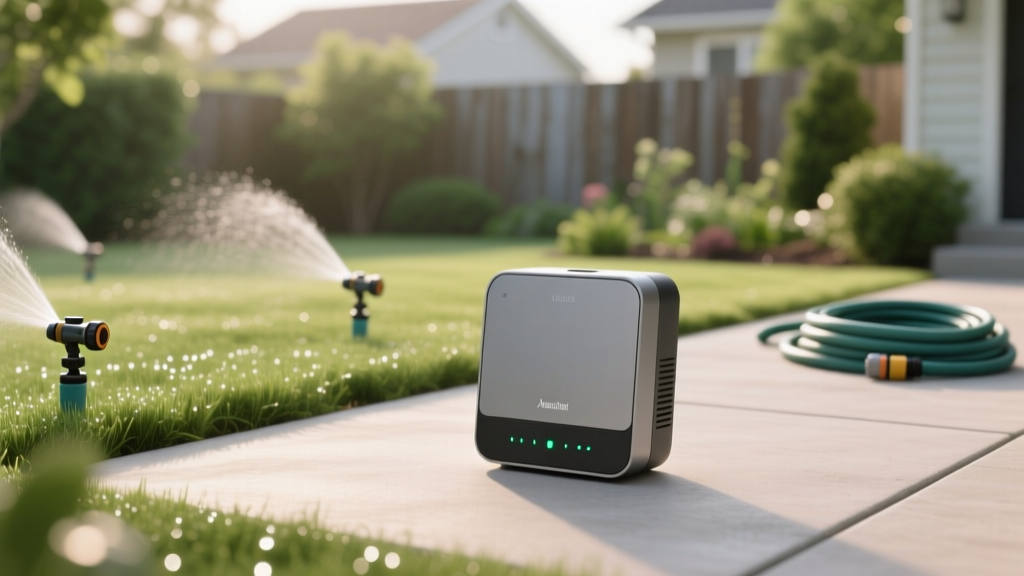
Best Smart Irrigation Controllers: Top Picks and Setup Guide
Anna KowalskiPublished
The Evolution of Lawn Care: Why Go Smart?
Watering your lawn and garden should not be a guessing game. For decades, homeowners have relied on legacy dial timers that blindly water the grass whether it is pouring rain or experiencing a severe drought. This outdated approach not only wastes a precious natural resource but also drives up utility bills and promotes shallow root growth, fungal diseases, and nutrient runoff. Upgrading to a smart irrigation controller bridges the gap between modern smart home integration and energy-efficient landscaping, giving you precise control over your outdoor water usage right from your smartphone.
According to the Environmental Protection Agency (EPA), outdoor water use accounts for nearly 30% of total household water consumption, and up to 50% of that water is wasted due to wind, evaporation, and runoff from inefficient irrigation methods. The EPA WaterSense program notes that replacing a standard clock timer with a WaterSense-labeled smart irrigation controller can save the average home nearly 7,600 gallons of water annually. Beyond the environmental impact, this translates to tangible financial savings and a significantly healthier, more resilient lawn.
Weather-Based vs. Soil Moisture Controllers
When shopping for smart sprinkler timers, it is crucial to understand the two primary technologies driving these devices. Choosing the right type depends on your local climate, soil composition, and specific landscaping needs.
Weather-Based (ET) Controllers
Weather-based controllers, often referred to as Evapotranspiration (ET) controllers, use local weather data to adjust watering schedules automatically. They pull real-time data from local weather stations or national meteorological services to measure temperature, humidity, solar radiation, and wind speed. By calculating the exact rate of evapotranspiration—the sum of evaporation from the soil and transpiration from plants—these controllers apply only the exact amount of water your lawn needs to replace what was lost to the atmosphere.
Soil Moisture Sensor (SMS) Controllers
Soil moisture sensors take a more direct approach. Instead of relying on atmospheric data, SMS controllers use physical probes buried in the root zone of your lawn or garden beds (typically 3 to 6 inches deep). These probes measure the actual volumetric water content in the soil. If the soil already holds sufficient moisture, the controller overrides the scheduled watering cycle. This method is highly effective for areas with microclimates, heavy clay soils that retain water, or shaded zones that dry out much slower than the rest of the yard.
Top Smart Irrigation Controllers Compared
To help you navigate the market, we have evaluated the top smart irrigation controllers based on reliability, feature sets, smart home integration, and overall value. Below is a comprehensive comparison chart of the industry leaders.
| Model | Controller Type | Max Zones | Key Smart Features | Estimated Cost |
|---|---|---|---|---|
| Rachio 3 | Weather-Based (ET) | 8 or 16 | Weather Intelligence Plus, freeze skip, wind skip | $229 - $279 |
| Orbit B-hyve XR | Weather-Based (ET) | 6 to 16 | Weather Sense technology, EPA WaterSense certified | $149 - $199 |
| Rain Bird ST8I-2.0 | Weather-Based (ET) | 8 | Automatic seasonal adjust, rapid Wi-Fi setup | $119 - $149 |
| Hunter Hydrawise | Weather-Based (ET) | 6 to 16 | Predictive watering, flow meter support, detailed reporting | $250 - $350 |
Key Features to Look For
Not all smart controllers are created equal. When selecting a unit for your home, prioritize the following features to ensure maximum efficiency and ease of use:
- EPA WaterSense Certification: This label guarantees the controller has passed rigorous third-party testing for water efficiency and performance.
- Cycle and Soak Functionality: Essential for clay soils or sloped yards, this feature breaks long watering sessions into shorter cycles, allowing water to penetrate deeply without causing surface runoff.
- Weather Skip Features: Look for controllers that automatically skip watering during rain, high winds, or freezing temperatures to prevent ice hazards and water waste.
- Flow Meter Integration: Premium models allow you to install a physical flow meter on your mainline, alerting your smartphone instantly if a pipe bursts or a sprinkler head breaks.
Step-by-Step Installation Guide
Upgrading from a legacy dial timer to a smart Wi-Fi controller is a highly rewarding DIY garden project. Most modern controllers are designed for easy retrofitting. Here is how to complete the swap safely:
- Turn Off the Power: Locate the transformer (usually a small black plug in a nearby outlet) and unplug it. Never work on irrigation wiring while the system is energized, as the 24V AC current can damage the new controller's internal logic board.
- Document the Wiring: Before disconnecting a single wire, take a clear, well-lit photograph of your legacy controller's wiring terminal. Ensure every zone number and color is legible.
- Mount the New Backplate: Remove the old unit and use the provided hardware to mount the new smart controller's backplate. If upgrading from an indoor to an outdoor-rated controller, ensure you use a weatherproof enclosure.
- Reconnect the Wires: Using your photograph as a guide, strip the ends of the wires if necessary and secure them into the corresponding zone terminals on the new controller. Do not forget the common wire (usually white or black, labeled 'C' or 'COM').
- Power Up and Configure: Plug the transformer back in. Download the manufacturer's app, connect the device to your 2.4GHz Wi-Fi network, and input your specific zone data (plant type, soil type, sun exposure, and sprinkler head type).
Pro Tip: Always take a clear, well-lit photograph of your legacy controller's wiring before disconnecting a single wire. This simple step is the most reliable troubleshooting method if your new smart controller fails to trigger specific zones during the initial test.
Smart Home Integration and Automation
One of the greatest advantages of modern smart controllers is their ability to bridge indoor and outdoor living through smart home ecosystems. Top-tier models like the Rachio 3 and Orbit B-hyve integrate seamlessly with Amazon Alexa, Google Home, and Apple HomeKit. This allows you to use voice commands to pause watering if you are hosting an outdoor dinner party or to check system status from your smart display.
Furthermore, integration with IFTTT (If This Then That) opens up advanced automation. You can create custom applets that trigger your irrigation system to run an extra cycle if a local weather station reports unseasonably high temperatures, or automatically shut off your smart water main valve if a leak sensor detects moisture in your utility room.
Maximizing Efficiency with Smart Landscaping
A smart controller is only half the equation. To truly optimize your garden-to-table ecosystem and landscape efficiency, you must pair your technology with sound horticultural practices. The Irrigation Association heavily promotes the concept of 'Smart Irrigation,' which emphasizes matching the right technology with the right delivery method.
For garden beds, shrubs, and vegetable patches, transition from traditional spray heads to drip irrigation. Drip lines deliver water directly to the root zone at a slow, steady rate, virtually eliminating evaporation and wind drift. According to research highlighted by the Colorado State University Extension, combining smart ET controllers with drip irrigation can reduce outdoor water use by up to 70% compared to conventional spray systems. Additionally, applying a 2-to-3-inch layer of organic mulch over your drip lines will further insulate the soil, retain moisture, and suppress weeds.
Maintenance, Troubleshooting, and Winterization
While smart controllers require far less manual tweaking than mechanical timers, they do require basic seasonal maintenance. Wi-Fi connectivity drops are the most common issue; if your controller shows as 'offline' in the app, check your router's 2.4GHz band and ensure the signal reaches your garage or exterior wall. Installing a simple Wi-Fi extender near the controller often resolves this.
If you utilize soil moisture sensors, inspect the probes annually. Over time, mineral deposits from hard water and soil compaction can coat the sensors, leading to inaccurate readings. Gently clean the probes with a soft brush and a mild vinegar solution to restore conductivity.
Finally, proper winterization is non-negotiable in freezing climates. Before the first hard freeze, shut off the main water supply to your irrigation system and use an air compressor to blow out the lines. Once the system is clear of water, set your smart controller to 'Off' or 'Rain Delay' for the winter. Do not simply unplug the unit, as the internal memory and clock may reset, requiring a full reconfiguration in the spring.
Conclusion
Investing in a smart irrigation controller is one of the most impactful upgrades you can make to your home's exterior. By leveraging real-time weather data, soil science, and smart home automation, you can cultivate a lush, vibrant landscape while drastically reducing your environmental footprint. Whether you choose the feature-rich Rachio 3 or the budget-friendly Rain Bird ST8I-2.0, transitioning to smart irrigation ensures your lawn receives exactly what it needs, precisely when it needs it, leaving you with more free time to actually enjoy your outdoor living space.
