Home & Garden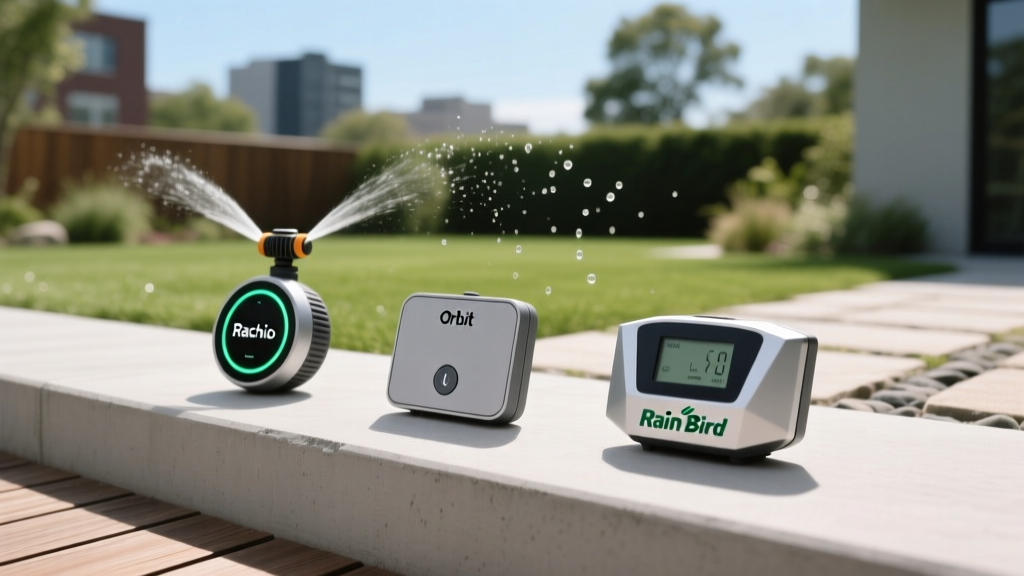
Best Smart Sprinkler Controllers: Rachio vs Orbit vs Rain Bird
James MillerPublished
Bridging the Gap: Smart Home Tech Meets the Lawn
The modern smart home extends far beyond indoor lighting and thermostats. Today, the most impactful home automation happens right outside your front door. Smart sprinkler controllers bridge the gap between indoor convenience and outdoor landscaping, transforming how we manage garden-to-table ecosystems, maintain lush lawns, and conserve vital water resources. By replacing outdated mechanical timers with Wi-Fi-enabled irrigation hubs, homeowners can automate their landscaping maintenance, integrate with voice assistants, and drastically reduce water waste. But with dozens of options on the market, which system deserves a spot on your garage wall?
In this comprehensive product review and comparison, we evaluate three of the most popular smart irrigation controllers on the market: the Rachio 3, the Orbit B-hyve XR, and the Rain Bird ST8I-2.0. We will break down their features, pricing, installation requirements, and overall value to help you make an informed decision for your specific yard.
The Science of Smart Irrigation and Water Conservation
Before diving into specific models, it is crucial to understand why upgrading to a smart controller is an essential piece of seasonal home maintenance. Traditional timers operate on rigid schedules, watering your lawn whether it is raining, freezing, or experiencing high humidity. Smart controllers, however, utilize local weather data and soil science to optimize watering schedules dynamically.
According to the United States Environmental Protection Agency (EPA) WaterSense program, replacing a standard clock timer with a WaterSense-labeled smart irrigation controller can save an average home nearly 8,800 gallons of water annually. This not only lowers your utility bills but also prevents the fungal diseases and root rot associated with overwatering.
Expert Insight: The Colorado State University Extension notes that Evapotranspiration (ET) controllers—which calculate water loss based on temperature, humidity, solar radiation, and wind—can reduce outdoor water use by up to 50% compared to traditional timers while maintaining optimal turf health.
All three controllers reviewed below utilize ET data and weather forecasting to keep your lawn healthy and your water usage efficient.
Top Smart Sprinkler Controllers Reviewed
1. Rachio 3 Smart Sprinkler Controller
The Rachio 3 is widely considered the gold standard in smart irrigation. Available in 8-zone and 16-zone models, it boasts the most sophisticated weather tracking algorithm in the industry, known as Weather Intelligence Plus. This feature pulls hyperlocal weather data from over 250,000 weather stations to automatically skip watering during rain, wind, or freezing temperatures.
- Price: Approximately $229 (8-zone) / $279 (16-zone)
- Smart Home Integration: Alexa, Google Assistant, Apple HomeKit, Samsung SmartThings, Nest
- Pros: Incredibly intuitive app, seamless smart home integration, highly accurate hyperlocal weather skips, EPA WaterSense certified.
- Cons: Premium price point; requires a strong 2.4GHz Wi-Fi signal at the installation site.
The Rachio 3 is ideal for tech-savvy homeowners who want a 'set it and forget it' system that integrates flawlessly with their existing smart home ecosystem. The app's zone setup wizard walks you through selecting soil type, slope, sun exposure, and sprinkler head type for every single zone, ensuring maximum efficiency.
2. Orbit B-hyve XR Smart Controller
Orbit's B-hyve XR is a formidable budget-friendly contender that does not skimp on essential smart features. Available in 6, 12, and 16-zone configurations, the XR model features a sleek, modern interface and utilizes Orbit's WeatherSense technology to adjust watering based on local weather forecasts and site-specific conditions.
- Price: Approximately $109 (6-zone) / $139 (12-zone)
- Smart Home Integration: Alexa, Google Assistant
- Pros: Excellent value, built-in catch basins to protect wiring from moisture, physical dial for manual overrides, EPA WaterSense certified.
- Cons: App interface is slightly less polished than Rachio; lacks native Apple HomeKit support.
The B-hyve XR is the perfect choice for budget-conscious DIYers. Its physical locking cabinet and built-in catch basins make it highly durable for outdoor or humid garage installations. While the app is slightly more utilitarian, it still offers robust scheduling, water usage reporting, and freeze-skip features.
3. Rain Bird ST8I-2.0 Smart Irrigation Timer
Rain Bird is a legacy brand in professional landscaping, and the ST8I-2.0 brings their commercial-grade reliability to the residential smart home market. This 8-zone controller focuses on hardware durability and straightforward scheduling, utilizing a Wi-Fi module to connect to the Rain Bird app for remote access and weather-based adjustments.
- Price: Approximately $115 (8-zone)
- Smart Home Integration: Alexa (via IFTTT or limited native skills), Google Assistant
- Pros: Extremely reliable hardware, simple wiring terminal block, trusted legacy brand, weather adjustment features.
- Cons: The app feels dated and clunky; smart home integration is less seamless than competitors; limited zone options.
The Rain Bird ST8I-2.0 is best suited for traditionalists who prioritize hardware longevity over cutting-edge software features. If you already have a yard full of Rain Bird sprinkler heads and rotors, pairing them with a Rain Bird controller ensures brand consistency, though you will sacrifice some of the advanced software polish found in the Rachio ecosystem.
Head-to-Head Feature Comparison
To help you visualize how these three heavyweights stack up against one another, refer to the comparison chart below:
| Feature | Rachio 3 | Orbit B-hyve XR | Rain Bird ST8I-2.0 | |
|---|---|---|---|---|
| Available Zones | 8, 16 | 6, 12, 16 | 8 | |
| Average Price (8-Zone) | $229 | $119 (via 12-zone) | $115 | |
| EPA WaterSense Certified | Yes | Yes | Yes | |
| Weather Skip Technology | Hyperlocal (250k+ stations) | Local Forecast | Local Forecast | |
| Smart Home Ecosystems | Alexa, Google, HomeKit, Nest | Alexa, Google | Alexa, Google | |
| App User Experience | Excellent | Good | Fair | |
| Warranty | 3 Years | 6 Years | 2 Years |
Step-by-Step Installation and Setup Tips
One of the most common misconceptions about smart sprinkler controllers is that they require professional installation. In reality, upgrading your system is a straightforward DIY garden project that takes about 30 to 45 minutes. Follow these actionable steps for a safe and successful installation:
- Power Down: Always turn off the power to your irrigation system at the breaker panel or by unplugging the 24V transformer. Never work on live wires.
- Document the Wiring: Before removing a single wire from your old controller, take a clear, well-lit photograph of the terminal block. Label each wire with painter's tape if the colors are faded.
- Mount the New Backplate: Most smart controllers use a new backplate. Use a level and drywall anchors to secure it to your wall.
- Connect the Wires: Insert your labeled zone wires into the corresponding numbered terminals on the new smart controller. Use the provided waterproof, silicone-filled wire nuts for the common (C) wire and the 24V AC power wires to prevent corrosion.
- Wi-Fi Configuration: Download the manufacturer's app and follow the pairing instructions. Critical Tip: Nearly all smart irrigation controllers require a 2.4GHz Wi-Fi network. If you have a dual-band router, ensure your phone is connected to the 2.4GHz band during setup, or the device will fail to pair.
Pro Tips for Maximizing Efficiency
Buying the best smart sprinkler controller is only half the battle; proper configuration is where the real water savings occur. To get the most out of your energy-efficient landscaping investment, take the time to tune your zones:
- Map Your Sun and Shade: A zone in full afternoon sun requires vastly different watering durations than a zone shaded by a large oak tree. Use the app's custom nozzle and sun/shade settings to adjust water output per zone.
- Identify Soil Type: Clay soil absorbs water slowly and is prone to runoff, requiring a 'cycle and soak' method (watering in short bursts). Sandy soil drains quickly and requires more frequent, shorter watering sessions. Configure your soil type in the app to let the algorithm handle the math.
- Perform a Seasonal Audit: At the start of every spring, run a manual test of each zone. Check for clogged nozzles, misaligned spray heads watering the sidewalk, and leaks. Smart controllers cannot fix broken hardware.
Final Verdict: Which Should You Choose?
When comparing the top smart sprinkler controllers, the Rachio 3 emerges as the overall winner for homeowners who want the absolute best software experience, hyperlocal weather tracking, and deep smart home integration. It is worth the premium price for the sheer convenience and water savings it provides.
However, if you are working within a tighter budget, the Orbit B-hyve XR offers incredible value. It provides 90% of the Rachio's functionality at nearly half the cost, making it our top pick for budget-minded DIYers. Finally, the Rain Bird ST8I-2.0 remains a solid, reliable choice for those who prioritize traditional hardware durability over app aesthetics. Whichever you choose, upgrading to a smart controller is one of the most impactful seasonal home maintenance projects you can undertake this year.
