Tree Care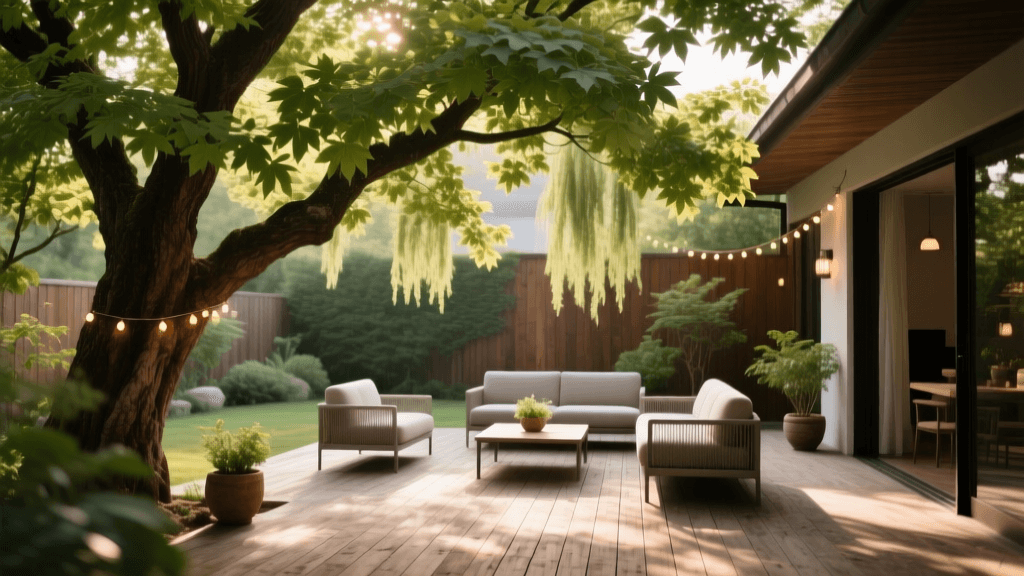
Best Trees For Patio Shade And Outdoor Entertaining Areas
Designing the Perfect Outdoor Oasis with Trees
When planning an outdoor entertaining space, hardscaping, outdoor kitchens, and high-end patio furniture often take center stage. However, the true architectural framework of any stunning backyard oasis lies in its tree canopy. Trees provide essential shade for daytime gatherings, create natural privacy screens from neighboring properties, and dramatically boost your home's curb appeal. According to the Arbor Day Foundation, mature, well-placed trees can increase property values by up to 15 percent, making them a critical investment for homeowners focused on outdoor living and long-term equity.
But not all trees are suited for the patio environment. A poorly chosen species can drop messy sap onto your dining table, heave your expensive paver patio with aggressive roots, or block the very views you want to enjoy. This guide explores the best tree species for entertaining spaces, precise pruning techniques for clearance, and hardscape protection strategies to ensure your outdoor retreat remains both beautiful and functional.
Top Tree Species for Patios and Entertaining Areas
When selecting a tree to anchor your patio or deck, you must prioritize species with non-invasive root systems, manageable debris, and an attractive branching structure. Avoid heavy fruiting trees or species prone to dropping large, messy seed pods over your seating areas. Instead, opt for ornamental trees that offer multi-season interest, dappled shade, and structural elegance.
| Tree Species | Mature Height | Canopy Spread | Debris Level | Best Entertaining Feature |
|---|---|---|---|---|
| Serviceberry (Amelanchier) | 15-25 ft | 15-20 ft | Low | Spring blooms, edible berries, clean patio. |
| Crape Myrtle (Lagerstroemia) | 15-30 ft | 15-25 ft | Moderate | Vibrant summer color, sculptural winter bark. |
| Japanese Maple (Acer palmatum) | 15-25 ft | 20 ft | Low | Stunning focal point, dappled shade for dining. |
| Eastern Redbud (Cercis canadensis) | 20-30 ft | 25-35 ft | Low | Heart-shaped leaves, early spring color. |
For larger properties where a massive shade tree is desired, consider the Bur Oak or the Ginkgo Biloba (male cultivars only, to avoid messy fruit). These species provide expansive canopies that can cool an entire patio area during the peak heat of summer, significantly reducing the need for expensive shade sails or pergolas.
Pruning for Clearance, Privacy, and Curb Appeal
A common mistake homeowners make is allowing patio trees to grow wild, resulting in low-hanging branches that obstruct sightlines and make seating areas feel claustrophobic. Proper pruning is essential for maintaining curb appeal and ensuring the space is comfortable for guests. The International Society of Arboriculture emphasizes that proper pruning techniques not only improve aesthetics but also maintain the structural health of the tree, as detailed in their consumer guide on pruning your trees.
To optimize your outdoor entertaining space, focus on a technique known as 'crown raising.' This involves selectively removing the lower branches of a tree to elevate the canopy and create vertical clearance over your patio, deck, or walkways.
- The 8-to-10 Foot Clearance Rule: For standard pedestrian walkways, an 8-foot clearance is usually sufficient. However, for patio dining areas where guests might be standing, or where you plan to use market umbrellas, aim for a 10-to-12-foot clearance. This prevents guests from brushing against foliage and keeps the sightlines open across your yard.
- The 1/3 Rule: Never remove more than 25% to 30% of a tree's live canopy in a single season. Over-pruning stresses the tree, triggers rapid, weak 'water sprout' growth, and ruins the natural aesthetic that boosts your curb appeal.
- The Three-Cut Method: When removing thicker lower branches, use the three-cut method to prevent the bark from tearing down the trunk. Make an undercut a few inches from the trunk, followed by a top cut further out to remove the bulk of the branch, and finish with a precise collar cut just outside the branch bark ridge.
Hiring a certified arborist for professional crown raising typically costs between $300 and $800 per tree, depending on the species, size, and accessibility. This investment pays off immediately by transforming a cramped, dark patio into an open, inviting entertainment hub.
Hardscape Protection: Managing Roots and Debris
Nothing ruins the curb appeal of an outdoor entertaining space faster than a heaved, cracked paver patio or a buckled wooden deck. Tree roots naturally seek out moisture and oxygen, and the gaps beneath hardscapes are prime real estate for root expansion. To protect your investment, proactive root management is non-negotiable.
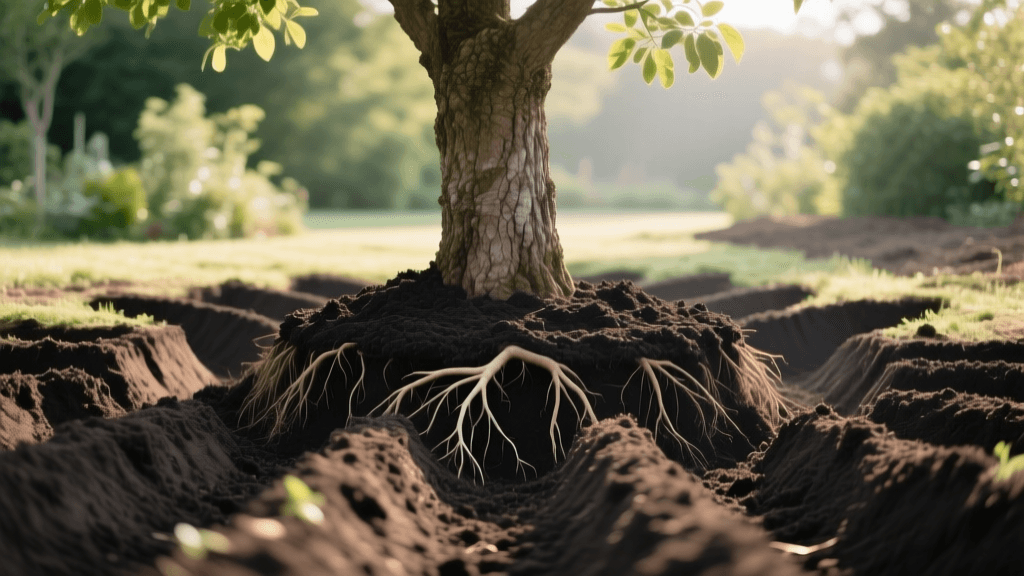
If you are planting new trees near an existing or planned patio, install a high-density polyethylene (HDPE) root barrier. These rigid panels are buried vertically in the soil between the tree and the hardscape, forcing roots to grow downward rather than laterally beneath your patio. For optimal protection, root barriers should be installed at least 24 to 36 inches deep and extend slightly above the soil line to prevent surface roots from bypassing the barrier. The cost for professional installation of a root barrier generally ranges from $8 to $15 per linear foot.
Additionally, consider the mature trunk flare of the tree. Always plant trees at least 10 to 15 feet away from the edge of a patio to allow for natural trunk expansion and surface root flaring without compromising the hardscape foundation. For existing mature trees near patios, avoid adding soil or heavy decorative stone over the root zone, as this suffocates the roots and leads to canopy dieback, drastically reducing the shade and beauty of your entertaining area.
Lighting and Tree Integration for Evening Entertaining
As the sun sets, your patio trees transition from shade providers to dramatic architectural features. Integrating low-voltage landscape lighting into your tree canopy elevates the ambiance of your outdoor space and enhances nighttime curb appeal. The most effective technique for entertaining spaces is 'moonlighting' or 'downlighting.'
By mounting warm-white (2700K to 3000K) LED fixtures high in the canopy and angling them downward through the branches, you create a soft, natural illumination that mimics moonlight. This provides functional ambient light for dining and conversing without the harsh glare of traditional floodlights. When installing fixtures, always use tree-friendly mounting hardware that allows for trunk expansion, and keep light sources at least 12 to 18 inches away from the bark to prevent heat damage or light scorch to the tree's sensitive cambium layer.
Mulching and Seasonal Care for Lasting Beauty
A healthy, vibrant tree is the cornerstone of curb appeal. To ensure your patio trees remain lush and capable of providing dense shade, proper mulching and watering are critical. The Morton Arboretum strongly advocates for proper mulching techniques to retain soil moisture, regulate temperature, and suppress weeds that compete with your tree's root system.
Follow the '3-3-3 Rule' for mulching your entertaining space trees: apply a mulch ring that is 3 inches deep, extends 3 feet out from the trunk, and is kept 3 inches away from the actual trunk bark. Piling mulch against the trunk (often called 'volcano mulching') invites rot, fungal diseases, and pest infestations, which can quickly degrade the health and appearance of your landscape. Use high-quality, double-shredded hardwood bark mulch, which breaks down slowly, enriches the soil, and provides a clean, uniform backdrop that makes your patio furniture and hardscaping pop. By combining strategic species selection, precise clearance pruning, and proactive root management, you can cultivate a breathtaking outdoor entertaining space that offers privacy, comfort, and undeniable curb appeal for decades to come.