
Landscaping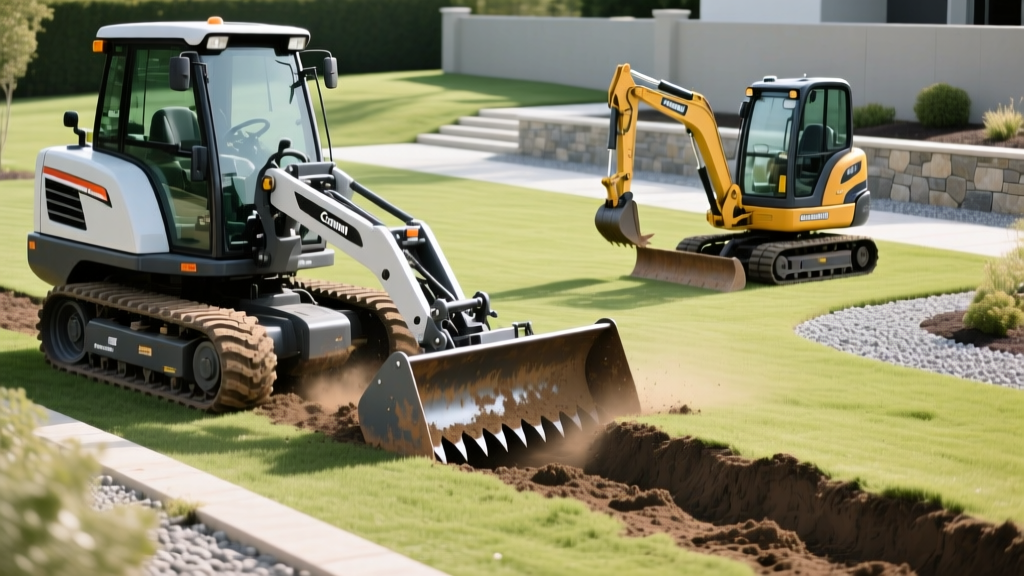
The Best Trenchers for Landscape Drainage Projects
James MillerPublished
Transforming Your Landscape with Mechanical Trenching
Water management is the unsung hero of landscape design. Whether you are installing a comprehensive French drain system to protect your home's foundation, laying down miles of PVC piping for a new sprinkler system, or burying low-voltage lighting cables, moving earth is an unavoidable part of the process. For decades, landscapers and homeowners relied on flat spades and trenching shovels to carve out these pathways. However, hand-digging through compacted clay, rocky soil, and dense root systems is not only exhausting but also incredibly time-consuming.
Enter the mechanical trencher. A dedicated trenching machine can cut through stubborn soil with precision, leaving a clean, uniform channel that is perfectly prepped for drainage gravel, perforated pipe, and landscape fabric. By integrating the right trenching equipment into your hardscaping and drainage projects, you can reduce a multi-weekend manual labor marathon into a single-day operation. But with various sizes, power sources, and cutting chains available, selecting the right tool for your specific landscape topology is critical for success.
Types of Trenchers for Residential Landscaping
Choosing the correct equipment depends heavily on the depth and width of your trench, the volume of soil you need to displace, and the accessibility of your backyard. Below are the three primary categories of trenchers used in residential and light-commercial landscaping.
Walk-Behind Trenchers
Walk-behind trenchers are the most common choice for DIYers and residential landscapers. Resembling a heavy-duty rear-tine tiller, these machines are operated by walking behind them and guiding their path. They are typically powered by gas engines ranging from 9 to 15 horsepower. Walk-behind models are ideal for shallow to medium-depth applications, such as burying irrigation lines, electrical conduits, or shallow curtain drains. They generally dig trenches between 12 and 36 inches deep and 4 to 8 inches wide. Because of their relatively compact footprint, they can fit through standard backyard gates (usually 36 inches wide), making them highly accessible for enclosed outdoor spaces.
Ride-On Trenchers
When your landscape drainage plan requires deep French drains, extensive footing drains, or long runs of main water lines, a walk-behind model will not suffice. Ride-on trenchers offer significantly more horsepower (often 25 to 50 HP) and feature a dedicated operator seat, hydraulic controls, and an integrated backfill blade. These machines can effortlessly dig trenches up to 48 or even 60 inches deep. The added weight and hydraulic down-pressure allow the cutting chain to slice through dense clay and minor root systems without the machine bucking or stalling. However, their wider stance and heavier weight mean they can cause more turf damage and may require specialized trailer transport to the job site.
Mini Excavators with Trenching Buckets
While not a dedicated 'trencher' in the traditional sense, a mini excavator equipped with a 12-inch or 18-inch trenching bucket is a favorite among modern landscape contractors. Mini excavators offer unparalleled versatility. Not only can they dig deep, wide trenches for major drainage catch basins and dry wells, but they can also be used to lift heavy stone, grade soil, and remove large stumps. The primary advantage of a mini excavator over a chain trencher is its ability to handle large rocks and debris without jamming. If your property is heavily wooded or the soil is notoriously rocky, an excavator is often the safer and more efficient choice.
Trencher Equipment Comparison Chart
Use the following table to determine which equipment class aligns with your specific landscape drainage requirements, budget, and site constraints.
| Equipment Type | Ideal Depth | Ideal Width | Best Landscaping Application | Avg. Daily Rental Cost |
|---|---|---|---|---|
| Walk-Behind Trencher | 12 - 36 inches | 4 - 8 inches | Irrigation lines, shallow curtain drains, lighting | $150 - $250 |
| Ride-On Trencher | 36 - 60 inches | 8 - 16 inches | Deep French drains, main water lines, footings | $400 - $650 |
| Mini Excavator | 48 - 96+ inches | 12 - 36 inches | Dry wells, catch basins, rocky soil trenching | $350 - $550 |
Choosing the Right Chain and Teeth for Your Soil
The cutting chain is the business end of a chain trencher. Selecting the wrong chain for your soil type will result in excessive wear, stalled engines, and a jagged, uneven trench wall. Rental yards typically offer three main types of cutting teeth:
- Shark Teeth (Standard): Designed for soft to medium soils, loam, and sandy conditions. They provide a clean cut and high speed but will dull or break quickly if they strike rocks or heavy clay.
- Bullet Teeth (All-Purpose): These feature a rounded, carbide-tipped design that is excellent for breaking up compacted clay, hardpan, and frost lines. They are the most versatile choice for mixed soil profiles.
- Rock Teeth (Heavy-Duty): Equipped with aggressive, chisel-like edges, rock teeth are engineered to fracture shale, caliche, and gravel-heavy soils. They move slower and create a rougher trench wall but are essential for difficult geological conditions.
Step-by-Step Guide to Trenching for a French Drain
Installing a French drain is one of the most effective ways to redirect subsurface water away from your home's foundation and vulnerable garden beds. Here is how to execute the project using a walk-behind trencher.
Step 1: Plan and Mark the Route. Use landscaping spray paint to mark the exact path of your trench. Ensure the route maintains a consistent downward slope of at least 1 inch per 10 feet to allow gravity to move the water toward the discharge point or dry well.
Step 2: Cut the Trench. Start the trencher and lower the chain slowly into the soil. Walk at a steady, moderate pace. Let the machine do the work; forcing it forward will stretch the chain and risk snapping the shear pin. Make a second pass if you need to widen the trench to accommodate your drainage pipe and gravel envelope.
Step 3: Line and Fill. Line the trench with non-woven geotextile landscape fabric, leaving excess on both sides to fold over the top later. Add a 2-inch base layer of washed drainage gravel, followed by the perforated PVC or corrugated pipe (holes facing down).
Step 4: Backfill and Close. Cover the pipe with more washed gravel until you are a few inches below the soil surface. Fold the excess landscape fabric over the gravel to prevent topsoil from clogging the system, then cap it with topsoil and sod.
Critical Safety Protocols and Utility Location
Trenching is inherently dangerous and involves heavy machinery, flying debris, and the risk of striking underground infrastructure. Before you even think about starting the engine on a trencher, you must contact your local utility location service. In the United States, you can visit Call 811 or dial 8-1-1 to have professionals mark public underground gas, water, and electrical lines for free. Never assume you know where these lines are buried.
Furthermore, trench collapses are a leading cause of fatal injuries in landscaping and construction. The Occupational Safety and Health Administration (OSHA) strictly regulates trenching operations, noting that a single cubic yard of dirt can weigh as much as 3,000 pounds—easily enough to cause fatal crushing injuries. For any trench deeper than 18 to 24 inches, be highly cautious of the sidewalls. If you are utilizing a mini excavator to dig deep drainage pits or dry wells exceeding 4 feet in depth, OSHA and the National Institute for Occupational Safety and Health (NIOSH) mandate the use of protective systems, such as trench boxes, shoring, or sloping the walls back at a safe angle to prevent catastrophic cave-ins.
Pro Tip: Always wear steel-toed boots, heavy-duty leather gloves, ANSI-rated safety glasses, and hearing protection when operating a trencher. The chain throws rocks and clods of dirt at high velocities, and the engine noise can exceed 90 decibels over prolonged use.
Renting vs. Buying: What Makes Financial Sense?
For 95% of homeowners and even many boutique landscape design firms, renting a trencher is the most logical financial decision. A commercial-grade walk-behind trencher from a reputable brand like Ditch Witch or Toro can cost anywhere from $3,500 to $7,000 to purchase brand new. When you factor in the cost of routine maintenance, chain sharpening, winterization, and the logistical nightmare of storing a 300-pound machine in your garage, the math rarely favors ownership for occasional use.
Renting allows you to match the exact machine to the specific job. If you are laying shallow drip irrigation in the spring, you can rent a lightweight walk-behind model. If you are installing a deep foundation drain in the fall, you can rent a high-horsepower ride-on unit. Additionally, rental yards handle all the maintenance, ensuring that the cutting chains are sharp and the hydraulic fluids are topped off before you load the equipment onto your truck.
Conclusion
Mastering the use of a trencher elevates your landscaping capabilities from basic surface planting to comprehensive, professional-grade site engineering. By selecting the right machine for your soil type, understanding the nuances of cutting chains, and rigorously adhering to safety and utility-location protocols, you can install robust drainage systems that protect your property for decades. Whether you are carving a shallow path for landscape lighting or excavating a deep channel for a major French drain, the right trenching equipment turns an impossible weekend chore into a highly efficient, deeply satisfying landscape transformation.

