Lawn Care
Boost Curb Appeal and Lawn Durability for Outdoor Entertaining
The Ultimate Outdoor Living Room: Balancing Beauty and Durability
Summer is the premier season for outdoor entertaining, transforming your backyard into a bustling hub for barbecues, weddings, family reunions, and evening cocktail parties. While your patio or deck might serve as the primary staging area, your lawn inevitably becomes the ultimate outdoor living room. Guests will wander, children will run, and heavy foot traffic will test the limits of your turf. For homeowners who take pride in their property, the challenge lies in maintaining pristine curb appeal while ensuring the grass is durable enough to withstand the rigors of a major event.
Achieving this balance requires a strategic approach to lawn care that goes far beyond basic weekly mowing. It involves selecting the right turfgrass, employing advanced aesthetic techniques like striping and edging, and proactively managing soil health to prevent compaction. According to the UC Statewide IPM Program, a well-maintained lawn not only elevates the visual appeal of your property but also provides a safer, cooler, and more inviting surface for outdoor recreation compared to bare soil or synthetic alternatives. In this comprehensive guide, we will explore the best practices for preparing, protecting, and recovering your lawn so it looks spectacular for every gathering you host.
Selecting Traffic-Tolerant Grass for Entertaining
The foundation of a party-ready lawn begins long before the first invitation is sent; it starts with the grass species you choose to cultivate. Not all turfgrasses are created equal when it comes to wear tolerance. If you are overseeding, renovating, or installing a new lawn in an area designated for frequent entertaining, selecting a high-traffic variety is paramount. The University of Minnesota Extension emphasizes that matching the grass species to your specific climate and intended use is the single most important decision in lawn establishment.
For cool-season climates, Tall Fescue and Kentucky Bluegrass are top contenders. Tall Fescue offers deep root systems and excellent wear tolerance, while Kentucky Bluegrass boasts a beautiful dark green color and the unique ability to spread via rhizomes, allowing it to self-repair damaged areas. In warm-season regions, Bermuda grass and Zoysia grass are the undisputed champions of durability, capable of bouncing back rapidly from heavy foot traffic.
Grass Type Comparison Chart for High-Traffic Zones
| Grass Species | Climate Zone | Traffic Tolerance | Curb Appeal & Aesthetics | Recovery Rate |
|---|---|---|---|---|
| Bermuda Grass | Warm-Season | Excellent | Fine texture, vibrant green | Very Fast |
| Zoysia Grass | Warm/Transition | Very Good | Dense, carpet-like, lush | Moderate |
| Tall Fescue | Cool-Season | Good | Coarse texture, deep green | Slow |
| Kentucky Bluegrass | Cool-Season | Moderate to Good | Exceptional color and density | Fast (via rhizomes) |
Pre-Party Prep: Mowing, Edging, and Striping
When preparing for a major outdoor event, the visual impact of your lawn is just as important as its structural integrity. A crisp, meticulously manicured lawn signals to guests that they are entering a well-cared-for space, instantly boosting your property's curb appeal. This requires a multi-step grooming process in the days leading up to your event.
The Golden Rules of Mowing for Durability
It is a common misconception that cutting the grass extremely short will reduce the frequency of mowing or make the lawn look more like a golf course. In reality, scalping your lawn weakens the root system, making it highly susceptible to drought stress and physical damage from foot traffic. To maximize durability for a party, raise your mower deck. For cool-season grasses, aim for a cutting height of 3.0 to 3.5 inches. For warm-season grasses like Bermuda or Zoysia, 1.5 to 2.5 inches is ideal. Taller grass blades facilitate deeper root growth, which anchors the turf firmly in the soil and provides a natural cushion against compaction.
Edging for Country-Club Curb Appeal
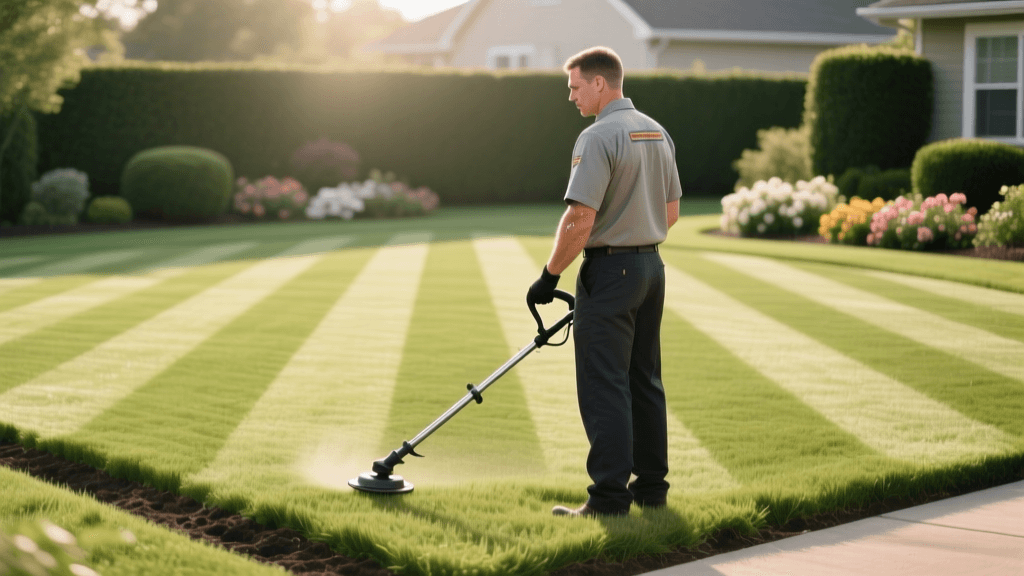
Nothing defines a premium landscape quite like sharp, clean edges. Where your lawn meets the driveway, walkways, and garden beds, overgrown grass creates a sloppy, unkempt appearance. Use a mechanical stick edger or a manual half-moon edging tool to create a sharp 90-degree trench along all hardscape borders. Remove the excess soil and grass clippings immediately. This crisp delineation tricks the eye into perceiving the entire lawn as more manicured and professional, significantly elevating the aesthetic experience for your guests.
Implementing Lawn Striping for Maximum Wow Factor
If you truly want to impress your guests and elevate your curb appeal to the next level, consider lawn striping. The alternating light and dark bands seen on professional sports fields are achieved simply by bending grass blades in opposite directions. Light reflects off the blades differently depending on which way they are bent. To achieve this at home, invest in a polyurethane lawn striping kit that attaches to the back of your standard push or riding mower. Mow in straight, overlapping lines, alternating your direction on each pass. The result is a stunning, professional-grade visual texture that serves as a spectacular backdrop for outdoor photography and entertaining.
Protecting Your Turf: Managing Soil Compaction
The greatest threat to your lawn during a large gathering is soil compaction. When dozens of people congregate in one area—such as around a buffet table, a fire pit, or a children's game zone—the weight of their footsteps compresses the soil particles. This squeezes out vital oxygen and water, effectively suffocating the grassroots. The Texas A&M AgriLife Extension notes that compacted soil is a leading cause of turf decline, thinning, and increased vulnerability to weed invasion.
Pre-Event Core Aeration
If your party is scheduled for late spring or early summer, perform core aeration a few weeks in advance. Core aeration involves using a machine to pull small plugs of soil (typically 2 to 3 inches deep) out of the lawn. This alleviates existing compaction, improves water infiltration, and allows the root system to expand. Follow up aeration with a light topdressing of compost to introduce beneficial microbes and improve soil structure before the heavy traffic arrives.
Strategic Hardscaping and Traffic Routing
You can protect your most vulnerable turf areas by subtly directing foot traffic. Consider laying down temporary, aesthetically pleasing pathways. Natural coir matting, interlocking rubber patio tiles, or even a series of decorative flagstones can guide guests from the patio to the backyard amenities without trampling the grass. Additionally, strategically placing large potted plants, portable lighting, or seating clusters can act as natural barriers, discouraging guests from congregating in the same high-traffic bottleneck areas.
Post-Party Recovery Protocol
No matter how well you prepare, a large gathering will leave some impact on your lawn. Implementing a swift post-party recovery routine is essential to maintain long-term curb appeal and prevent localized dead spots from turning into permanent weeds.
Pro Tip: Never apply heavy synthetic nitrogen fertilizers immediately after a high-traffic event. The stressed grass needs to focus on root recovery and cellular repair, not rapid, vulnerable top-growth.
Deep Watering and Soil Surfactants
The morning after the event, give the high-traffic zones a deep, thorough watering. This helps the soil expand and relieves minor surface compaction. If your soil is heavy clay or prone to hydrophobic (water-repelling) conditions, apply a liquid soil surfactant or wetting agent. Surfactants reduce the surface tension of water, allowing it to penetrate deeply into compacted areas and reach the stressed roots much faster.
Spot Seeding and Organic Nutrition
Inspect the lawn for any areas where the turf was completely torn away or severely damaged. Rake out the dead debris, loosen the top inch of soil, and apply a high-quality grass seed that matches your existing lawn. Cover the seed lightly with peat moss or straw to retain moisture. To support overall recovery, apply a gentle, organic fertilizer rich in potassium and humic acids. Potassium strengthens the grass at the cellular level, improving its natural wear tolerance and disease resistance, while humic acids stimulate root regeneration in compacted zones.
Conclusion
Hosting outdoor events should be a joy, not a source of anxiety regarding your landscaping. By understanding the unique demands that entertaining places on your turf, you can take proactive steps to ensure your lawn remains both beautiful and resilient. From selecting traffic-tolerant grass varieties and mastering the art of lawn striping to managing soil compaction and executing a swift post-party recovery, these strategies will keep your outdoor space looking impeccable. With the right preparation, your lawn will not only survive the summer party season but will serve as a stunning, durable foundation for years of unforgettable outdoor memories.