Lawn Care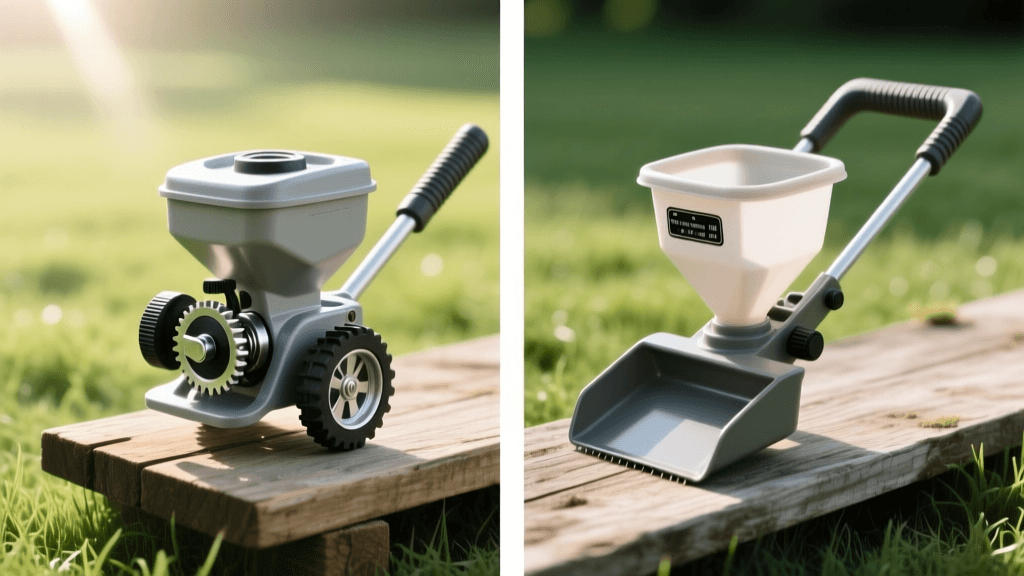
Broadcast vs Drop Spreader: Which Lawn Tool is Best?
The Importance of Choosing the Right Lawn Spreader
Achieving a lush, vibrant, and weed-free lawn requires more than just buying the right bag of fertilizer or grass seed; it demands the right equipment to apply it evenly. Uneven application can lead to severe consequences, including fertilizer burn, unsightly striping, stunted growth, and excessive nutrient runoff into local waterways. When shopping for lawn care tools, homeowners and turf professionals are typically faced with a primary decision: broadcast spreader vs. drop spreader.
Both tools serve the fundamental purpose of distributing granular products—such as fertilizers, pre-emergent herbicides, grub control, and grass seed—but they do so using entirely different mechanical principles. In this comprehensive tools and equipment guide, we will break down the mechanics, pros, cons, and ideal use cases for each spreader type. Whether you are maintaining a small urban lawn or a sprawling suburban estate, understanding these differences will save you time, money, and potential turf damage.
Understanding Drop Spreaders: Precision and Control
A drop spreader operates on a simple, gravity-fed mechanism. As you push the tool forward, a rotating agitator bar inside the hopper stirs the granular product, allowing it to fall through a series of adjustable holes along the bottom of the hopper. The product drops directly below the machine, creating a precise, defined swath of coverage. The width of this swath is strictly limited to the physical width of the hopper, which typically ranges from 18 to 36 inches on consumer-grade models.
Pros and Cons of Drop Spreaders
The primary advantage of a drop spreader is unparalleled precision. Because the product falls straight down, it is entirely immune to wind drift. This makes it the ultimate tool for applying expensive products near sensitive areas, such as flower beds, vegetable gardens, water features, and paved driveways. According to the University of Minnesota Extension, precise application is critical for preventing fertilizer burn on delicate ornamental plants and reducing waste on non-target surfaces.
However, this precision comes at the cost of speed and forgiveness. To avoid visible striping (alternating bands of light and dark green grass), you must perfectly overlap the wheels of the spreader with the tracks from your previous pass. Furthermore, drop spreaders are significantly slower, making them impractical for lawns larger than 5,000 square feet. The small hopper openings can also clog if you attempt to use large, irregularly shaped granules or if the product has absorbed moisture.
Understanding Broadcast (Rotary) Spreaders: Speed and Efficiency
Also known as rotary spreaders, broadcast spreaders utilize a horizontal spinning disk located beneath the hopper. As the product falls through the discharge hole, it hits the spinning impeller, which flings the granules outward in a wide, fan-like pattern. Depending on the model, the walking speed, and the size of the granules, a broadcast spreader can cast material anywhere from 5 to 15 feet in width.
Pros and Cons of Broadcast Spreaders
Speed and forgiveness are the hallmarks of the broadcast spreader. Because the swath is so wide, you do not need to be exact with your overlapping; a general 20% to 30% overlap is sufficient to guarantee uniform coverage without streaking. This makes broadcast spreaders the undisputed champions for large, open lawn areas. They are also much faster, allowing you to fertilize a 10,000-square-foot lawn in a fraction of the time it would take with a drop spreader.
The downside is the lack of edge control. Wind can easily carry lightweight granules off-target, potentially burning delicate ornamental plants or wasting product on concrete. To combat this, many modern broadcast spreaders feature adjustable edge guards or deflectors that block one side of the spinning disk, allowing you to trim the edges of your lawn safely. If your spreader lacks an edge guard, you must manually turn off the flow rate before reaching the end of a pass near a garden bed.
Head-to-Head Equipment Comparison
Use the following comparison chart to determine which lawn care tool aligns best with your specific property requirements and budget.
| Feature | Drop Spreader | Broadcast Spreader |
|---|---|---|
| Application Method | Gravity-fed (drops straight down) | Centrifugal force (flings outward) |
| Swath Width | 18 to 36 inches (fixed) | 5 to 15 feet (adjustable) |
| Application Speed | Slow and methodical | Fast and efficient |
| Precision & Edging | Excellent (no overspray) | Moderate (requires edge guards) |
| Wind Sensitivity | None | High (avoid windy days) |
| Best Lawn Size | Small to medium (under 5,000 sq ft) | Medium to large (over 5,000 sq ft) |
| Overlap Forgiveness | Low (requires exact wheel tracking) | High (general overlap is fine) |
| Average Cost | $40 - $90 | $50 - $150+ |
How to Calibrate Your Spreader for Perfect Results
Buying the right tool is only half the battle; calibrating it correctly is where the real work begins. The settings printed on the side of fertilizer bags are merely starting points. Humidity, granule size, and your personal walking speed all affect the application rate. Applying too much fertilizer not only wastes money but also contributes to severe environmental issues. The Environmental Protection Agency (EPA) warns that excess nitrogen and phosphorus from improperly applied lawn chemicals are leading contributors to nutrient pollution, which causes harmful algal blooms in local waterways.
The Tarp Calibration Method
To ensure your equipment is delivering the exact amount of product required, follow this simple calibration process:
- Measure a Test Area: Mark off a 100-square-foot area of your driveway or lay down a large tarp on the lawn. For example, a 10-foot by 10-foot square.
- Weigh Your Product: Weigh out the exact amount of fertilizer needed for 100 square feet based on the bag's recommended application rate.
- Load and Apply: Put the weighed product into your spreader and walk over the test area at your normal, steady pace, using the spreader setting recommended on the bag.
- Evaluate the Results: If you have product left over in the hopper, your spreader is set too low. If you run out before finishing the 100 square feet, your setting is too high. Adjust the dial and repeat the test until the product runs out exactly as you finish the area.
Tool Maintenance and Storage Best Practices
Lawn care tools represent a significant investment, and spreaders are particularly vulnerable to corrosion. Most synthetic and organic fertilizers contain salts and moisture-attracting compounds that will rapidly rust metal components and degrade plastic if left uncleaned. After every use, you must thoroughly clean your equipment.
For broadcast spreaders, pay special attention to the spinning impeller and the discharge hole, as caked-on fertilizer will unbalance the spinner, resulting in an uneven application pattern the next time you use it. Rinse the spreader with a garden hose, using a stiff brush to dislodge stubborn granules. Once washed, allow the tool to dry completely in the sun before storing it. Applying a light coat of silicone lubricant or WD-40 to the axle, wheels, and moving metal parts will prevent rust and ensure smooth operation for years to come. Always store your spreader in a dry garage or shed, elevated off the ground if possible, to prevent moisture accumulation.
Final Thoughts on Lawn Care Equipment
Ultimately, the choice between a broadcast spreader and a drop spreader comes down to the layout and size of your property. If you have a large, open lawn with wide margins, a broadcast spreader equipped with an edge guard will save you hours of labor and provide beautifully uniform results. If your property is a complex puzzle of narrow grass strips, intricate garden beds, and tight property lines, the surgical precision of a drop spreader is well worth the extra time and effort. Many seasoned lawn care enthusiasts keep a broadcast spreader for their main turf areas and a small, handheld drop spreader for precise edging and spot-treatments. By selecting the right tool and taking the time to calibrate it properly, you will protect your landscape, save money on expensive turf products, and safeguard the local environment.