Lawn Care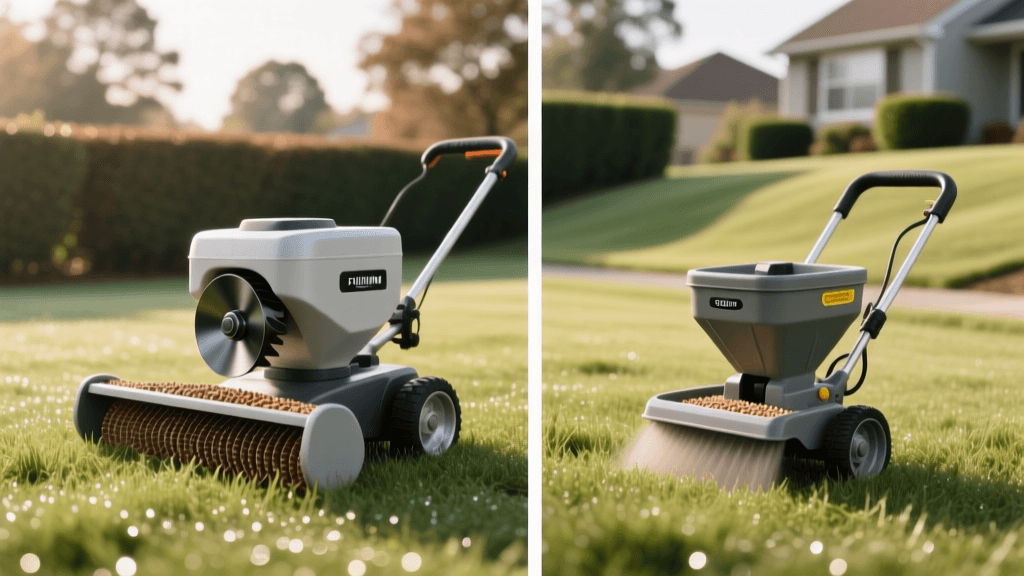
Broadcast vs Drop Spreaders: Choosing the Right Lawn Tool
The Foundation of a Healthy Lawn: Precision Application
When it comes to professional-grade lawn care, the health and vibrancy of your turf depend heavily on the even distribution of fertilizers, grass seed, and soil amendments. Applying these materials by hand often results in clumping, striping, and severe nutrient burn. To achieve a lush, uniform lawn, investing in the right lawn spreader is non-negotiable. However, walking into a garden center or browsing online can quickly become overwhelming. The two dominant categories—broadcast (rotary) spreaders and drop spreaders—serve distinctly different purposes. Choosing the wrong equipment can lead to wasted product, damaged landscaping, and uneven grass growth. This comprehensive tools and equipment guide will break down the mechanics, pros, cons, and ideal use cases for both spreader types, ensuring you make the right investment for your specific yard.
Understanding Broadcast (Rotary) Spreaders
Broadcast spreaders, frequently referred to as rotary spreaders, are the most common tools found in residential garages. They operate using a spinning horizontal disk located at the base of the hopper. As gravity feeds the granular material down, the rotating disk flings the particles outward in a wide, sweeping fan pattern. Depending on the model and the size of the granules, a broadcast spreader can cover a swath anywhere from 5 to 15 feet wide.
Pros of Broadcast Spreaders
- Speed and Efficiency: Because of their wide application swath, broadcast spreaders allow you to cover large, open expanses of turf in a fraction of the time it would take with a drop spreader.
- Forgiving Overlap: The wide, feathered edge of the broadcast pattern makes it easy to overlap passes without creating noticeable striping or double-apply lines.
- Less Clogging: The large openings and aggressive spinning mechanism handle larger, irregularly shaped granules (like certain organic fertilizers or coarse grass seeds) without jamming.
Cons of Broadcast Spreaders
- Overspray and Waste: The spinning disk does not discriminate. If you walk too close to a garden bed, driveway, or water feature, the fertilizer will be flung onto those surfaces, leading to wasted product and potential environmental runoff.
- Wind Drift: Lightweight materials applied on a breezy day can easily be blown off course, resulting in uneven application.
Understanding Drop Spreaders
Drop spreaders utilize a much simpler, gravity-fed mechanism. The hopper spans the width of the wheelbase (typically around 22 inches), and a series of adjustable holes along the bottom open to release the material directly straight down onto the soil. There is no spinning disk or lateral throwing action.
Pros of Drop Spreaders
- Surgical Precision: Because the material falls strictly between the wheels, you can apply fertilizer right up to the edge of a flower bed, sidewalk, or pond without worrying about overspray.
- Environmental Safety: The Environmental Protection Agency (EPA) heavily advises homeowners to prevent fertilizer runoff into storm drains and waterways. Drop spreaders are the safest choice for properties bordering water or paved surfaces.
- Wind Immunity: Since the granules drop straight down from a low height, windy conditions will not disrupt your application pattern.
Cons of Drop Spreaders
- Strict Overlap Requirements: You must perfectly align the edge of your current pass with the tracks of your previous pass. Missing by even an inch can leave un-fertilized strips that will show up as yellow lines weeks later.
- Slower Application: The narrow 22-inch width means you will be walking significantly more laps to cover the same square footage.
- Prone to Clogging: Wet fertilizer, large granules, or damp grass seed can easily bridge over the small drop holes, requiring frequent clearing.
Head-to-Head Comparison Chart
| Feature | Broadcast (Rotary) Spreader | Drop Spreader |
|---|---|---|
| Application Width | 5 to 15 feet | 18 to 24 inches (wheelbase width) |
| Best Lawn Size | Large, open lawns (5,000+ sq. ft.) | Small, complex lawns (Under 5,000 sq. ft.) |
| Precision | Low to Moderate | Very High |
| Speed | Fast | Slow |
| Wind Sensitivity | High | Very Low |
| Skill Level Required | Beginner-friendly | Requires careful attention to overlap |
Matching the Spreader to Your Lawn Layout
If your property is a sprawling, open rectangle with few obstacles, a broadcast spreader like the Scotts Turf Builder EdgeGuard Mini or a tow-behind Agri-Fab 40-Inch model is your best bet. The EdgeGuard feature on modern Scotts models includes a physical shield that blocks the right side of the spinning disk, mitigating the overspray issue when walking along driveways. Conversely, if your yard is a narrow urban lot, features intricate landscaping, or borders a sensitive koi pond, a drop spreader like the Scotts Classic Drop Spreader will save you from hand-sweeping fertilizer off your patio.
The Crucial Step: Spreader Calibration
Buying the right tool is only half the battle. Product labels provide suggested dial settings, but these are merely starting points. Wear and tear, humidity, and manufacturing variances mean your spreader's output will differ from the factory standard. According to turfgrass specialists at the University of Minnesota Extension, failing to calibrate your spreader can result in applying 20% to 50% more or less product than intended, leading to severe turf burn or ineffective weed control.
"Proper calibration ensures that the correct amount of fertilizer or pesticide is applied to the target area, maximizing efficacy while minimizing environmental impact and wasted money."
The Clemson University Home & Garden Information Center outlines a simple, foolproof method for calibrating your equipment before every major application season.
Step-by-Step Calibration Guide
- Measure a Test Area: Mark off a 100-square-foot section of your lawn or driveway (e.g., 10 feet by 10 feet).
- Weigh the Product: Calculate the amount of product needed for 100 sq. ft. based on the bag's total coverage rate. Weigh this exact amount and place it in the hopper.
- Set the Dial: Adjust the spreader to the manufacturer's recommended setting.
- Run the Test: Walk the 100-square-foot area at your normal, steady mowing pace. Engage the hopper at the start line and disengage exactly at the finish line.
- Evaluate and Adjust: Collect and weigh the leftover product. If you have too much left, your spreader is under-applying (open the dial slightly). If you run out before the 10-foot mark, you are over-applying (close the dial slightly). Repeat until the product runs out exactly at the finish line.
Maintenance and Cleaning Best Practices
Fertilizers are highly corrosive salts. Leaving residue in your spreader hopper will quickly lead to rusted axles, seized spinner gears, and degraded plastic. After every single use, you must wash the spreader thoroughly. Push it onto your lawn (not the driveway, to avoid chemical runoff) and hose out the hopper, agitation plate, and wheels. Allow it to dry completely in the sun before storing it in a shed. Once a year, apply a silicone-based lubricant to the axle bearings and the rotary spinner shaft to ensure smooth operation.
Cost Expectations and Professional Alternatives
For the average homeowner, a high-quality broadcast or drop spreader will cost between $40 and $90. These models typically feature plastic hoppers and pneumatic tires. If you are a lawn care enthusiast managing multiple acres, or if you frequently apply heavy, sandy top-dressing materials, you should look into professional-grade equipment. Brands like Lesco manufacture stainless-steel, high-wheel fertilizer spreaders that cost upwards of $300 to $500. While expensive, their enclosed gearboxes and rust-proof frames will last a lifetime, making them a worthwhile investment for serious turf managers.
Conclusion
Ultimately, the choice between a broadcast and a drop spreader comes down to the geometry of your lawn and your personal tolerance for precision. Broadcast spreaders offer unmatched speed and forgiveness for large, open turf areas, while drop spreaders provide the surgical accuracy required for complex landscapes and environmentally sensitive zones. Whichever tool you select, committing to a rigorous calibration routine and post-use cleaning schedule will ensure your lawn receives the exact nutrition it needs, exactly where it needs it, season after season.