Home & Garden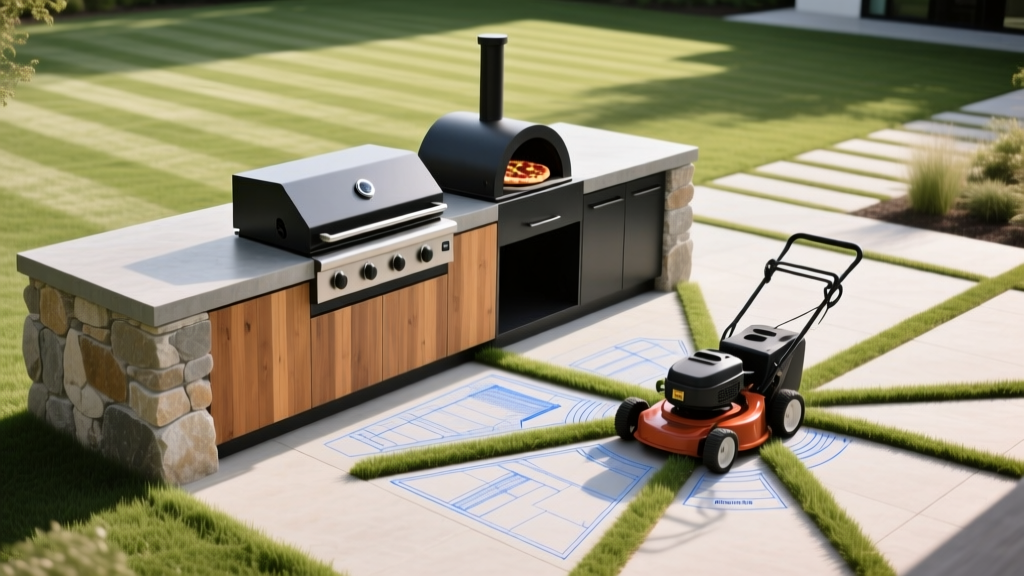
2026 Outdoor Kitchen Design: Pizza Ovens & Mowing Patterns
Anna KowalskiPublished
The Intersection of Culinary Hardscapes and Turfgrass Geometry
Welcome to the 2026 outdoor living renaissance. Today, the backyard is no longer just a patch of grass; it is a fully integrated extension of the home. For the modern homeowner, installing an outdoor kitchen complete with a built-in grill and a high-temperature pizza oven is the ultimate garden-to-table dream. However, as landscaping and turfgrass experts know, dropping a massive 12-foot granite-topped island into the middle of your yard can completely destroy your established mowing patterns. If your hardscape design ignores the geometry of your lawn mower, you will spend your weekends frustrated, wrestling with a string trimmer around sharp concrete corners and dealing with scalped turf.
Designing an outdoor kitchen requires a dual mindset: you must think like a master chef and a precision turf manager. In 2026, the most celebrated outdoor living spaces are those that seamlessly blend high-end culinary appliances with mow-friendly landscaping. By planning your built-in grill and pizza oven layout around your mower’s turning radius, utilizing flush edging, and establishing protective garden-to-table herb zones, you can achieve a pristine, striped lawn that perfectly frames your outdoor culinary oasis.
Top 2026 Built-In Grills and Pizza Oven Integrations
Before we map out the mowing patterns, we must consider the footprint of the 2026 appliance lineup. Modern outdoor kitchens are moving away from sprawling, linear layouts and toward compact, high-efficiency L-shapes and U-shapes that preserve valuable turfgrass area.
- Coyote C-Series Built-In Grills: The 2026 Coyote models feature enhanced ceramic briquette trays and infrared rotisserie back burners. Their standard 30-inch and 36-inch cutout dimensions allow for tighter island footprints, meaning less hardscape to navigate around during your weekly mow.
- Kalamazoo Hybrid Fire Grill: A premium choice for serious chefs, this unit allows you to cook with gas, wood, or charcoal. Because it requires specific clearance for wood storage and ventilation, the island footprint is larger. Designing sweeping, rounded corners around a Kalamazoo island is essential to accommodate zero-turn mowers without tearing the turf.
- Integrated Pizza Oven Modules: Countertop wood-fired ovens, such as the Ooni Karu 16 or Gozney Dome, are now being integrated into custom masonry surrounds with built-in heat shields. These masonry bases often extend 18 to 24 inches past the oven itself to protect the surrounding lawn from radiant heat, creating a substantial hardscape obstacle that must be factored into your mowing route.
Designing the Island for Zero-Turn Mowing Patterns
When executing advanced mowing patterns—such as the classic stripe, the checkerboard, or the spiral—an outdoor kitchen island acts as a central obstacle. The key to maintaining a clean pattern is the perimeter relief pass. According to Penn State Extension's guidelines on turfgrass management, making one or two perimeter passes around obstacles before engaging in the primary striping pattern prevents turf tearing and ensures an even cut.
However, if your outdoor kitchen island features sharp 90-degree corners, zero-turn mowers will struggle to execute a clean perimeter pass. The caster wheels will dig into the soil during pivot turns, causing unsightly brown patches and soil compaction. The 2026 design standard is to incorporate rounded corners or sweeping curves into your masonry or paver island base. A corner radius of at least 12 to 24 inches allows the mower deck to glide smoothly around the hardscape, maintaining the integrity of your striping pattern and eliminating the need for post-mow string trimming.
Mower Clearances vs. Island Corner Designs
| Mower Type (2026 Models) | Typical Turning Radius | Ideal Island Corner Design | Perimeter Mowing Strategy |
|---|---|---|---|
| Residential Zero-Turn (42"-54" Deck) | 0° (Pivot Turn) | 12" Rounded Corner | Single perimeter pass, then stripe |
| Commercial Stand-On (52"-61" Deck) | 18" - 24" | 24" Sweeping Curve | Two perimeter passes to avoid turf tearing |
| Lawn Tractor (46"-50" Deck) | 6" - 12" (Tight Turn) | 90° Angle with Flush Edging | Three-point turns or string-trim corners |
The Magic of Flush Edging and Mowing Strips
To truly bridge the gap between hardscape and lawn care, your outdoor kitchen patio must feature flush edging. A mowing strip is a border of pavers, flagstone, or poured concrete installed at the exact same height as the surrounding turfgrass. When designing the patio that supports your built-in grill and pizza oven, extend the hardscape border 6 to 12 inches beyond the island base and any outdoor seating walls.
This technique allows the outer wheels of your mower deck to ride directly on the hardscape while the blades cut the grass perfectly flush against the edge. As highlighted by the National Association of Landscape Professionals, flush edging drastically reduces the time spent on manual edging and string trimming, while also preventing the accidental scalping of grass near heavy stone features. For 2026 installations, permeable paver mowing strips are highly recommended, as they allow rainwater to drain into the soil below, supporting the root systems of the adjacent turfgrass while providing a solid track for your mower wheels.
Garden-to-Table Herb Zones and Mow Boundaries
An outdoor kitchen with a pizza oven is incomplete without fresh, garden-to-table ingredients. Planting rosemary, basil, oregano, and thyme near the cooking zone is a popular 2026 trend. However, these herb gardens must be strategically placed outside the primary mowing paths to avoid damage from mower discharge and exhaust.
Design Tip: Create raised Corten steel or stone planter beds that double as retaining walls and mowing barriers. By elevating the herb garden 12 to 18 inches above the lawn grade, you protect the delicate culinary plants from the lateral blast of grass clippings generated by high-speed zero-turn mowers. Furthermore, aligning these raised beds parallel to your primary mowing lines allows you to execute long, uninterrupted striping passes without having to navigate around individual, ground-level garden plots.
Protecting Turf from Heat and Grease
Wood-fired pizza ovens and high-BTU infrared sear zones generate immense ambient heat and occasional grease splatter, both of which can devastate adjacent turfgrass. The Texas A&M AgriLife Extension frequently notes that localized soil compaction and heat stress are primary culprits for dead zones in high-traffic backyard areas. To protect your meticulously striped lawn, ensure that the hardscape patio extends at least 4 feet outward from the front of the grill and pizza oven. This creates a safe "culinary drop zone" where the chef can stand, turn, and manage wood fires without trampling the grass or dropping hot embers onto the turf.
"A successful outdoor kitchen is measured not just by the quality of the food it produces, but by how harmoniously it integrates into the surrounding landscape. If the lawn care becomes a burden, the outdoor space loses its magic."
Conclusion: Mastering the 2026 Backyard Canvas
Integrating a built-in grill and pizza oven into your backyard is a significant investment in your home's value and your family's lifestyle. By approaching the design from the perspective of mowing techniques and patterns, you ensure that the space remains functional, beautiful, and easy to maintain for years to come. Remember to design sweeping corners for your zero-turn mower, install flush mowing strips to eliminate string trimming, and elevate your garden-to-table herb zones to protect them from mower discharge. In 2026, the perfect backyard is one where the chef's culinary artistry and the turf manager's precision striping exist in perfect, effortless harmony.
