
Tree Care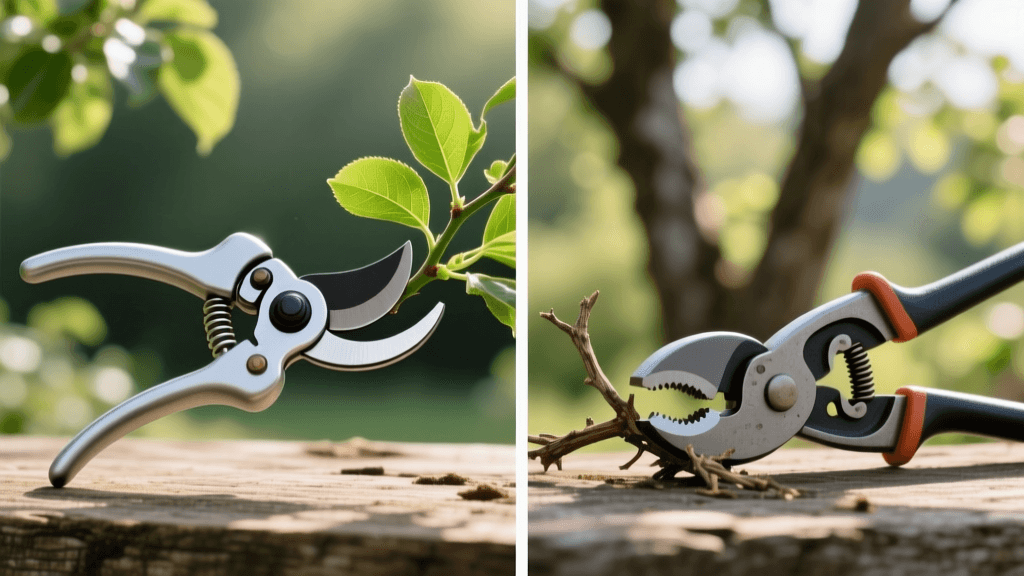
Bypass vs. Anvil Pruners: The Ultimate Tree Tool Guide
The Anatomy of a Pruner: Bypass vs. Anvil
Trees are living organisms that respond to injury through a biological process called compartmentalization. When you make a pruning cut, you are essentially wounding the tree. Using the wrong tool can tear the bark, crush the delicate cambium layer, and create a massive entry point for fungal spores and wood-boring insects. For homeowners and professional arborists alike, understanding the mechanical differences between bypass and anvil pruners is the first step toward maintaining a healthy, thriving landscape.
While both tools are designed to cut wood, their cutting actions are fundamentally different. Choosing the correct tool depends entirely on the type of wood you are cutting, the thickness of the branch, and the desired healing outcome for the tree.
Bypass Pruners: The Surgeon's Scalpel
Bypass pruners operate much like a pair of heavy-duty scissors. They feature two curved blades that pass by each other—one sharp cutting blade that slides closely past a lower, unsharpened jaw (often called the hook or anvil). This shearing action creates a remarkably clean, precise cut that leaves the plant tissue largely undisturbed.
Because the cut is so clean, bypass pruners are the undisputed champions of live, green wood. When you prune a live branch, the tree must quickly seal the wound to prevent decay. A clean shear cut allows the tree's natural defense mechanisms to work efficiently without having to repair crushed cellular structures. Bypass pruners are also excellent for making tight, angled cuts close to the branch collar, which is critical for proper healing.
Anvil Pruners: The Heavy-Duty Bone Crusher
Anvil pruners feature a single, straight, sharpened blade that comes down directly onto a flat, blunt surface (the anvil), which is typically made of softer metal, plastic, or rubber. Think of it like a knife cutting against a wooden chopping block.
This design provides immense crushing leverage, making anvil pruners incredibly powerful for cutting through thick, dry, dead wood that might jam or sap up a bypass blade. However, this same crushing action is devastating to live, green wood. When an anvil blade closes, it pinches and crushes the bark and cambium layer on the side of the cut before severing it. This crushed tissue cannot heal properly, leaving a ragged wound that invites disease and extends the decay zone into the healthy parts of the branch.
The Science of Healing: CODIT
To understand why tool selection matters, we must look at the Compartmentalization of Decay in Trees (CODIT), a model developed by the renowned tree biologist Dr. Alex Shigo. When a tree is wounded, it does not 'heal' by regenerating damaged tissue like human skin; instead, it 'seals' the wound by building chemical and physical walls around the injury to stop the spread of decay. According to the Arbor Day Foundation, making clean cuts with sharp bypass tools minimizes the size of the wound and reduces the amount of energy the tree must expend on building these defensive walls, allowing it to focus on vigorous new growth.
Head-to-Head Comparison Chart
| Feature | Bypass Pruners | Anvil Pruners |
|---|---|---|
| Cutting Action | Shearing (scissor-like) | Crushing (knife-on-block) |
| Best Used For | Live, green, and growing wood | Dead, dry, and brittle wood |
| Wound Quality | Clean, precise, fast-healing | Crushed, ragged, slow-healing |
| Risk of Bark Tearing | Low (if kept sharp) | High on live wood |
| Leverage & Power | Moderate | High (excellent for hard deadwood) |
| Average Cost | $25 - $75 | $20 - $50 |
Top Tool Recommendations for Tree Care
Investing in high-quality steel and ergonomic designs will save your hands and your trees. Here are the industry-standard tools trusted by arborists:
- Felco F-2 Classic Bypass Pruner (Approx. $65): The gold standard for professional arborists. Made with hardened steel blades and a forged aluminum handle, the F-2 features a sap groove to prevent sticking and a wire-cutting notch. Every part is replaceable, making it a lifetime investment.
- Corona ComfortGEL Bypass Pruner (Approx. $35): An excellent mid-range option for homeowners. The gel grips reduce hand fatigue during long pruning sessions, and the forged steel blade holds a sharp edge well through multiple seasons.
- Fiskars PowerGear Anvil Pruner (Approx. $30): If you must clear out deadwood in an old, neglected tree, this tool's patented gear technology multiplies your leverage, allowing you to snap through dry, 1-inch dead branches with minimal hand strain.
- Silky Gomboy 210mm Folding Saw (Approx. $55): When a branch exceeds 1.5 inches in diameter, pruners are no longer appropriate. This Japanese pull-saw cuts on the pull stroke, leaving a glass-smooth finish that requires no sanding or sealing, perfectly aligning with modern arboricultural standards.
Extending Your Reach: Loppers and Pole Pruners
Hand pruners are limited to branches up to 3/4-inch thick. For larger limbs or higher branches, you must scale up your equipment while maintaining the bypass cutting action for live wood.
Bypass Loppers: Essential for branches between 1 and 2.5 inches thick. Look for loppers with 24-to-30-inch handles to provide adequate leverage. The University of Minnesota Extension emphasizes that using loppers beyond their rated capacity will misalign the blades and ruin the tool, so always upgrade to a pruning saw for thicker limbs.
Pole Pruners: For branches up to 15 feet high, a telescoping pole pruner with a rope-pull bypass blade is invaluable. These tools allow you to maintain the three-cut method from the ground without the immediate danger of climbing a ladder with a handsaw.
Tool Maintenance: Protecting Your Investment and Your Trees
A dull or dirty pruner is a dangerous tool. Dull blades require excessive force, increasing the likelihood of the blade slipping and causing personal injury or tearing the tree bark. Furthermore, dirty tools are primary vectors for devastating tree diseases like Oak Wilt, Fire Blight, and Dutch Elm Disease.
Never move from pruning a diseased tree to a healthy tree without thoroughly sterilizing your equipment. Pathogens can survive on steel blades for weeks.
The Maintenance Routine:
- Sterilize: Wipe down blades with 70% isopropyl alcohol or a Lysol disinfectant spray between trees. Avoid bleach, as it rapidly corrodes carbon steel and pits the blade edge.
- Clean: Use a wire brush and warm soapy water to remove dried sap and resin. For stubborn sap, a solvent like Simple Green or rubbing alcohol works wonders.
- Sharpen: Use a medium-grit diamond sharpening stone or a bastard file. Follow the original factory bevel angle (usually between 20 and 25 degrees). Only sharpen the outer, beveled edge of the bypass blade; never sharpen the flat inner side, or the blades will fail to meet properly.
- Lubricate: Apply a few drops of Camellia oil or a lightweight synthetic tool oil to the pivot point and the blade surface to prevent rust and ensure smooth action.
Proper Pruning Technique: The Three-Cut Method
Having the right bypass pruner or saw is only half the battle. When removing branches larger than 2 inches, the weight of the falling wood can strip the bark down the trunk, causing catastrophic damage to the tree's main vascular system. To prevent this, the International Society of Arboriculture (ISA) recommends the three-cut method:
- The Undercut: Make a shallow cut on the underside of the branch, about 6 to 12 inches away from the trunk. This cut should go about one-third of the way through the branch.
- The Top Cut (Weight Removal): Move an inch or two further out on the branch and cut all the way through from the top down. The branch will snap off cleanly at the undercut, preventing any bark tearing.
- The Final Collar Cut: Now that the heavy weight is gone, make your final, clean cut just outside the branch collar (the swollen area where the branch meets the trunk). Never cut flush with the trunk, as this removes the collar and destroys the tree's natural chemical defense zone.
By pairing the correct bypass tools with proper cutting techniques, you ensure that your trees remain structurally sound, visually appealing, and biologically resilient for decades to come. Remember that every cut is a permanent alteration to the tree's architecture; always measure twice, select the right tool, and cut with purpose.