Gardening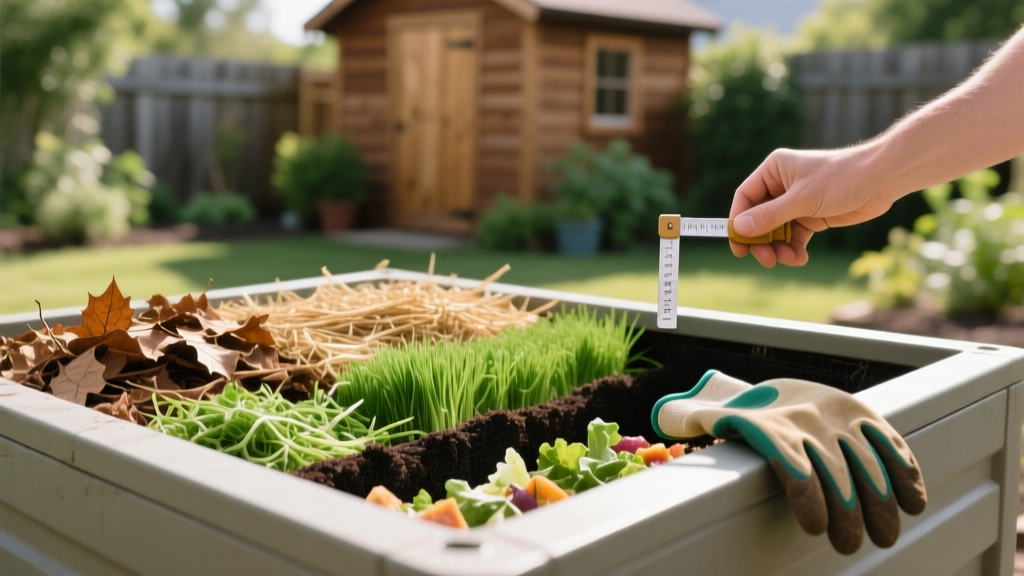
Master the Carbon to Nitrogen Ratio for Perfect Compost
Lisa ThompsonPublished
The Microbiology of Compost: Why the C:N Ratio Matters
Every seasoned gardener knows that the secret to a thriving vegetable patch or a vibrant flower border lies beneath the surface. Soil health is the foundation of successful gardening, and composting is the most effective way to build that foundation. However, many home gardeners treat their compost bin as a magical black hole where kitchen scraps and yard waste simply disappear. When the pile fails to heat up, emits foul odors, or takes years to break down, frustration inevitably sets in. The culprit is almost always an imbalance in the fundamental chemistry of decomposition: the Carbon-to-Nitrogen (C:N) ratio.
Understanding and mastering the C:N ratio is the difference between maintaining a sluggish, smelly pile of rotting debris and managing a biological furnace that produces rich, dark, crumbly humus in a matter of months. According to the Environmental Protection Agency (EPA), composting is a controlled, aerobic process that requires specific ingredients and conditions to thrive. By recycling organic waste at home, you not only reduce landfill contributions but also save hundreds of dollars on commercial soil amendments. Let us dive deep into the science of soil health and explore exactly how to balance your compost for optimal results.
To understand the C:N ratio, you must first understand the workforce doing the heavy lifting in your compost bin: billions of microscopic organisms, primarily bacteria, fungi, and actinomycetes. These microbes require two primary nutritional elements to survive, reproduce, and break down organic matter efficiently.
Carbon (C) provides the energy source. Think of carbon as the carbohydrates and sugars that fuel microbial activity. As microbes consume carbon, they release heat and carbon dioxide, which is why a healthy, active compost pile feels warm or even hot to the touch. Nitrogen (N), on the other hand, provides the building blocks for proteins, enzymes, and DNA. Nitrogen is essential for rapid microbial reproduction and population growth.
If a pile has too much nitrogen, the microbes reproduce rapidly but run out of energy, leading to anaerobic conditions and the release of ammonia gas. If a pile has too much carbon, the microbes have plenty of energy but lack the nitrogen required to build their cellular structures, causing the decomposition process to grind to a near halt. The universally accepted ideal C:N ratio for a compost pile is approximately 30:1. This means 30 parts carbon for every 1 part nitrogen by weight.
Understanding 'Browns' and 'Greens'
In the gardening community, high-carbon materials are colloquially referred to as 'browns,' while high-nitrogen materials are called 'greens.' It is crucial to note that these terms refer to their chemical composition, not necessarily their physical color. For instance, fresh coffee grounds are dark brown in color, but they are considered a 'green' nitrogen source. Conversely, dry autumn leaves might be yellow, orange, or red, but they are a 'brown' carbon source.
The Ultimate C:N Ratio Data Table
To build a perfect pile, you need to know the approximate C:N ratios of your available materials. The following table outlines common household and yard waste materials, categorized by their primary nutritional contribution to the soil food web.
| Material | Category | Approximate C:N Ratio | Decomposition Speed |
|---|---|---|---|
| Sawdust (Untreated) | Brown (Carbon) | 400:1 to 500:1 | Very Slow |
| Dry Autumn Leaves | Brown (Carbon) | 60:1 | Slow to Moderate |
| Straw or Hay | Brown (Carbon) | 80:1 | Moderate |
| Shredded Newspaper | Brown (Carbon) | 175:1 | Slow |
| Fresh Grass Clippings | Green (Nitrogen) | 17:1 | Very Fast |
| Used Coffee Grounds | Green (Nitrogen) | 20:1 | Fast |
| Vegetable Kitchen Scraps | Green (Nitrogen) | 25:1 | Fast |
| Chicken Manure | Green (Nitrogen) | 10:1 | Extremely Fast |
How to Calculate and Mix Your Pile
While scientists and commercial composting facilities calculate the C:N ratio by exact dry weight, this is entirely impractical for the home gardener. Fortunately, you can achieve a highly effective 30:1 ratio by using a simple volumetric measurement.
The golden rule for home composting is to mix two to three parts 'browns' to one part 'greens' by volume. Because carbon-rich materials like dry leaves and straw are generally lighter and fluffier than dense, wet nitrogen sources like kitchen scraps and grass clippings, a 3:1 volume ratio naturally balances out to roughly a 30:1 weight ratio.
When building your pile, avoid thick, compacted layers of a single material. A thick mat of wet grass clippings will become anaerobic and slimy, while a thick layer of dry leaves will blow away or remain completely dry in the center. Instead, mix the materials thoroughly as you add them, or build thin, alternating layers and turn them with a pitchfork immediately to ensure an even distribution of nutrients.
The Missing Variables: Moisture, Aeration, and Particle Size
Even with a perfect 30:1 C:N ratio, your compost pile will fail if you ignore the physical environment of the microbes. The USDA Natural Resources Conservation Service (NRCS) emphasizes that soil and compost health relies heavily on habitat conditions for biological organisms. You must manage moisture, oxygen, and surface area.
Moisture Content
Microbes live in the water films surrounding organic particles. Your compost pile should maintain a moisture content of 40% to 60%. The easiest way to test this is the 'wrung-out sponge' test. Grab a handful of compost (wearing gloves) and squeeze it tightly. It should feel like a damp, wrung-out sponge. If water drips out, the pile is too wet; add more dry browns and turn it. If it crumbles and falls apart, it is too dry; add water or more fresh greens.
Aeration
The beneficial bacteria that drive the hot composting process are aerobic, meaning they require oxygen. Without adequate airflow, anaerobic bacteria take over, producing the foul, rotten-egg smell of hydrogen sulfide. Turn your pile with a pitchfork or compost aerator every 3 to 7 days to introduce fresh oxygen and redistribute the materials from the cooler outer edges to the hot center.
Particle Size
Surface area dictates how quickly microbes can access their food. Whole branches or unshredded leaves take years to break down. Run your carbon-rich brown materials through a leaf shredder or lawn mower before adding them to the bin. Aim for a particle size between 1 and 2 inches. Anything smaller can restrict airflow and cause compaction, while anything larger will slow the process significantly.
Troubleshooting Your Compost Pile
Even the most diligent gardeners occasionally encounter composting hiccups. Use this diagnostic guide to correct imbalances on the fly:
- The pile smells like ammonia or rotting garbage: You have too much nitrogen (low C:N ratio). The pile has likely gone anaerobic. Fix this by immediately turning the pile and mixing in a generous amount of dry, bulky browns like shredded cardboard, straw, or dry leaves to absorb excess moisture and restore the carbon balance.
- The pile is cool and not decomposing: You have too much carbon (high C:N ratio), or the pile is too dry. Check the moisture first. If it is dry, add water and fresh grass clippings. If moisture is adequate, mix in a high-nitrogen green source like blood meal, chicken manure, or fresh coffee grounds to give the microbial population a protein boost.
- The pile is attracting pests or rodents: This is usually caused by adding meat, dairy, or oils, which should never go in a home compost bin. It can also happen if kitchen scraps are exposed on the surface. Always bury your nitrogen-rich kitchen scraps at least 8 to 10 inches deep into the center of the pile and cover them with a thick layer of browns.
Seasonal Composting Adjustments
Your C:N strategy must adapt to the weather. In the summer, high temperatures accelerate microbial activity, meaning you may need to water your pile more frequently to maintain the 40-60% moisture threshold. Piles can dry out in a matter of days during a heatwave. In the winter, microbial activity slows down dramatically. To keep your pile active in cold climates, increase the overall volume to at least one cubic yard to retain heat, and insulate the top with a thick layer of straw. Avoid turning the pile in freezing temperatures, as this releases the trapped heat core and resets the biological clock.
Curing and Application for Maximum Soil Health
Knowing when your compost is finished is just as important as building it correctly. Finished compost should be dark brown, crumbly, and smell like a rich forest floor after a rainstorm. You should no longer be able to recognize the original ingredients. Once the pile cools down to ambient temperature and stops heating up after being turned, it is ready for the curing phase.
Let the compost cure for 3 to 4 weeks. This allows the microbial population to stabilize and the pH to neutralize, ensuring it will not harm tender plant roots. When applying to your garden, top-dress vegetable beds with a 1-to-2-inch layer of finished compost in the spring, or mix it directly into the top 6 inches of soil when preparing new raised beds. For heavy feeders like tomatoes and squash, you can side-dress with a handful of compost mid-season or brew aerated compost tea to deliver liquid nutrients directly to the root zone. By mastering the C:N ratio, you are not just recycling yard waste; you are actively engineering a living, breathing soil ecosystem that will sustain your garden for years to come.
