
Landscaping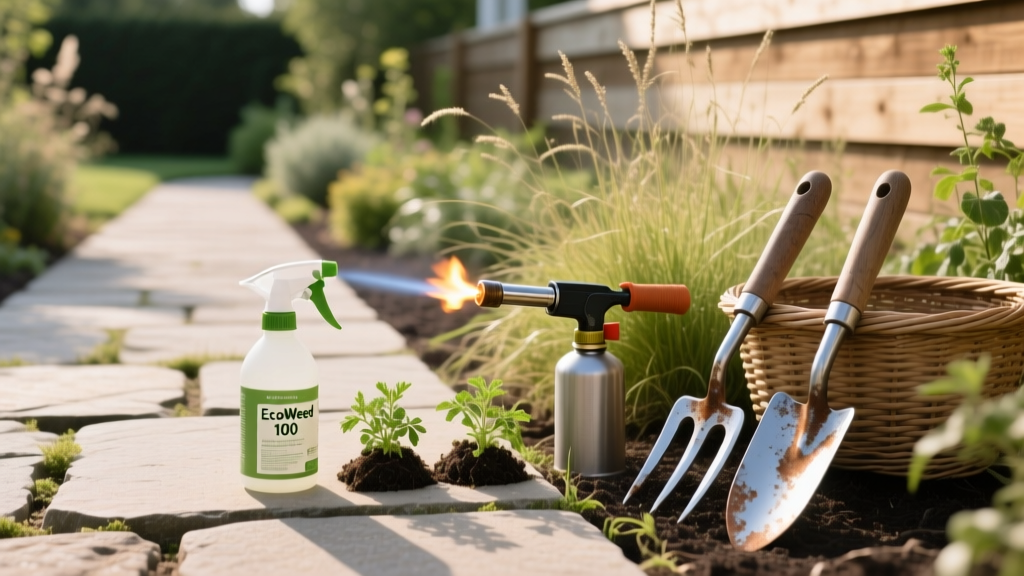
Chemical-Free Weed Control for Hardscapes and Garden Edges
James MillerPublished
Reclaiming Your Hardscapes Without Synthetics
Weeds thriving in the cracks of your driveway, patio, or garden edging can be one of the most frustrating challenges in landscape maintenance. For decades, the default solution has been to reach for synthetic, systemic herbicides like glyphosate. However, as homeowners and landscape professionals become increasingly aware of the ecological impact of these chemicals, the demand for chemical-free and organic landscaping approaches has surged. Hardscapes—such as paver patios, stone walkways, and concrete driveways—are particularly vulnerable to chemical runoff. Because these surfaces are impervious, any synthetic herbicide applied to them is easily washed away by the next rainstorm, flowing directly into storm drains and local watersheds.
According to research highlighted by The Xerces Society, synthetic herbicides and their inert adjuvant ingredients can be highly toxic to native pollinators and aquatic ecosystems. Transitioning to organic weed management is not just a trend; it is a vital step toward sustainable landscape stewardship. Fortunately, modern organic landscaping offers a robust toolkit for managing hardscape weeds effectively, safely, and without a single drop of synthetic chemicals.
The Hidden Ecological Cost of Synthetic Herbicides
Before exploring organic alternatives, it is crucial to understand why synthetic herbicides are particularly problematic in hardscape environments. When you spray a garden bed, the soil microbiome can sometimes help break down certain chemicals over time. When you spray a concrete driveway or a paver patio, there is no soil to buffer the chemical. The active ingredients and surfactants pool on the surface and are flushed directly into the environment.
Furthermore, repeated use of synthetic herbicides leads to herbicide-resistant weed biotypes, forcing landscapers to use higher concentrations or more toxic mixtures. By adopting chemical-free methods, you preserve the local water table, protect beneficial insects, and maintain a safer environment for pets and children who frequently play on patios and walkways. The Environmental Protection Agency (EPA) actively encourages the use of minimum-risk and organic pest control products to reduce the environmental footprint of residential and commercial landscaping.
Top Chemical-Free Weed Control Methods for Hardscapes
Managing weeds organically requires a multi-pronged approach. Because organic methods are often contact-based rather than systemic, combining different strategies will yield the best long-term results.
1. High-Concentration Acetic Acid (Horticultural Vinegar)
While household vinegar (5% acetic acid) is a popular internet myth for weed control, it is largely ineffective on established weeds. For true chemical-free eradication on hardscapes, you need horticultural vinegar, which contains 20% to 30% acetic acid. This highly acidic solution works as a rapid-contact herbicide. It strips the waxy cuticle off the weed's leaves, causing the plant to desiccate and die within hours.
- Application: Spray directly onto the foliage of the weed on a hot, sunny day. The sun accelerates the desiccation process.
- Limitations: Acetic acid is non-selective and will harm any plant it touches. It also does not translocate to the roots, meaning deep-rooted perennial weeds (like dandelions or bindweed) may require two or three applications to exhaust their root reserves.
- Safety & Cost: At 30% concentration, acetic acid is corrosive and can cause severe eye and skin burns. Always wear safety goggles, long sleeves, and chemical-resistant gloves. A one-gallon jug of 30% horticultural vinegar typically costs between $25 and $40.
2. Thermal Weeding (Flame Weeding)
Thermal weeding is one of the most satisfying and effective organic methods for clearing weeds from driveway cracks and stone edges. Using a specialized propane torch (usually generating between 100,000 and 400,000 BTUs), you apply intense heat directly to the weed.
The goal of flame weeding is not to burn the weed to a crisp. Instead, you pass the flame over the plant for just one to two seconds. The intense heat boils the water inside the plant's cells, causing them to rupture. You can perform the 'thumbprint test': press your thumb against a leaf after flaming it. If it leaves a dark, wet fingerprint, the cells have ruptured and the weed will die within 24 hours, even if it still looks green.
- Timing: Best performed in the early morning when plants are turgid (full of water) and the surrounding hardscape is damp, reducing fire risk.
- Cost: A basic flame weeding kit with a wand and a 20lb propane tank will cost around $75 to $120 upfront, with minimal ongoing fuel costs.
3. Organic Pre-Emergents: Corn Gluten Meal
If your hardscape borders a lawn or a soil-heavy garden bed, weed seeds are constantly blowing into the cracks. Corn Gluten Meal (CGM) is a natural byproduct of corn milling that acts as an organic pre-emergent herbicide. It works by inhibiting the formation of feeder roots in germinating seeds, effectively stopping weeds before they ever break the surface.
- Application Rate: Apply at a rate of 20 pounds per 1,000 square feet.
- Timing: CGM must be applied before weed seeds germinate. In most temperate climates, this means applying it in early spring when soil temperatures reach 50°F to 55°F (often coinciding with the blooming of forsythia).
- Cost: A 50-pound bag of organic corn gluten meal costs approximately $40 to $50.
4. Physical Barriers: Polymeric Sand and Steel Edging
The ultimate chemical-free weed control strategy is prevention through superior hardscape construction and maintenance. Weeds only grow in patio cracks because wind-blown soil and organic debris accumulate, creating a seedbed. By eliminating the seedbed, you eliminate the weed.
For paver patios and walkways, removing old, degraded jointing sand and replacing it with polymeric sand is a game-changer. Polymeric sand contains special additives that, when misted with water, bind the sand particles together into a flexible, concrete-like matrix. This seals the joints completely, preventing weed seeds from taking root and stopping ants from excavating the base. For garden beds bordering lawns, installing deep steel or heavy-duty aluminum landscape edging (at least 6 inches deep) prevents aggressive grasses like Bermuda or Zoysia from creeping into your organic mulch beds.
Comparison Chart: Organic Weed Control Methods
To help you choose the right approach for your specific landscape, review the comparison table below detailing the pros, cons, and ideal use cases for each chemical-free method.
| Method | Target Weeds | Est. Cost | Pros | Cons |
|---|---|---|---|---|
| Horticultural Vinegar | Annuals, young perennials | $30 / gallon | Fast results, no residual soil toxicity. | Requires PPE, does not kill deep roots, non-selective. |
| Flame Weeding | All types, especially in deep cracks | $100 (kit) | Extremely effective, satisfying, zero chemicals. | Fire hazard in dry seasons, requires fuel handling. |
| Corn Gluten Meal | Germinating seeds (Pre-emergent) | $45 / 50 lbs | Adds nitrogen to nearby soil, prevents new weeds. | Useless on existing weeds, timing is critical. |
| Polymeric Sand | Prevention (All types) | $35 / 50 lbs | Long-term solution, stabilizes pavers, stops ants. | Labor-intensive installation, requires dry weather to set. |
Long-Term Organic Landscape Maintenance
Transitioning to a chemical-free landscape is a commitment to working with nature rather than against it. As noted by the USDA National Organic Program, sustainable land management relies on fostering ecological balance. In the context of hardscapes, this means accepting that a perfectly sterile, weed-free environment requires constant vigilance, but the tools available make this vigilance safe and effective.
Implement a seasonal maintenance schedule: use polymeric sand to seal hardscapes in the late spring, apply corn gluten meal to adjacent soil borders in early spring and early fall, and keep a propane torch or horticultural vinegar on hand for spot-treating the inevitable stray dandelion that finds its way into a driveway crack. By combining physical barriers with organic contact treatments, you can maintain pristine, beautiful outdoor living spaces while protecting the soil, water, and wildlife that make your garden thrive.

