Lawn Care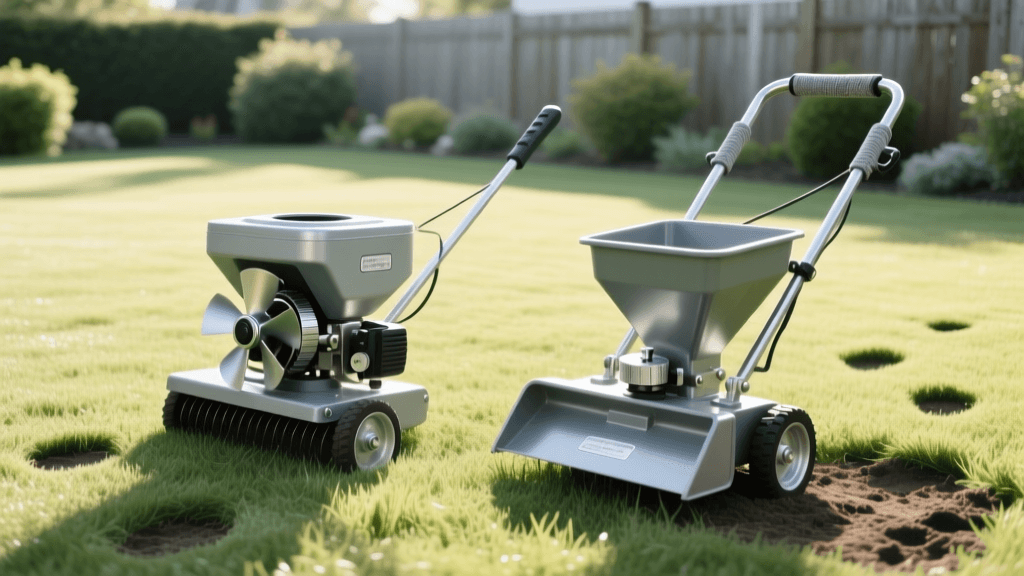
How to Choose and Calibrate the Right Lawn Spreader
Introduction to Lawn Spreaders
Applying fertilizer, grass seed, or herbicide evenly is one of the most critical steps in maintaining a lush, healthy lawn. However, without the right equipment and proper calibration, you risk over-applying chemicals, which can burn your turf and pollute local waterways, or under-applying, which leaves your lawn vulnerable to weeds and disease. According to guidelines from the Environmental Protection Agency (EPA), proper calibration of application equipment is essential for environmental safety and effective nutrient management. In this comprehensive tools and equipment guide, we will break down the differences between broadcast and drop spreaders, help you choose the right size for your yard, and provide a foolproof, step-by-step calibration method.
Broadcast vs. Drop Spreaders: Which is Right for You?
When shopping for lawn care equipment, you will primarily encounter two types of spreaders: broadcast (rotary) and drop. Understanding the mechanical differences between these tools will help you select the best option for your specific landscape.
Broadcast (Rotary) Spreaders
Broadcast spreaders feature a rotating disk at the base that flings product outward in a wide, fan-like pattern. This design allows you to cover large areas quickly and efficiently. They are ideal for open, expansive lawns where overlapping swaths will not damage adjacent garden beds. Many modern broadcast spreaders come equipped with edge-control shields, which allow you to direct the flow away from driveways, sidewalks, and flower beds. However, because the product is thrown through the air, wind can significantly affect the distribution pattern, making it best to apply products on calm days.
Drop Spreaders
Drop spreaders, on the other hand, release the product directly downward through a series of holes in the bottom of the hopper. The application width is strictly limited to the width of the spreader wheelbase. This precision makes drop spreaders the superior choice for smaller lawns, narrow strips of grass, or areas immediately adjacent to vegetable gardens, ponds, and hardscapes. While they offer unmatched accuracy and are unaffected by wind, they require a much slower, more methodical walking pace and meticulous overlapping to avoid visible striping on your lawn.
Comparison Chart
| Feature | Broadcast (Rotary) Spreader | Drop Spreader |
|---|---|---|
| Application Pattern | Wide, fan-like swath | Narrow, straight down |
| Best For | Large, open lawns | Small lawns, near gardens and water |
| Wind Interference | High | None |
| Walking Speed | Normal to fast | Slow and methodical |
| Overlap Required | 50 percent overlap for even coverage | Edge-to-edge precision |
Choosing the Right Spreader Size
Beyond the mechanism, spreaders are categorized by their capacity and form factor. Selecting the right size prevents fatigue and ensures you can complete the job without constant refilling.
- Handheld Spreaders: Best for lawns under 1,500 square feet. These are lightweight, battery-operated or crank-driven, and perfect for spot-treating weeds or applying small amounts of seed.
- Push Spreaders: The standard for residential lawns ranging from 1,500 to 10,000 square feet. They feature large, pneumatic or plastic wheels that glide easily over uneven terrain.
- Tow-Behind Spreaders: Designed for properties exceeding one acre. These hook up to a riding mower or ATV and feature massive hoppers capable of holding 50 to 100 pounds of product.
The Importance of Spreader Calibration
Many homeowners simply set their spreader to the number recommended on the back of the fertilizer bag and start walking. While this is a good baseline, it is not foolproof. Spreader settings vary based on the brand, the age of the equipment, the size of the granules, and your personal walking speed. Turfgrass researchers at the University of Nebraska-Lincoln Turfgrass Science program emphasize that calibrating your specific equipment to your walking pace is the only way to guarantee the correct application rate.
Step-by-Step Spreader Calibration Guide
To calibrate your spreader, you will need a tape measure, a small digital scale, a bucket, and a flat surface like a driveway or a large tarp. We will use the 100-square-foot test method, which is widely recommended by turfgrass professionals and detailed in resources from major agricultural extensions like Penn State Extension.
Step 1: Calculate the Target Weight
First, determine how much product you need for 100 square feet. If a 20-pound bag of fertilizer covers 5,000 square feet, the application rate is 4 pounds per 1,000 square feet, or 0.4 pounds per 100 square feet. Convert 0.4 pounds to ounces by multiplying by 16. Your target is to spread exactly 6.4 ounces over a 100-square-foot area.
Step 2: Prepare the Test Area
Measure a 10-foot by 10-foot square on your driveway or a tarp. Ensure the surface is clean and dry so you can easily collect the product afterward.
Step 3: Load and Spread
Place slightly more than 6.4 ounces of product into the spreader. Set the dial to a medium setting. For example, if the dial goes from 1 to 15, set it to 7 or 8. Walk at your normal, comfortable mowing pace over the 10x10 area, making sure to open the hopper at the starting edge and close it exactly at the ending edge.
Step 4: Weigh and Adjust
Collect the product from the tarp and weigh it on your digital scale. If you spread 8 ounces, your setting is too high; close the dial by one or two notches. If you spread 4 ounces, open the dial. Repeat the test until you consistently spread 6.4 ounces over the 100-square-foot area. Once dialed in, record this setting for that specific product brand and granule size.
Top Spreader Brands for Residential Lawn Care
- Lesco: Known for commercial-grade durability, Lesco spreaders feature stainless steel components and are a favorite among landscaping professionals.
- Scotts: The most recognizable brand for homeowners, offering affordable push spreaders with proprietary EdgeGuard technology to keep fertilizer off hardscapes.
- Chapin: Offers excellent mid-range options with rust-resistant hoppers and comfortable ergonomic grips.
- Earthway: Famous for their lightweight, high-wheel broadcast spreaders that handle uneven terrain with ease.
Spreader Maintenance and Storage
Fertilizer is highly corrosive, and leaving it in your spreader will quickly rust the metal components and seize the agitator. After every use, empty the hopper completely. Rinse the spreader thoroughly with a garden hose, paying special attention to the axle and the underside of the hopper. Allow the equipment to dry completely in the sun before storing it in a shed or garage. Once a season, apply a silicone-based lubricant to the wheel axles and the pivot points of the hopper gate to ensure smooth operation.
Conclusion
Investing in the right lawn spreader and taking the time to calibrate it will transform your lawn care routine. Whether you choose a precision drop spreader for a small urban yard or a high-capacity broadcast spreader for a sprawling suburban estate, proper application ensures your grass gets exactly what it needs to thrive. By following the calibration steps and maintenance tips outlined above, you will save money on wasted products, protect the environment, and achieve a consistently beautiful, dark green lawn all season long.