Lawn Care
Choosing the Right Grass Species for Your Climate Zone
The Foundation of a Resilient Lawn: Species Selection
The secret to a lush, vibrant, and low-maintenance lawn does not begin with expensive fertilizers or complex irrigation systems. It begins long before the first seed is sown or the first roll of sod is laid down. The true foundation of a successful lawn is selecting the correct turfgrass species for your specific climate zone, soil type, and sunlight conditions. Planting a shade-intolerant grass in a heavily wooded yard, or a water-thirsty cool-season grass in a drought-prone southern state, will result in an endless cycle of disease, weed invasion, and disappointment.
In this comprehensive guide, we will break down the physiological differences between cool-season and warm-season grasses, explore the unique challenges of the Transition Zone, and provide actionable data to help you choose the perfect grass variety for your landscape.
Understanding Your Climate Zone
Turfgrasses are broadly categorized into two main physiological groups based on their optimal growing temperatures and geographic adaptability: cool-season grasses and warm-season grasses. The United States is generally divided by the 37th parallel, which acts as a rough border between the northern cool-season zone and the southern warm-season zone. However, microclimates, elevation, and proximity to large bodies of water can shift these boundaries.
Before selecting a seed or sod, consult the USDA Plant Hardiness Zone Map to understand your region's minimum winter temperatures. A grass species that thrives in the humid summers of Georgia will likely perish during the freezing winters of Minnesota. Matching the grass's genetic hardiness to your local climate is the single most important decision you will make.
Cool-Season Grasses: Thriving in the North
Cool-season grasses grow most vigorously during the cooler temperatures of spring and fall (60°F to 75°F). They tend to slow down or go dormant during the peak heat of summer and can tolerate freezing winter temperatures. These grasses are predominantly seeded rather than sodded, making them cost-effective for large areas.
Kentucky Bluegrass (Poa pratensis)
Known for its rich, dark green color and fine texture, Kentucky Bluegrass (KBG) is the gold standard for northern lawns. It spreads via underground stems called rhizomes, giving it excellent self-repairing capabilities for high-traffic areas. However, it requires full sun and high maintenance.
- Seeding Rate: 2 to 3 lbs per 1,000 square feet.
- Cost: $6 to $9 per pound of premium seed.
- Water Needs: 1.5 to 2 inches per week; poor drought tolerance.
Tall Fescue (Festuca arundinacea)
Tall Fescue is a bunch-type grass renowned for its deep root system, which can reach 2 to 3 feet into the soil. This makes it exceptionally drought-tolerant and heat-resistant compared to other cool-season grasses. Modern "turf-type" tall fescues have a much finer blade than older forage varieties like Kentucky 31.
- Seeding Rate: 6 to 8 lbs per 1,000 square feet.
- Cost: $4 to $6 per pound.
- Water Needs: 1 to 1.5 inches per week; excellent drought tolerance.
Perennial Ryegrass (Lolium perenne)
Perennial Ryegrass is the speed demon of the turf world. It germinates in as little as 5 to 7 days, making it an excellent choice for quick erosion control or for overseeding thin lawns. It does not spread via rhizomes or stolons, so it relies on tillering to fill in bare spots.
- Seeding Rate: 5 to 7 lbs per 1,000 square feet.
- Cost: $5 to $8 per pound.
- Water Needs: 1 to 1.5 inches per week; moderate drought tolerance.
Fine Fescue (Festuca spp.)
If you have a heavily shaded yard in a northern climate, Fine Fescue (including creeping red, chewings, and hard fescues) is your best option. It requires less fertilizer and water than KBG but struggles with heavy foot traffic and extreme summer heat.
Warm-Season Grasses: Dominating the South
Warm-season grasses thrive in hot summer temperatures (80°F to 95°F) and turn brown after the first hard frost in autumn. They are highly drought-tolerant and aggressively spread via above-ground stolons and below-ground rhizomes. Because they are often sterile or difficult to grow from seed, they are frequently established via sod, sprigs, or plugs.
Bermudagrass (Cynodon dactylon)
Bermudagrass is the most widely used warm-season turf. It is incredibly aggressive, traffic-tolerant, and recovers rapidly from damage. It demands full, direct sunlight and will thin out significantly in shaded areas.
- Seeding Rate: 1 to 2 lbs of hulled seed per 1,000 square feet.
- Cost: $12 to $18 per pound (seed); $0.30 to $0.45 per sq ft (sod).
- Maintenance: High; requires frequent mowing and heavy nitrogen fertilization.
Zoysiagrass (Zoysia spp.)
Zoysiagrass forms a dense, carpet-like lawn that naturally chokes out weeds. It is more cold-hardy than Bermudagrass and offers better shade tolerance. The trade-off is a very slow establishment rate; a Zoysia lawn can take 2 to 3 years to fully fill in from plugs.
- Establishment: Best planted via sod or plugs.
- Cost: $0.40 to $0.60 per square foot (sod).
- Maintenance: Moderate; prone to thatch buildup requiring annual dethatching.
Centipedegrass (Eremochloa ophiuroides)
Often called the "lazy man's grass," Centipedegrass is a slow-growing, low-maintenance option for the Southeast. It prefers acidic soils (pH 5.0 to 6.0) and requires very little nitrogen fertilizer. Over-fertilizing Centipedegrass leads to a phenomenon known as "centipede decline."
St. Augustinegrass (Stenotaphrum secundatum)
St. Augustine is the premier shade-tolerant warm-season grass. It features broad, coarse blades and spreads rapidly via thick above-ground stolons. It is highly susceptible to chinch bugs and fungal diseases like gray leaf spot, and it must be established vegetatively (sod or plugs) as viable seed is not commercially available.
The Transition Zone Dilemma
The "Transition Zone" is a horizontal band stretching across the middle of the United States, from the Mid-Atlantic through the Midwest to the lower Plains. In this region, summers are often too hot and humid for cool-season grasses to survive without severe stress, and winters are too cold for warm-season grasses to avoid winterkill.
According to turfgrass researchers at North Carolina State University, the most successful lawns in the Transition Zone rely on highly adaptable species. Tall Fescue is the most reliable cool-season choice due to its heat tolerance, while Zoysiagrass is the safest warm-season bet due to its superior winter hardiness. Many homeowners in this zone utilize a strategy of planting Tall Fescue for year-round green, accepting that it may require heavy irrigation during July and August.
Comprehensive Grass Species Comparison Chart
Use the table below to quickly compare the physiological traits and maintenance requirements of the most common turfgrass species.
| Grass Species | Season Type | Sun / Shade Tolerance | Drought Tolerance | Maintenance Level | Best Planting Time |
|---|---|---|---|---|---|
| Kentucky Bluegrass | Cool | Full Sun / Poor Shade | Low | High | Early Fall |
| Tall Fescue | Cool | Sun to Moderate Shade | High | Moderate | Early Fall |
| Perennial Ryegrass | Cool | Full Sun / Poor Shade | Moderate | High | Early Fall |
| Fine Fescue | Cool | Excellent Shade Tolerance | Moderate | Low | Early Fall |
| Bermudagrass | Warm | Full Sun Only | Very High | High | Late Spring |
| Zoysiagrass | Warm | Sun to Moderate Shade | High | Moderate | Late Spring |
| Centipedegrass | Warm | Sun to Light Shade | Moderate | Low | Late Spring |
| St. Augustinegrass | Warm | Excellent Shade Tolerance | Moderate | Moderate | Late Spring |
Step-by-Step Selection and Planting Guide
Once you have selected the right species for your climate and yard conditions, follow these actionable steps to ensure successful establishment.
1. Conduct a Soil Test
Never plant grass blind. Purchase a soil test kit from your local university cooperative extension. Most turfgrasses prefer a soil pH between 6.0 and 7.0. If your soil is too acidic (common in the Northeast and Southeast), you will need to apply pelletized limestone at a rate of roughly 50 lbs per 1,000 square feet to raise the pH. If it is too alkaline, elemental sulfur is required.
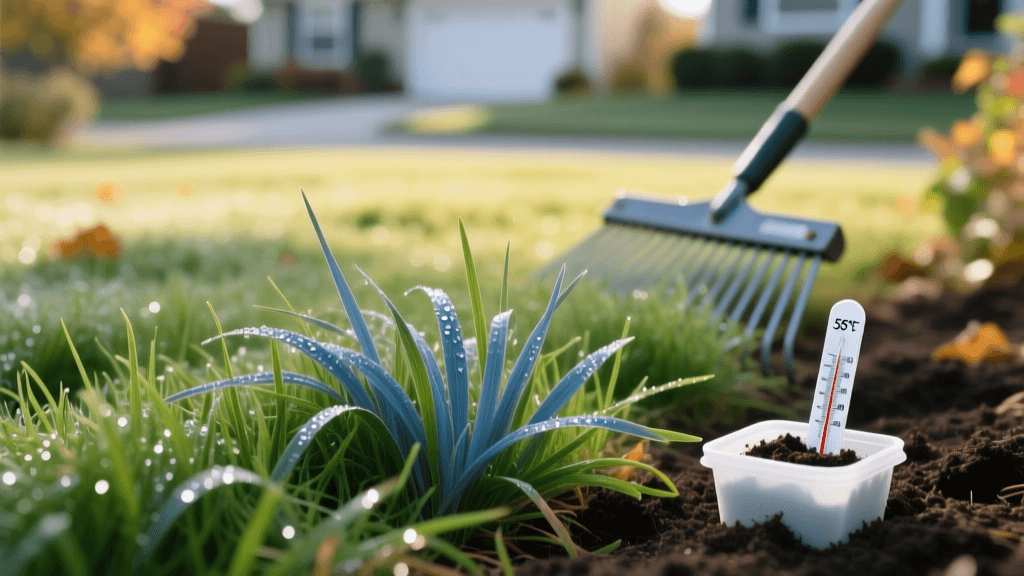
Expert Tip: Soil temperatures dictate seed germination, not air temperatures. Cool-season seeds require a soil temperature of 50°F to 65°F, while warm-season seeds need soil temperatures consistently above 65°F. Use a soil thermometer to verify conditions before planting.
2. Site Preparation
Rototill the top 4 to 6 inches of soil to relieve compaction. Remove all rocks, debris, and existing weed roots. Grade the lawn to ensure a 1% to 2% slope away from your home's foundation to prevent water pooling. Incorporate a 2-inch layer of organic compost into the topsoil to improve moisture retention and microbial activity.
3. Precision Seeding and Sodding
For seed, use a broadcast spreader and apply half the seed in a north-south direction, and the other half in an east-west direction to ensure even coverage. Lightly rake the seed into the top 1/4 inch of soil and roll the area with a water-filled lawn roller to ensure seed-to-soil contact. For sod, lay the rolls in a staggered brick pattern, ensuring the edges are tightly butted together without overlapping.
4. Smart Irrigation Practices
Newly planted seed must remain constantly moist for the first 14 to 21 days. This requires light watering 2 to 3 times a day for 5 to 10 minutes per session. Once the grass reaches 2 inches, transition to deeper, less frequent watering to encourage root growth. The EPA WaterSense program recommends watering established lawns deeply but infrequently, providing about 1 inch of water per week, preferably in the early morning hours to reduce evaporation and fungal diseases.
Conclusion
Selecting the right grass species is an investment in the long-term health, aesthetics, and environmental sustainability of your landscape. By respecting your local climate zone, understanding the unique physiological traits of cool-season and warm-season grasses, and preparing your soil correctly, you can cultivate a lawn that is not only beautiful but naturally resilient against weeds, drought, and disease. Take the time to research your specific microclimate, and your lawn will reward you for decades to come.