
Landscaping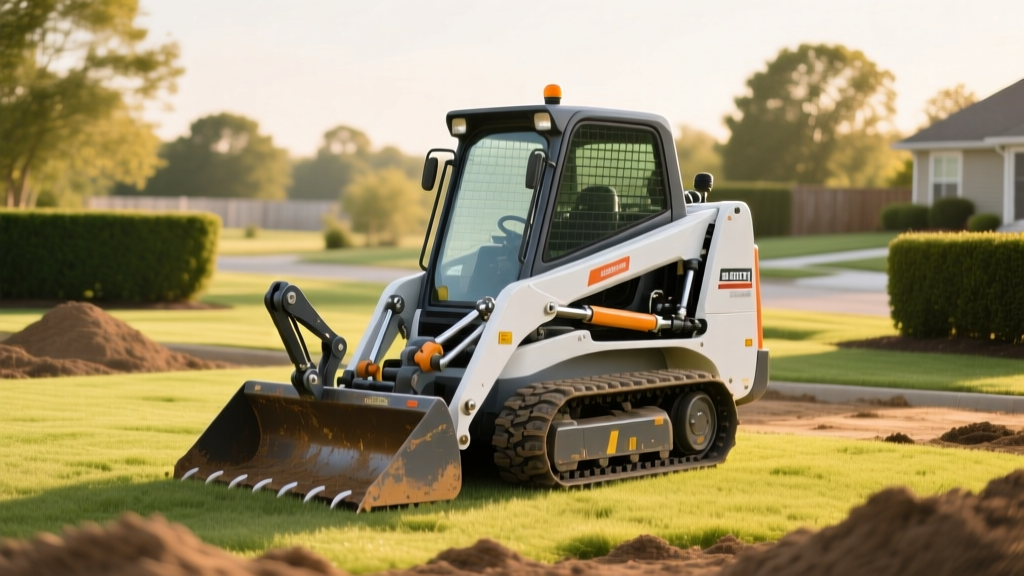
Choosing a Mini Skid Steer for Landscaping Projects
Mike RodriguezPublished
The Evolution of Landscape Equipment
The landscaping industry has undergone a massive transformation over the last two decades. Gone are the days when residential and commercial landscape contractors relied solely on wheelbarrows, manual shovels, and back-breaking labor to move dirt, mulch, and hardscaping materials. Today, the mini skid steer—formally known in the industry as a Compact Utility Loader (CUL)—has become an indispensable piece of equipment for professionals and serious DIY enthusiasts alike. These powerhouse machines offer the lifting capacity and hydraulic versatility of a full-sized skid steer but in a footprint small enough to fit through a standard residential backyard gate.
Whether you are installing a complex French drain system, laying down tons of paver base for a new patio, or augering holes for a privacy tree line, selecting the right mini skid steer is critical to your project's success. This comprehensive guide will walk you through the essential specifications, attachment options, and financial considerations you need to evaluate before adding a CUL to your landscaping arsenal.
Stand-On vs. Walk-Behind: A Comprehensive Comparison
When shopping for a mini skid steer, the first major decision you will face is choosing between a walk-behind model and a stand-on (ride-on) platform. While both serve the same fundamental purpose, their operational dynamics differ significantly, impacting operator fatigue, visibility, and overall job site efficiency.
| Feature | Walk-Behind CUL | Stand-On CUL |
|---|---|---|
| Operator Fatigue | Moderate to High (requires walking alongside) | Low (operator rides on a rear platform) |
| Visibility | Excellent (unobstructed view of the bucket) | Good (slight obstruction from the operator's body) |
| Weight Distribution | Lighter overall machine weight | Heavier; operator weight adds to traction and lift capacity |
| Price Point | Generally lower initial cost | Higher initial cost, but better ROI for daily use |
| Best Application | Occasional use, tight indoor spaces, light grading | Daily contracting, heavy hardscaping, large material movement |
For landscape contractors who spend 40 hours a week moving heavy natural stone, gravel, and soil, the stand-on model is overwhelmingly the preferred choice. The operator's weight on the rear platform acts as a counterbalance, allowing the machine to safely lift heavier loads without tipping forward. Furthermore, industry leaders like Toro with their Dingo line and Vermeer have heavily invested in stand-on ergonomics, featuring ISO-mounted platforms that absorb vibration and reduce lower back strain over a long workday.
Critical Specifications to Evaluate
Not all mini skid steers are created equal. When comparing models from top manufacturers, you must look beyond the marketing brochures and focus on the hard specifications that dictate performance in the field.
Rated Operating Capacity (ROC) and Tipping Load
The Rated Operating Capacity (ROC) is the maximum weight the machine can safely lift and carry without risking a forward tip-over. In landscaping, you are frequently moving wet topsoil, dense gravel, and heavy retaining wall blocks. A machine with an ROC of 500 pounds might struggle with a fully loaded bucket of wet clay, whereas a model with an 800 to 1,000-pound ROC will handle it with ease. Always calculate the weight of your heaviest typical load (including the bucket attachment) and ensure it falls well within the machine's ROC.
Machine Width and Turf Protection
One of the primary reasons to choose a CUL over a full-sized skid steer is its ability to navigate narrow access points. Standard residential gates are typically 36 to 48 inches wide. Most mini skid steers feature a narrow track configuration that measures around 36 inches wide, allowing them to pass through gates seamlessly. However, narrow tracks exert higher ground pressure (measured in PSI), which can tear up delicate turf. If your projects frequently involve driving over established lawns, look for models that offer wide-track options or specialized turf tires to distribute the weight and minimize soil compaction and grass damage.
Hydraulic Flow and Auxiliary Power
The engine horsepower is only half the story; hydraulic flow is what truly powers your attachments. Standard flow systems typically offer 8 to 12 gallons per minute (GPM), which is sufficient for basic buckets and light augers. However, if you plan to run high-demand attachments like hydraulic breakers, cold planers, or heavy-duty trenchers for drainage installations, you will need a machine equipped with a high-flow auxiliary hydraulic system capable of delivering 15 to 20+ GPM.
Essential Attachments for Landscape Contractors
A mini skid steer is essentially a versatile power plant on tracks. Its true value is unlocked through its attachments. Most modern CULs utilize a universal mounting plate, allowing you to swap tools in minutes. Here are the must-have attachments for landscaping:
- Hydraulic Auger: Essential for planting balled-and-burlapped (B&B) trees, installing fence posts, and digging footing holes for pergolas. Available in various bit diameters from 4 inches to 36 inches.
- Chain Trencher: A massive time-saver for installing French drains, irrigation lines, and low-voltage landscape lighting. A dedicated trencher attachment digs a clean, consistent trench much faster than a manual trenching shovel or a backhoe.
- Soil Spreader / Dump Hopper: Allows you to load bulk mulch, topsoil, or gravel and spread it evenly across garden beds by hydraulically opening the bottom gate while driving forward.
- Root Grapple: Invaluable for land clearing, picking up large boulders, and moving irregular hardscaping materials like natural flagstone that cannot be scooped with a standard bucket.
- Power Rake / Tiller: Perfect for final grading, seedbed preparation, and breaking up compacted clay soil before laying sod.
Renting vs. Buying: Making the Financial Decision
Deciding whether to rent or buy a mini skid steer depends entirely on your utilization rate. Renting a CUL from a local equipment yard typically costs between $150 and $250 per day, or roughly $600 to $900 per week. If you are a homeowner tackling a single weekend patio project, renting is the undisputed smart choice. You get access to a commercial-grade machine without the burden of long-term maintenance, storage, or depreciation.
However, for landscape contractors, the math shifts dramatically. Purchasing a new, commercial-grade stand-on mini skid steer will cost anywhere from $25,000 to $45,000, depending on the brand, horsepower, and included attachments. If you find yourself renting a machine for more than 15 to 20 days a year, the rental fees will quickly eclipse the monthly financing cost of purchasing your own unit. Furthermore, owning your equipment eliminates the logistical nightmare of picking up and dropping off rentals, allowing you to deploy the machine for quick, two-hour tasks that would otherwise be unprofitable if rental minimums applied.
Safety and Operation Best Practices
Despite their compact size, mini skid steers are heavy, powerful pieces of industrial equipment that demand respect. According to the Occupational Safety and Health Administration (OSHA), proper training and adherence to safety protocols are vital to prevent severe injuries, including crushing hazards, rollovers, and hydraulic fluid injections.
Always operate the machine on level ground whenever possible. When working on slopes, keep the heaviest part of the machine (the engine and counterweight) pointed uphill to maintain stability and prevent tip-overs. Never exceed the Rated Operating Capacity, and always ensure the load is carried low to the ground while traveling. Finally, operators must wear appropriate Personal Protective Equipment (PPE), including steel-toed boots, high-visibility clothing, hearing protection, and safety glasses, especially when operating hydraulic breakers or augers that can kick up debris.
Conclusion
Investing in a mini skid steer is a game-changer for the landscaping industry. By carefully evaluating your specific needs regarding machine width, lifting capacity, and hydraulic flow, you can select a Compact Utility Loader that will pay for itself in saved labor and expanded service offerings. Whether you are laying the groundwork for a massive retaining wall or simply trenching a new drainage line, the right equipment ensures the job is done safely, efficiently, and profitably.

