
Landscaping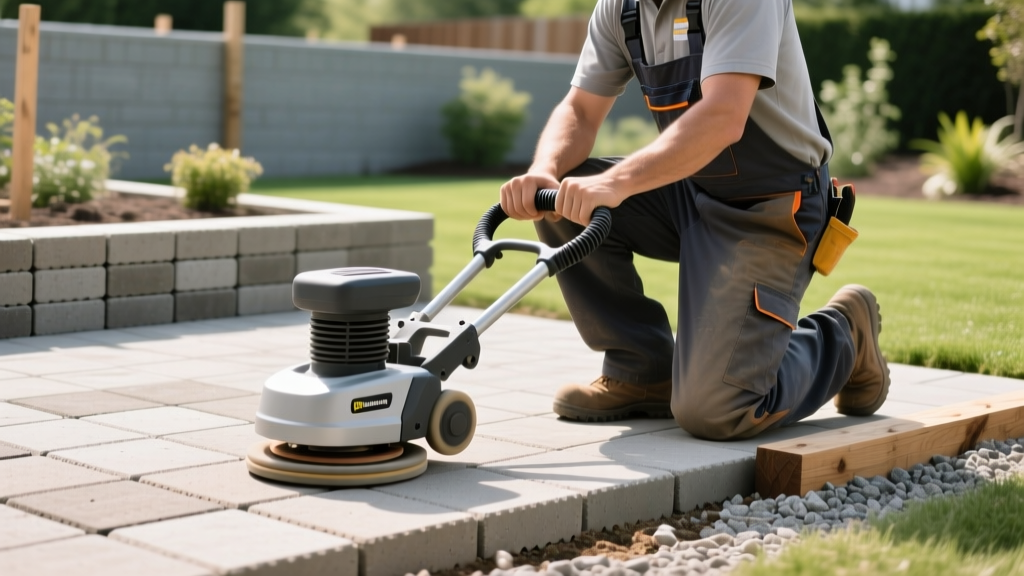
Choosing the Right Plate Compactor for Paver Patios
Anna KowalskiPublished
Why a Plate Compactor is Essential for Hardscaping
When designing and installing a new outdoor living space, the visual appeal of interlocking concrete pavers or natural stone often steals the show. However, the true longevity of any hardscaping project lies entirely beneath the surface. A flawless paver patio, walkway, or retaining wall base requires meticulous soil preparation and mechanical compaction. Attempting to compact base materials or set pavers using a manual hand tamper is a recipe for disaster, leading to uneven settlement, pooling water, and weed intrusion within a single season.
According to the National Concrete Masonry Association (NCMA), proper base preparation and mechanical compaction are the most critical factors in preventing retaining wall failure and paver settlement. A mechanical plate compactor utilizes high-frequency vibrations to eliminate air pockets in the soil and aggregate base, creating a dense, load-bearing foundation that mimics solid rock. Furthermore, vibrating the pavers after installation forces the bedding sand up into the joints, creating the essential 'interlock' that gives segmental paving its structural integrity.
Decoding Plate Compactor Specifications
Walking into an equipment rental yard or browsing online retailers can be overwhelming. To choose the right tool for your landscaping project, you must understand the core specifications that dictate a machine's performance.
Centrifugal Force (Compaction Force)
Centrifugal force, measured in pounds (lbs) or kilonewtons (kN), is the actual downward impact force generated by the machine's spinning eccentric weights. Do not confuse this with the static weight of the machine. A 150 lb plate compactor can generate upwards of 3,000 lbs of centrifugal force. For standard residential paver patios and walkways, a machine generating between 2,500 and 4,000 lbs of force is ideal. For heavy-duty retaining wall bases or commercial driveways, you will need 6,000+ lbs of force to achieve proper depth compaction.
Plate Size and Dimensions
The footprint of the compactor plate dictates both your productivity and your maneuverability. A wider plate (20 to 24 inches) covers more square footage per pass, making it ideal for large, open patio areas. However, if you are landscaping a narrow side yard, weaving through established garden beds, or working inside a tight trench for a French drain, a narrower plate (14 to 16 inches) is mandatory. Always measure the narrowest choke point of your landscape design before renting or purchasing.
Vibration Frequency
Frequency is measured in vibrations per minute (VPM) or Hertz (Hz). Granular soils, such as the crushed gravel and coarse concrete sand used in hardscaping, respond best to high-frequency vibrations. Look for a machine that operates between 4,000 and 6,000 VPM. Higher frequencies shake the aggregate particles more rapidly, allowing them to settle into a dense, tightly packed matrix much faster than lower-frequency machines.
Forward vs. Reversible Plate Compactors
One of the most important decisions you will make is choosing between a standard forward-traveling plate compactor and a reversible model. Below is a comparison to help you match the equipment to your specific landscaping needs.
| Feature | Forward Plate Compactor | Reversible Plate Compactor |
|---|---|---|
| Best Application | Paver patios, walkways, final sand settling | Deep base compaction, trenches, retaining walls |
| Weight Range | 100 - 250 lbs | 300 - 800+ lbs |
| Maneuverability | High (Easy to turn, pivot, and edge) | Low (Bulky, requires space to stop and reverse) |
| Depth of Compaction | Shallow (4 to 8 inches per lift) | Deep (12 to 24+ inches per lift) |
| Estimated Price Range | $600 - $1,500 | $2,500 - $6,000+ |
For 90% of residential DIY landscaping projects and standard backyard patio installations, a forward plate compactor is the correct choice. Reversible compactors are heavy, expensive, and generally reserved for commercial contractors building deep structural bases for driveways or massive segmental retaining walls.
Top Equipment Picks for Landscaping Professionals and DIYers
If you are investing in equipment or requesting specific models from your local rental house, look for industry-trusted brands known for reliable engines and durable exciter boxes.
- Wacker Neuson WP1030: A premium, lightweight forward compactor featuring a 15-inch plate. It is exceptionally well-balanced, making it the ultimate tool for tight garden pathways and intricate paver patterns where precision is required.
- Multiquip Mikasa MVC88: The undisputed workhorse of the hardscaping industry. Weighing around 185 lbs with a 20-inch plate and a reliable Honda engine, it offers the perfect balance of compaction force and maneuverability for standard 400 to 800 sq. ft. patios.
- Tomr TC-160: A highly durable, mid-range option that includes a built-in wheel kit for easy transport across soft turf and finished lawns without causing damage to the grass.
Step-by-Step Compaction Strategy for Paver Patios
Owning the right tool is only half the battle; using it correctly is what separates a professional landscape from an amateur mistake. Manufacturers like Belgard explicitly state in their hardscape installation guidelines that a mechanical plate compactor is required to achieve the necessary interlock between pavers and the bedding sand. Follow this protocol for a flawless finish.
1. Subgrade and Base Compaction
Never attempt to compact your entire base material in one thick layer. After excavating your patio area and laying a geotextile fabric, add your crushed angular gravel (typically 3/4-inch minus DOT-approved stone) in 'lifts' or layers no thicker than 4 to 6 inches. Run the plate compactor over each lift in a grid pattern: make one pass horizontally, then make a second pass vertically. This cross-hatching ensures uniform density. Repeat this process until you reach your final base elevation.
2. The Bedding Sand Rule
Once your base is fully compacted, you will spread a 1-inch layer of coarse, concrete-leveling sand. Do not compact the bedding sand before laying the pavers. The sand must remain loose and uncompacted so that when the pavers are vibrated later, the sand is forced upward into the joints, locking the stones together.
3. Final Paver Compaction
After laying all pavers and cutting your border stones, it is time for the final compaction. Crucial Step: You must attach a polyurethane pad to the bottom of the steel compactor plate. Running bare steel over concrete pavers will permanently scratch, scuff, and ruin the surface of your expensive hardscape materials. The polyurethane pad also dampens the noise and distributes the centrifugal force evenly across the stones. Run the compactor over the entire patio to set the pavers into the bedding sand.
4. Jointing Sand Integration
Sweep polymeric sand or fine jointing sand over the surface of the patio, filling all the crevices. Run the plate compactor (with the polyurethane pad still attached) over the patio one final time. The vibration will shake the sand deep into the joints, eliminating voids and ensuring a rigid, interlocked surface. Sweep the excess sand away before activating the polymeric sand with a light mist of water.
Safety and Equipment Maintenance
Plate compactors are heavy, violent machines that demand respect. Always prioritize safety on the job site. The Occupational Safety and Health Administration (OSHA) recommends strict adherence to power tool safety, including the use of hearing protection and anti-vibration gloves when operating heavy landscaping machinery. The high-decibel roar of the engine combined with the acoustic reflection off nearby fences or house siding can cause long-term hearing damage. Steel-toed boots are also mandatory; if a 200 lb machine slips off a retaining wall block, it will easily crush a standard work shoe.
To keep your equipment running smoothly, perform routine maintenance. The exciter box (the sealed unit containing the spinning weights) is the heart of the machine. Check the oil level in the exciter box every 50 hours of operation using the sight glass. Additionally, hardscape sites are incredibly dusty environments. Clean the engine's air filter at the end of every single workday to prevent silica dust from entering the carburetor and destroying the engine internals. By selecting the right plate compactor and adhering to proper hardscaping protocols, your landscape installations will remain level, beautiful, and structurally sound for decades.

