
Landscaping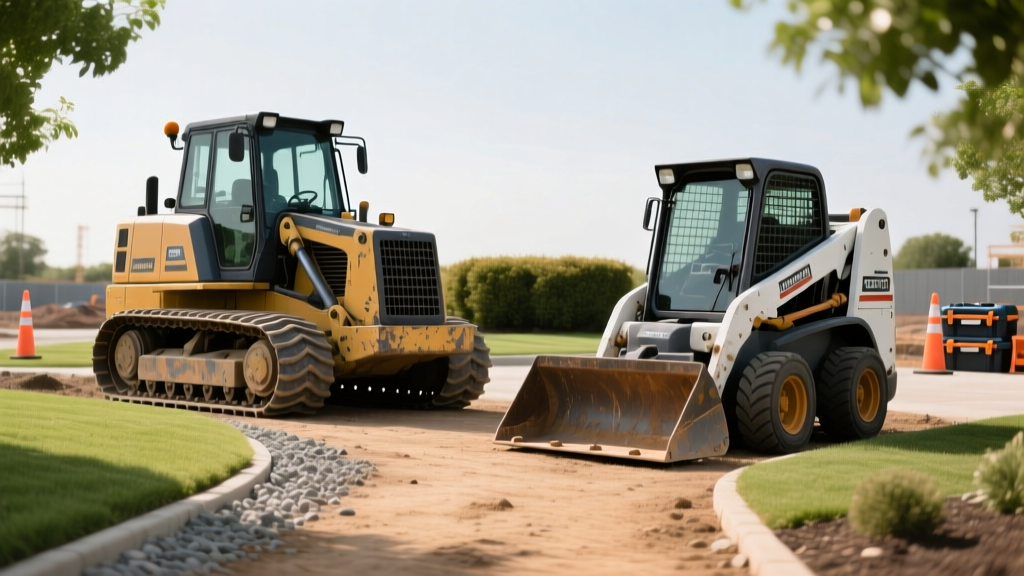
Compact Track Loaders vs Skid Steers for Landscaping
David ParkPublished
Choosing the Right Heavy Equipment for Your Landscape
When tackling major landscaping projects—whether you are regrading a sprawling backyard, installing a massive retaining wall, or clearing densely wooded acreage—manual labor and wheelbarrows will only get you so far. To move earth, haul stone, and grade soil efficiently, professional landscapers and serious DIYers rely on compact heavy equipment. The two undisputed kings of the residential and commercial landscaping job site are the skid steer loader and the compact track loader (CTL). While they may look similar and often share the same attachment interfaces, their underlying mechanics, terrain capabilities, and long-term costs are vastly different.
Making the wrong choice can lead to severe lawn damage, stalled projects in muddy conditions, or thousands of dollars in unnecessary rental and maintenance fees. This comprehensive tools and equipment guide breaks down the engineering, practical applications, and cost differences between skid steers and CTLs to help you select the exact machine your landscaping project demands.
Understanding the Skid Steer Loader
The skid steer loader is a staple on hardscaping and construction sites. It operates on four rubber tires and achieves steering by 'skidding'—meaning the left and right wheels can rotate at different speeds or in opposite directions to achieve a zero-degree turning radius. Popular models like the Bobcat S650 and John Deere 324G are renowned for their raw speed, durability, and lower initial price points.
Pros of Skid Steers
- Speed and Agility: On hard, flat surfaces like concrete driveways or compacted dirt, skid steers are significantly faster than CTLs. A skid steer can easily travel at 7 to 10 mph, making it ideal for loading dump trucks or moving pallets of pavers across a large property.
- Lower Maintenance Costs: Tires are relatively inexpensive to replace and require minimal daily maintenance compared to a complex rubber track undercarriage.
- Aggressive Traction on Hard Surfaces: The downward force of the tires provides excellent pushing power when back-dragging gravel on a paved surface or loading heavy hardscape materials.
Cons of Skid Steers
- High Ground Pressure: Because the entire weight of the machine is distributed across four small tire contact patches, skid steers exert immense ground pressure—often between 40 and 60 PSI. This will instantly tear up turf, sink into soft topsoil, and severely compact the earth.
- Poor Performance in Mud: Tires easily lose traction in wet, muddy, or snowy conditions, turning the machine into a multi-thousand-dollar paperweight.
Understanding the Compact Track Loader (CTL)
Compact track loaders, such as the Caterpillar 259D3 or Bobcat T550, replace the traditional four-wheel setup with a suspended or rigid rubber track undercarriage. This design fundamentally changes how the machine interacts with the ground, making it the premier choice for fine grading, turf installation, and working in wet environments.
Pros of CTLs
- Ultra-Low Ground Pressure: By distributing the machine's weight across the entire length and width of the tracks, CTLs exert a ground pressure of just 4 to 6 PSI. This allows them to drive over newly laid sod or soft topsoil without leaving deep ruts.
- Superior Traction and Stability: The massive surface area of the tracks provides unparalleled grip on steep slopes and in slippery mud. CTLs can push heavier loads without spinning out.
- Smoother Ride for Fine Grading: Suspended track systems absorb bumps and vibrations, allowing the operator to achieve a much smoother, more precise finish when grading topsoil for a new lawn.
Cons of CTLs
- Undercarriage Maintenance: Rubber tracks, idlers, and sprockets are expensive. A complete undercarriage replacement can cost between $2,000 and $4,000. Tracks must also be regularly cleaned of packed mud and tensioned properly to prevent 'de-tracking' on the job site.
- Destructive on Hard Surfaces: Turning a CTL on bare concrete or asphalt will tear the rubber tracks and scar the pavement. They are strictly meant for dirt, grass, and soft materials.
Head-to-Head Equipment Comparison
The following table highlights the critical operational differences between these two landscaping machines:
| Feature | Skid Steer Loader | Compact Track Loader (CTL) |
|---|---|---|
| Ground Pressure | 40 - 60+ PSI | 4 - 6 PSI |
| Best Terrain | Concrete, gravel, hard-packed dirt | Mud, sand, snow, soft topsoil, turf |
| Top Travel Speed | 7 - 10 mph | 5 - 7 mph |
| Avg. Daily Rental Cost | $250 - $400 | $400 - $700 |
| Maintenance Focus | Tire pressure, axle grease | Track tension, undercarriage cleaning |
| Purchase Price (New) | $35,000 - $65,000 | $60,000 - $110,000+ |
The Hidden Cost of Soil Compaction
When choosing equipment for landscaping, you must consider the long-term health of the soil. Heavy machinery is a leading cause of soil degradation in residential areas. According to the University of Minnesota Extension, soil compaction destroys soil structure, reduces pore space, and severely restricts water infiltration and root growth. When you drive a 10,000-pound skid steer over a future garden bed or lawn area, the high PSI crushes the soil aggregates. This creates a hardpan layer that will cause drainage issues and stunt plant growth for years.
If your project involves final grading, topsoil spreading, or driving over existing root zones of protected trees, a Compact Track Loader is practically mandatory. The low ground pressure of a CTL mimics the footprint of a human, preserving the vital macropores in the soil structure.
Hydraulics and Landscaping Attachments
Both skid steers and CTLs utilize a universal quick-attach system, meaning they can share the same landscaping attachments. However, you must match the machine's hydraulic flow rate to the tool.
- Standard Flow (15 to 25 GPM): Sufficient for basic landscaping tools like 60-inch grading buckets, pallet forks, hydraulic augers for planting trees, and standard trenchers for irrigation lines.
- High-Flow (26 to 40 GPM): Required for heavy-duty landscaping attachments. If you plan to use a 60-inch rotary brush cutter for land clearing, a heavy-duty tiller for preparing seedbeds, or a cold planer for removing asphalt, you must rent or buy a high-flow machine.
Pro-Tip: Always check the attachment's required GPM and pressure (PSI) before hooking it up. Running a high-flow tiller on a standard-flow skid steer will result in sluggish performance and stalled engines.
Renting vs. Buying: A Cost Breakdown
For most homeowners and small-scale landscaping contractors, renting is the most financially sound option. A typical backyard regrading and retaining wall project might require a machine for 5 to 7 days.
- Renting a Skid Steer: Expect to pay around $300 per day, plus a $50 delivery fee and mandatory damage waivers. A 5-day rental will cost roughly $1,600.
- Renting a CTL: Expect to pay around $500 per day. A 5-day rental will cost roughly $2,600.
While the CTL is more expensive to rent upfront, consider the cost of lawn restoration. If a skid steer destroys an existing lawn or causes severe soil compaction that requires deep-tine aeration and topsoil amendments, the landscaping repair costs will easily eclipse the $1,000 difference in rental fees.
Operator Safety and Best Practices
Heavy landscaping equipment poses severe risks if operated improperly. The Centers for Disease Control and Prevention (CDC) and the National Institute for Occupational Safety and Health (NIOSH) maintain strict guidelines regarding skid steer safety. Crush injuries and rollovers are common hazards on sloped terrain.
Critical Safety Rules for Landscapers:
- Always Use the Seatbelt and Lap Bar: Never bypass the safety interlock switches. The lap bar or seatbelt must be engaged for the hydraulics to operate.
- Mind the Slope: When working on hillsides, always keep the heavy end of the machine (usually the rear engine compartment) pointed uphill. This prevents tipping when the bucket is raised.
- Watch for Utility Lines: Before using a trencher or auger attachment, always call your local utility locating service (like 811 in the US) to mark underground gas, water, and electrical lines.
- Clear the Swing Zone: Never allow bystanders, children, or pets near the machine. The rear swing radius of the loader can easily pin a person against a wall or tree.
The Final Verdict
The choice between a skid steer and a compact track loader ultimately comes down to your specific site conditions and project scope. If you are primarily doing hardscaping, moving heavy materials across paved driveways, or working on extremely tight budgets on dry, hard-packed sites, a skid steer offers unmatched speed and cost-efficiency. However, if your landscaping project involves fine grading topsoil, working in wet or muddy conditions, installing sod, or protecting existing lawns from severe compaction, the compact track loader is the undisputed champion. By matching the right tracks or tires to your terrain, you ensure a pristine finish and a healthy landscape for decades to come.

