Lawn Care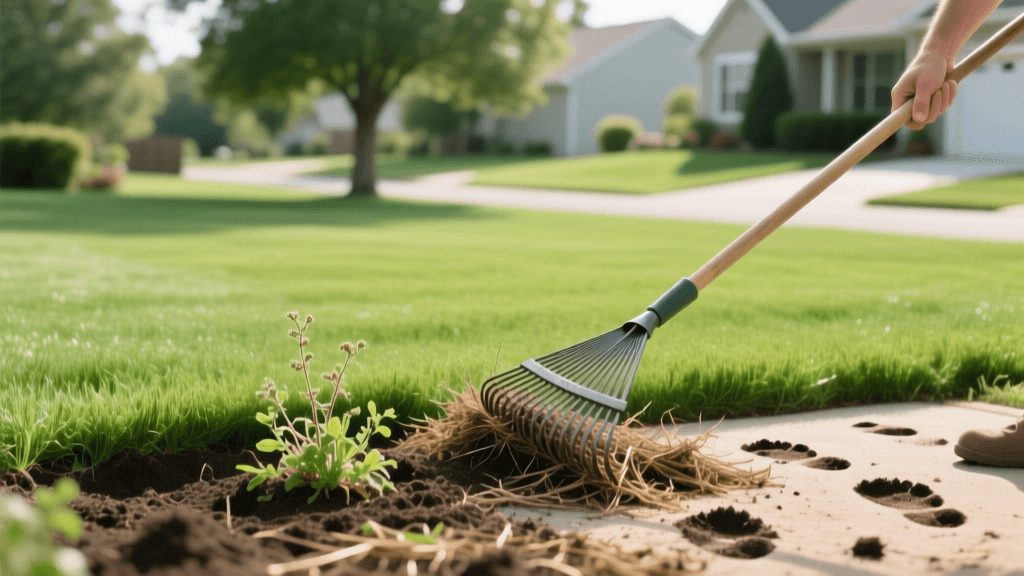
The Ultimate Lawn Renovation Guide: Kill, Prep, Reseed
When your lawn is more weeds than grass, or when bare patches and soil compaction have ruined the aesthetic and health of your yard, overseeding is no longer enough. Complete lawn renovation is the process of eradicating existing vegetation, thoroughly preparing the soil, and planting new seed to establish a pristine, thick turf. While it requires patience and physical labor, the results of a full renovation far outweigh the temporary fixes of spot-treating and overseeding.
In this comprehensive guide, we will walk you through the exact steps to renovate a cool-season lawn (such as Tall Fescue or Kentucky Bluegrass), including product recommendations, precise measurements, timing, and cost estimates. According to turfgrass experts at the University of Minnesota Extension, late summer to early fall is the absolute best window for cool-season lawn renovation, as warm soil promotes rapid germination while cool air reduces heat stress on young seedlings.
Assessing the Damage: Renovation vs. Overseeding
Before ripping up your yard, ensure that a full renovation is actually necessary. Complete renovation is expensive and labor-intensive, typically costing between $0.15 and $0.35 per square foot if done as a DIY project, and significantly more if hired out.
- Choose Overseeding If: Your lawn has less than 40% weed coverage, the soil is relatively healthy, and the existing grass is a desirable species that just needs thickening.
- Choose Complete Renovation If: Your lawn is overrun with 50% or more weeds (especially invasive species like creeping charlie or quackgrass), the soil is severely compacted or graded poorly, or you want to completely change the grass species.
Step 1: Eradicating the Existing Lawn
You cannot plant a new lawn on top of a weedy, competing one. You must start with a blank slate. You have two primary options for killing existing turf: chemical eradication or organic solarization.
Chemical Eradication (Glyphosate)
For the fastest and most reliable results, use a non-selective systemic herbicide containing Glyphosate (such as Roundup Pro or a generic 41% Glyphosate concentrate). Apply the herbicide when weeds and grass are actively growing and not drought-stressed. Wait 7 to 14 days for the vegetation to completely brown and die. Because some perennial weeds and grasses have deep rhizomes, a second application is highly recommended two weeks after the first to catch any surviving growth.
Organic Solarization
If you prefer to avoid herbicides, soil solarization is an effective, albeit slower, alternative. Mow the existing lawn as short as possible, water the soil deeply, and cover the entire area with clear, thick plastic sheeting (2 to 4 mil). Weigh down the edges with soil or rocks. Leave the plastic in place for 4 to 6 weeks during the heat of summer. The trapped solar radiation will cook the grass, weeds, and many weed seeds in the top layer of soil.
Step 2: Soil Testing and Amendment
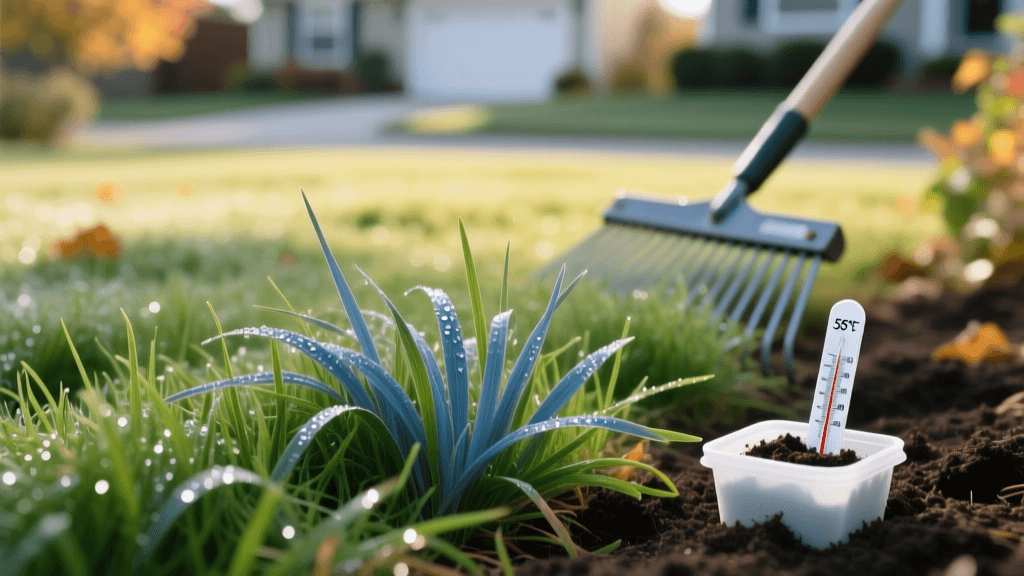
Once the vegetation is dead, do not skip soil testing. Sending a soil sample to a reputable lab (like Logan Labs or your local university extension) will reveal your soil pH and nutrient deficiencies. Cool-season grasses thrive in a pH range of 6.2 to 6.8.
- If pH is below 6.0 (Acidic): Apply pelletized limestone. A typical application is 50 lbs per 1,000 square feet to raise the pH by roughly 0.5 points.
- If pH is above 7.2 (Alkaline): Apply elemental sulfur at a rate of 10 to 15 lbs per 1,000 square feet to gradually lower the pH.
As noted by Penn State Extension, incorporating these amendments into the top few inches of soil during the tilling phase is crucial for long-term root health and nutrient uptake.
Step 3: Tilling, Grading, and Seedbed Prep
After the dead grass is completely brown, it is time to prepare the seedbed. Use a rear-tine rototiller to break up the soil to a depth of 4 to 6 inches. This relieves deep compaction and creates a loose environment for new roots to penetrate.
During tilling, incorporate 1 to 2 inches of high-quality, screened organic compost into the topsoil. This improves moisture retention and introduces beneficial microbes. Once tilled, use a heavy landscaping rake to grade the yard. Ensure the soil slopes away from your home's foundation at a minimum grade of 1/4 inch per foot to prevent water intrusion. Finally, use a lawn roller half-filled with water to firm the soil and reveal any low spots that need additional topsoil.
Step 4: Selecting and Sowing the Right Seed
Choosing the right seed is paramount for a successful renovation. Avoid cheap, generic seed mixes found at big-box stores, as they often contain high percentages of weed seeds and annual ryegrass fillers. Look for seed tags that guarantee 99% purity and 0% weed seed, with a germination rate of 85% or higher.
| Grass Species | Seeding Rate (per 1,000 sq ft) | Germination Time | Best Use Case |
|---|---|---|---|
| Turf-Type Tall Fescue | 6 to 8 lbs | 7 to 12 days | High traffic, deep roots, drought tolerance, full sun to moderate shade. |
| Kentucky Bluegrass (KBG) | 2 to 3 lbs | 14 to 28 days | Lush appearance, rhizome spreading for self-repair, requires full sun and high maintenance. |
| Perennial Ryegrass | 4 to 5 lbs | 5 to 7 days | Quick germination, often mixed with KBG for rapid erosion control and establishment. |
For most residential lawns in the transition zone and northern climates, a blend of 90% Turf-Type Tall Fescue and 10% Kentucky Bluegrass offers the perfect balance of durability, drought resistance, and lateral spread.
Step 5: Sowing and Starter Fertilizer
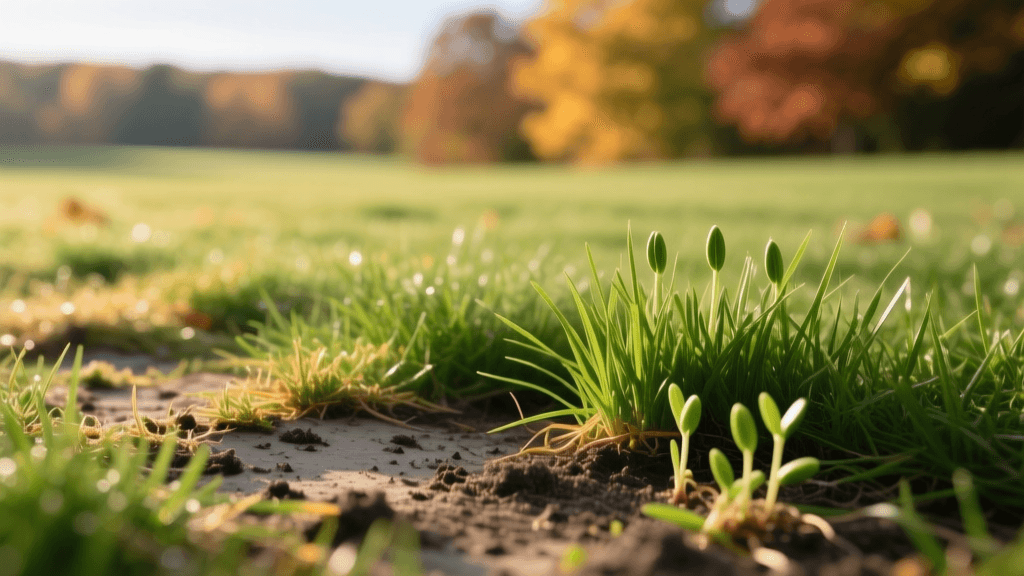
Divide your seed in half. Broadcast the first half walking horizontally across the lawn, and the second half walking vertically. This crisscross pattern prevents striping and ensures even coverage. After seeding, lightly rake the soil to ensure seed-to-soil contact; seed should not be buried deeper than 1/4 inch.
Immediately after seeding, apply a high-quality starter fertilizer. Look for an N-P-K ratio where the middle number (Phosphorus) is high, such as 18-24-12 or 10-18-10. Phosphorus is critical for early root development. Apply the starter fertilizer at a rate that delivers exactly 1.0 lb of Nitrogen per 1,000 square feet. If you are dealing with a history of severe broadleaf weeds or Poa annua, consider applying a pre-emergent alternative like Tenacity (mesotrione) at the time of seeding, which will prevent weed seeds from germinating without harming your new cool-season grass seedlings.
Expert Timing Tip: The ideal window for cool-season lawn renovation is between August 15th and September 15th. Seeding during this window allows the grass to establish deep roots before winter dormancy and gives it a massive head start before the heat stress of the following summer.
Step 6: Post-Planting Irrigation and Early Maintenance
Water is the single most critical factor in the first 30 days of a lawn renovation. New seed cannot survive drying out, even for a few hours in direct sunlight.
The Watering Schedule
- Weeks 1 and 2 (Germination Phase): Water lightly 3 to 4 times a day for 5 to 10 minutes per zone. The goal is to keep the top 1 inch of soil constantly moist, not muddy.
- Weeks 3 and 4 (Establishment Phase): As seedlings reach 1 inch tall, reduce watering frequency to once a day, but increase the duration to 20 to 30 minutes. This encourages roots to grow deeper into the soil profile.
- Weeks 5 and 6 (Maturation Phase): Transition to a standard deep and infrequent watering schedule of 1 to 1.5 inches of water per week, divided into two watering sessions.
The First Mow
Do not mow your new lawn until the majority of the grass blades have reached at least 3.5 to 4 inches in height. When you do mow, ensure your mower blade is razor-sharp to avoid tearing the delicate young seedlings out of the ground by their shallow roots. Only cut off the top 1/3 of the blade, bringing the lawn down to roughly 2.5 to 3 inches. Leave the clippings on the lawn to return valuable moisture and nitrogen to the soil.
Conclusion
A complete lawn renovation is a transformative project that requires dedication, precise timing, and adherence to best agronomic practices. By properly eradicating old weeds, amending the soil based on lab tests, selecting premium seed, and strictly managing irrigation, you will be rewarded with a dense, vibrant, and resilient lawn that will serve as the envy of the neighborhood for years to come.