Lawn Care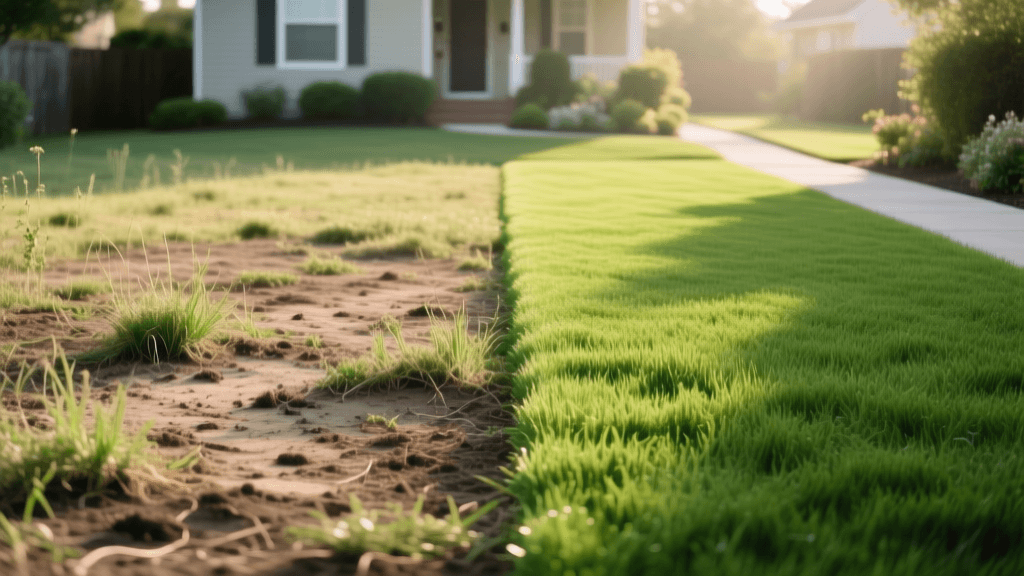
90-Day Lawn Renovation: From Weedy Mess to Lush Grass
The Ultimate Before & After Lawn Transformation
Every homeowner dreams of a thick, carpet-like lawn, but many are stuck staring at a patchy, weed-choked yard that seems impossible to fix. If your lawn is composed of more than 50% weeds, bare dirt, and compacted clay, spot-treating and overseeding will not save it. You need a complete reset. This guide documents a true Before & After Transformation, taking a neglected 5,000-square-foot cool-season yard from a weedy mess to a lush, dark-green Kentucky Bluegrass and Perennial Ryegrass blend in exactly 90 days.
The Before State: A Lawn in Crisis
Before the renovation, the yard was a textbook example of turf neglect. The soil was heavily compacted, causing water to pool and run off rather than absorb. Crabgrass, dandelions, and Poa annua dominated the landscape, while high-traffic areas were reduced to hard, cracked clay. The existing grass was a thin, pale mix of dying fine fescue and rough bluegrass that lacked the vigor to compete with weeds.
The After State: A Lush, Resilient Turf
Ninety days later, the transformation is staggering. The yard now boasts 95% turfgrass coverage with a deep emerald hue. The soil structure has been amended to retain moisture and support deep root growth, and the dense canopy of Kentucky Bluegrass naturally chokes out new weed seeds. Below, we break down the exact timeline, products, measurements, and costs required to achieve this dramatic before-and-after result.
Phase 1: The Reset (Days 1-14)
You cannot build a masterpiece on a flawed foundation. The first step in any major lawn transformation is eradicating the existing, failing vegetation. Trying to seed over thick crabgrass and broadleaf weeds will result in poor seed-to-soil contact and intense competition for nutrients.
Action Steps for Total Vegetation Control
- Day 1: Apply a non-selective systemic herbicide containing 41% Glyphosate. Use a pump sprayer for even application across the entire 5,000 square feet. Ensure the weeds are actively growing and not drought-stressed, as this ensures the chemical is pulled down into the roots.
- Day 7: Inspect the yard. You will notice the grass and weeds turning yellow and brown. Spot-treat any surviving green patches with a second application of Glyphosate.
- Day 14: The yard should now be completely brown. Do not rake or remove the dead vegetation yet; it will act as a temporary mulch to protect the soil during the tilling phase.
Estimated Cost: $45 for a 2.5-gallon concentrate of agricultural-grade Glyphosate.
Phase 2: Soil Preparation and Grading (Days 15-20)
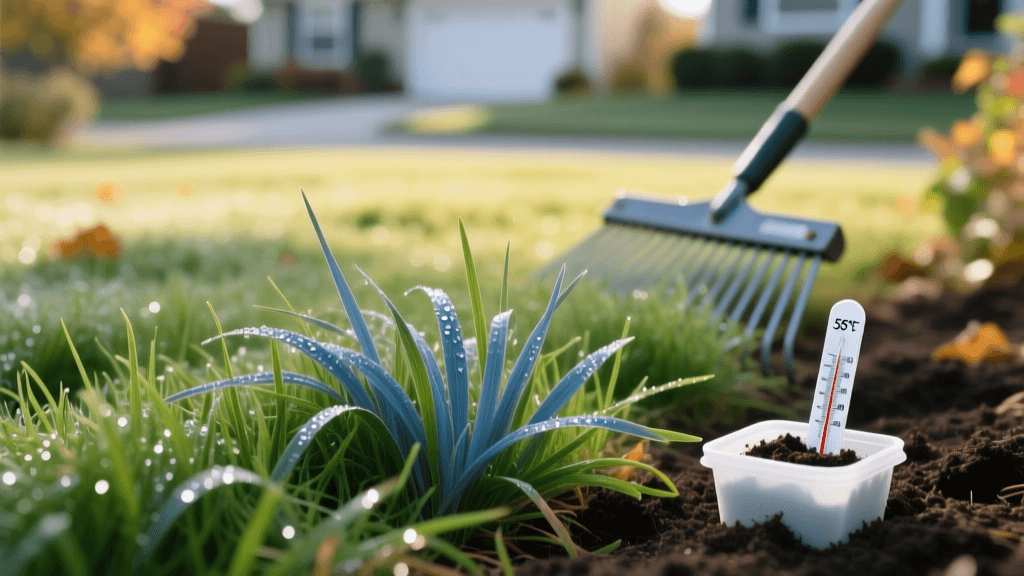
The secret to a stunning "After" photo lies beneath the surface. According to Penn State Extension, soil testing is the most critical step in lawn establishment, as it dictates exactly which amendments your soil needs to support vigorous turf growth.
Amending the Soil Profile
Before our renovation, the soil was a heavy, poorly draining clay. To transform it into a loamy, root-friendly environment, we had to physically alter the soil structure.
- Soil Testing: Send a soil sample to your local university extension. Our test revealed a pH of 5.8 (too acidic for optimal nutrient uptake) and a severe lack of organic matter.
- Tilling: Use a rear-tine rototiller to break up the top 4 to 6 inches of the dead lawn and compacted clay.
- Amending: Based on the soil test, we spread 50 lbs of pelletized lime per 1,000 sq ft to raise the pH to 6.5. Then, we laid down a 1-inch layer of premium screened compost over the entire tilled area and tilled it in to improve drainage and microbial activity.
- Grading: Use a heavy landscaping rake to level the yard, ensuring a slight 1% slope away from the home's foundation to prevent water damage.
Estimated Cost: $15 for the soil test, $40 for pelletized lime, $150 for bulk compost delivery.
Phase 3: Seeding and Fertilizing (Day 21)
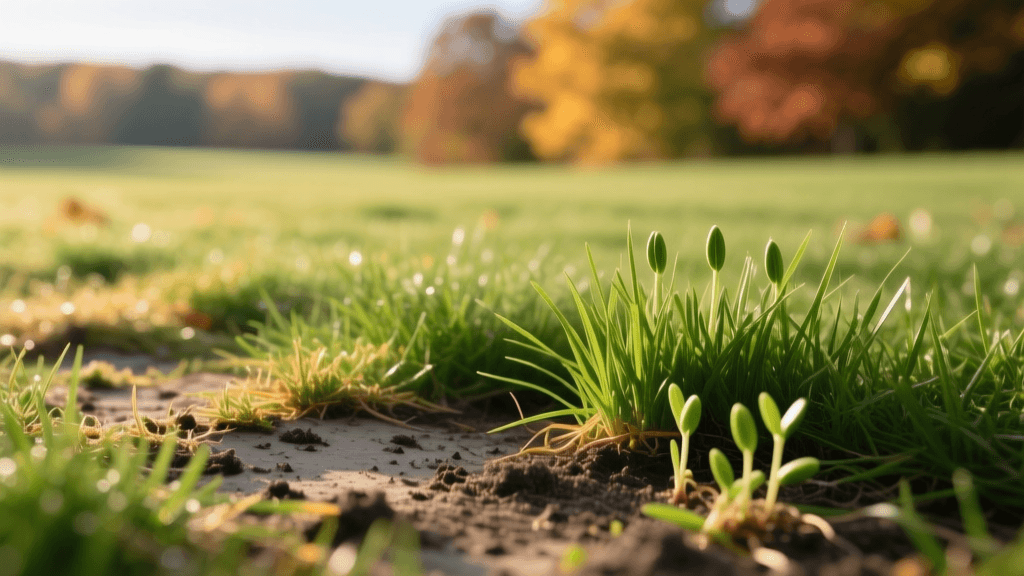
With a perfectly graded, nutrient-rich seedbed prepared, it is time to introduce the new turf. For this cool-season transformation, we selected a premium seed mix consisting of 80% Kentucky Bluegrass (KBG) and 20% Perennial Ryegrass. The Ryegrass acts as a "nurse grass," germinating in 5-7 days to hold the soil in place, while the KBG takes 21-28 days to germinate and eventually spreads via underground rhizomes to create a thick, self-repairing carpet.
Seeding Best Practices
According to the experts at NC State Extension TurfFiles, proper seeding rates and starter fertilizers are non-negotiable for new lawn establishments. We applied a high-phosphorus starter fertilizer (Scotts Turf Builder Starter Food for New Grass, 24-25-4) to promote rapid root development. Phosphorus is heavily restricted in many areas for established lawns, but it is legally and scientifically required for new seed germination.
- Seed Rate: Broadcast the seed at a rate of 5 lbs per 1,000 sq ft using a rotary spreader. Walk in a grid pattern (north-south, then east-west) to ensure even coverage and avoid striping.
- Top Dressing: Lightly rake the seed so it is barely covered by 1/8 inch of soil, or apply a very thin layer of peat moss to retain moisture.
- Rolling: Use a water-filled lawn roller to press the seed firmly into the soil. Seed-to-soil contact is the single biggest factor in germination success.
Estimated Cost: $150 for premium KBG/Rye seed mix, $60 for starter fertilizer.
Phase 4: Germination and the Watering Discipline (Days 22-45)
The transition from "Before" to "After" lives or dies in Phase 4. Kentucky Bluegrass seed will die if it dries out even once during the 28-day germination window. The EPA WaterSense program notes that outdoor water use can account for up to 30% of total household water consumption, but during a renovation, frequent, light watering is a mandatory investment.
"A successful lawn renovation is 20% seeding and 80% soil preparation and watering discipline. If the seed dries out, your investment is lost."
The Germination Watering Schedule
- Weeks 1-3: Water 3 to 4 times a day for 5-10 minutes per zone. The goal is not to soak the deep soil, but to keep the top 1 inch of the seedbed constantly moist.
- Weeks 4-5: As the Ryegrass reaches 2 inches and KBG sprouts begin to appear, reduce watering to once a day for 20 minutes. This encourages the young roots to stretch deeper into the soil profile to find moisture.
- Week 6 and Beyond: Transition to deep, infrequent watering. Apply 1 to 1.5 inches of water per week, split into two heavy waterings. This trains the lawn to become drought-tolerant.
Phase 5: First Mows and Weed Prevention (Days 46-90)
By Day 45, the yard has transformed from bare dirt to a vibrant, albeit uneven, green carpet. The Perennial Ryegrass is tall, and the Kentucky Bluegrass is filling in rapidly. It is time for the first mow.
Mowing and Early Maintenance
Never remove more than one-third of the grass blade in a single mowing. Set your mower deck to 3 inches. Ensure your mower blades are razor-sharp; dull blades will tear the tender young grass, leaving it vulnerable to disease and browning.
Crucial Weed Control Warning: You will inevitably see some broadleaf weeds or crabgrass pop up during the 90-day window. Do not apply post-emergent chemical weed killers. Young turfgrass is highly sensitive to herbicides. Wait until the new lawn has been mowed at least three to four times before applying a selective broadleaf weed control product. In the meantime, hand-pull any egregious weeds.
Before & After Transformation: Cost and Timeline Breakdown
Below is the structured summary of the 90-day renovation process for a standard 5,000-square-foot cool-season lawn. Costs are estimates based on national averages for DIY execution.
| Renovation Phase | Timeline | Primary Actions | Est. Cost (5,000 sq ft) |
|---|---|---|---|
| 1. The Reset | Days 1-14 | Two applications of Glyphosate to kill existing weeds and failing turf. | $45 |
| 2. Soil Prep | Days 15-20 | Soil testing, rototilling, lime application, and compost integration. | $205 |
| 3. Seeding | Day 21 | Broadcasting KBG/Rye blend, starter fertilizer, and lawn rolling. | $210 |
| 4. Germination | Days 22-45 | Frequent, light irrigation to maintain seedbed moisture. | $60 (Water usage) |
| 5. Grow-In | Days 46-90 | Transition to deep watering, first mows, and monitoring turf density. | $0 (Labor only) |
| Total Transformation | 90 Days | Complete overhaul from weedy clay to lush, resilient turfgrass. | ~$520 |
Conclusion: Enjoying Your New Lawn
By Day 90, the transformation is complete. The bare, compacted clay and aggressive crabgrass of the "Before" state have been entirely replaced by a dense, dark-green lawn that feels soft underfoot and dramatically boosts your home's curb appeal. While a 90-day full renovation requires intense labor, precise timing, and strict watering discipline, the before-and-after results speak for themselves. By investing the time to properly reset the soil and select the right seed blend, you are not just growing grass for a single season; you are establishing a resilient, beautiful landscape that will thrive for years to come.