Pest Control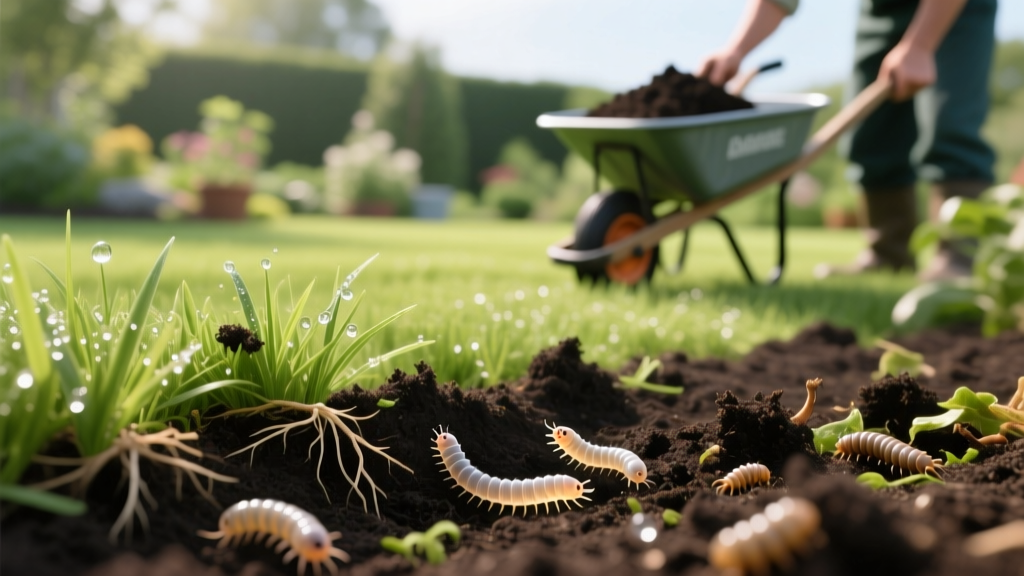
Using Compost and Nematodes to Control Lawn Grubs Naturally
David ParkPublished
The Hidden Link Between Soil Health and Pest Outbreaks
When homeowners notice yellowing patches of turf or see animals digging up their lawn for a midnight snack, the immediate reaction is often to reach for a synthetic chemical pesticide. However, modern integrated pest management (IPM) and organic lawn care practices reveal a deeper truth: pest outbreaks are frequently a symptom of degraded soil health. A lawn growing in compacted, biologically dead soil is highly susceptible to root-feeding insects, whereas a lawn rooted in a thriving, compost-rich soil microbiome possesses natural defenses that suppress pest populations before they reach damaging thresholds.
The soil food web is a complex ecosystem of bacteria, fungi, protozoa, and beneficial nematodes. When we rely heavily on synthetic salt-based fertilizers and broad-spectrum chemical pesticides, we inadvertently sterilize this ecosystem. According to the USDA Natural Resources Conservation Service, soil health is defined as the continued capacity of soil to function as a vital living ecosystem that sustains plants, animals, and humans. By rebuilding this ecosystem through composting and biological controls, you can naturally eradicate soil-borne pests while cultivating a deeper, more drought-resistant root system.
Common Soil-Borne Pests Targeting Degraded Lawns
Before deploying biological controls, it is essential to identify the pests thriving in your soil. The most notorious turf-destroying insects live beneath the surface for the majority of their life cycle:
- White Grubs: The larval stage of Japanese beetles, June bugs, and European chafers. These C-shaped, cream-colored larvae feed aggressively on grassroots, causing the turf to detach from the soil and roll back like a loose carpet.
- Fungus Gnats: While mostly a nuisance in gardens and potted plants, fungus gnats thrive in the top layer of overly moist, poorly drained lawns rich in decaying organic matter but lacking predatory microbes.
- Root Aphids and Root Mealybugs: These sap-sucking insects weaken the turf by extracting nutrients directly from the root hairs, often mistaken for drought stress or nutrient deficiencies.
- Plant-Parasitic Nematodes: Unlike their beneficial counterparts, these microscopic worms pierce root cells, causing stunted growth, chlorosis, and localized dead patches.
Research from the University of Kentucky Department of Entomology highlights that white grubs are the most destructive turfgrass pests in North America, capable of destroying entire lawns in late summer and early fall. Traditional chemical grub preventatives (like imidacloprid) can harm non-target pollinators and soil biology, making biological alternatives highly desirable for eco-conscious homeowners.
Compost as a Biological Shield
Compost is not merely a fertilizer; it is a microbial inoculant. When you topdress your lawn with high-quality, screened compost, you are introducing billions of beneficial microorganisms that compete with, and often prey upon, soil-borne pests. Specific fungi found in mature compost, such as Trichoderma and Metarhizium, are naturally entomopathogenic, meaning they infect and kill insect larvae.
Furthermore, compost improves soil structure, alleviating compaction and improving drainage. This creates an environment that is hostile to fungus gnats and root rot pathogens, which require stagnant, waterlogged conditions to reproduce. For optimal pest suppression, apply a 1/4-inch to 1/2-inch layer of finely screened, mature compost across your lawn in the early spring and early fall. This translates to roughly 0.8 to 1.5 cubic yards of compost per 1,000 square feet. Expect to pay between $30 and $60 per cubic yard for premium, weed-free organic compost.
Beneficial Nematodes: Nature's Microscopic Assassins
While compost builds the long-term habitat for a healthy lawn, beneficial nematodes act as the immediate biological strike force against active grub populations. Nematodes are unsegmented microscopic roundworms. While some are pests, entomopathogenic nematodes are highly specialized predators that hunt down and destroy soil-dwelling insects.
According to the United States Environmental Protection Agency (EPA), biological pest control utilizes natural predators, parasites, or pathogens to manage pest populations, significantly reducing the need for synthetic chemicals. Beneficial nematodes carry symbiotic bacteria in their gut. When they locate a grub or larva, they enter the insect's body through natural openings and release this bacteria, which liquefies the pest's internal organs within 48 hours. The nematodes then feed on the multiplying bacteria, reproduce inside the dead host, and disperse into the soil to hunt the next victim.
Nematode Selection and Application Data
Choosing the correct species of nematode is critical, as different species employ different hunting strategies and target different pests. Below is a comparison chart to help you select the right biological control for your lawn:
| Nematode Species | Hunting Strategy | Target Pests | Optimal Soil Temp | Application Rate |
|---|---|---|---|---|
| Heterorhabditis bacteriophora (Hb) | Cruiser (Actively searches soil) | White grubs, Japanese beetle larvae, June bugs | 60°F - 85°F | 250,000 per 1,000 sq ft |
| Steinernema carpocapsae (Sc) | Ambusher (Waits near surface) | Cutworms, armyworms, fungus gnat larvae | 55°F - 80°F | 250,000 per 1,000 sq ft |
| Steinernema feltiae (Sf) | Intermediate Cruiser | Fungus gnats, thrips pupae, root aphids | 50°F - 75°F | 250,000 per 1,000 sq ft |
For general lawn grub control, Heterorhabditis bacteriophora (Hb) is the undisputed champion, as it actively migrates deeper into the soil profile to track down grubs hiding near the root zone. A standard commercial application covering 5,000 square feet typically costs between $30 and $45, making it highly cost-effective compared to repeated chemical treatments.
Step-by-Step Guide: Applying Compost and Nematodes
To maximize the efficacy of your biological pest control, timing and application techniques must be precise. Nematodes are living organisms and are highly sensitive to UV light and desiccation.
- Timing is Everything: Apply nematodes in late summer or early fall (typically August through September) when grubs are young, actively feeding, and located close to the soil surface. Soil temperatures must be consistently above 55°F.
- Prepare the Lawn: Mow your grass slightly shorter than usual and remove heavy thatch. If the soil is heavily compacted, perform core aeration to create pathways for the compost and nematodes to penetrate the root zone.
- Topdress with Compost: Spread your screened compost evenly across the lawn using a shovel and the back of a landscaping rake. This provides an immediate food source for the native soil biology and creates a protective, moisture-retaining blanket for the incoming nematodes.
- Mix the Nematodes: Nematodes are usually shipped in a dormant state inside a sponge or clay powder. Dissolve the contents in a bucket of cool, distilled, or dechlorinated water. Crucial: If using tap water, let it sit in an open bucket for 24 hours to allow chlorine to dissipate, as chlorine will kill the nematodes instantly.
- Apply at Dusk: Never apply nematodes in direct sunlight; UV radiation is lethal to them. Apply the mixture using a watering can or a hose-end sprayer (with the filter screen removed) late in the evening or on a heavily overcast day.
- Water Immediately: After application, water the lawn with an additional 1/4 inch of plain water. This washes the nematodes off the grass blades and down into the soil and compost layer where they can begin hunting.
- Maintain Moisture: The soil must remain consistently moist for 7 to 10 days post-application to allow the nematodes to move through the soil water films and locate their hosts.
Compost Tea: A Liquid Alternative for Prevention
If topdressing with solid compost is not feasible for your lawn's current condition, actively aerated compost tea (AACT) is an excellent alternative for pest prevention. By brewing compost in dechlorinated water with a food source (like unsulfured blackstrap molasses) and an air pump for 24 to 36 hours, you multiply the beneficial bacteria and fungi exponentially. Spraying compost tea monthly during the growing season coats the grassroots in predatory microbes, making the rhizosphere highly inhospitable to pest eggs and early-stage larvae. While it will not cure a severe, active grub infestation like nematodes will, it is a cornerstone of long-term preventative IPM.
Long-Term Soil Management for Pest Prevention
Eradicating a grub infestation with nematodes and compost is a massive victory, but maintaining that pest-free environment requires a shift in lawn care philosophy. To ensure soil-borne pests do not return, adopt the following long-term soil health practices:
- Leave Grass Clippings: Mulch your clippings back into the lawn. As they break down, they feed the soil food web and provide a steady, slow-release source of nitrogen.
- Transition to Organic Fertilizers: Replace synthetic nitrogen with organic alternatives like alfalfa meal, feather meal, or kelp extracts. These require microbial activity to break down, thereby feeding the soil biology rather than bypassing it.
- Overseed Annually: Introduce modern, endophyte-enhanced turfgrass varieties. Endophytes are beneficial fungi that live inside the grass blades and produce natural alkaloids that deter surface-feeding insects like chinch bugs and sod webworms.
- Avoid Broad-Spectrum Pesticides: Never use chemical grub killers (like carbaryl or trichlorfon) on a lawn where you have applied compost and nematodes. These chemicals do not discriminate and will wipe out the multi-million-dollar biological workforce you just established in your soil.
By viewing your lawn not just as a carpet of grass, but as a living, breathing soil ecosystem, you fundamentally change the dynamics of pest control. Compost builds the fortress, and beneficial nematodes act as the guards. Together, they provide a sustainable, highly effective, and environmentally responsible solution to soil-borne pests, ensuring your lawn remains lush, green, and naturally resilient for years to come.