Tree Care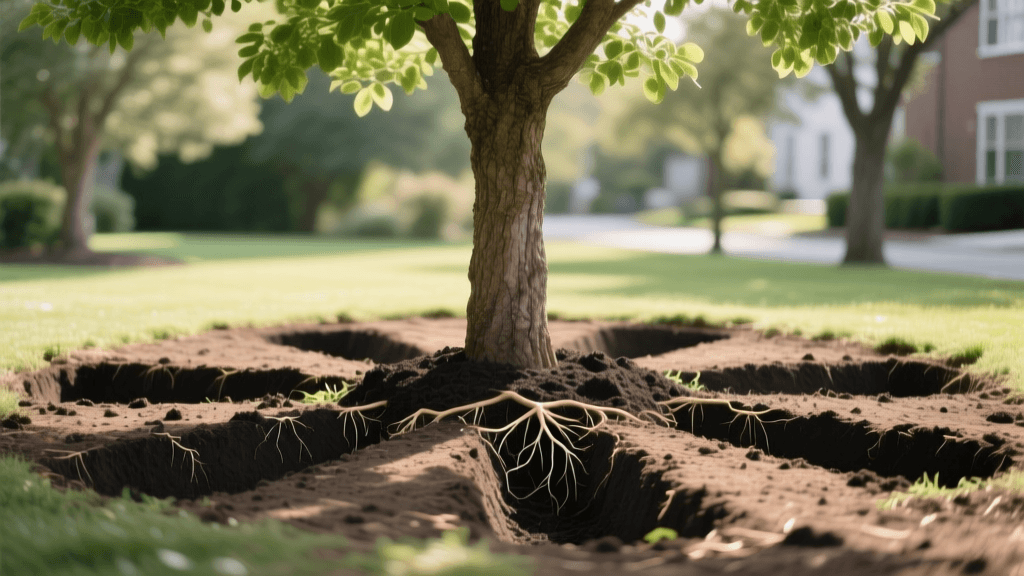
Radial Trenching and Compost Top-Dressing for Trees
The Hidden Threat of Soil Compaction to Tree Health
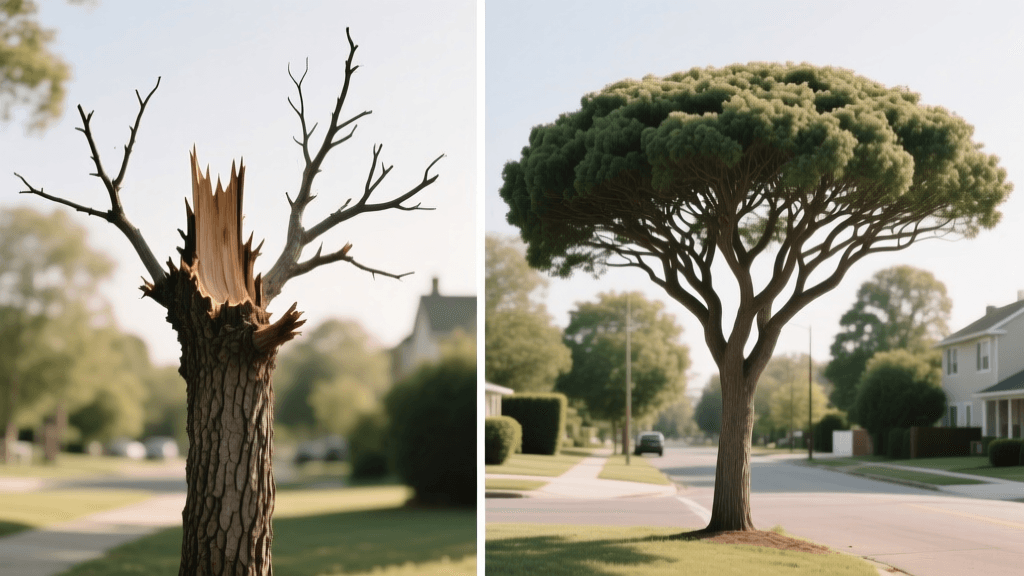
Trees in urban and suburban landscapes face an invisible enemy beneath the surface: soil compaction. When foot traffic, construction equipment, or even heavy lawn mowers repeatedly compress the soil, they destroy the delicate balance of macropores and micropores. Macropores are essential for oxygen exchange and water drainage, while micropores hold moisture. According to The Morton Arboretum, when soil bulk density exceeds 1.4 g/cm³ in heavy clays or 1.6 g/cm³ in loams, root tips physically cannot penetrate the soil matrix. The result is a shallow, stressed root system that is highly susceptible to drought, windthrow, and secondary pests.
To combat this, arborists and soil scientists recommend a dual-pronged approach: radial trenching to physically break up the compaction, combined with compost top-dressing to restore soil biology and structure. This guide will walk you through the exact measurements, materials, and timing required to successfully rehabilitate compacted tree soils.
What is Radial Trenching?
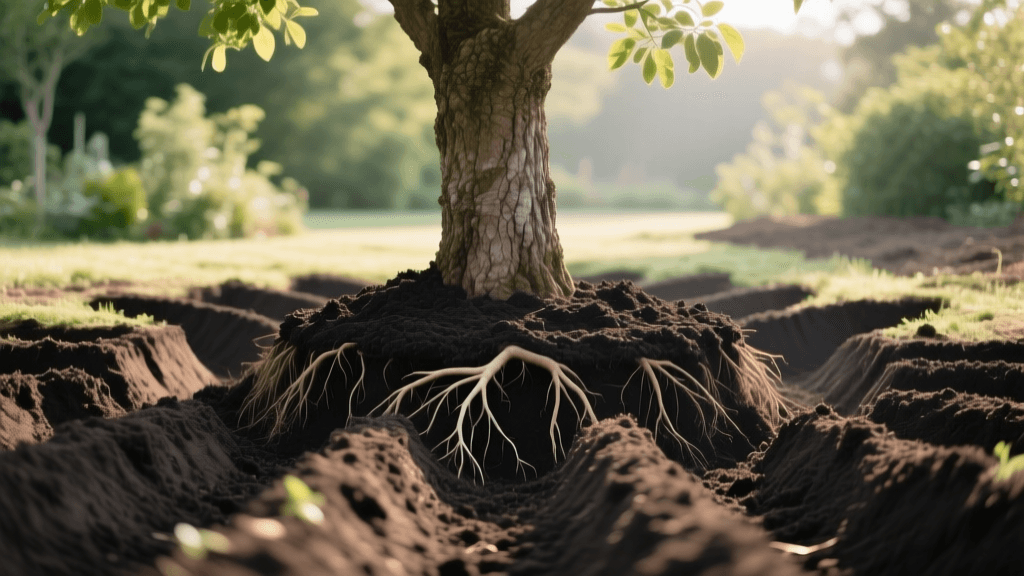
Radial trenching is a surgical soil remediation technique. Instead of rototilling the entire yard—which severs vital structural roots and destroys the soil food web—radial trenching involves digging narrow, spoke-like trenches that radiate outward from the tree trunk to the drip line. These trenches are then backfilled with a nutrient-rich, porous compost blend. This creates high-quality pathways for oxygen, water, and new feeder roots to expand into the surrounding compacted soil.
Step-by-Step Guide to Radial Trenching and Composting
Step 1: Map the Critical Root Zone (CRZ)
Before digging, you must identify the Critical Root Zone. The standard formula used by certified arborists is to measure the tree's Diameter at Breast Height (DBH) in inches, and multiply it by 1.5 to find the CRZ radius in feet. For example, a tree with a 20-inch DBH has a CRZ radius of 30 feet. This is the area where the majority of the fine, water-absorbing roots are located and where your trenching and composting efforts should be concentrated.
Step 2: Excavating the Trenches
Start your trenches at least 3 to 4 feet away from the trunk flare to avoid damaging the major structural roots and the root collar. Using a narrow trenching shovel, a mattock, or a 3-inch gas-powered earth auger, dig trenches that are 8 to 12 inches deep and 2 to 4 inches wide. Space the trenches 2 to 3 feet apart, radiating outward like the spokes of a bicycle wheel until you reach the edge of the CRZ.
Step 3: Selecting and Preparing the Compost Blend
Do not use pure, fine compost to fill the trenches, as it can break down too quickly and settle, leading to future sinking. Instead, create a 50/50 mix of high-quality, plant-based compost and coarse arborist wood chips. The coarse wood chips provide long-term structural support and maintain macroporosity, while the compost provides immediate biological inoculation and slow-release nutrients.
Step 4: Filling and Top-Dressing
Fill the trenches with your 50/50 compost and wood chip blend, mounding it slightly above grade to account for natural settling over the next few months. Once the trenches are filled, apply a thin 1/4-inch to 1/2-inch layer of pure, finely screened compost over the entire Critical Root Zone. The US Composting Council notes that this thin top-dressing acts as a biological inoculant, introducing beneficial mycorrhizal fungi and bacteria to the soil surface without smothering the turfgrass or existing shallow roots.
Compost Selection Guide for Trees
Not all compost is created equal. Trees are highly sensitive to excess salts and soluble nitrogen, which are common in manure-heavy blends. Use the table below to select the right compost for your soil rehabilitation project.
| Compost Type | Best Use Case | C:N Ratio | Application Rate | Pros & Cons |
|---|---|---|---|---|
| Leaf Mold Compost | Mature shade trees, acidic soil lovers (Oaks, Maples) | 15:1 to 20:1 | 1/2 inch top-dress | Pros: Low salt, high fungal dominance. Cons: Hard to source commercially. |
| Arborist Wood Compost | General urban tree care, radial trenching fill | 25:1 to 30:1 | 50/50 mix in trenches | Pros: Excellent structure, mimics forest floor. Cons: Can tie up nitrogen if not fully aged. |
| Manure-Based Compost | Agricultural crops, vegetable gardens | 10:1 to 15:1 | Avoid for trees | Pros: High nitrogen. Cons: High salts can burn fine tree roots and alter soil pH. |
| Biosolids (Treated) | Large-scale municipal reforestation | 10:1 to 12:1 | Not for residential | Pros: Cheap, nutrient-dense. Cons: Potential heavy metal concerns, strong odor. |
Timing, Costs, and Equipment
Timing: The best time to perform radial trenching and composting is during the tree's dormant season. Late fall (after leaf drop) or early spring (before bud break) minimizes stress on the tree and allows the root system to take advantage of the new oxygen pathways during the spring growth flush.
Costs: If you choose to dig the trenches manually using a trenching shovel and wheelbarrow, your primary cost will be the compost itself, which typically ranges from $30 to $50 per cubic yard. For large, mature trees, manual digging is incredibly labor-intensive. Professional arborists use a tool called an AirSpade, which uses compressed air to safely fracture compacted soil and excavate trenches without cutting roots. Hiring a professional for AirSpade radial trenching typically costs between $800 and $1,500 per tree, depending on the size of the CRZ and local labor rates.
Post-Trenching Care and Watering Schedule
After backfilling and top-dressing, the soil profile needs time to integrate. Water the entire CRZ deeply and slowly immediately after the work is completed. Use a soaker hose or a slow-flowing sprinkler to apply roughly 1 inch of water, which helps settle the compost into the soil voids and activates the microbial life.
According to the University of Minnesota Extension, maintaining proper soil moisture is critical after soil remediation. For the first growing season, monitor the soil moisture weekly. Avoid heavy foot traffic or parking vehicles over the newly trenched areas, as the soil is temporarily more susceptible to re-compaction until the tree's fine roots grow into the trenches and bind the soil aggregates together.
Common Mistakes to Avoid
- Volcano Mulching: Never pile compost or mulch against the trunk flare. This traps moisture against the bark, leading to root collar rot and inviting boring insects. Keep all compost at least 3 to 4 inches away from the trunk.
- Using Fresh Wood Chips in Trenches: Fresh, uncomposted wood chips will cause severe nitrogen immobilization (nitrogen tie-up) as microbes consume all available soil nitrogen to break down the carbon. Always use aged or composted wood material.
- Over-Top-Dressing: Applying more than 1/2 inch of compost over existing turfgrass will smother the grass and create an anaerobic layer that prevents gas exchange.
When to Call a Certified Arborist
While DIY radial trenching is feasible for smaller trees or localized compaction issues, you should hire an ISA Certified Arborist if:
- The tree is located near underground utility lines (always call 811 before digging).
- The tree is showing severe signs of decline, such as significant crown dieback or premature fall coloration.
- The soil is heavily compacted clay that requires deep pneumatic fracturing beyond the reach of manual tools.
'Soil is not just dirt; it is a living, breathing ecosystem. By reintroducing organic matter and oxygen through targeted composting and trenching, we are essentially rebuilding the forest floor in an urban environment, allowing the tree's symbiotic fungal networks to thrive once again.' — Urban Soil Ecology Principle
By investing the time and effort into radial trenching and compost top-dressing, you are addressing the root cause of urban tree decline. Proper soil health management ensures your trees remain structurally sound, vibrant, and resilient for decades to come.