Pest Control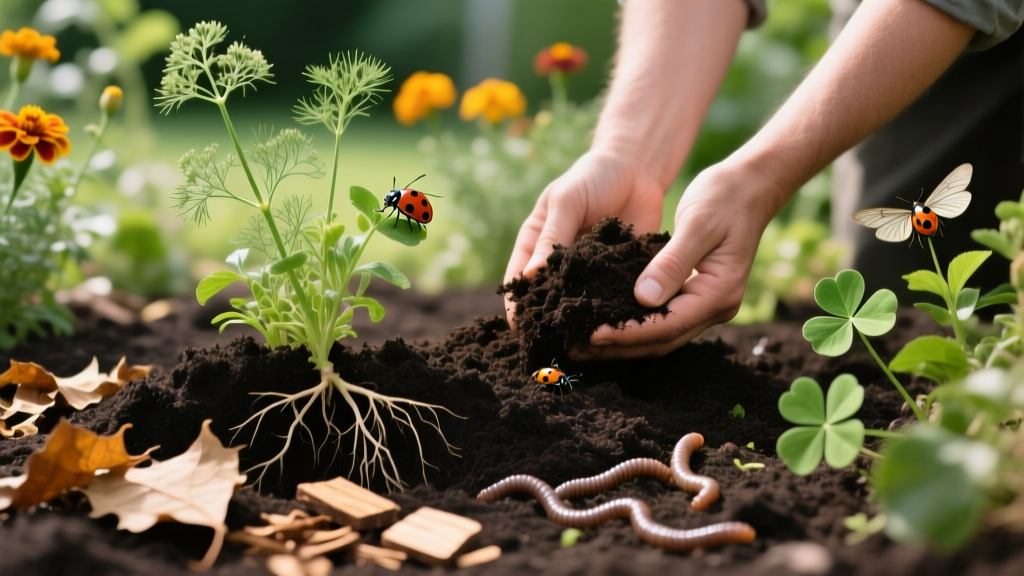
How Compost and Soil Health Naturally Suppress Pests
Robert HayesPublished
The Connection Between Soil Health and Pest Control
When most homeowners spot a pest in their lawn or garden, their immediate instinct is to reach for a chemical pesticide. While these synthetic treatments can offer a quick knockdown effect, they rarely address the root cause of the infestation. In fact, broad-spectrum pesticides often decimate the beneficial insect populations that naturally keep pests in check, creating a vicious cycle of dependency and chemical resistance. A more sustainable, long-term approach lies beneath our feet. By focusing on soil health and integrating high-quality compost into your landscape, you can create an environment that is naturally hostile to pests and highly resilient to damage.
This biological approach forms the foundation of Integrated Pest Management (EPA IPM), prioritizing ecosystem balance over chemical warfare. Healthy soil is not just dirt; it is a living, breathing ecosystem teeming with microscopic organisms that compete with, prey upon, and inhibit the pathogens and pests that threaten your plants.
The Soil Food Web as a Defense System
The soil food web is a complex network of interacting organisms, including bacteria, fungi, protozoa, nematodes, and arthropods. According to the USDA Natural Resources Conservation Service, a robust soil food web is essential for nutrient cycling, water retention, and natural pest suppression. When soil is sterile, compacted, or heavily treated with synthetic fertilizers, this web collapses. Pests and soil-borne diseases thrive in these imbalanced, dead soils because they face zero biological competition.
Conversely, when you amend your soil with organic compost, you inoculate it with billions of beneficial microbes. These organisms form symbiotic relationships with plant roots, strengthening the plant's natural immune system and making it less attractive to sap-sucking insects like aphids and spider mites. Furthermore, a diverse soil ecology ensures that no single pest species can dominate, as predatory organisms are always present to keep herbivore populations in check.
How Compost Suppresses Soil-Borne Pests
Compost suppresses pests and diseases through three primary biological mechanisms:
- Competition: Beneficial microbes introduced via compost rapidly consume available space and nutrients on the root zone and soil surface, leaving nothing for pathogenic fungi or pest larvae to feed on.
- Antibiosis: Certain beneficial bacteria and fungi, such as Trichoderma and Pseudomonas, produce natural antibiotics and volatile organic compounds that actively inhibit the growth of soil-borne pathogens and repel root-feeding insects.
- Parasitism and Predation: High-quality compost is rich in predatory nematodes and fungi that actively hunt and parasitize pest eggs and larvae, including those of destructive root-knot nematodes and Japanese beetle grubs.
Actionable Strategies: Building Pest-Resistant Soil
Transitioning to a soil-health-focused pest management strategy requires consistent, actionable steps. Below are the most effective methods for integrating compost into your lawn and garden to naturally deter pests.
1. Lawn Top-Dressing
For turfgrass, top-dressing with finely screened compost is one of the best ways to suppress thatch buildup and deter surface-feeding pests like chinch bugs and sod webworms. Apply a thin layer (about 1/4 to 1/2 inch) of compost over your lawn in the early spring and late fall. Rake it gently so the grass blades remain exposed. The compost will introduce thatch-degrading microbes and predatory ground beetles that feed on pest larvae.
2. Garden Bed Mulching and Amendment
Before planting, incorporate 2 to 3 inches of mature compost into the top 6 inches of garden beds. During the growing season, use compost as a top-layer mulch around the base of plants. This not only retains moisture but also creates a habitat for predatory insects like rove beetles and spiders, which are voracious consumers of slugs, snails, and caterpillar eggs.
3. Aerated Compost Tea (ACT) Applications
Compost tea is a liquid extract rich in soluble nutrients and beneficial microbes. To make ACT, steep 2 cups of high-quality compost in 2 gallons of dechlorinated water. Add 1 tablespoon of unsulfured molasses to feed the microbes, and use an aquarium air pump to aerate the mixture for 24 to 36 hours. Apply this as a soil drench or foliar spray every two weeks during the growing season to coat leaves in beneficial microbes that outcompete powdery mildew and deter foliage-feeding insects.
Compost Application Rates for Pest Prevention
| Application Area | Compost Type | Application Rate | Timing | Target Pests Suppressed |
|---|---|---|---|---|
| Turfgrass Lawns | Finely screened yard waste compost | 1/4 to 1/2 inch top-dress | Early Spring & Late Fall | Thatch-builders, Chinch bugs, Grubs |
| Vegetable Beds | Mature organic compost | 2 to 3 inches incorporated | 2 weeks before planting | Root-knot nematodes, Slugs, Aphids |
| Ornamental Trees | Wood-chip based compost | 2 inches under drip line | Spring mulch | Borers, Fungal root rots, Scale |
| Potted Plants | Vermicompost (Worm castings) | 10% to 20% of potting mix | During repotting | Fungus gnats, Spider mites, Mealybugs |
Managing Specific Pests Through Soil Health
Different pests require specific soil amendments and biological interventions. Here is how to tailor your soil health strategy to target the most common lawn and garden offenders.
White Grubs (Japanese Beetles, June Bugs)
Grubs feed on grassroots, causing massive brown patches in lawns. Chemical grub control often harms earthworms and soil biology. Instead, maintain a healthy, compost-rich lawn to encourage populations of naturally occurring predatory nematodes, specifically Heterorhabditis bacteriophora. These microscopic worms actively seek out and infect grub larvae. Furthermore, adding compost keeps the soil moist and friable, which is the exact environment these beneficial nematodes need to survive and reproduce. You can also apply milky spore disease (Paenibacillus popilliae), which thrives in organically rich soils and specifically targets Japanese beetle grubs.
Fungus Gnats in Containers and Beds
Fungus gnats are a notorious nuisance in greenhouses, container gardens, and indoor plants. They thrive in chronically wet, anaerobic, and poorly decomposed organic matter. The EPA's guidelines on composting emphasize that properly cured compost should be aerobic and earthy-smelling. If your compost smells like ammonia or rot, it is anaerobic and will attract gnats. To combat them, ensure your compost reaches thermophilic temperatures (131°F to 170°F) during the breakdown process to kill gnat eggs. For existing infestations, introduce Bacillus thuringiensis israelensis (Bti) via mosquito dunks soaked in your watering can, and top-dress the soil with a dry layer of vermicompost to create a dry, microbe-rich barrier that deters egg-laying.
Root-Knot Nematodes
Root-knot nematodes are microscopic soil worms that cause galls on plant roots, stunting growth and causing wilting. They are incredibly difficult to eradicate. However, you can suppress them by amending your soil with chitin-rich composts. Adding crab meal, shrimp meal, or composted mushroom substrate (which contains fungal chitin) stimulates a massive bloom of chitinolytic (chitin-eating) bacteria. Because nematode eggs are encased in chitin, these bacteria will actively consume the egg casings, drastically reducing the next generation of root-knot nematodes in your garden beds.
Common Composting Mistakes That Invite Pests
While compost is a powerful tool for pest suppression, improper composting practices can inadvertently invite pests into your yard. Avoid these common mistakes to maintain a healthy, pest-free composting system:
- Adding Meat, Dairy, or Oils: These materials decompose slowly, smell foul, and are magnets for rodents, raccoons, and blowflies. Stick to plant-based kitchen scraps and yard waste.
- Failing to Turn the Pile: A compost pile that is not turned regularly becomes anaerobic. This lack of oxygen breeds fungus gnats, soldier flies, and pathogenic bacteria. Turn your pile every 1 to 2 weeks to maintain aerobic conditions and high heat.
- Using Immature Compost: Applying compost that has not fully broken down (it still looks like raw leaves or food scraps) can tie up soil nitrogen and attract saprophytic pests. Ensure your compost is dark, crumbly, and smells like a forest floor before applying it to your lawn or garden.
- Over-Tilling the Soil: Once you have applied compost, avoid aggressive rototilling. Over-tilling destroys the delicate fungal hyphae networks (mycorrhizae) that connect plant roots and facilitate biological pest defense. Use a broadfork or no-till methods to preserve soil structure.
Conclusion
Shifting your pest control paradigm from chemical eradication to biological prevention is one of the most rewarding investments you can make for your landscape. By prioritizing soil health and utilizing compost, you are not merely feeding your plants; you are cultivating a complex, underground army of beneficial organisms that work around the clock to suppress pests, break down thatch, and cycle nutrients. While chemical pesticides offer a temporary illusion of control, building a robust soil food web provides a permanent, resilient foundation for a thriving, naturally pest-resistant lawn and garden.