Pest Control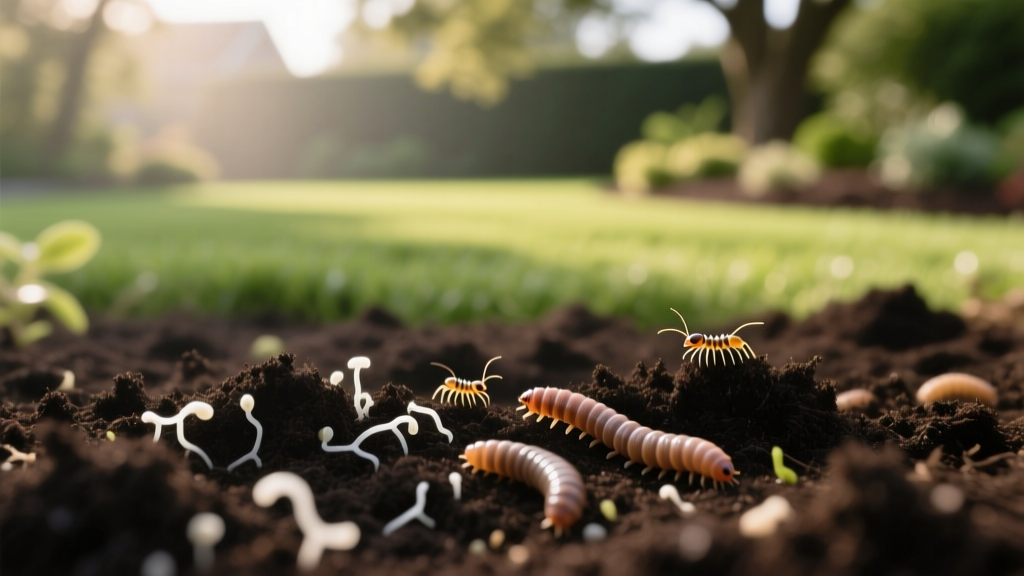
How Compost Suppresses Lawn Grubs and Soil Pests Naturally
Mike RodriguezPublished
The Paradigm Shift: From Chemical Warfare to Biological Defense
For decades, the standard approach to lawn and garden pest management relied heavily on synthetic chemical pesticides. While products containing imidacloprid or trichlorfon can effectively knock down grub populations, they often come at a severe cost to the broader ecosystem, harming essential pollinators, earthworms, and the delicate soil food web. Today, integrated pest management (IPM) emphasizes a more sustainable, long-term strategy: leveraging soil health and composting to naturally suppress pests.
When you view your lawn and garden not just as a collection of plants, but as a living biological system, pest control transforms from a reactive battle into a proactive defense. High-quality compost is not merely a fertilizer; it is a complex inoculant teeming with beneficial bacteria, fungi, protozoa, and predatory nematodes. By introducing this biology into your soil, you create an environment where common pests like white grubs, root-knot nematodes, and fungus gnats struggle to survive.
The Microbiology of Pest Suppression
How exactly does decomposed organic matter fight off insects and pathogens? The answer lies in the complex interactions of the soil food web. According to research highlighted by the University of Minnesota Extension, mature compost introduces billions of beneficial microorganisms per gram, which utilize several distinct mechanisms to suppress pest populations and soil-borne diseases.
Competitive Exclusion
Pathogenic fungi and harmful bacteria require specific resources and physical space on plant roots to establish infections. Compost introduces aggressive, beneficial microbes (such as Trichoderma fungi and Bacillus bacteria) that rapidly colonize the rhizosphere (root zone). By outcompeting pathogens for food and space, these beneficial organisms effectively starve out the agents of disease that often attract secondary pests like fungus gnats.
Predation and Chitinase Production
Many soil-dwelling pests, including Japanese beetle grubs and plant-parasitic nematodes, possess exoskeletons or egg casings made of chitin. Mature compost is rich in chitinase-producing bacteria and fungi. These microbes naturally secrete enzymes that break down chitin, effectively dissolving the protective barriers of pest eggs and larvae. Furthermore, a compost-rich soil ecosystem supports robust populations of predatory nematodes (such as Steinernema and Heterorhabditis species) that actively hunt and parasitize grub larvae before they can sever grass roots.
Induced Systemic Resistance (ISR)
Plants grown in biologically active, compost-amended soil develop stronger internal immune systems. Mycorrhizal fungi and specific compost bacteria trigger Induced Systemic Resistance (ISR) in turfgrass and garden plants. This primes the plant to produce defensive compounds and volatile organic chemicals that repel above-ground sucking insects like aphids and chinch bugs, reducing the need for topical foliar sprays.
Target Pests Controlled by Compost
White Grubs (Japanese Beetles, June Bugs, Masked Chafers)
Grubs are the larval stage of various scarab beetles, and they cause massive damage by feeding on grassroots. While chemical preventatives kill grubs indiscriminately, compost builds a habitat for natural grub predators. Ground beetles, parasitic wasps, and predatory nematodes thrive in the moist, organic-rich environment provided by compost topdressing, keeping grub populations below the economic damage threshold (typically 5-10 grubs per square foot).
Root-Knot Nematodes
These microscopic worms attack plant roots, causing galls that stunt growth and invite fungal rot. Compost amendments increase the presence of nematode-trapping fungi and predatory nematodes that feed on root-knot species. Additionally, the organic acids produced during compost decomposition can create a soil pH and chemical environment that is hostile to plant-parasitic nematodes.
Fungus Gnats
Fungus gnats are a nuisance in garden beds and greenhouses, laying eggs in damp, decaying organic matter. Their larvae feed on tender plant roots and spread diseases like Pythium. By using properly cured, thermophilic compost, you eliminate the raw, rotting materials that attract adult gnats, while introducing Bacillus thuringiensis israelensis (Bti) and predatory mites that consume gnat larvae.
Actionable Guide: Applying Compost for Pest Management
To harness the pest-suppressing power of compost, you must apply it correctly. Raw, unfinished compost can actually attract pests, so proper sourcing and application timing are critical.
Step 1: Sourcing and Testing Your Compost
Only use fully matured, thermophilic compost. The University of California Compost Resource Portal emphasizes that compost must reach temperatures between 131°F and 160°F for several days to eradicate plant pathogens, weed seeds, and harmful insect eggs. The finished product should smell earthy, like a forest floor, and have a dark, crumbly texture. Avoid composts that smell sour, ammonia-like, or sulfurous, as these indicate anaerobic conditions that will harm roots and attract pests.
Step 2: Topdressing Application Rates
For established lawns, apply a 1/4 to 1/2 inch layer of finely screened compost in the early fall or spring. This translates to roughly 0.75 to 1.5 cubic yards per 1,000 square feet. Core aerate the lawn before topdressing to allow the beneficial microbes direct access to the root zone and thatch layer. For garden beds, incorporate 1 to 2 inches of compost into the top 6 inches of soil prior to planting.
Step 3: Brewing Aerated Compost Tea (ACT)
To deliver a concentrated dose of predatory microbes to active pest hotspots, brew Aerated Compost Tea. This liquid extract multiplies beneficial biology and can be applied as a soil drench.
- Recipe: Mix 1 gallon of high-quality worm castings or mature compost with 5 gallons of dechlorinated water in a 5-gallon bucket.
- Food Source: Add 1 tablespoon of unsulfured blackstrap molasses to feed the bacteria.
- Aeration: Use an aquarium air pump to vigorously bubble the mixture for 24 to 36 hours. This ensures the proliferation of aerobic, pest-fighting microbes.
- Application: Strain the tea and apply it as a soil drench at a rate of 5 gallons per 1,000 square feet within 4 hours of brewing. Apply in the early morning or late evening to protect microbes from UV degradation.
Soil Amendment Comparison Chart
Different organic amendments offer varying levels of pest suppression based on their biological makeup and nutrient profiles.
| Amendment Type | Primary Pest Target | Suppression Mechanism | Application Rate |
|---|---|---|---|
| Thermophilic Compost | Soil-borne fungi, Grubs | Competitive exclusion, Predatory nematodes | 1/4 - 1/2 inch topdressing |
| Vermicompost (Worm Castings) | Root-knot nematodes, Aphids | Chitinase enzymes, Induced Systemic Resistance | 1/8 inch topdressing or tea |
| Aerated Compost Tea | Foliar diseases, Fungus gnats | Microbial coating, Antibiosis | Soil drench (5 gal/1000 sq ft) |
| Chitin Meal (Crab/Shrimp) | Grubs, Parasitic Nematodes | Stimulates chitin-eating bacteria | 1-2 lbs per 1,000 sq ft |
Common Composting Mistakes That Attract Pests
While compost is a powerful tool for pest control, mismanagement can have the opposite effect. Avoid these common pitfalls:
- Using Unfinished Compost: Compost that has not completed the curing process contains volatile organic compounds that attract scavengers, flies, and grubs. Always ensure the material is fully stabilized.
- Over-Applying Nitrogen: While compost is generally a slow-release fertilizer, heavily manure-based composts can cause rapid, sappy plant growth. This soft tissue is highly attractive to sap-sucking insects like aphids and spider mites. Balance high-nitrogen composts with carbon-rich materials like leaf mold.
- Ignoring Moisture Levels: Pests like fungus gnats and slugs thrive in perpetually waterlogged environments. Compost improves soil drainage, but if you overwater your lawn or garden beds after topdressing, you negate the biological benefits and create a pest haven.
Cost Analysis: Compost vs. Chemical Pesticides
Transitioning to a compost-based IPM strategy is economically viable over the long term. A standard synthetic grub preventative (like Merit/Imidacloprid) costs approximately $50 to $80 per treatment for an average-sized lawn, and must be reapplied annually. Furthermore, it degrades soil biology over time, leading to increased thatch buildup and compaction, which ironically invites more pests.
Bulk, high-quality compost typically costs between $30 and $50 per cubic yard. One cubic yard covers 1,000 square feet at a 1/3-inch depth. While the upfront labor and material cost might slightly exceed a chemical spray in year one, compost permanently improves soil structure, increases water retention (lowering irrigation bills), and establishes a self-sustaining predatory biology that reduces the need for future interventions. As noted by Penn State Extension, the long-term agronomic and environmental benefits of compost topdressing far outweigh the temporary knockdown power of synthetic pesticides.
Conclusion
Effective pest control does not require a scorched-earth chemical approach. By prioritizing soil health and integrating high-quality compost into your lawn and garden care routine, you foster a resilient ecosystem capable of defending itself. The microbes, fungi, and predatory nematodes introduced through compost work tirelessly beneath the surface, providing a natural, sustainable shield against grubs, nematodes, and fungal pathogens.