Pest Control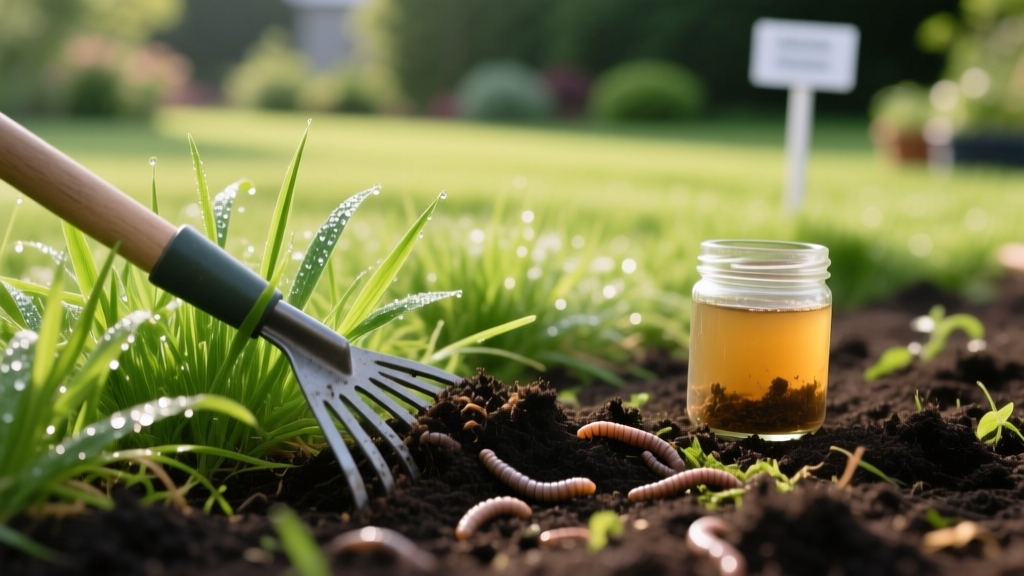
Using Compost to Suppress Lawn Pests and Fungal Diseases
Mike RodriguezPublished
The Paradigm Shift: From Chemical Warfare to Soil Biology
For decades, the standard approach to lawn pest control and disease management relied heavily on synthetic chemical pesticides and fungicides. While these products offer rapid knockdown of issues like grub infestations, brown patch, or dollar spot, they often act as a temporary band-aid. More importantly, broad-spectrum chemicals can decimate the beneficial soil microbiome, leaving your turf vulnerable to future, often more severe, outbreaks. Today, modern Integrated Pest Management (IPM) recognizes that the most effective long-term pest control strategy begins beneath the surface. By focusing on soil health and composting, homeowners can cultivate a resilient lawn that naturally suppresses pests and pathogens.
According to the USDA Natural Resources Conservation Service (NRCS), soil organic matter is the foundation of a healthy soil food web. When you feed the soil with high-quality compost, you are not merely fertilizing the grass; you are inoculating the rhizosphere with billions of beneficial microorganisms that act as a biological defense system against turf-destroying pests and fungi.
The Soil Microbiome: Your Lawn's First Line of Defense
Healthy, biologically active soil creates an environment where turfgrass can thrive and where pests struggle to gain a foothold. Grass grown in compacted, lifeless soil develops shallow root systems, making it highly susceptible to sucking insects like chinch bugs and root-feeding insects like white grubs. Compost amendments improve soil structure, increase water retention, and promote deep, vigorous root growth. A lawn with a deep root system can tolerate pest feeding far better than a stressed lawn with shallow roots.
Furthermore, the Environmental Protection Agency (EPA) notes that compost enriches soil, helping it retain moisture and suppress plant diseases and pests. The microorganisms introduced through compost form symbiotic relationships with grass roots. Mycorrhizal fungi, for example, extend the root system's reach, while beneficial bacteria coat the root surface, creating a physical and chemical barrier against soil-borne pathogens and nematodes.
Mechanisms of Pest and Disease Suppression
How exactly does a pile of decomposed organic matter stop a Japanese beetle grub or a Rhizoctonia solani (brown patch) outbreak? The suppression mechanisms driven by compost are primarily biological:
- Competition for Resources: Beneficial microbes in compost rapidly consume the available nutrients and space in the thatch and soil layers. By monopolizing these resources, they starve out pathogenic fungi and harmful bacteria before they can establish a colony and infect the turf.
- Antibiosis: Certain bacteria and fungi found in mature compost, such as Bacillus subtilis and Trichoderma species, produce natural antibiotics and enzymes that actively inhibit or destroy the cell walls of turf pathogens.
- Parasitism and Predation: Compost is teeming with predatory nematodes, micro-arthropods, and fungi that prey on turf-damaging pests. For instance, specific fungi can trap and consume root-knot nematodes, while predatory mites in the thatch layer feed on the eggs of damaging insects.
- Induced Systemic Resistance (ISR): The microbes in compost trigger the grass plant's own immune system. The plant produces defensive compounds that make its leaves and roots less palatable and more resistant to insect feeding and fungal penetration.
Identifying the Target: Pests vs. Pathogens
Before applying compost-based treatments, it is crucial to correctly identify the issue. Compost is a preventative and long-term suppressive tool, not an instant-kill contact pesticide. If your lawn is suffering from brown, irregular patches during high humidity, you are likely dealing with a fungal disease like brown patch or dollar spot. If you see wilting grass despite adequate watering, and the turf pulls up easily to reveal severed roots or C-shaped white grubs, you have an insect problem. Compost tea is particularly effective against foliar fungi, while solid compost topdressing excels at long-term grub and nematode suppression by building a robust root zone and introducing predatory soil life.
Choosing the Right Compost for Pest Management
Not all compost is created equal when it comes to pest and disease suppression. The biological profile of the compost depends heavily on how it was processed. Below is a comparison of the best compost types for lawn IPM:
| Compost Type | Best Target | Mechanism of Action | Application Rate |
|---|---|---|---|
| Thermophilic Compost | Soil structure, root rot, general vigor | High-heat processing kills weed seeds and pathogens; introduces diverse, resilient bacterial communities. | 1/4 to 1/2 inch topdressing annually |
| Vermicompost (Worm Castings) | Root-knot nematodes, chinch bugs | Rich in chitinase-producing bacteria that degrade the exoskeletons of insects and nematode eggs. | 1/8 inch topdressing or soil drench |
| Aerated Compost Tea (ACT) | Foliar diseases (Dollar Spot, Rust, Powdery Mildew) | Coats grass blades with beneficial microbes to outcompete and block fungal spores from germinating. | Foliar spray every 14 days during peak humidity |
Actionable Application Guide: Topdressing and Compost Tea
Core Aeration and Compost Topdressing
To combat soil compaction and introduce beneficial biology directly to the root zone, combine core aeration with compost topdressing. The best time for this is early fall for cool-season grasses and late spring for warm-season grasses.
- Aerate: Rent a core aerator and make two passes over the lawn in perpendicular directions to pull out thousands of soil plugs.
- Source Quality Compost: Purchase bulk, screened, mature compost from a reputable local supplier. Ensure it has an earthy smell; sour or ammonia odors indicate anaerobic conditions that can harm turf.
- Calculate Volume: You will need approximately 1 cubic yard of compost per 1,000 square feet of lawn to achieve a 1/4-inch topdressing layer.
- Spread and Drag: Shovel the compost into small piles across the lawn and use a landscaping rake or a drag mat to spread it evenly. The goal is to fill the aeration holes with compost while leaving the grass blades exposed to sunlight.
- Water Deeply: Immediately water the lawn to wash the compost microbes and nutrients down into the aeration holes and soil profile.
Brewing Aerated Compost Tea (ACT) for Fungal Suppression
When environmental conditions favor fungal diseases (high humidity, nighttime temperatures above 65°F), applying Aerated Compost Tea can coat the grass blades with protective microbes. Here is a proven, low-cost recipe for a 5-gallon batch:
- Equipment: 5-gallon bucket, aquarium air pump with 2-4 air stones, porous mesh bag (like a paint strainer).
- Ingredients: 2 cups of high-quality vermicompost or thermophilic compost, 1 tablespoon of unsulfured blackstrap molasses (food source for bacteria), 1 drop of liquid seaweed (trace minerals).
- Brewing Process: Place the compost in the mesh bag and suspend it in the bucket filled with dechlorinated water (let tap water sit for 24 hours to off-gas chlorine, which kills microbes). Add the molasses and seaweed. Turn on the air pump. The water should bubble vigorously, creating a foam head on top.
- Timing: Brew for 24 to 36 hours at room temperature. The tea should smell sweet and earthy. If it smells putrid, anaerobic bacteria have taken over; discard it and start over.
- Application: Dilute the tea 1:1 with water and apply using a backpack sprayer or hose-end sprayer within 4 hours of turning off the air pump, as the microbes will die without oxygen. Apply in the early evening to protect microbes from UV degradation.
Cost-Benefit Analysis: Compost vs. Chemical Controls
Transitioning to a compost-based IPM strategy requires an upfront investment of time and money, but the long-term economics heavily favor soil health. A synthetic preventative fungicide application for a 5,000-square-foot lawn can cost between $75 and $120 per application, requiring multiple treatments per season. In contrast, 5 cubic yards of bulk compost (enough to topdress 5,000 square feet) typically costs between $150 and $250 and requires only one annual application. Over a three-year period, the compost approach not only becomes more cost-effective but also drastically reduces the need for supplemental synthetic fertilizers, herbicides, and irrigation, as the soil's natural water and nutrient-holding capacities improve exponentially.
Integrating Compost into a Broader IPM Strategy
Compost is a powerful tool, but it is not a silver bullet. It must be integrated with proper cultural practices to maximize pest suppression. Research highlighted by the Rodale Institute demonstrates that organic matter management works best when paired with holistic ecosystem management. To support your compost applications, adhere to these IPM pillars:
- Mow High: Keep your mower deck set to 3 to 4 inches. Taller grass shades the soil, keeping roots cool, conserving moisture, and preventing weed seeds from germinating.
- Leave the Clippings: Grasscycling returns valuable organic matter and nitrogen back to the soil, feeding the microbial life you introduced with your compost.
- Water Deeply and Infrequently: Provide 1 to 1.5 inches of water per week in one or two deep sessions. This encourages deep rooting and allows the soil surface to dry out between waterings, depriving fungal spores of the constant moisture they need to germinate.
Feeding the soil, rather than just the plant, creates a resilient, living ecosystem that naturally resists severe pest outbreaks and recovers rapidly from environmental stress.
Conclusion
Rethinking pest control through the lens of soil health and composting transforms your lawn from a chemical-dependent monoculture into a thriving, self-regulating ecosystem. By utilizing thermophilic compost topdressing and aerated compost tea, you introduce biological warfare agents that target pests and pathogens at their source. While it requires patience to build the soil food web, the reward is a lush, deeply rooted lawn that defends itself against grubs, nematodes, and fungal diseases naturally, saving you time, money, and environmental impact in the long run.