Tree Care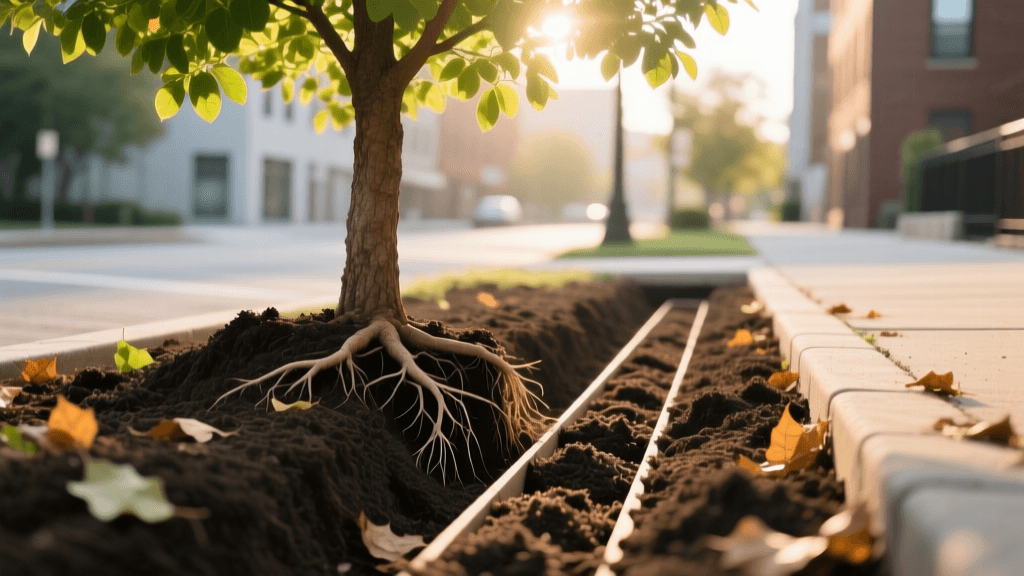
How to Use Compost and Vertical Mulching for Tree Roots
The Silent Killer: Soil Compaction in Urban Landscapes
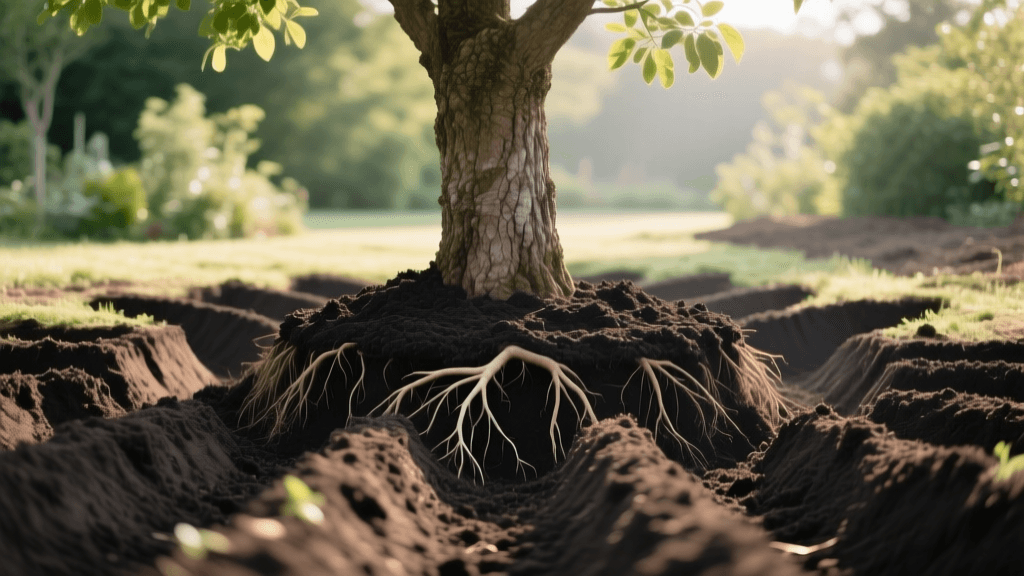
Trees in urban and suburban environments face a hidden enemy beneath the surface: soil compaction. While above-ground care like pruning and canopy spraying often gets the spotlight, the root zone is where true tree health begins. In natural forest settings, tree roots thrive in loose, aerated soil rich in organic matter. However, in residential landscapes, foot traffic, lawn mowers, construction equipment, and even heavy rainfall can compress soil particles together, squeezing out vital pore space.
According to the Arbor Day Foundation, compacted soil prevents water, oxygen, and essential nutrients from reaching the fine absorbing roots. Without these elements, trees experience stunted growth, premature fall coloration, dieback in the canopy, and increased susceptibility to pests and diseases. To combat this, arborists and soil scientists recommend a highly effective technique known as vertical mulching, combined with high-quality compost and soil amendments.
What is Vertical Mulching?
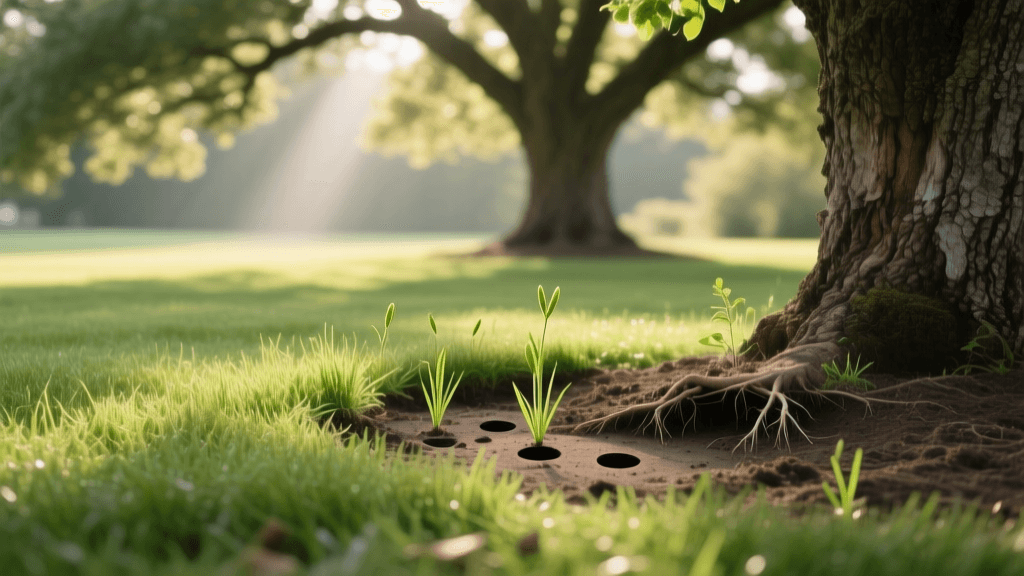
Vertical mulching is the process of drilling narrow, deep holes into the compacted soil within a tree's critical root zone and filling them with a porous, nutrient-rich mixture of compost, biochar, and organic amendments. This technique bypasses the hardened surface layer, creating direct vertical channels that deliver oxygen, water, and organic matter straight to the root zone.
The majority of a tree's fine absorbing roots are located in the top 12 to 18 inches of soil. When this zone is compacted, the tree essentially suffocates. Vertical mulching acts as an artificial aeration system, encouraging roots to grow into the newly created, uncompacted columns of organic matter.
Unlike surface mulching, which takes months or years to break down and improve soil structure beneath it, vertical mulching provides immediate relief to stressed root systems and dramatically improves soil drainage and gas exchange.
Tools and Materials You Will Need
Before starting your vertical mulching project, gather the following tools and materials. The initial investment in tools can be reused for future landscape projects, making it a cost-effective long-term strategy for lawn and tree care.
- Heavy-Duty Drill: A corded 1/2-inch drill or a high-torque cordless drill (such as the DeWalt 20V MAX XR) is essential. Standard household drills may overheat when driving large auger bits through dense clay.
- Soil Auger Bit: A 2-inch to 3-inch diameter bulb planting or earth auger bit (typically $35 to $60). A 2-inch width is ideal for minimizing root damage while providing enough volume for amendments.
- Screened Compost: High-quality, fully decomposed organic compost. Avoid compost with high wood-chip content for this specific application, as it can tie up nitrogen as it continues to break down.
- Horticultural Biochar: Biochar acts as a permanent soil sponge, retaining moisture and housing beneficial soil microbes.
- Mycorrhizal Fungi Inoculant: Granular or powdered inoculants (like RootGrow or Wildroot Organic) help establish symbiotic relationships between the compost and the tree roots.
- Safety Gear: Safety glasses, heavy leather gloves, and steel-toe boots.
Step-by-Step Guide to Vertical Mulching
Follow these precise steps to ensure you relieve compaction without damaging the tree's structural root system.
1. Identify the Critical Root Zone
The critical root zone (CRZ) generally extends from the base of the trunk out to the tree's drip line (the outer edge of the canopy) and slightly beyond. Focus your efforts in the area between 3 feet away from the trunk and the drip line. Avoid drilling within 3 feet of the trunk to prevent damaging major structural anchoring roots.
2. Drill the Vertical Columns
Using your drill and auger bit, bore holes to a depth of 12 to 18 inches. Space the holes 18 to 24 inches apart in a grid or concentric circle pattern across the target zone. If you hit a root thicker than a pencil, stop drilling and move the hole 6 inches to the left or right to avoid severing it.
3. Mix the Amendment Blend
Create a custom soil blend in a wheelbarrow. A highly effective, well-draining mixture consists of:
- 60% Premium Screened Compost
- 30% Horticultural Biochar (pre-soaked in water or compost tea)
- 10% Coarse Sand or Pine Bark Fines (for structural drainage)
Sprinkle your mycorrhizal fungi inoculant into the mix according to the manufacturer's package directions. This ensures the fungi are immediately introduced to the organic matter and the exposed fine roots.
4. Fill and Water
Fill each hole with the amendment blend, tamping it down lightly with a wooden dowel to eliminate large air pockets, but do not pack it so tightly that you recreate compaction. Once all holes are filled, water the entire root zone deeply to help the amendments settle and to activate the mycorrhizal fungi.
Choosing the Right Compost and Soil Amendments
Not all compost is created equal. The Environmental Protection Agency (EPA) notes that mature compost improves soil structure, water retention, and provides a slow-release source of nutrients. However, for vertical mulching, the physical structure and porosity of the amendment are just as important as the nutrient profile. Below is a comparison chart of common amendments used in tree care.
| Amendment Type | Primary Benefit | Water Retention | Estimated Cost per Cu. Ft. |
|---|---|---|---|
| Screened Leaf Compost | Rich in micronutrients, excellent microbial life | High | $6.00 - $9.00 |
| Horticultural Biochar | Permanent pore space, carbon sequestration | Very High | $12.00 - $18.00 |
| Coarse Arborist Chips | Prevents soil settling, long-term aeration | Low | $2.00 - $4.00 |
| Peat Moss | Acidifies soil, holds moisture | High | $5.00 - $8.00 |
| Expanded Shale | Permanent physical aeration, lightweight | Low | $10.00 - $14.00 |
For heavy clay soils, a mix of screened compost and expanded shale or biochar is ideal to prevent the holes from collapsing and re-compacting over time. For sandy soils, increasing the compost ratio will help retain moisture and nutrients that would otherwise leach away.
Surface Composting vs. Vertical Mulching
Homeowners often wonder if they can simply lay a thick layer of compost over the soil surface. While surface composting is beneficial, it serves a different purpose. According to the University of Minnesota Extension, surface mulching helps regulate soil temperature, suppress weeds, and slowly adds organic matter as it decomposes. However, surface applications do not immediately alleviate deep soil compaction.
For severely stressed trees or areas with heavy foot traffic, vertical mulching provides immediate sub-surface relief, while a subsequent 2-inch layer of surface compost and organic mulch (like shredded bark) will protect the newly aerated soil from future compaction. Never pile surface mulch or compost against the tree trunk, as this leads to root girdling and trunk rot. Always maintain a mulch-free ring of at least 6 inches around the base of the trunk.
Seasonal Timing and Aftercare
The best time to perform vertical mulching is during the tree's dormant season or periods of active root growth. Late fall (after leaf drop) and early spring (before bud break) are the optimal windows. During these times, the tree can focus its energy on establishing new fine roots into the nutrient-rich vertical columns without the stress of supporting a full canopy during summer heat.
Aftercare is minimal but important. Avoid heavy foot traffic or driving lawn equipment over the treated area. If the soil settles in the holes after heavy rains, top-dress the area with a small amount of additional compost to keep the columns level with the surrounding grade. By combining the science of soil health with the physical intervention of vertical mulching, you can dramatically extend the lifespan and vitality of your landscape trees, turning compacted, lifeless dirt into a thriving, breathable root ecosystem.