Tree Care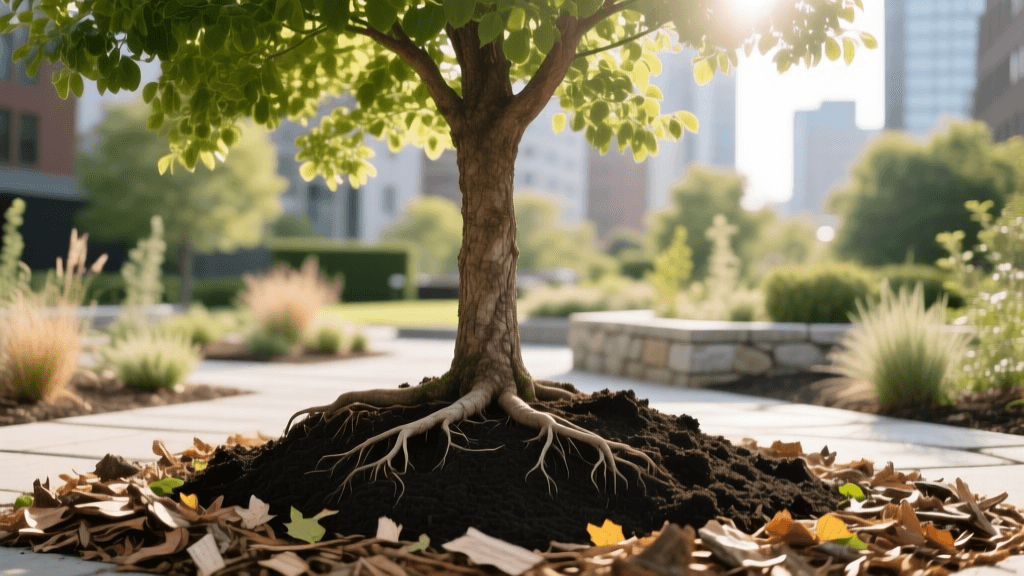
Composting for Tree Health: Revitalizing Compacted Soil
The Hidden Crisis Beneath Your Trees
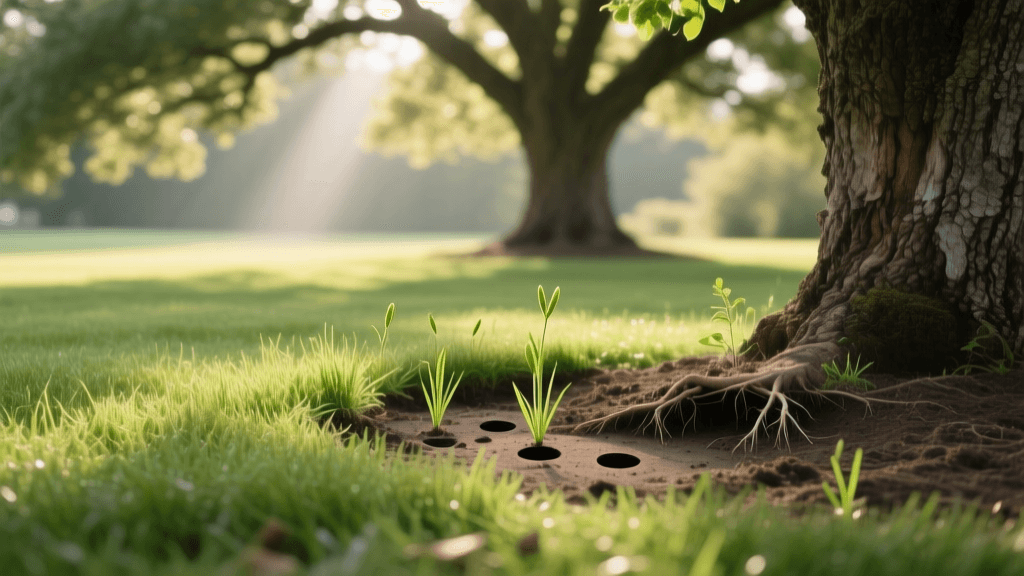
When homeowners think about tree care, they often focus on the canopy: pruning dead branches, treating foliar diseases, or managing pest infestations. However, the most critical factor in a tree’s long-term health and structural stability lies entirely out of sight. Soil health is the foundation of arboriculture, and in urban and suburban landscapes, soil compaction and organic matter depletion are the silent killers of mature trees. When soil becomes compacted by foot traffic, construction equipment, or even heavy rainfall, pore space is eliminated. This restricts the flow of oxygen, water, and vital nutrients to the fine feeder roots responsible for uptake.
Revitalizing compacted tree soil requires more than just poking holes in the ground; it requires a strategic application of compost and organic amendments to rebuild the soil structure from the inside out. By mimicking the natural forest floor, we can restore the biological activity necessary for trees to thrive in challenging environments. In this comprehensive guide, we will explore the science of the soil food web, how to diagnose soil compaction, and the exact step-by-step methods for using compost to save declining trees.
Understanding the Soil Food Web
Healthy soil is not just dirt; it is a living, breathing ecosystem. The USDA Natural Resources Conservation Service emphasizes that soil health management is fundamentally about feeding the soil biology. In a natural forest setting, decades of decomposing leaves, twigs, and organic matter create a rich humus layer teeming with bacteria, fungi, nematodes, and arthropods.
The most important players in this ecosystem for tree health are mycorrhizal fungi. These beneficial fungi form symbiotic relationships with tree roots, effectively extending the root system's reach by hundreds of times. They mine the soil for phosphorus and micronutrients, trading them to the tree in exchange for carbohydrates produced through photosynthesis. When soil is compacted or stripped of organic matter, these fungal networks collapse. Applying high-quality, biologically active compost reintroduces these vital microorganisms and provides the organic carbon they need to survive and multiply.
How to Test Your Tree's Soil Health
Before applying compost, you must assess the current state of your soil. Here are two simple, actionable tests you can perform in your yard today:
- The Screwdriver Test: Take a standard 6-inch flathead screwdriver and attempt to push it into the soil within the tree’s drip line (the area directly beneath the outer edge of the canopy). If you cannot easily push the screwdriver in by hand, your soil is severely compacted and suffering from a lack of organic matter.
- The Percolation Test: Dig a small hole 12 inches deep and 6 inches wide. Fill it with water and let it drain completely to saturate the surrounding soil. Fill it a second time and measure how long it takes for the water level to drop one inch. If it takes longer than one hour per inch, you have a drainage and compaction issue that requires immediate amendment.
Step-by-Step Guide to Amending Tree Soil with Compost
Simply throwing compost on top of heavily compacted clay will not solve the problem. The organic matter must be integrated into the root zone without severing critical structural roots. Follow this three-step protocol to safely revitalize your tree's soil.
Step 1: Radial Trenching (Vertical Mulching)
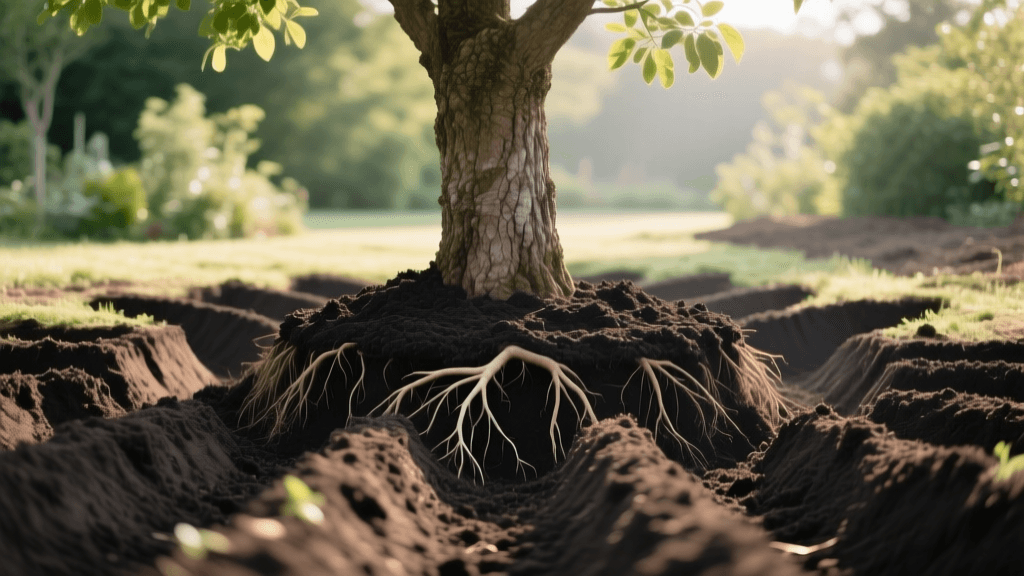
Radial trenching is a proven arboricultural technique used to alleviate compaction and deliver organic matter directly to the root zone. According to research from the University of Minnesota Extension, vertical mulching significantly improves soil aeration and water infiltration.
- Map the Trenches: Starting at least 3 feet away from the trunk (to avoid damaging major structural roots), mark out 4 to 6 radial lines extending outward to the drip line, like the spokes of a bicycle wheel.
- Dig the Trenches: Using a narrow trenching shovel or a powered auger, dig trenches 2 to 3 inches wide and 8 to 12 inches deep along your marked lines.
- Backfill with Compost: Mix a high-quality, OMRI-listed organic compost (such as Coast of Maine or a locally sourced municipal leaf compost) with coarse sand in a 50/50 ratio. Backfill the trenches with this mixture. This creates permanent channels for air, water, and biological activity to penetrate deep into the soil profile.
- Cost Estimate: DIY radial trenching costs roughly $50-$100 in materials and labor for a medium-sized tree. Hiring a certified arborist to perform this with a pneumatic AirSpade® can cost between $400 and $800, but it is safer for highly valuable or historic trees.
Step 2: Compost Top-Dressing
Once the trenches are filled, it is time to address the soil surface. Top-dressing involves applying a thin layer of compost over the entire root zone.
- Application Rate: Apply exactly 1/4 to 1/2 inch of finely screened compost over the soil surface from the trench lines out to the drip line.
- Why so thin? Applying more than half an inch of dense compost can inadvertently smother shallow feeder roots and alter the gas exchange at the soil line. The goal is to feed the soil biology, not bury the roots.
- Product Recommendation: Use a well-aged leaf mold compost or vermicompost (worm castings). Avoid heavy manure-based composts, which can contain excessive salts and nitrogen that may burn delicate surface roots.
Step 3: The Proper Mulch Layer
Compost breaks down quickly and needs to be protected. This is where mulch comes in. The International Society of Arboriculture strictly advises against 'volcano mulching,' which suffocates the root flare and promotes rot. Instead, use the 'donut method'.
- Clear the Root Flare: Gently pull soil and mulch away from the base of the trunk until the root flare (where the trunk widens and meets the roots) is completely visible.
- Apply Arborist Wood Chips: Lay down a 2 to 4-inch layer of coarse, aged arborist wood chips over the compost layer. Coarse chips are superior to dyed mulch or shredded bark because they allow for better gas exchange and break down slowly, providing a steady food source for fungi.
- Keep it Away from the Trunk: Ensure the mulch is kept at least 3 to 5 inches away from the trunk itself, resembling a donut rather than a volcano.
Comparison Chart: Best Compost Types for Trees
Not all compost is created equal. Choosing the wrong amendment can alter soil pH or introduce harmful pathogens. Use this chart to select the right product for your specific tree care needs.
| Compost Type | Best Use Case | Pros | Cons | Estimated Cost (per cu. yd.) |
|---|---|---|---|---|
| Leaf Mold | Top-dressing, fungal inoculation | Mimics forest floor; excellent for mycorrhizal fungi; neutral pH. | Low immediate NPK nutrient value; slow to release nutrients. | $25 - $40 |
| Vermicompost | Radial trenching, sick trees | Extremely high microbial diversity; rich in humic acids and enzymes. | Expensive; difficult to source in bulk quantities. | $60 - $120 (bagged) |
| Municipal Leaf Compost | General soil building, large areas | Highly sustainable; cost-effective; great bulk organic matter. | Quality varies wildly; must be tested for contaminants/herbicides. | $15 - $30 |
| Mushroom Compost | Alkaline-loving trees (e.g., Ash, Maple) | High calcium content; improves clay soil structure rapidly. | Very high pH (alkaline) and high soluble salts; can burn acid-loving trees. | $30 - $50 |
Critical Mistakes to Avoid
When implementing a composting regimen for trees, avoid these common pitfalls that can cause more harm than good:
- Using "Hot" or Unfinished Compost: Compost that is still actively decomposing generates heat and consumes nitrogen from the soil, robbing your tree of essential nutrients. Always ensure compost is fully cured, smells earthy, and has a dark, crumbly texture.
- Over-Amending Clay Soils: If you dig a massive hole in heavy clay and fill it entirely with porous compost, you create a 'bathtub effect.' Water will rush into the loose compost but fail to drain into the surrounding clay, drowning the tree's roots. Always integrate compost into the native soil or use the radial trenching method to ensure proper drainage.
- Ignoring Soil pH: Before applying large amounts of compost, perform a basic soil pH test. If your soil is highly acidic (below 5.5) or highly alkaline (above 8.0), nutrient lockout will occur regardless of how much organic matter you add. Amend pH slowly using elemental sulfur or lime based on laboratory soil test recommendations.
Seasonal Maintenance Schedule
Soil revitalization is not a one-time event; it is an ongoing process. Follow this seasonal schedule to maintain optimal soil health:
- Spring: Refresh the mulch layer to maintain a 3-inch depth. Apply a light 1/4-inch top-dressing of vermicompost just before the spring growth flush to provide a biological boost.
- Summer: Monitor soil moisture. The combination of compost and wood chips will significantly reduce your need for supplemental watering, but during droughts, deep watering once a week is still necessary.
- Fall: Leave fallen leaves under the tree canopy! Instead of raking them away, use a mulching mower to chop them into small pieces. This provides a free, natural source of organic matter that will break down over the winter, feeding the soil food web exactly as nature intended.
- Winter: Avoid walking on or driving over the tree's root zone, especially when the soil is wet or frozen, to prevent re-compaction of your newly amended soil.
Conclusion
Transforming the soil beneath your trees from a compacted, lifeless medium into a thriving biological ecosystem is the single most impactful investment you can make in your landscape. By utilizing radial trenching, strategic compost top-dressing, and proper mulching techniques, you empower your trees to develop robust root systems capable of withstanding drought, disease, and severe weather. Remember to always source high-quality, biologically active compost, respect the tree's root flare, and prioritize the long-term health of the soil food web. Your trees will reward you with decades of vibrant growth, stunning seasonal color, and enduring structural stability.