Lawn Care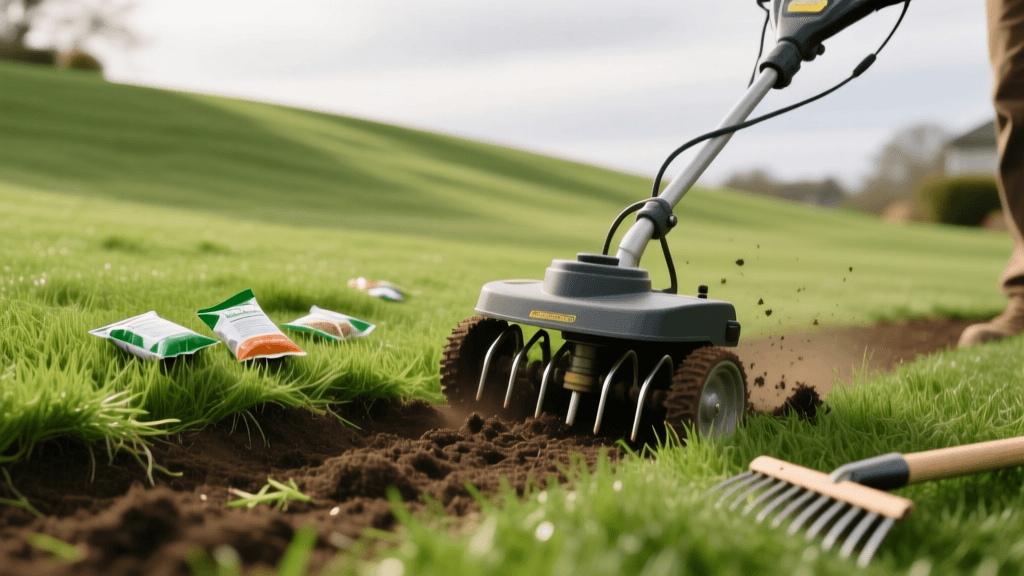
Revive Your Cool-Season Lawn: Aeration and Overseeding Guide
Reviving a tired, thin, or weed-infested cool-season lawn requires more than just a quick application of fertilizer. If your Kentucky Bluegrass, Tall Fescue, or Perennial Ryegrass lawn has suffered from summer heat stress, heavy foot traffic, or soil compaction, a complete renovation using core aeration and overseeding is the most effective recovery strategy. According to turfgrass experts, combining these two practices addresses the root causes of lawn decline while introducing vigorous, disease-resistant grass cultivars.
Assessing Your Lawn: Renovation vs. Complete Replacement
Before renting an aerator and buying seed, evaluate your lawn's current state. The general rule of thumb among agronomists is the 50% rule. If your lawn consists of at least 50% desirable turfgrass (even if it is thin or dormant), renovation through aeration and overseeding is the most cost-effective and time-efficient route. However, if your lawn is overrun by more than 50% broadleaf weeds, invasive grasses like Poa annua, or bare dirt, you may need to consider a complete kill-and-reseed approach using a non-selective herbicide. For the purpose of this guide, we will focus on the renovation and recovery of an existing, struggling cool-season lawn.
Timing is Everything: The Fall Recovery Window
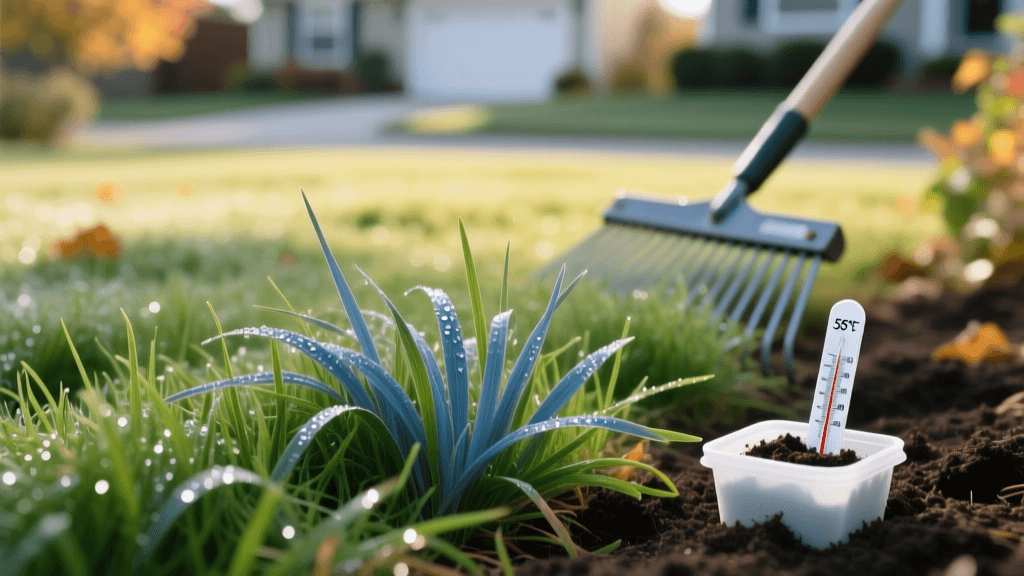
Cool-season grasses thrive in the cooler temperatures of autumn. The ideal window for aeration and overseeding is late August through mid-September, depending on your USDA Hardiness Zone. During this period, soil temperatures are still warm enough (between 50°F and 65°F) to trigger rapid seed germination, while air temperatures are cooling down, reducing heat stress on tender seedlings. Furthermore, fall renovation allows the new grass to establish a deep root system before the freezing winter months and gives it a head start ahead of the following summer's heat. Spring overseeding is generally discouraged because the emerging seedlings will immediately face the stress of summer heat and competition from aggressive spring weeds like crabgrass.
Step 1: Core Aeration to Relieve Soil Compaction
Soil compaction is the silent killer of lawns. Over time, foot traffic, heavy mowing equipment, and rainfall compress the soil particles, squeezing out the oxygen and water that grassroots need to survive. Core aeration involves using a machine to extract small plugs of soil and thatch, typically 2 to 3 inches deep and 0.5 to 0.75 inches in diameter.
According to the University of Massachusetts Extension Turf Program, core aeration improves water infiltration, enhances fertilizer uptake, and stimulates new root growth.
Aeration Execution and Costs
You can hire a professional lawn care service or rent a walk-behind core aerator from a local hardware store. Professional aeration typically costs between $75 and $150 for an average-sized residential lawn (5,000 sq. ft.). Renting a machine will cost around $80 to $100 for a half-day, but be warned: these machines are incredibly heavy and require physical exertion to operate.
- Preparation: Mow the lawn slightly shorter than usual (about 2 inches) and water it deeply 24 hours before aerating. The tines need moist soil to pull proper plugs; dry, hard soil will result in shallow, ineffective aeration.
- Pattern: Make two passes over the lawn in perpendicular directions (e.g., North-South, then East-West) to ensure maximum hole density. Aim for 20 to 40 holes per square foot.
- Plug Management: Leave the extracted soil plugs on the lawn. They will break down naturally over the next two to three weeks, depositing beneficial soil microbes back into the thatch layer to accelerate decomposition.
Step 2: Selecting the Right Seed and Starter Fertilizer
Choosing high-quality seed is non-negotiable for successful lawn recovery. Avoid cheap, generic seed mixes that contain high percentages of annual ryegrass or weed seeds. Look for cultivars rated highly by the National Turfgrass Evaluation Program (NTEP).
Seed Selection and Application Rates
The University of Minnesota Extension recommends matching your seed type to your lawn's specific light and traffic conditions.
| Grass Type | Best Use Case | Overseeding Rate (per 1,000 sq. ft.) | Germination Time |
|---|---|---|---|
| Tall Fescue (Turf-Type) | High traffic, heat/drought tolerance, full sun to light shade | 4 to 6 lbs | 7 to 14 days |
| Kentucky Bluegrass | Lush aesthetics, cold tolerance, full sun, requires high maintenance | 1 to 2 lbs | 14 to 28 days |
| Perennial Ryegrass | Quick establishment, erosion control, high traffic areas | 3 to 5 lbs | 5 to 10 days |
| Fine Fescue | Deep shade, low fertility soils, low traffic areas | 3 to 4 lbs | 7 to 14 days |
Fertilizing for Recovery
Apply a high-phosphorus starter fertilizer at the time of seeding to promote rapid root development. A product like Scotts Turf Builder Starter Food for New Grass (24-25-4) or a professional-grade Lesco 18-24-12 Starter Fertilizer is ideal. Phosphorus (the middle number) is crucial for early root establishment, but be sure to check local regulations, as some municipalities restrict phosphorus use unless a soil test proves a deficiency or you are actively establishing new seed.
Step 3: The Overseeding and Topdressing Process
Once the lawn is aerated, it is time to introduce the seed. For best results, use a broadcast spreader to apply the seed evenly, splitting the total amount in half and walking in perpendicular directions.
To maximize seed-to-soil contact—the single most important factor in germination—drag a piece of chain-link fence or a stiff push broom across the lawn. This works the seed down into the aeration holes and protects it from birds and wind.
The Magic of Topdressing
For a premium renovation, apply a thin layer (about 1/4 inch) of finely screened compost over the seeded area. Topdressing retains moisture around the seed, provides a slow-release organic nutrient source, and helps level minor imperfections in the soil. A yard of compost will cover roughly 1,000 square feet at this depth and typically costs between $30 and $50 from a local landscape supplier.
Step 4: The Critical Watering and Recovery Schedule
Seed will die if it dries out during the germination phase. Your irrigation strategy must shift from deep and infrequent to shallow and frequent. The Michigan State University Extension emphasizes that keeping the top inch of soil consistently moist is the key to successful establishment.
Week-by-Week Watering Guide
- Days 1 to 14 (Germination Phase): Water lightly 2 to 3 times per day for 5 to 10 minutes per zone. The goal is to keep the seed and topsoil damp, not soggy. If the seed dries out even once, the germination process halts, and the seed may die.
- Days 15 to 28 (Seedling Establishment): As the grass sprouts and reaches 1 inch tall, reduce watering frequency to once per day, but increase the duration to 15 to 20 minutes. This encourages the young roots to stretch deeper into the soil profile.
- Days 29 to 60 (Maturation): Transition back to a standard deep-watering schedule of 1 to 1.5 inches of water per week, applied over 2 or 3 sessions. This builds the drought tolerance necessary for the following summer.
Post-Renovation Maintenance Rules
Patience is required after overseeding. Do not apply any broadleaf weed control (such as 2,4-D or Dicamba) or pre-emergent crabgrass preventers for at least 4 to 6 weeks after the new seed has germinated, or until you have mowed the new grass at least three times. Herbicides will severely stunt or kill young turfgrass seedlings.
When it is time for the first mow, ensure your mower blades are razor-sharp. Dull blades will tear the tender new grass out of the ground by the roots. Set your mower deck to a height of 3 to 3.5 inches to allow the new grass to photosynthesize efficiently and shade out potential weed seeds.
Conclusion
Lawn renovation through core aeration and overseeding is an investment of time, sweat, and money, but the payoff is a thick, resilient, and vibrant turf. By carefully timing your project for early fall, relieving soil compaction, selecting premium NTEP-rated cultivars, and strictly adhering to a moisture-management schedule, you can successfully recover a damaged lawn and transform it into the envy of the neighborhood.