Tree Care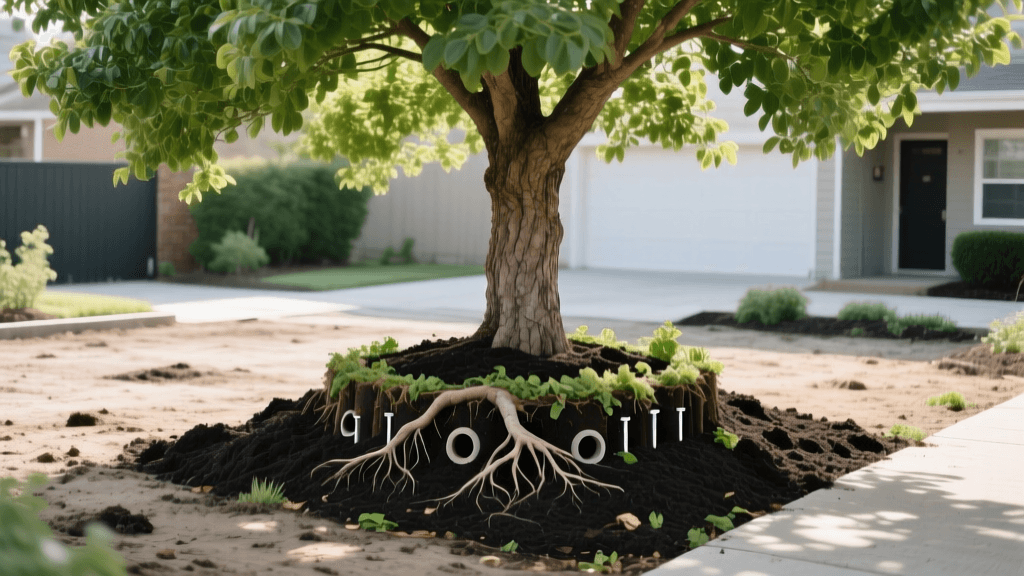
Deep Root Composting for Mature Trees: A Soil Health Guide
The Hidden Crisis: Soil Compaction and Oxygen Deprivation
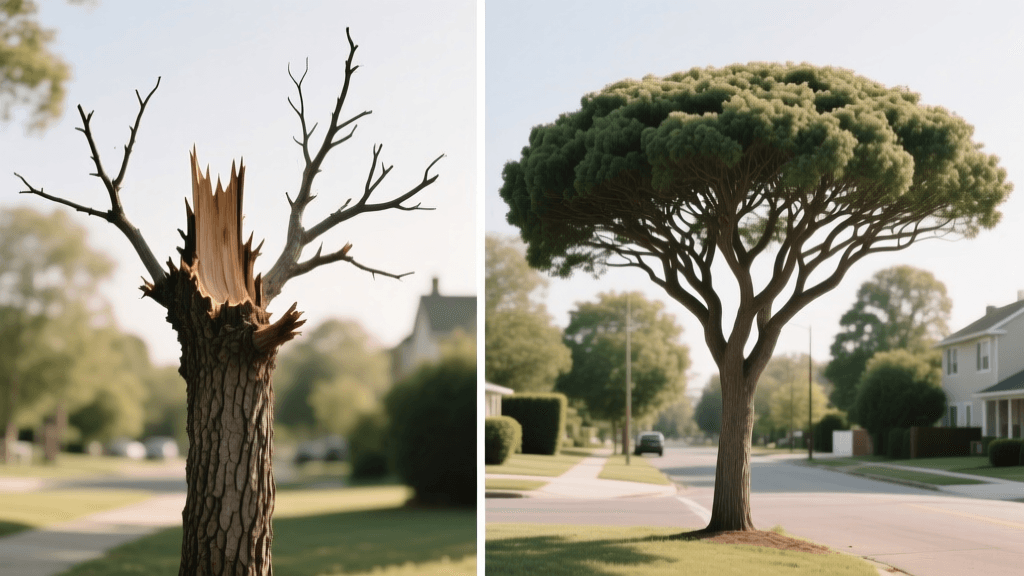
Mature trees in suburban and urban landscapes often face an invisible enemy beneath the surface: degraded soil health. Over decades of foot traffic, lawn mowing, and construction, the soil surrounding established trees becomes heavily compacted. This compaction destroys soil structure, collapsing the vital pore spaces that roots need for oxygen exchange and water infiltration. When soil bulk density exceeds 1.6 g/cm³, fine feeder roots begin to suffocate, leading to canopy dieback, increased susceptibility to borers, and premature decline.
Traditional surface applications of fertilizer or thin layers of mulch cannot penetrate these compacted layers. To truly rehabilitate the soil food web and restore nutrient cycling, arborists turn to a targeted technique known as deep root composting, or vertical mulching.
What is Deep Root Composting?
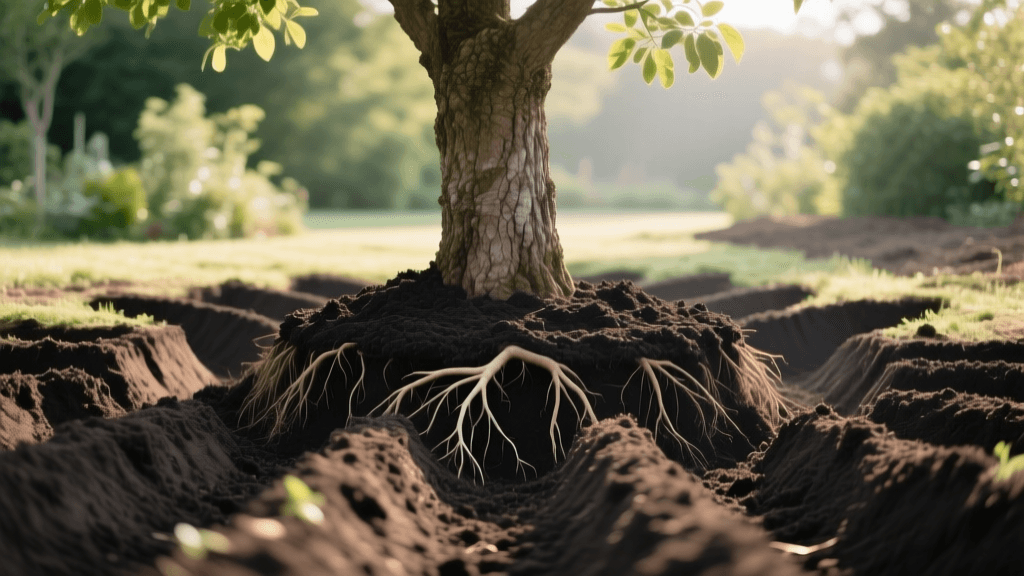
Deep root composting involves drilling a grid of holes into the soil within the tree's critical root zone and filling them with a nutrient-dense, biologically active compost blend. According to experts at Michigan State University Extension, vertical mulching alleviates soil compaction, improves drainage, and provides a direct pathway for oxygen, water, and organic matter to reach the deeper root profile.
Unlike surface top-dressing, which can take years to migrate downward, deep root composting bypasses the impermeable surface crust. It creates vertical columns of loose, biologically rich soil that encourage roots to grow deeper, making the tree more resilient to drought and extreme weather.
The Ideal Compost Blend for Tree Health
Not all compost is created equal. Using immature or 'hot' compost can burn fine roots and introduce harmful anaerobic bacteria. For deep root applications, the blend must be fully cured, well-screened, and rich in microbial life.
The Ultimate Tree Compost Recipe
- 60% High-Quality Leaf Mold or OMRI-Listed Compost: Provides the base organic matter and humic acids necessary for long-term soil structure.
- 20% Horticultural Biochar (Inoculated): Biochar acts as a permanent sponge for water and nutrients. It must be pre-charged (inoculated) with compost tea or mycorrhizal fungi so it does not initially rob the soil of nitrogen.
- 10% Coarse Arborist Wood Chips: Adds necessary macro-porosity to the vertical columns, preventing the compost from settling and compacting over time.
- 10% Native Soil: Helps the tree roots transition smoothly from the amendment to the surrounding earth.
Additionally, dusting the blend with endomycorrhizal and ectomycorrhizal inoculants is highly recommended. These beneficial fungi form symbiotic relationships with tree roots, extending their reach by hundreds of times and unlocking bound phosphorus and micronutrients.
Step-by-Step Implementation Guide
Step 1: Map the Critical Root Zone
The critical root zone (CRZ) is generally defined as the area under the tree's canopy and extending slightly past the drip line. Mark any visible surface roots to avoid damaging them during the drilling process.
Step 2: Drill the Aeration Holes
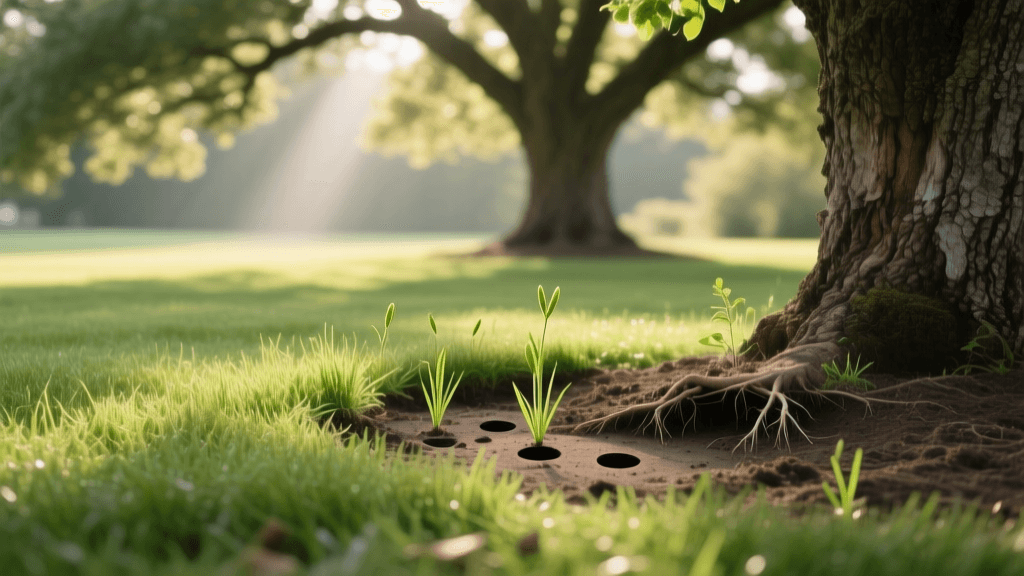
Using a gas-powered or heavy-duty electric auger, drill holes in a concentric ring pattern starting about 3 to 4 feet away from the trunk and extending to the drip line. Avoid the 'root flare' and major structural roots. If you hit a root larger than 1.5 inches in diameter, stop and move the hole location.
| Soil Condition | Auger Diameter | Target Depth | Spacing Between Holes |
|---|---|---|---|
| Moderate Compaction (Loam) | 2 inches | 12 to 15 inches | 24 inches |
| Heavy Compaction (Clay) | 3 to 4 inches | 18 to 24 inches | 18 inches |
| Severe Hardpan / Construction Fill | 4 to 6 inches | 24 to 36 inches | 12 to 18 inches |
Step 3: Fill and Top-Dress
Pour the compost blend into the holes, tamping lightly with a broom handle to ensure the material reaches the bottom without creating air pockets. Once all holes are filled, apply a 2-inch layer of the same compost blend across the surface of the CRZ, followed by a 2-inch layer of coarse wood chip mulch.
As noted by the University of Minnesota Extension, maintaining a proper mulch ring helps retain moisture and regulate soil temperature, but it is crucial to keep all mulch and compost at least 4 inches away from the trunk bark to prevent rot and rodent damage.
Timing and Seasonal Considerations
The best time to perform deep root composting is during the tree's dormant season or early spring before bud break. Late fall, after leaf drop, is ideal because the tree is directing energy toward root growth rather than canopy expansion. Spring applications are also effective as long as the soil is not waterlogged. Avoid drilling and amending during the peak of summer drought, as the root disturbance can add undue stress to an already water-stressed tree.
Cost Breakdown: DIY vs. Professional Arborist
Deciding whether to tackle this project yourself or hire an ISA Certified Arborist depends on the size of the tree, the severity of the compaction, and your access to equipment.
- DIY Approach ($150 - $350): Renting a 2-inch or 4-inch earth auger from a local hardware store typically costs $75 to $120 per day. High-quality, OMRI-listed compost and biochar will cost roughly $50 to $150 depending on the volume needed. This is feasible for younger trees or moderate compaction in accessible yards.
- Professional Air-Spade and Vertical Mulching ($800 - $2,500+): For massive, historic, or highly valuable trees, professionals use pneumatic air excavation tools (Air-Spades) to safely expose and fracture compacted soil without cutting vital roots. They then backfill with custom compost blends and radial trenching techniques. While expensive, this is the gold standard for saving declining legacy trees.
Common Mistakes to Avoid
When attempting to improve soil health around trees, good intentions can sometimes lead to fatal errors. Keep these warnings in mind:
- Volcano Mulching: Piling compost or mulch high against the trunk traps moisture against the bark, leading to fungal cankers and inviting wood-boring insects. Always maintain a donut shape around the root flare.
- Using High-Nitrogen Synthetic Fertilizers in Holes: Placing raw synthetic fertilizers directly into root zones will cause severe root burn. Rely on the slow-release, biological nutrient cycling provided by high-quality compost.
- Ignoring Drainage: If your soil is heavy clay and holds water for days after a rain, drilling deep holes and filling them with organic matter can sometimes create 'sumps' where water pools and roots drown. In poorly drained sites, incorporate more coarse pine bark into your compost blend and consider installing passive aeration tubes.
- Severing Structural Roots: As warned by researchers studying urban soil management, indiscriminately trenching or using large augers too close to the trunk can compromise the tree's structural stability, making it a hazard in high winds. Always respect the critical root zone geometry.
Conclusion
Reviving a struggling mature tree requires looking beneath the surface. By implementing deep root composting and vertical mulching, you actively rebuild the soil food web, alleviate compaction, and provide the biological foundation your tree needs to thrive for decades to come. Patience is key; while you may see improved leaf color and vigor in the first growing season, the true benefits of a rehabilitated soil profile compound year over year.