Tree Care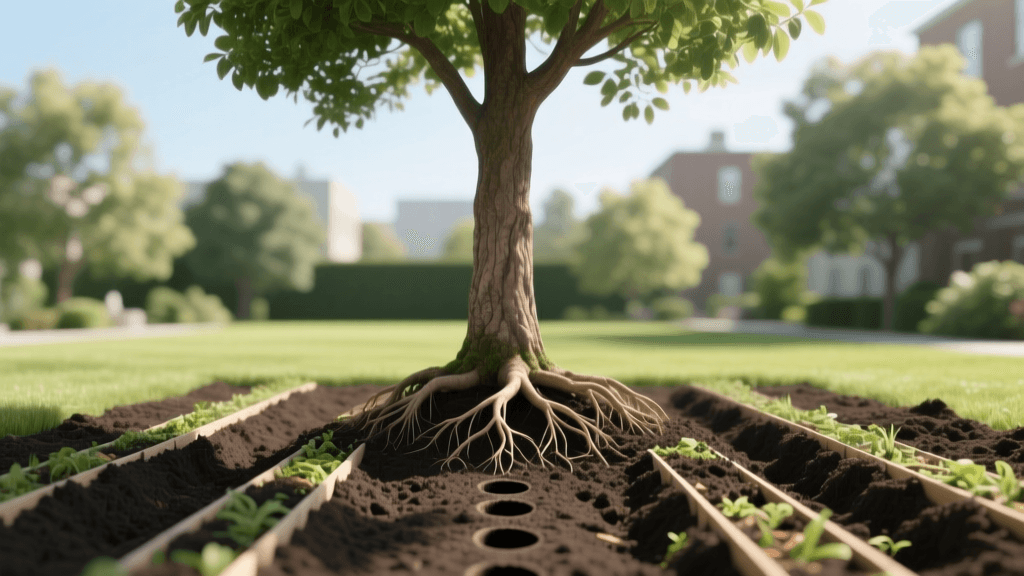
Deep Root Composting and Soil Aeration for Mature Trees
The Hidden Foundation: Why Soil Health Dictates Tree Longevity
When homeowners notice a mature tree struggling, their first instinct is often to look up at the canopy, searching for pests, fungal diseases, or storm damage. However, the true culprit is frequently hidden beneath the surface. Soil health is the single most critical factor in tree longevity, vitality, and resilience. In urban and suburban environments, the natural soil food web is routinely disrupted by construction compaction, foot traffic, chemical fertilizers, and the removal of organic leaf litter.
Healthy tree soil is not just dirt; it is a living, breathing ecosystem. It relies on a delicate balance of soil structure, moisture retention, cation exchange capacity (CEC), and a thriving microbiome of bacteria, nematodes, and fungi. When soil becomes compacted, pore space is eliminated. This cuts off oxygen to the fine feeder roots and prevents water infiltration, essentially suffocating the tree from the bottom up. By integrating targeted composting and soil aeration techniques, you can reverse decades of degradation and restore the rhizosphere to its natural, biologically active state.
Diagnosing Soil Compaction and Nutrient Deficiency
Before breaking ground, it is essential to confirm that your tree is suffering from soil-related stress. Look for the following diagnostic indicators:
- Chlorosis: Yellowing leaves with green veins, often indicating an iron or manganese deficiency locked up by high soil pH or poor aeration.
- Early Fall Coloration: Trees that change color or drop leaves weeks earlier than neighboring trees of the same species.
- Crown Dieback: Thinning foliage and dead branches, particularly at the outer edges of the canopy.
- Water Pooling: Surface runoff or water pooling around the base after light rain, indicating that the soil structure has become hydrophobic or heavily compacted.
- Stunted Twig Growth: Measuring less than 2 to 3 inches of new terminal growth per year on mature deciduous trees.
Top-Dressing vs. Deep Root Composting
Not all composting methods are created equal. The technique you choose should depend on the age of the tree, the severity of soil compaction, and the specific goals of your landscape management plan.
Method 1: Compost Top-Dressing for Surface Health
Top-dressing involves applying a thin layer of finely screened compost over the root zone. This method mimics the natural forest floor, where leaves and organic matter slowly decompose and filter into the topsoil. It is best for young trees, newly planted specimens, or established trees with mild surface compaction.
Actionable Steps:
- Clear the area under the drip line of any synthetic mulch, landscape fabric, or turfgrass.
- Apply a 1/4-inch to 1/2-inch layer of fully mature, screened compost directly to the soil surface.
- Water deeply immediately after application to help microbial organisms and soluble nutrients migrate into the topsoil.
- Follow up with a 2-inch to 3-inch layer of coarse arborist wood chips, keeping the mulch at least 3 inches away from the root flare to prevent rot.
Method 2: Vertical Mulching and Deep Root Composting
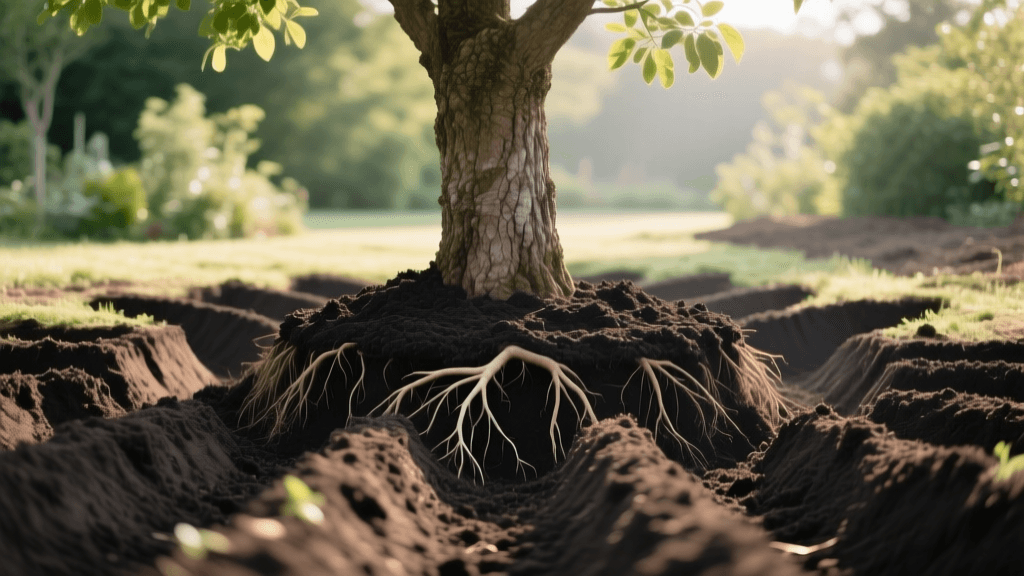
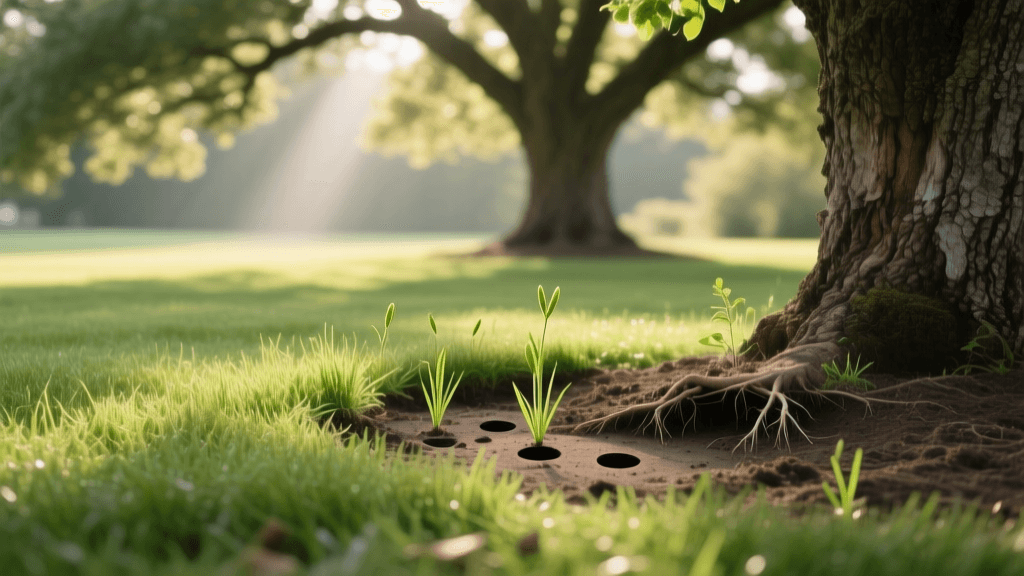
For mature trees suffering from severe subsoil compaction, surface top-dressing is insufficient. Nutrients and oxygen cannot penetrate the hardened clay pan. Deep root composting, often referred to as vertical mulching, involves drilling holes into the subsoil and filling them with a nutrient-dense compost blend. This creates vertical columns of organic matter that act as sponges, holding water and oxygen deep within the root zone while encouraging fine feeder roots to grow downward.
Tools Required:
- Heavy-duty corded or gas-powered auger drill
- 2-inch to 3-inch diameter soil auger bit (18 inches long)
- Mature, screened compost (e.g., Black Kow or local municipal leaf compost)
- Mycorrhizal root inoculant (e.g., Roots Organics or Bio-tone)
Actionable Steps:
- Identify the critical root zone (CRZ), which generally extends 1.5 times the diameter of the tree's canopy drip line.
- Starting about 3 feet away from the trunk to avoid severing major structural roots, drill holes 12 to 18 inches deep.
- Space the holes in a staggered grid pattern, approximately 2 to 3 feet apart, working outward to and beyond the drip line.
- Mix your compost with a granular mycorrhizal inoculant according to the product's label rates.
- Fill each hole to the top with the compost-inoculant mixture. Do not pack it tightly; leave it loose to encourage water infiltration and root exploration.
Choosing the Right Compost for Tree Care
Using the wrong compost can introduce soluble salts, weed seeds, or harmful pathogens to the root zone. Always ensure your compost is fully cured, dark, crumbly, and smells earthy. Below is a comparison matrix to help you select the right amendment for your specific tree care needs.
| Compost Type | N-P-K Profile | Best Application | Potential Drawbacks |
|---|---|---|---|
| Leaf Mold | Low N, Moderate K | Surface top-dressing, moisture retention, fungal dominance | Low immediate nutrient value; takes years to produce at home |
| Mushroom Compost | Balanced N-P-K | General soil amendment, pH buffering, clay soil conditioning | Can be high in soluble salts; may contain chalk residues |
| Manure-Based | High N, Moderate P | Nutrient-deficient soils, stimulating vigorous vegetative growth | Risk of root burn if not fully aged; potential weed seeds |
| Municipal Green Waste | Variable | Large-scale urban tree projects, vertical mulching fill | Quality control varies; potential trace plastics or heavy metals |
The Role of Mycorrhizal Fungi in Tree Soil Health
You cannot discuss tree soil health without addressing mycorrhizal fungi. These beneficial fungi form a symbiotic relationship with tree roots, effectively extending the root system's reach by up to 100 times. The fungi trade water and mined soil minerals (like phosphorus) to the tree in exchange for carbohydrates produced through photosynthesis. When soils are compacted or treated with broad-spectrum fungicides, these fungal networks are destroyed. Adding a high-quality mycorrhizal inoculant directly into your vertical mulch holes or top-dressing layer is a proven way to jumpstart this vital biological partnership.
Seasonal Timing and Cost Analysis
Timing your soil amendments correctly ensures maximum uptake and minimal stress to the tree. The optimal windows for deep root composting and aeration are early fall (after leaf drop but before the ground freezes) and early spring (as soil temperatures begin to rise above 50°F). During these periods, trees are actively growing fine feeder roots and can immediately capitalize on the improved soil structure.
Cost Breakdown:
- DIY Top-Dressing: $30 to $60 per mature tree (cost of bulk compost and arborist mulch).
- DIY Vertical Mulching: $75 to $150 per tree (factoring in tool rental, compost, and inoculants).
- Professional Air-Spade Service: $300 to $800+ per tree. Certified arborists use compressed air tools (AirSpades) to excavate and fracture compacted soil without damaging roots, followed by the incorporation of premium compost blends. This is highly recommended for heritage or high-value specimen trees.
Common Mistakes to Avoid
Even with the best intentions, improper composting techniques can do more harm than good. Avoid these frequent arboricultural errors:
- Volcano Mulching: Piling compost or mulch high against the tree trunk. According to the Morton Arboretum, proper mulching and soil amendment must keep organic matter away from the trunk flare to prevent bark decay, girdling roots, and rodent damage.
- Using Hot or Unfinished Compost: The Cornell Waste Management Institute emphasizes that mature compost is essential; unfinished compost will continue to decompose, tying up soil nitrogen and generating heat that can literally cook fine feeder roots.
- Over-Application: As noted by the Arbor Day Foundation, keeping compost and mulch layers to a maximum of 3 to 4 inches is vital. Thicker layers restrict gas exchange, suffocating the rhizosphere and promoting anaerobic, foul-smelling soil conditions.
Conclusion
Revitalizing the soil beneath your trees is an investment in the long-term structural integrity and beauty of your landscape. By diagnosing compaction early, selecting the appropriate compost matrix, and utilizing deep root vertical mulching techniques, you can transform sterile, compacted dirt into a thriving biological engine. Consistent soil care not only reduces the need for synthetic fertilizers and emergency pruning but also ensures your mature trees continue to provide shade, ecological value, and property equity for generations to come.