
Landscaping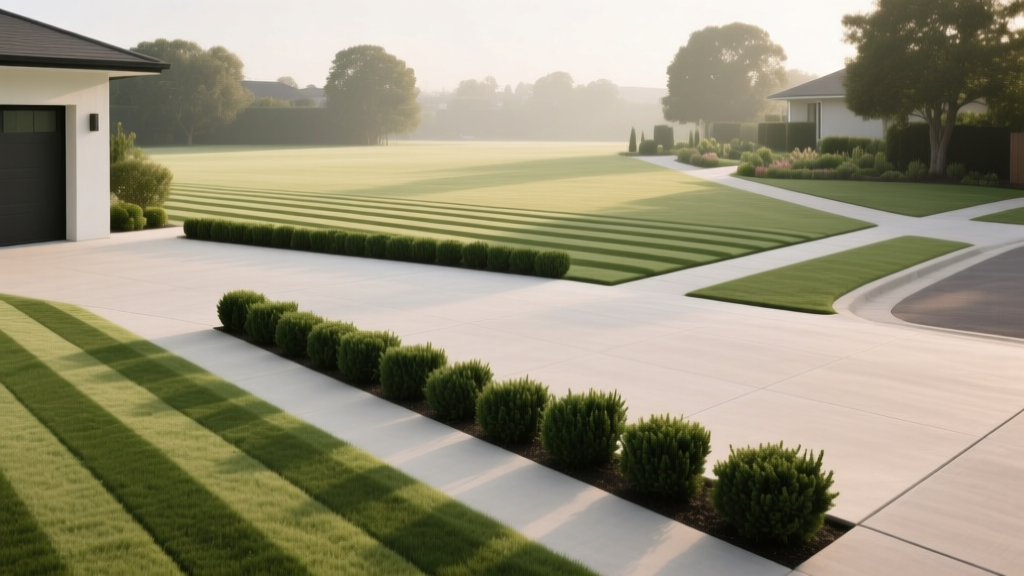
2026 Driveway Juniper Borders & Lawn Striping Guide
Robert HayesPublished
The Art of the Frame: Why Juniper and Striping Belong Together
As landscaping trends evolve in 2026, homeowners and landscape architects are increasingly seeking designs that balance high-impact visual aesthetics with low-maintenance sustainability. One of the most striking ways to elevate your property's curb appeal is by pairing the dynamic, geometric patterns of a professionally striped lawn with the permanent, textured elegance of a low-growing juniper driveway border. While lawn striping creates a temporary, glossy canvas of alternating light and dark bands, the juniper acts as a matte, evergreen frame that grounds the design and provides year-round structure.
The optical illusion of lawn striping relies on bending turfgrass blades in opposite directions to reflect sunlight. When this bright, reflective surface is bordered by the deep, light-absorbing blue-greens and silvery-blues of creeping junipers, the contrast is nothing short of spectacular. This guide will walk you through selecting the right cultivars, installing a robust border, and executing precise mowing patterns that protect your plants while maximizing aesthetic impact.
Top Low-Growing Juniper Cultivars for 2026 Driveway Borders
Choosing the correct juniper species is critical for driveway borders. You need a cultivar that stays low enough to avoid obstructing the sightlines of vehicles, tolerates the radiant heat reflected off asphalt or concrete, and resists the occasional exhaust exposure. According to the Clemson University Home & Garden Information Center, creeping junipers (Juniperus horizontalis) are exceptionally hardy, drought-tolerant, and ideal for groundcover applications in full sun.
| Cultivar | Botanical Name | Mature Height | Spread | Foliage Color | 2026 Avg. Cost (1-Gal) |
|---|---|---|---|---|---|
| Blue Rug | J. horizontalis 'Wiltonii' | 4 - 6 inches | 6 - 8 feet | Silvery-Blue | $18 - $24 |
| Bar Harbor | J. horizontalis 'Bar Harbor' | 6 - 12 inches | 4 - 6 feet | Blue-Green | $20 - $26 |
| Blue Pacific | J. conferta 'Blue Pacific' | 12 - 18 inches | 5 - 6 feet | Ice Blue-Green | $22 - $28 |
| Prince of Wales | J. horizontalis 'Prince of Wales' | 4 - 6 inches | 4 - 6 feet | Green (Bronze in winter) | $19 - $25 |
For the sharpest contrast against bright green turfgrass stripes, Blue Rug and Blue Pacific are the top recommendations for 2026. Their cool-toned foliage provides a stunning visual break from the warm, vibrant greens of Kentucky Bluegrass or Tall Fescue.
Step-by-Step Installation: Creating the Perfect Canvas Edge
A flawless lawn stripe requires a flawless edge. If your juniper creeps into the turf, or if the grass invades the juniper bed, your mower will struggle to create clean turnaround points, ruining the symmetry of your striping pattern.
1. Trenching and Steel Edging
Do not rely on plastic poly-edging for driveway juniper borders; the vigorous root systems of creeping junipers can easily heave lightweight plastics over time. In 2026, landscape professionals overwhelmingly recommend heavy-gauge steel landscape edging (at least 14-gauge).
- Width: Plan for a border width of 24 to 36 inches from the driveway edge. This provides enough mass to look substantial from the street.
- Depth: Dig a trench 4 inches deep and install the steel edging so that it sits exactly 0.5 inches above the soil grade. This prevents turf stolons from creeping underneath while allowing string trimmers to glide over the top without damaging the steel.
2. Soil Preparation and Planting
Junipers demand exceptional drainage. Soggy soil near driveway runoff zones will lead to root rot. Amend the native soil with 30% coarse builder's sand and 20% compost. When planting 1-gallon junipers, space them 3 to 4 feet apart in a staggered, zig-zag pattern. This ensures rapid, interlocking coverage within two growing seasons, creating a solid, weed-suppressing mat that looks incredibly sharp against a freshly striped lawn.
Mastering Lawn Striping Patterns Along the Border
The true magic of this landscape design lies in the execution of the mowing patterns. The EPA WaterSense Landscaping Guidelines emphasize that efficient landscape design reduces maintenance time and resource waste. A well-defined juniper border actually makes lawn striping easier by providing a permanent, straight-line guide for your mower.
The Visual Contrast Effect
When you bend grass blades away from the sun, they appear dark green; when bent toward the sun, they appear light green. The matte, textured surface of the juniper border absorbs light uniformly. By running your primary striping lines perpendicular to the driveway, the alternating light and dark bands will appear to "terminate" cleanly into the dark blue-green wall of the juniper. This creates an optical illusion of depth, making the driveway appear wider and the lawn appear more expansive.
Mower Maneuvering and Pattern Continuity
One of the greatest challenges in lawn striping is the "turnaround" at the end of a pass. Turning a heavy zero-turn or riding mower on the turf can cause tire scuffing, which tears the grass and leaves unsightly brown marks that disrupt the striping pattern.
Pro Tip for 2026: Use the concrete or asphalt driveway itself as your turnaround zone. By keeping the juniper border set back just 2 inches from the driveway edge, you can drop your mower deck, drive onto the driveway to execute a smooth, tear-free 180-degree turn, and re-enter the turf perfectly aligned for the next stripe. The low profile of the 'Blue Rug' juniper ensures your mower tires won't crush the foliage when you hug the edge.
Recommended Striping Kits
To achieve the deepest contrast against the juniper, you need a high-quality striping kit attached to your mower deck. The Toro Stripe Kit and the Big League Lawns Full Metal Jacket remain the industry standards in 2026. These heavy rubber or steel flaps press the grass down firmly, ensuring the light-reflecting bands are vibrant enough to stand out against the evergreen border.
2026 Maintenance Schedule for Borders and Stripes
Maintaining the crisp intersection between the striped turf and the juniper border requires a disciplined, yet minimal, maintenance schedule.
- Spring (April): Apply a pre-emergent herbicide to the juniper bed to prevent crabgrass from infiltrating the border. Use a granular formula carefully to avoid damaging the juniper's shallow feeder roots. Edge the turf line with a motorized bed edger to re-establish the 90-degree vertical drop between the grass and the steel edging.
- Summer (June - August): Junipers are highly drought-tolerant, but during their first two years, they require deep, infrequent watering. Utilize a sub-surface drip irrigation line buried 2 inches beneath the juniper mulch. This keeps the foliage dry (preventing blight) and prevents water from overspraying onto the turf, which can dilute your lawn's striping contrast by causing uneven growth spurts.
- Autumn (October): Prune any juniper branches that have dared to reach over the steel edging. Use sharp bypass shears to cut the branches back to a lateral growth point. Never use hedge trimmers on creeping junipers, as this promotes a dense outer shell that blocks sunlight from the interior, leading to dead zones.
Conclusion
Integrating a low-growing juniper driveway border with precision lawn striping is a masterclass in modern landscape design. It marries the rugged, water-wise durability of evergreen groundcovers with the manicured, athletic elegance of striped turf. By selecting the right silvery-blue cultivar, installing robust steel edging, and utilizing your driveway for tear-free mower turnarounds, you can create a breathtaking, low-maintenance entrance that will be the envy of the neighborhood throughout 2026 and beyond.

